Vision models like ChatGPT frequently invent elements missing from an image. A novel approach reduces these errors by generating exaggerated versions of the model's own hallucinated details from its captions, then prompting it to revise. This technique requires no retraining or additional data, making it broadly applicable to various models and architectures.
A new study from China tackles the stubborn issue of hallucinations in AI-generated images and videos—details that clearly contradict the user's prompt.
The process starts conventionally: the model describes an image. That caption is then fed into a text-to-image model to produce a new image—any extra objects or features in this reconstruction directly reveal the model's initial hallucinations. By comparing the original and generated images, the system guides the model to avoid repeating those mistakes in future attempts.
This diagram shows how the new technique detects and minimizes caption hallucinations. A standard model incorrectly adds birds to its description of an image, and the reconstructed version inserts them visually (highlighted in red). The new method avoids these fabrications while maintaining descriptive accuracy. Source: https://arxiv.org/pdf/2509.21997
The method begins by having the model describe real images, sometimes including objects or details not actually present. These inaccurate captions generate synthetic images that highlight the errors. By comparing real and synthetic images, the system identifies internal patterns that lead to invented content.
Once these error patterns are recognized, they are stored for future use. When captioning a new image, the system adjusts the model's internal signals, steering it away from known hallucination triggers. This correction happens in a single pass without extra data, retraining, or image generation during testing.
The Challenge of Entanglement
In the paper's example, "entanglement" likely explains why birds were added to an image containing none.
Entanglement occurs when a model strongly links certain concepts because they often appear together in its training data. Here, the model may have frequently encountered planes with birds, creating an association that wrongly influences the caption.
While ending training earlier can reduce entanglement (increasing model flexibility), it also diminishes conceptual detail and resolution. Developers face a persistent trade-off: prioritize a flexible, disentangled model or a more generative one prone to associated hallucinations?
Ideally, source image captions would itemize every object present, allowing the model to store them as separate, disentangled entries. However, SEO-driven captioning practices and large-scale web scraping—common in training powerful generative models—often fall short of this standard.
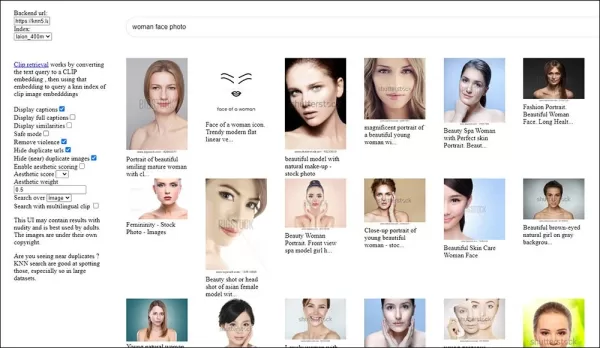
Weak captions reduce the value of LAION images for training models like Stable Diffusion. Labels are often shallow, vague, or SEO-focused rather than descriptive, hindering the model's ability to learn detailed visual concepts like facial features. (Original source was https://rom1504.github.io/, now defunct).
Since a foundational fix is impractical, workarounds to reduce hallucinations in LLMs and VLMs have become a significant research focus. The new Chinese method, tested across various architectures and conditions, shows promise in curbing "hallucination pollution."
The authors state:
‘Extensive experiments across multiple benchmarks show that our method significantly reduces hallucinations at the object, attribute, and relation levels while largely preserving recall and caption [richness].’
The paper, titled Exposing Hallucinations To Suppress Them: VLMs Representation Editing With Generative Anchors, comes from researchers at the University of Science and Technology of China and Nanjing University.
How the Method Works
The researchers developed an end-to-end pipeline to expose and suppress caption hallucinations:
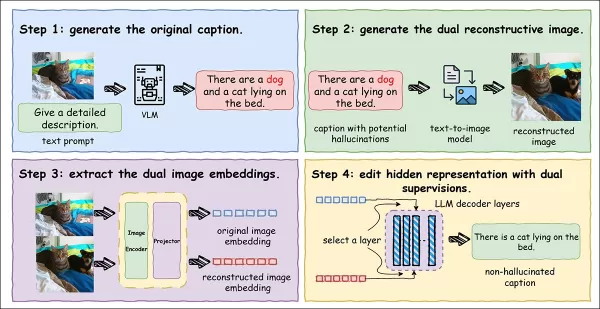
The full pipeline illustration. A vision-language model generates a caption from an input image, potentially including hallucinations. That caption is used to create a reconstructed image via a text-to-image model, making errors visible. Embeddings from both images guide internal adjustments, helping the model reduce invented details without losing caption quality.
A vision-language model first captions a real image, possibly inventing objects or relationships. That caption then generates a reconstructed image, revealing any fabrications as visual discrepancies. Comparing the two images turns subtle text errors into measurable, correctable signals.
To discourage inventions, the system compares the original image (a reliable reference) with the reconstructed one (highlighting errors). Each is converted into a compact embedding. By adjusting internal representations to align more closely with the original and diverge from the reconstruction, the model self-corrects in a fully self-supervised manner.
The paper explains:
‘Hallucinations in MLLMs are intrinsically difficult to detect because they are linguistically well-formed and often indistinguishable from faithful descriptions at the text level. The discrepancy lies not in language plausibility but in the misalignment with visual evidence, which the model itself is typically insensitive to.
‘To address this, we introduce a hallucination exposure mechanism that leverages generative reconstruction to convert implicit inconsistencies into explicit and observable signals.’
Using the FLUX.1-dev text-to-image model, the system recreates an image from the caption, exaggerating any false details. These amplified errors help the model recognize and correct its mistakes.
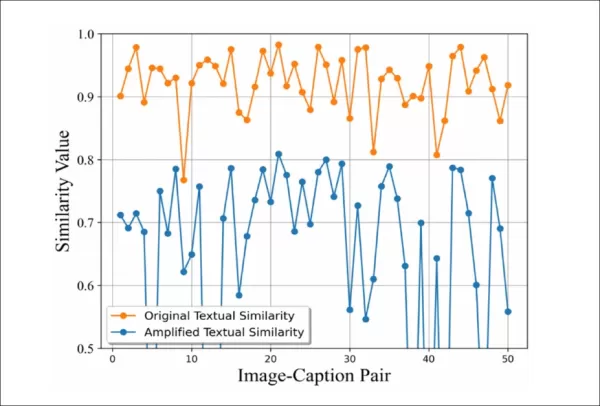
To validate the approach, researchers injected hallucinations into captions, generated reconstructed images, and then re-captioned them with LLaVA. They measured semantic similarity between original and hallucinated captions:
The hallucination amplification mechanism visualizes subtle errors. Each point shows caption similarity for an image-caption pair. The orange line (direct comparison) remains high, masking mistakes; the blue line (post-reconstruction) drops sharply, revealing hidden hallucinations as detectable semantic markers.
Similarity declined significantly after reconstruction, demonstrating the method's ability to expose subtle errors.
Data and Testing
Effectiveness was validated using three benchmarks: Caption Hallucination Assessment with Image Relevance (CHAIR); MLLM Evaluation (MME); and Pooling-based Object Probing Evaluation (POPE).
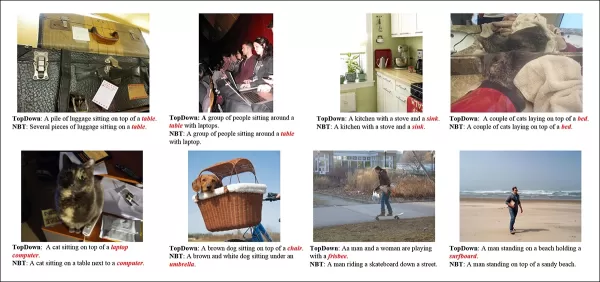
From the CHAIR release paper: examples of hallucinated objects generated by captioning systems TopDown and NBT, which invent elements like laptops, sinks, or surfboards not present in the image. Source: https://arxiv.org/pdf/1809.02156
Standard metrics like hallucination rate or recall can be misleading—models might avoid errors by producing vague captions. To balance accuracy and completeness, the combined metric Hallucination and Recall (HAR@β) was used, scoring captions on both factors with adjustable weighting.
POPE assessed context-sensitive object hallucinations, and MME evaluated attribute-level hallucinations, both as Yes/No tasks.
Tests used the Flux model and LLaVA-v1.5-7B on datasets including Microsoft COCO, A-OKVQA, and GQA. Latent editing targeted the models' second layer, with consistent hyperparameters and temperature across all tests.
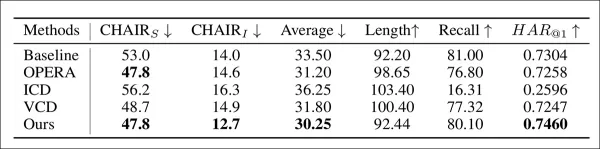
Initial CHAIR results are shown below*:
Performance on the CHAIR benchmark for hallucination mitigation, assessed with multiple metrics.
The authors note:
‘[Our method consistently outperforms other baselines on both CHAIRS and CHAIRI[*] , demonstrating its superior effectiveness in suppressing hallucinations. Meanwhile, although nearly all methods inevitably reduce recall while suppressing hallucinations, reflecting a trade-off between faithfulness and informativeness, our approach achieves the smallest drop.
‘This demonstrates that our method captures a broad range of ground-truth objects. With the HAR@β metric, our method achieves the highest score, highlighting its ability to reduce hallucinations while maintaining coverage.’
Strong results are attributed to dual-supervision: reinforcing clean semantics from the original image while suppressing misleading signals from the reconstruction. By targeting only hallucination-related directions, the system corrects errors without losing detail.
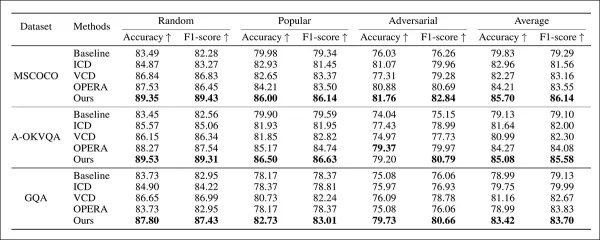
Performance comparison on the POPE benchmark across different configurations and datasets.
Regarding POPE results, the paper states:
‘It can be observed that our method consistently achieves the best performance across all settings. Notably, our method can achieve up to +5.95% accuracy and +6.85% F1 score on average, outperforming other training-free approaches by a large margin.
‘Therefore, these results demonstrate that our method provides a reliable and generalizable solution across different levels of difficulty.’
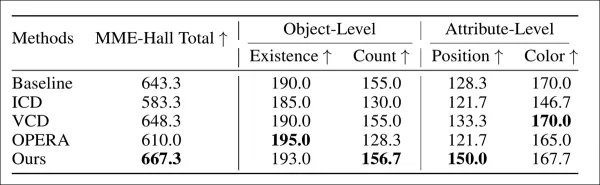
Performance comparisons from the third testing round on MME.
The final main test was on MME, with results shown above. However, the paper mentions the method "OPERA" without definition in the main text or appendix. While the authors claim strong MME performance, the lack of method details suggests caution in interpreting these results.
Musk Considered Leaving OpenAI to His Kids as Altman TestifiesThis morning, OpenAI CEO Sam Altman took the stand to address former co-founder Elon Musk’s lawsuit challenging the company’s corporate structure.When asked about Musk’s claim that other founders “stole a charity” by launching a for-profit subsidiary
Sam Altman Sparks Debate Over AI's DecelerationListen onApple PodcastsListen onSpotifyOpenAI CEO Sam Altman recently suggested that it may be time to “pace the rate of AI development” to allow society to “harden around some of these new capability levels.”On the latest episode of TechCrunch’s Equ
2026 Latest Best Photoshop AI retouch tools for ecommerce apparel, skin cleanup, and color consistency! This top-rated curated list features powerful game-changing solutions that help you boost writing efficiency, streamline content creation, and achieve perfect visual results effortlessly. Each tool has undergone real-world tests through weekly updated rankings, complete with free vs paid comparison details. Backed by XIX.AI, it’s the must-try guide for anyone aiming to unlock your AI edge. Explore now!
2026 Latest Best Top-Rated AI Prompt Libraries for optimizing all types of ChatGPT workflows. XIX.AI has curated a powerful, game-changing collection that goes through rigorous real-world tests to ensure top performance. You can find detailed free vs paid comparisons and expert rankings to help you choose the must-try tools that boost your productivity and unlock your AI edge. Explore now!
2026 Latest Best AI Quiz Builder Platforms for Teachers, Tutors, and Cohort-Based Learning Programs! XIX.AI has curated a top-rated list of powerful game-changing tools that go through real-world tests to deliver accurate rankings. These must-try platforms help boost writing efficiency, streamline content creation, and simplify quiz design across all learning scenarios. Explore now to discover your perfect tool for unlocking your AI edge in teaching!
2026 Latest Best AI Pull Request Review Tools for GitHub Teams are here on XIX.AI! This top-rated curated list showcases powerful game-changing solutions that streamline refactoring, bug fixing, and security gap detection across all team workflows. Enjoy a free vs paid comparison along with real-world tests and detailed rankings to help you find the perfect tool that boosts productivity significantly. Explore now to unlock your AI edge!
2026 Latest Best Top-rated AI Text to Speech Tools for Natural Voiceovers are here on XIX.AI! This curated list features powerful, game-changing options that deliver crystal-clear voices for every use case, backed by real-world tests and weekly updated rankings. Get a free vs paid comparison to find the must-try solution that boosts your productivity instantly. Explore now to Unlock your AI edge!
2026 Latest Best Manga AI Background Generators Ranked Top-Rated! This curated collection showcases powerful game-changing tools perfect for creating high-quality chapter backgrounds, book covers, and promotional art. Every option has undergone rigorous real-world tests to ensure reliability. Get a free vs paid comparison along with detailed insights. Explore now to discover your perfect tool and unlock your AI edge in manga creation.
By clicking "Accept All Cookies", you agree to the storing of cookies on your device to enhance site navigation, analyze site usage, and assist in our marketing efforts.Privacy Policy Notice
When you visit any website, it may store or retrieve information on your browser, mostly in the form of cookies. This information might be about you, your preferences or your device and is mostly used to make the site work as you expect it to. The information does not usually directly identify you, but it can give you a more personalized web experience. Because we respect your right to privacy, you can choose not to allow some types of cookies. Click on the different category headings to find out more and change our default settings.However, blocking some types of cookies may impact your experience of the site and the services we are able to offer. Privacy PolicyStatement
Manage Preferences
Strictly Necessary Cookie
Always Active
These cookies are necessary for the website to function and cannot be switched off in our systems. They are usually only set in response to actions made by you which amount to a request for services, such as setting your privacy preferences, logging in or filling in forms. You can set your browser to block or alert you about these cookies, but some parts of the site will not then work. These cookies do not store any personally identifiable information.



 Home
Home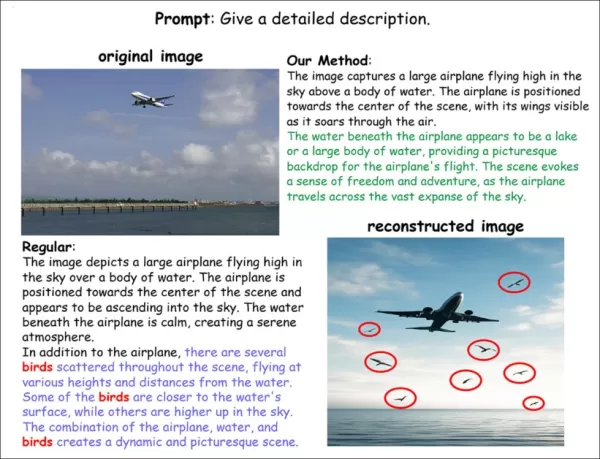
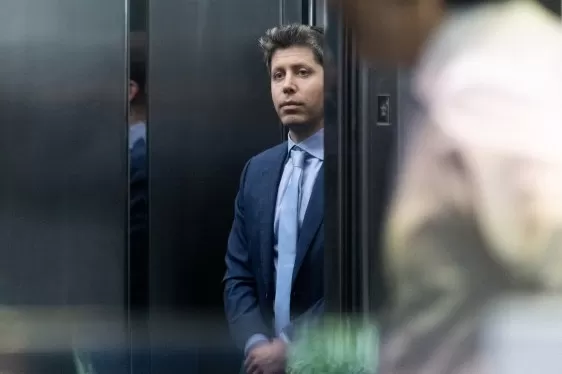
 Musk Considered Leaving OpenAI to His Kids as Altman Testifies
This morning, OpenAI CEO Sam Altman took the stand to address former co-founder Elon Musk’s lawsuit challenging the company’s corporate structure.When asked about Musk’s claim that other founders “stole a charity” by launching a for-profit subsidiary
Musk Considered Leaving OpenAI to His Kids as Altman Testifies
This morning, OpenAI CEO Sam Altman took the stand to address former co-founder Elon Musk’s lawsuit challenging the company’s corporate structure.When asked about Musk’s claim that other founders “stole a charity” by launching a for-profit subsidiary
 Photoshop AI Retouch Tools for Ecommerce Apparel, Skin Cleanup, and Color Consistency
 10 tools
 xix.ai
Prompt
xix.ai
Prompt

 Comments (0)
0/500
Comments (0)
0/500








 Musk Considered Leaving OpenAI to His Kids as Altman Testifies
This morning, OpenAI CEO Sam Altman took the stand to address former co-founder Elon Musk’s lawsuit challenging the company’s corporate structure.When asked about Musk’s claim that other founders “stole a charity” by launching a for-profit subsidiary
Musk Considered Leaving OpenAI to His Kids as Altman Testifies
This morning, OpenAI CEO Sam Altman took the stand to address former co-founder Elon Musk’s lawsuit challenging the company’s corporate structure.When asked about Musk’s claim that other founders “stole a charity” by launching a for-profit subsidiary
 Sam Altman Sparks Debate Over AI's Deceleration
Listen onApple PodcastsListen onSpotifyOpenAI CEO Sam Altman recently suggested that it may be time to “pace the rate of AI development” to allow society to “harden around some of these new capability levels.”On the latest episode of TechCrunch’s Equ
Sam Altman Sparks Debate Over AI's Deceleration
Listen onApple PodcastsListen onSpotifyOpenAI CEO Sam Altman recently suggested that it may be time to “pace the rate of AI development” to allow society to “harden around some of these new capability levels.”On the latest episode of TechCrunch’s Equ
 Anthropic Opens Doors to EU Cybersecurity Agency as Mythos5 Model Faces Compliance Exam
Artificial intelligence compliance regulations are advancing significantly. Leading AI firm Anthropic has officially granted the European Union's cybersecurity authority access to its Mythos AI model, a pivotal move for this advanced large language m
Anthropic Opens Doors to EU Cybersecurity Agency as Mythos5 Model Faces Compliance Exam
Artificial intelligence compliance regulations are advancing significantly. Leading AI firm Anthropic has officially granted the European Union's cybersecurity authority access to its Mythos AI model, a pivotal move for this advanced large language m