


 Home
HomePublic Resistance to AI Infrastructure Grows
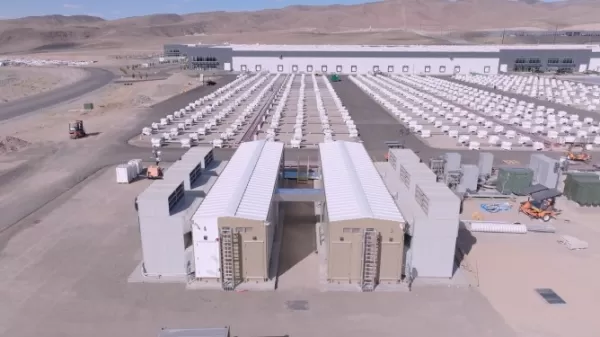
Across the United States, frustration is mounting over the proliferation of data centers driven by the AI boom. Public outcry has grown so intense that it's influencing legislative agendas, with some states and communities considering temporary bans on new data center construction. Earlier this month, New York joined this movement with a bold proposal to halt local cloud infrastructure expansion.
A newly introduced bill in New York State would impose a three-year moratorium on new data center construction permits, allowing regulators time to study the industry's environmental and economic effects on local communities. The bill's sponsors, State Senator Liz Krueger and Assemblymember Anna Kelles, have described it as the most comprehensive legislation of its kind in the nation.
While no statewide bans have been enacted yet, local restrictions are spreading rapidly. Weeks before Krueger and Kelles introduced their bill, the New Orleans City Council approved a one-year pause on new data center projects. In early January, Madison, Wisconsin implemented similar restrictions following protests against regional tech developments.
Comparable measures have been adopted in numerous communities across construction hotspots like Georgia and Michigan, as well as in various other regions nationwide.
Although environmental advocates have long criticized data centers, recent concerns have emerged from prominent lawmakers capitalizing on broader public dissatisfaction with the tech industry. In conservative Florida, Governor Ron DeSantis recently proposed an AI "bill of rights" that would grant local communities authority to restrict new data center construction.
In liberal Vermont, Senator Bernie Sanders has advocated for a nationwide moratorium. Meanwhile in politically divided Arizona, Governor Katie Hobbs has expressed support for revoking the industry's tax incentives. The issue has even sparked political conflicts, with Mississippi's governor criticizing Sanders' moratorium proposal online.
This political opposition emerges as tech companies substantially increase their infrastructure investments. The four largest spenders—Amazon, Google, Meta, and Microsoft—plan to allocate an astonishing $650 billion in capital expenditures over the coming year, primarily for data center development. Even greater investments are anticipated in subsequent years as these companies compete to secure computational capacity.
Techcrunch eventSave up to $300 or 30% to TechCrunch Founder Summit
1,000+ founders and investors come together at TechCrunch Founder Summit 2026 for a full day focused on growth, execution, and real-world scaling. Learn from founders and investors who have shaped the industry. Connect with peers navigating similar growth stages. Walk away with tactics you can apply immediately.
Offer ends March 13.
Save up to $300 or 30% to TechCrunch Founder Summit
1,000+ founders and investors come together at TechCrunch Founder Summit 2026 for a full day focused on growth, execution, and real-world scaling. Learn from founders and investors who have shaped the industry. Connect with peers navigating similar growth stages. Walk away with tactics you can apply immediately
Offer ends March 13.
Boston, MA|June 9, 2026REGISTER NOWRecent polling indicates that the rapid pace and scale of these projects has diminished their popularity. An Echelon Insights survey found 46% of respondents would oppose data center construction in their communities, compared to 35% in support. A separate Politico poll revealed that while many voters express concern about these facilities, substantial numbers remain undecided—leaving public opinion potentially malleable in either direction.
The industry is already investing significantly to improve its standing, particularly in crucial regions. In January, the Financial Times reported that major data center operators were preparing a "lobbying blitz" with plans to increase spending on targeted advertising and community engagement where they build.
Tech companies are also making substantive concessions, such as the proposed Rate Payer Protection Pledge that would make them responsible for powering new AI data centers. However, it remains uncertain whether these measures will sufficiently address public concerns.
Dan Diorio of the Data Center Coalition argued in a TechCrunch interview that data centers should appeal to smaller communities by generating revenue without straining limited resources. If incentives disappear and companies choose not to build in these areas, the potential revenue vanishes as well. "This is where statewide policy considerations become crucial," he said. "Will you restrict communities that could significantly benefit from these businesses?"
The rationale for pressing pause
Generally, data center moratoriums provide communities with breathing room while policymakers assess the potential costs and benefits of hosting such facilities. Construction rates in some states have accelerated so dramatically that communities remain uncertain about the industry's long-term impacts.
Justin Flagg, communications and environmental policy director for Senator Krueger's office, told TechCrunch that the legislation was partially motivated by what he described as New York's energy affordability crisis, which has concerned both ratepayers and politicians.
Thirty state lawmakers recently urged Governor Kathy Hochul to declare an "energy state of emergency" in response to rate increases. While multiple factors contribute to rising energy prices, there's general agreement that data center expansion exacerbates rather than alleviates the problem.
"There's widespread dissatisfaction with energy prices," Flagg noted. "We consistently hear from constituents facing increasing electric and gas rates." He added that local opposition also stems from environmental concerns—specifically "water impacts, noise pollution, and effects on local infrastructure."
Addressing grid reliability concerns, major tech companies—including Microsoft, Google, Meta, and OpenAI—have committed to covering the costs of their electrical grid additions in host communities, often installing behind-the-meter power sources alongside new data centers.
The Washington Post recently reported that Silicon Valley is increasingly developing its own private power supply—a sort of "shadow grid"—to operate energy-intensive facilities supporting the AI industry. This strategy involves establishing massive private power sources rather than depending on public grids.
One example comes from xAI, Elon Musk's AI startup, which constructed methane gas turbines at its massive "Colossus" data center in Memphis, Tennessee. These turbines have been accused of polluting the local community.
The company's efforts have encountered significant challenges. xAI reportedly informed local officials that legal loopholes exempted its turbines from air-quality permits. In January, the Environmental Protection Agency ruled that Musk's company required these permits, rendering their previous operations illegal. Environmental activists, protesting the facility's emission of "smog-forming pollution, soot, and hazardous chemicals," announced plans this month to sue the company. Musk's facility has since permitted its turbines.
As the xAI case demonstrates, while the "shadow grid" approach might address public grid overload, it risks creating new problems—with both environmental advocates and local communities expressing concerns about pollution from these facilities.
At the federal level, the Trump administration—which prioritizes AI development—has also sought to portray the industry as responsible community stewards. Administration officials have discussed hypothetical policies requiring AI companies to internalize costs associated with their grid additions, though details remain vague.
The tax incentive debate
For years, communities have encouraged data center development through tax incentives. Last summer, a CNBC analysis found that 42 U.S. states either impose no sales tax or provide full or partial sales tax exemptions to tech companies. Among these, approximately 16 states disclosed tax break amounts awarded to companies, totaling roughly $6 billion in forfeited revenue over five years.
Now, however, more states are reconsidering these incentives. In Georgia, several recently introduced bills would curtail industry benefits. State Senator Matt Brass, who proposed eliminating the server sales tax exemption, told TechCrunch he believes tech companies don't need additional financial support, and that ending the benefit won't deter them from operating in the state. "Georgia's property taxes are low, property values are reasonable, and our overall tax burden is light," Brass explained. "Our favorable business climate should be the primary attraction."
Brass, who chairs the state's rules committee, anticipates substantial support for his policy. Similar legislation passed Georgia's legislature in 2024 but was vetoed by the governor. Brass estimates that eliminating the exemption could generate hundreds of millions of dollars for the state.
A comparable policy debate is unfolding in Ohio, where Democratic lawmakers recently introduced legislation to eliminate the state's sales tax exemption. A similar proposal last year was defeated by Governor Mike DeWine, mirroring Georgia's outcome.
"The most unreasonable tax break currently available is for data centers," stated supporting lawmaker State Senator Kent Smith. "This exemption should end to benefit everyone paying electric bills."
Nevertheless, many lawmakers continue supporting server sales tax exemptions. In Colorado, State Representative Alex Valdez recently proposed legislation that would preserve data centers' tax loophole for the next 20 years. Valdez told TechCrunch that the exemption serves as an incentive to attract tech companies, which eventually become passive revenue sources that benefit their host communities.
Related article
 Sam Altman Sparks Debate Over AI's Deceleration
Listen onApple PodcastsListen onSpotifyOpenAI CEO Sam Altman recently suggested that it may be time to “pace the rate of AI development” to allow society to “harden around some of these new capability levels.”On the latest episode of TechCrunch’s Equ
OpenAI fights Apple trade secret lawsuit
OpenAI rebutted Apple’s trade secret allegations on Tuesday, arguing the lawsuit is unfounded.“We take these claims seriously but see no evidence supporting them,” OpenAI stated, as reported by Bloomberg’s Ed Ludlow on X. “We support fair competition
OpenAI robotics head Caitlin Kalinowski resigns over Pentagon partnership
OpenAI robotics leader Caitlin Kalinowski has stepped down following the company’s controversial partnership with the Department of Defense.“This wasn’t an easy call,” Kalinowski explained in a social media statement. “While AI plays a vital role in
Related Special Topic Recommendations
Data Analysis
Sam Altman Sparks Debate Over AI's Deceleration
Listen onApple PodcastsListen onSpotifyOpenAI CEO Sam Altman recently suggested that it may be time to “pace the rate of AI development” to allow society to “harden around some of these new capability levels.”On the latest episode of TechCrunch’s Equ
OpenAI fights Apple trade secret lawsuit
OpenAI rebutted Apple’s trade secret allegations on Tuesday, arguing the lawsuit is unfounded.“We take these claims seriously but see no evidence supporting them,” OpenAI stated, as reported by Bloomberg’s Ed Ludlow on X. “We support fair competition
OpenAI robotics head Caitlin Kalinowski resigns over Pentagon partnership
OpenAI robotics leader Caitlin Kalinowski has stepped down following the company’s controversial partnership with the Department of Defense.“This wasn’t an easy call,” Kalinowski explained in a social media statement. “While AI plays a vital role in
Related Special Topic Recommendations
Data Analysis
 Best AI Anomaly Detection Tools for KPI Monitoring across SaaS and Ecommerce Teams
2026 Latest Best Top-rated AI Anomaly Detection Tools for KPI Monitoring in SaaS and Ecommerce teams! XIX.AI has curated a powerful, game-changing collection based on rigorous real-world tests and weekly updated rankings. You’ll find detailed free vs paid comparison insights to help you identify the must-try solution that boosts productivity and unlocks your AI edge. Explore now!
 10 tools
 xix.ai
writing
Best AI Outline Generators for Long-Form SEO Articles
xix.ai
writing
Best AI Outline Generators for Long-Form SEO Articles
2026 Latest Best Top-Rated AI Outline Generators for Long-Form SEO Articles, meticulously curated by XIX.AI. These powerful tools offer game-changing assistance in creating high-quality content quickly, boosting writing efficiency significantly. Get a free vs paid comparison along with real-world tests and detailed rankings to help you find the must-try option that suits your needs. Explore now to unlock your AI edge.
8 tools
xix.ai
Education and Learning
AI Study Tools for Homework and Exam Prep
2026 Latest Best AI Study Tools for Homework and Exam Prep! XIX.AI curates a top-rated list of powerful, game-changing tools that help students boost productivity, streamline homework completion, and ace exams through real-world tests. Get a free vs paid comparison, detailed rankings, and must-try options to unlock your AI edge. Explore now!
10 tools
xix.ai
Music composition
AI Vocal Demo Tools for Songwriters, Hooks, Toplines, and Multilingual Draft Sessions
2026 Latest Best AI Vocal Demo Tools for Songwriters, Hook Creators, and Multi-Language Content Teams! XIX.AI has curated a top-rated list of powerful game-changing tools that go through rigorous real-world tests. You’ll find detailed free vs paid comparison data, comprehensive rankings, and must-try options to help you boost writing efficiency and unlock your creative potential. Explore now to discover your perfect tool for all your content needs!
9 tools
xix.ai
Business
Best AI Competitive Research Tools for Small Businesses
2026 Latest Best Top-rated AI Competitive Research Tools for Small Businesses! XIX.AI has curated a highly powerful game-changing collection, updated weekly with rigorous real-world tests and detailed rankings. You can find a comprehensive free vs paid comparison to help you identify the must-try tools that boost your productivity and give you a competitive edge. Explore now to discover your perfect tool!
9 tools
xix.ai
Image editing
Photoshop AI Retouch Tools for Ecommerce Apparel, Skin Cleanup, and Color Consistency
2026 Latest Best Photoshop AI retouch tools for ecommerce apparel, skin cleanup, and color consistency! This top-rated curated list features powerful game-changing solutions that help you boost writing efficiency, streamline content creation, and achieve perfect visual results effortlessly. Each tool has undergone real-world tests through weekly updated rankings, complete with free vs paid comparison details. Backed by XIX.AI, it’s the must-try guide for anyone aiming to unlock your AI edge. Explore now!
10 tools
xix.ai

 Comments (1)
0/500
Comments (1)
0/500
![WalterWalker]()
AIインフラの拡大に反対する声が高まっているんですね。データセンターの建設ラッシュで地域の電力網に負荷がかかっているという話は聞いたことがあります。確かにAIの進歩はすごいけど、持続可能性や住民の生活への影響もちゃんと考えないとね。短期的な利益より長期的な計画が重要だと思います。🏭⚡
Across the United States, frustration is mounting over the proliferation of data centers driven by the AI boom. Public outcry has grown so intense that it's influencing legislative agendas, with some states and communities considering temporary bans on new data center construction. Earlier this month, New York joined this movement with a bold proposal to halt local cloud infrastructure expansion.
A newly introduced bill in New York State would impose a three-year moratorium on new data center construction permits, allowing regulators time to study the industry's environmental and economic effects on local communities. The bill's sponsors, State Senator Liz Krueger and Assemblymember Anna Kelles, have described it as the most comprehensive legislation of its kind in the nation.
While no statewide bans have been enacted yet, local restrictions are spreading rapidly. Weeks before Krueger and Kelles introduced their bill, the New Orleans City Council approved a one-year pause on new data center projects. In early January, Madison, Wisconsin implemented similar restrictions following protests against regional tech developments.
Comparable measures have been adopted in numerous communities across construction hotspots like Georgia and Michigan, as well as in various other regions nationwide.
Although environmental advocates have long criticized data centers, recent concerns have emerged from prominent lawmakers capitalizing on broader public dissatisfaction with the tech industry. In conservative Florida, Governor Ron DeSantis recently proposed an AI "bill of rights" that would grant local communities authority to restrict new data center construction.
In liberal Vermont, Senator Bernie Sanders has advocated for a nationwide moratorium. Meanwhile in politically divided Arizona, Governor Katie Hobbs has expressed support for revoking the industry's tax incentives. The issue has even sparked political conflicts, with Mississippi's governor criticizing Sanders' moratorium proposal online.
This political opposition emerges as tech companies substantially increase their infrastructure investments. The four largest spenders—Amazon, Google, Meta, and Microsoft—plan to allocate an astonishing $650 billion in capital expenditures over the coming year, primarily for data center development. Even greater investments are anticipated in subsequent years as these companies compete to secure computational capacity.
Techcrunch eventSave up to $300 or 30% to TechCrunch Founder Summit
1,000+ founders and investors come together at TechCrunch Founder Summit 2026 for a full day focused on growth, execution, and real-world scaling. Learn from founders and investors who have shaped the industry. Connect with peers navigating similar growth stages. Walk away with tactics you can apply immediately.
Offer ends March 13.
Save up to $300 or 30% to TechCrunch Founder Summit
1,000+ founders and investors come together at TechCrunch Founder Summit 2026 for a full day focused on growth, execution, and real-world scaling. Learn from founders and investors who have shaped the industry. Connect with peers navigating similar growth stages. Walk away with tactics you can apply immediately
Offer ends March 13.
Boston, MA|June 9, 2026REGISTER NOWRecent polling indicates that the rapid pace and scale of these projects has diminished their popularity. An Echelon Insights survey found 46% of respondents would oppose data center construction in their communities, compared to 35% in support. A separate Politico poll revealed that while many voters express concern about these facilities, substantial numbers remain undecided—leaving public opinion potentially malleable in either direction.
The industry is already investing significantly to improve its standing, particularly in crucial regions. In January, the Financial Times reported that major data center operators were preparing a "lobbying blitz" with plans to increase spending on targeted advertising and community engagement where they build.
Tech companies are also making substantive concessions, such as the proposed Rate Payer Protection Pledge that would make them responsible for powering new AI data centers. However, it remains uncertain whether these measures will sufficiently address public concerns.
Dan Diorio of the Data Center Coalition argued in a TechCrunch interview that data centers should appeal to smaller communities by generating revenue without straining limited resources. If incentives disappear and companies choose not to build in these areas, the potential revenue vanishes as well. "This is where statewide policy considerations become crucial," he said. "Will you restrict communities that could significantly benefit from these businesses?"
The rationale for pressing pause
Generally, data center moratoriums provide communities with breathing room while policymakers assess the potential costs and benefits of hosting such facilities. Construction rates in some states have accelerated so dramatically that communities remain uncertain about the industry's long-term impacts.
Justin Flagg, communications and environmental policy director for Senator Krueger's office, told TechCrunch that the legislation was partially motivated by what he described as New York's energy affordability crisis, which has concerned both ratepayers and politicians.
Thirty state lawmakers recently urged Governor Kathy Hochul to declare an "energy state of emergency" in response to rate increases. While multiple factors contribute to rising energy prices, there's general agreement that data center expansion exacerbates rather than alleviates the problem.
"There's widespread dissatisfaction with energy prices," Flagg noted. "We consistently hear from constituents facing increasing electric and gas rates." He added that local opposition also stems from environmental concerns—specifically "water impacts, noise pollution, and effects on local infrastructure."
Addressing grid reliability concerns, major tech companies—including Microsoft, Google, Meta, and OpenAI—have committed to covering the costs of their electrical grid additions in host communities, often installing behind-the-meter power sources alongside new data centers.
The Washington Post recently reported that Silicon Valley is increasingly developing its own private power supply—a sort of "shadow grid"—to operate energy-intensive facilities supporting the AI industry. This strategy involves establishing massive private power sources rather than depending on public grids.
One example comes from xAI, Elon Musk's AI startup, which constructed methane gas turbines at its massive "Colossus" data center in Memphis, Tennessee. These turbines have been accused of polluting the local community.
The company's efforts have encountered significant challenges. xAI reportedly informed local officials that legal loopholes exempted its turbines from air-quality permits. In January, the Environmental Protection Agency ruled that Musk's company required these permits, rendering their previous operations illegal. Environmental activists, protesting the facility's emission of "smog-forming pollution, soot, and hazardous chemicals," announced plans this month to sue the company. Musk's facility has since permitted its turbines.
As the xAI case demonstrates, while the "shadow grid" approach might address public grid overload, it risks creating new problems—with both environmental advocates and local communities expressing concerns about pollution from these facilities.
At the federal level, the Trump administration—which prioritizes AI development—has also sought to portray the industry as responsible community stewards. Administration officials have discussed hypothetical policies requiring AI companies to internalize costs associated with their grid additions, though details remain vague.
The tax incentive debate
For years, communities have encouraged data center development through tax incentives. Last summer, a CNBC analysis found that 42 U.S. states either impose no sales tax or provide full or partial sales tax exemptions to tech companies. Among these, approximately 16 states disclosed tax break amounts awarded to companies, totaling roughly $6 billion in forfeited revenue over five years.
Now, however, more states are reconsidering these incentives. In Georgia, several recently introduced bills would curtail industry benefits. State Senator Matt Brass, who proposed eliminating the server sales tax exemption, told TechCrunch he believes tech companies don't need additional financial support, and that ending the benefit won't deter them from operating in the state. "Georgia's property taxes are low, property values are reasonable, and our overall tax burden is light," Brass explained. "Our favorable business climate should be the primary attraction."
Brass, who chairs the state's rules committee, anticipates substantial support for his policy. Similar legislation passed Georgia's legislature in 2024 but was vetoed by the governor. Brass estimates that eliminating the exemption could generate hundreds of millions of dollars for the state.
A comparable policy debate is unfolding in Ohio, where Democratic lawmakers recently introduced legislation to eliminate the state's sales tax exemption. A similar proposal last year was defeated by Governor Mike DeWine, mirroring Georgia's outcome.
"The most unreasonable tax break currently available is for data centers," stated supporting lawmaker State Senator Kent Smith. "This exemption should end to benefit everyone paying electric bills."
Nevertheless, many lawmakers continue supporting server sales tax exemptions. In Colorado, State Representative Alex Valdez recently proposed legislation that would preserve data centers' tax loophole for the next 20 years. Valdez told TechCrunch that the exemption serves as an incentive to attract tech companies, which eventually become passive revenue sources that benefit their host communities.








 Sam Altman Sparks Debate Over AI's Deceleration
Listen onApple PodcastsListen onSpotifyOpenAI CEO Sam Altman recently suggested that it may be time to “pace the rate of AI development” to allow society to “harden around some of these new capability levels.”On the latest episode of TechCrunch’s Equ
Sam Altman Sparks Debate Over AI's Deceleration
Listen onApple PodcastsListen onSpotifyOpenAI CEO Sam Altman recently suggested that it may be time to “pace the rate of AI development” to allow society to “harden around some of these new capability levels.”On the latest episode of TechCrunch’s Equ
 OpenAI fights Apple trade secret lawsuit
OpenAI rebutted Apple’s trade secret allegations on Tuesday, arguing the lawsuit is unfounded.“We take these claims seriously but see no evidence supporting them,” OpenAI stated, as reported by Bloomberg’s Ed Ludlow on X. “We support fair competition
OpenAI fights Apple trade secret lawsuit
OpenAI rebutted Apple’s trade secret allegations on Tuesday, arguing the lawsuit is unfounded.“We take these claims seriously but see no evidence supporting them,” OpenAI stated, as reported by Bloomberg’s Ed Ludlow on X. “We support fair competition
 OpenAI robotics head Caitlin Kalinowski resigns over Pentagon partnership
OpenAI robotics leader Caitlin Kalinowski has stepped down following the company’s controversial partnership with the Department of Defense.“This wasn’t an easy call,” Kalinowski explained in a social media statement. “While AI plays a vital role in
OpenAI robotics head Caitlin Kalinowski resigns over Pentagon partnership
OpenAI robotics leader Caitlin Kalinowski has stepped down following the company’s controversial partnership with the Department of Defense.“This wasn’t an easy call,” Kalinowski explained in a social media statement. “While AI plays a vital role in

2026 Latest Best Top-rated AI Anomaly Detection Tools for KPI Monitoring in SaaS and Ecommerce teams! XIX.AI has curated a powerful, game-changing collection based on rigorous real-world tests and weekly updated rankings. You’ll find detailed free vs paid comparison insights to help you identify the must-try solution that boosts productivity and unlocks your AI edge. Explore now!
10 tools
xix.ai

2026 Latest Best Top-Rated AI Outline Generators for Long-Form SEO Articles, meticulously curated by XIX.AI. These powerful tools offer game-changing assistance in creating high-quality content quickly, boosting writing efficiency significantly. Get a free vs paid comparison along with real-world tests and detailed rankings to help you find the must-try option that suits your needs. Explore now to unlock your AI edge.
8 tools
xix.ai

2026 Latest Best AI Study Tools for Homework and Exam Prep! XIX.AI curates a top-rated list of powerful, game-changing tools that help students boost productivity, streamline homework completion, and ace exams through real-world tests. Get a free vs paid comparison, detailed rankings, and must-try options to unlock your AI edge. Explore now!
10 tools
xix.ai

2026 Latest Best AI Vocal Demo Tools for Songwriters, Hook Creators, and Multi-Language Content Teams! XIX.AI has curated a top-rated list of powerful game-changing tools that go through rigorous real-world tests. You’ll find detailed free vs paid comparison data, comprehensive rankings, and must-try options to help you boost writing efficiency and unlock your creative potential. Explore now to discover your perfect tool for all your content needs!
9 tools
xix.ai

2026 Latest Best Top-rated AI Competitive Research Tools for Small Businesses! XIX.AI has curated a highly powerful game-changing collection, updated weekly with rigorous real-world tests and detailed rankings. You can find a comprehensive free vs paid comparison to help you identify the must-try tools that boost your productivity and give you a competitive edge. Explore now to discover your perfect tool!
9 tools
xix.ai

2026 Latest Best Photoshop AI retouch tools for ecommerce apparel, skin cleanup, and color consistency! This top-rated curated list features powerful game-changing solutions that help you boost writing efficiency, streamline content creation, and achieve perfect visual results effortlessly. Each tool has undergone real-world tests through weekly updated rankings, complete with free vs paid comparison details. Backed by XIX.AI, it’s the must-try guide for anyone aiming to unlock your AI edge. Explore now!
10 tools
xix.ai

AIインフラの拡大に反対する声が高まっているんですね。データセンターの建設ラッシュで地域の電力網に負荷がかかっているという話は聞いたことがあります。確かにAIの進歩はすごいけど、持続可能性や住民の生活への影響もちゃんと考えないとね。短期的な利益より長期的な計画が重要だと思います。🏭⚡












