


 Home
Prentis, New AI Lab Co-Founded by Reid Hoffman and Marc Pincus, in Talks to Raise $100M
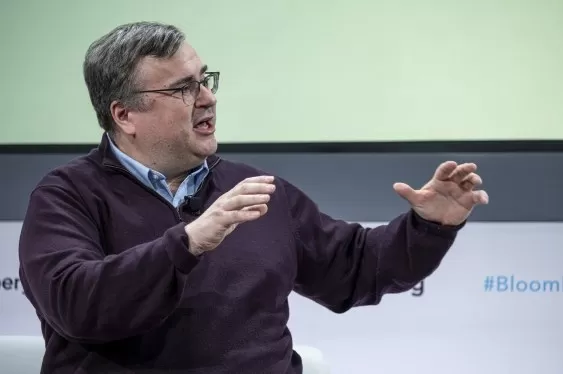
Prentis, an emerging AI research lab specializing in computer-use models, is co-founded by serial entrepreneur Ritankar Das alongside tech industry leaders Reid Hoffman and Marc Pincus. According to two individuals familiar with the matter, the company is currently negotiating to secure $100 million in funding at a valuation of $1 billion.
Since its launch in April, Prentis has been training models to master how office workers navigate routine workflows across various documents and systems. The ultimate objective is to create AI agents capable of controlling computers to automate these tasks.
Prentis aims to develop agents specifically tailored to customer needs, such as processing insurance claims and automating customs duty refund exceptions, thereby eliminating the need for humans to manually track down paperwork.
According to two sources familiar with the discussions, the startup has already secured contracts totaling up to $50 million with several clients, including a healthcare management service organization, a manufacturer, and goods and clothing producers. These figures align with investor materials obtained by TechCrunch, which project an estimated annualized run rate of $75 million by the third quarter of this year. (Prentis’s pitch deck clarifies that these figures represent estimated annualized value based on a contracted fee equal to 20% of realized savings, rather than recognized revenue, and are “performance-dependent and subject to final execution.”)
According to its own claims, Prentis states that its Hive-32B model outperforms competitors, including OpenAI’s GPT-5.4 and Anthropic’s Claude Opus 4.6, on two computer-use benchmarks: WindowsAgentArena, which measures end-to-end task completion on real Windows applications; and ScreenSpot-v2, which tests a model’s ability to locate the correct on-screen control.
In its pitch deck, the company argues that its competitive advantage stems from running a much smaller, more cost-effective model. It claims to achieve roughly 10 times lower cost per task compared to frontier APIs, making it more economical for deployment across everyday workflows. TechCrunch has not independently verified the company’s benchmark results.
The startup is betting that automating routine office tasks will soon surpass coding as AI’s primary use case, though it operates in a crowded market. Anthropic, OpenAI, and Mira Murati’s Thinking Machines are also developing AI agents for computer use, according to one source. Additionally, Anthropic has been directly acquiring talent in this sector—it acquired the Seattle-based computer-use startup Vercept earlier this year, integrating its founders while shutting down its product.
Prentis did not respond to TechCrunch’s request for comment.
Ritankar Das, CEO of Prentis, is also the founder of Titan, a holding company dedicated to building and operating AI firms. Das, now 31, was UC Berkeley’s youngest University Medalist in over a century, graduating at age 18 with double majors in bioengineering and chemical biology before earning a master’s degree in biomedical engineering from Oxford.
He established Titan in 2014 after leaving an AI PhD program at Cambridge, where he had been a Gates Cambridge Scholar. Das has described Titan as an intentional return to a traditional holding-company model similar to Berkshire Hathaway, funded by its own exits rather than outside limited partners.
Other ventures launched and operated by Titan include Tala Health, an AI-powered virtual care provider that raised a $100 million seed round last year, and Forta Health, an autism care startup that secured $55 million led by Insight Partners in 2024. Additionally, Dascena, a disease prediction company founded by Titan, was acquired by CirrusDx in 2022.
Prentis serves as a side project for its two other co-founders. Hoffman, co-founder of LinkedIn and partner at Greylock, announced last month that he is stepping down from Microsoft’s board after nearly a decade to enter “founder mode” at Manas AI, an AI drug-discovery startup he also backs. He was an early investor in OpenAI and co-founded Inflection AI with Mustafa Suleyman before Microsoft absorbed most of that team in 2024.
Pincus, the founder of Zynga, currently runs the investment firm Reinvent Capital with Hoffman serving as a senior adviser. He also published a memoir, “Life at the Speed of Play,” last month.
According to its website, Prentis has already hired more than 25 employees, including researchers who previously worked at OpenAI, Google DeepMind, Meta, Tencent, and Alibaba.
Related article
 French Startup ZML Unveils Free Tool to Accelerate AI Inference Across Multiple Chips
Nvidia’s era of unchecked market supremacy may be winding down, yet competitors and alternatives are emerging from every angle.ZML, a prominent French AI startup backed by Turing Award laureate Yann LeCun, has unveiled inference-performance software
Anthropic Unveils Opus 4.6, a Controversial Content Generator
Anthropic’s universal usage standards for Claude prohibit the model from generating sexually explicit content, including depicting or requesting sexual intercourse or sex acts, generating content related to sexual fetishes or fantasies, or engaging i
Marc Benioff-backed startup aims to solve AI deployment challenges
Big enterprises face such steep challenges in deploying reliable AI tools that entire teams of forward-deployed engineers—specialists embedded within client companies to operationalize AI systems—are emerging to bridge the gap.“Paradoxically, AI driv
Related Special Topic Recommendations
Design & Art
 Top AI Illustration Tools: Create Editorial Scenes and Cover Art Faster
2026 Latest Top-rated AI Illustration Tools: Our curated list features the best powerfully designed tools for creating stunning editorial scenes and eye-catching cover art quickly. Each option has gone through rigorous real-world tests, offering a free vs paid comparison to help you find the perfect match for your workflow. Try these must-try solutions today to unlock your AI edge and boost your creative productivity. Explore now at XIX.AI.
 10 tools
 xix.ai
Education and Learning
Top AI Tutors for Exam Prep: Practice Math, Science, and English
2026 Latest Top-Rated Best AI Tutors for Exam Prep are here on XIX.AI! Our curated list features powerful game-changing tools that offer free vs paid comparison, real-world tests, and weekly updated rankings. They help boost your writing efficiency, simplify complex topic learning, and unlock your academic potential. Explore now to Discover your perfect exam prep tool and Start creating today to Unlock your AI edge!
10 tools
xix.ai
Finance
AI Budget Planning Tools for Personal Money Management
2026 Latest Best Top-Rated AI Budget Planning Tools for Personal Money Management are here on XIX.AI! This curated collection features powerful, game-changing solutions that help you conduct real-world tests, understand spending habits, and create personalized plans to boost productivity. Enjoy a free vs paid comparison along with detailed rankings. Must-try tools designed to simplify money management and unlock your AI edge. Explore now!
11 tools
xix.ai
Health & Wellness
AI Sleep Tracking Assistants: Improve Recovery with Better Bedtime Habits
2026 Latest Best Top-Rated AI Sleep Tracking Assistants curated for ultimate recovery. This fully updated weekly guide features powerful tools that deliver real-world tests, free vs paid comparison, and detailed rankings to help you find the must-try solution that boosts sleep quality and supports better bedtime habits. Explore now at XIX.AI to Unlock your AI edge.
10 tools
xix.ai
Data Analysis
AI SQL Copilots for Product and Revenue Analytics
2026 Latest Best Top-Rated AI SQL Copilots for Product and Revenue Analytics! XIX.AI has curated a powerful, game-changing collection of must-try tools that undergo real-world tests through weekly updated rankings. These tools help users boost productivity significantly by accelerating data analysis, streamlining complex queries, and generating accurate insights to drive smarter business decisions. Explore now to Discover your perfect tool for unlocking your AI edge!
14 tools
xix.ai
Education and Learning
Best AI Homework Helpers That Teach: Learn Concepts, Not Just Answers
2026 Latest Best Top-Rated AI Homework Helpers That Teach Core Concepts Not Just Answers Powerful Tools for Students Must-Try Curated List Weekly Updated Free vs Paid Comparison Real-World Tests Accurate Rankings to Help You Unlock Your Full Learning Potential Explore now to Discover your perfect tool for smarter studying.
10 tools
xix.ai

 Comments (1)
0/500
![SamuelRamirez]()
Reid Hoffman and Marc Pincus are back in the game! Prentis focusing on computer-use models sounds intriguing, but $100M is a hefty ask in this funding winter. I’m curious if their approach to autonomous agents will actually solve the latency issues we’ve seen with other LLM-based tools, or if it’s just another buzzword chase. The talent pool they’re pulling from is impressive, though. Let’s see if they can deliver on the hype. 🤔🚀
Prentis, an emerging AI research lab specializing in computer-use models, is co-founded by serial entrepreneur Ritankar Das alongside tech industry leaders Reid Hoffman and Marc Pincus. According to two individuals familiar with the matter, the company is currently negotiating to secure $100 million in funding at a valuation of $1 billion.
Since its launch in April, Prentis has been training models to master how office workers navigate routine workflows across various documents and systems. The ultimate objective is to create AI agents capable of controlling computers to automate these tasks.
Prentis aims to develop agents specifically tailored to customer needs, such as processing insurance claims and automating customs duty refund exceptions, thereby eliminating the need for humans to manually track down paperwork.
According to two sources familiar with the discussions, the startup has already secured contracts totaling up to $50 million with several clients, including a healthcare management service organization, a manufacturer, and goods and clothing producers. These figures align with investor materials obtained by TechCrunch, which project an estimated annualized run rate of $75 million by the third quarter of this year. (Prentis’s pitch deck clarifies that these figures represent estimated annualized value based on a contracted fee equal to 20% of realized savings, rather than recognized revenue, and are “performance-dependent and subject to final execution.”)
According to its own claims, Prentis states that its Hive-32B model outperforms competitors, including OpenAI’s GPT-5.4 and Anthropic’s Claude Opus 4.6, on two computer-use benchmarks: WindowsAgentArena, which measures end-to-end task completion on real Windows applications; and ScreenSpot-v2, which tests a model’s ability to locate the correct on-screen control.
In its pitch deck, the company argues that its competitive advantage stems from running a much smaller, more cost-effective model. It claims to achieve roughly 10 times lower cost per task compared to frontier APIs, making it more economical for deployment across everyday workflows. TechCrunch has not independently verified the company’s benchmark results.
The startup is betting that automating routine office tasks will soon surpass coding as AI’s primary use case, though it operates in a crowded market. Anthropic, OpenAI, and Mira Murati’s Thinking Machines are also developing AI agents for computer use, according to one source. Additionally, Anthropic has been directly acquiring talent in this sector—it acquired the Seattle-based computer-use startup Vercept earlier this year, integrating its founders while shutting down its product.
Prentis did not respond to TechCrunch’s request for comment.
Ritankar Das, CEO of Prentis, is also the founder of Titan, a holding company dedicated to building and operating AI firms. Das, now 31, was UC Berkeley’s youngest University Medalist in over a century, graduating at age 18 with double majors in bioengineering and chemical biology before earning a master’s degree in biomedical engineering from Oxford.
He established Titan in 2014 after leaving an AI PhD program at Cambridge, where he had been a Gates Cambridge Scholar. Das has described Titan as an intentional return to a traditional holding-company model similar to Berkshire Hathaway, funded by its own exits rather than outside limited partners.
Other ventures launched and operated by Titan include Tala Health, an AI-powered virtual care provider that raised a $100 million seed round last year, and Forta Health, an autism care startup that secured $55 million led by Insight Partners in 2024. Additionally, Dascena, a disease prediction company founded by Titan, was acquired by CirrusDx in 2022.
Prentis serves as a side project for its two other co-founders. Hoffman, co-founder of LinkedIn and partner at Greylock, announced last month that he is stepping down from Microsoft’s board after nearly a decade to enter “founder mode” at Manas AI, an AI drug-discovery startup he also backs. He was an early investor in OpenAI and co-founded Inflection AI with Mustafa Suleyman before Microsoft absorbed most of that team in 2024.
Pincus, the founder of Zynga, currently runs the investment firm Reinvent Capital with Hoffman serving as a senior adviser. He also published a memoir, “Life at the Speed of Play,” last month.
According to its website, Prentis has already hired more than 25 employees, including researchers who previously worked at OpenAI, Google DeepMind, Meta, Tencent, and Alibaba.








 French Startup ZML Unveils Free Tool to Accelerate AI Inference Across Multiple Chips
Nvidia’s era of unchecked market supremacy may be winding down, yet competitors and alternatives are emerging from every angle.ZML, a prominent French AI startup backed by Turing Award laureate Yann LeCun, has unveiled inference-performance software
 Anthropic Unveils Opus 4.6, a Controversial Content Generator
Anthropic’s universal usage standards for Claude prohibit the model from generating sexually explicit content, including depicting or requesting sexual intercourse or sex acts, generating content related to sexual fetishes or fantasies, or engaging i
 Marc Benioff-backed startup aims to solve AI deployment challenges
Big enterprises face such steep challenges in deploying reliable AI tools that entire teams of forward-deployed engineers—specialists embedded within client companies to operationalize AI systems—are emerging to bridge the gap.“Paradoxically, AI driv

2026 Latest Top-rated AI Illustration Tools: Our curated list features the best powerfully designed tools for creating stunning editorial scenes and eye-catching cover art quickly. Each option has gone through rigorous real-world tests, offering a free vs paid comparison to help you find the perfect match for your workflow. Try these must-try solutions today to unlock your AI edge and boost your creative productivity. Explore now at XIX.AI.
10 tools
xix.ai

2026 Latest Top-Rated Best AI Tutors for Exam Prep are here on XIX.AI! Our curated list features powerful game-changing tools that offer free vs paid comparison, real-world tests, and weekly updated rankings. They help boost your writing efficiency, simplify complex topic learning, and unlock your academic potential. Explore now to Discover your perfect exam prep tool and Start creating today to Unlock your AI edge!
10 tools
xix.ai

2026 Latest Best Top-Rated AI Budget Planning Tools for Personal Money Management are here on XIX.AI! This curated collection features powerful, game-changing solutions that help you conduct real-world tests, understand spending habits, and create personalized plans to boost productivity. Enjoy a free vs paid comparison along with detailed rankings. Must-try tools designed to simplify money management and unlock your AI edge. Explore now!
11 tools
xix.ai

2026 Latest Best Top-Rated AI Sleep Tracking Assistants curated for ultimate recovery. This fully updated weekly guide features powerful tools that deliver real-world tests, free vs paid comparison, and detailed rankings to help you find the must-try solution that boosts sleep quality and supports better bedtime habits. Explore now at XIX.AI to Unlock your AI edge.
10 tools
xix.ai

2026 Latest Best Top-Rated AI SQL Copilots for Product and Revenue Analytics! XIX.AI has curated a powerful, game-changing collection of must-try tools that undergo real-world tests through weekly updated rankings. These tools help users boost productivity significantly by accelerating data analysis, streamlining complex queries, and generating accurate insights to drive smarter business decisions. Explore now to Discover your perfect tool for unlocking your AI edge!
14 tools
xix.ai

2026 Latest Best Top-Rated AI Homework Helpers That Teach Core Concepts Not Just Answers Powerful Tools for Students Must-Try Curated List Weekly Updated Free vs Paid Comparison Real-World Tests Accurate Rankings to Help You Unlock Your Full Learning Potential Explore now to Discover your perfect tool for smarter studying.
10 tools
xix.ai

Reid Hoffman and Marc Pincus are back in the game! Prentis focusing on computer-use models sounds intriguing, but $100M is a hefty ask in this funding winter. I’m curious if their approach to autonomous agents will actually solve the latency issues we’ve seen with other LLM-based tools, or if it’s just another buzzword chase. The talent pool they’re pulling from is impressive, though. Let’s see if they can deliver on the hype. 🤔🚀












