


 Home
French Startup ZML Unveils Free Tool to Accelerate AI Inference Across Multiple Chips
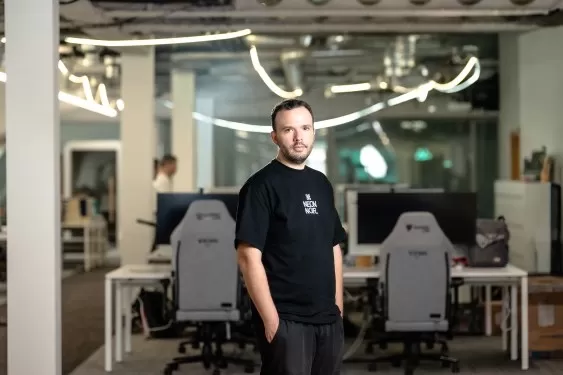
Nvidia’s era of unchecked market supremacy may be winding down, yet competitors and alternatives are emerging from every angle.
ZML, a prominent French AI startup backed by Turing Award laureate Yann LeCun, has unveiled inference-performance software enabling various open-source large language models to operate across diverse hardware, including Nvidia, AMD, Google TPUs, Apple Metal, and Intel Arc.
Through ZML/LLMD, its newly launched LLM inference server, the company aims to dismantle existing silos and maximize the speed of different chips for AI applications, often matching or exceeding current benchmarks, according to ZML founder Steeve Morin.
As AI integrates deeper into professional and daily routines, optimizing inference—processing user prompts—has become increasingly critical, yet it remains fragmented due to software and architectural barriers that frequently result in vendor lock-in, Morin noted.
While delivering peak performance across multiple chip types is a significant technical achievement, it also poses a potential market disruption amid growing concerns over rising AI costs.
ZML intends to offer enterprises and cloud providers the flexibility to utilize a hybrid mix of chips, potentially reducing costs and energy consumption. “Our goal is to empower users to build their own systems and achieve tangible efficiency gains, facilitating broader AI adoption,” Morin explained.
This software support could benefit emerging AI chipmakers, particularly those based in Europe, Morin pointed out, listing companies such as Axelera, Fractile, Kalray, OLIX, Q.ANT, SiPearl, SpiNNcloud, and VSORA. However, he emphasizes that ZML’s ability to collaborate on unprecedented innovations matters more than geographic origin.
Morin does not view Nvidia negatively, largely due to its established supply chain. He told TechCrunch that ZML maintains a strong relationship with the AI hardware giant, which is actively preparing for the growing demand for inference capabilities.
Inference has attracted massive investment, sparking what some call the “inference gold rush.” Consequently, ZML faces competition from players like Baseten, recently valued at $13 billion; Inferact, spun out from the creators of vLLM; and RadixArk, the commercial entity behind SGLang.
While vLLM and SGLang offer partial overlap with LLMD, Morin envisions ZML covering a wider scope. “We have reached a stage where we are co-designing silicon,” he stated. He also credited ZML’s lean team of 20 employees for the Paris-based startup’s rapid development pace, with more updates planned.
The small team is also well-capitalized. Leveraging his background as VP of engineering at Zenly, which Snapchat acquired for nine figures in 2017, Morin secured $20 million from investors including 20VC, >commit, AALVC, Drysdale Ventures, Kima Ventures, Kindred Capital, LocalGlobe, and Puzzle Ventures.
Unlike ZML’s initial open-source inference framework released in 2024 and updated in March, ZML/LLMD is not open source. However, it is launching as a free tool to gather usage data. “I prefer to measure impact and generate revenue where it matters most, avoiding unnecessary growth hindrances caused by premature monetization,” Morin said.
It remains unclear when ZML/LLMD might transition to a paid model or how widely it will be adopted. Nevertheless, the startup’s investor list signals strong interest from industry leaders, including Docker founder Solomon Hykes, Hugging Face’s Clément Delangue and Julien Chaumond, and LeCun, now at AMI Labs. This reinforces the argument that European AI startups can thrive locally. “I couldn’t have built ZML anywhere but in Paris,” Morin concluded.
Related article
 Anthropic Unveils Opus 4.6, a Controversial Content Generator
Anthropic’s universal usage standards for Claude prohibit the model from generating sexually explicit content, including depicting or requesting sexual intercourse or sex acts, generating content related to sexual fetishes or fantasies, or engaging i
Marc Benioff-backed startup aims to solve AI deployment challenges
Big enterprises face such steep challenges in deploying reliable AI tools that entire teams of forward-deployed engineers—specialists embedded within client companies to operationalize AI systems—are emerging to bridge the gap.“Paradoxically, AI driv
Robotics Startup Generalist Hits $3B Valuation, Sources Say
Robotics startup Generalist has reached a $3 billion valuation following a new funding round led by 8VC, according to two individuals familiar with the deal.Regulatory filings indicate the latest injection of capital amounts to nearly $200 million. T
Related Special Topic Recommendations
Design & Art
 Top AI Illustration Tools: Create Editorial Scenes and Cover Art Faster
2026 Latest Top-rated AI Illustration Tools: Our curated list features the best powerfully designed tools for creating stunning editorial scenes and eye-catching cover art quickly. Each option has gone through rigorous real-world tests, offering a free vs paid comparison to help you find the perfect match for your workflow. Try these must-try solutions today to unlock your AI edge and boost your creative productivity. Explore now at XIX.AI.
 10 tools
 xix.ai
Education and Learning
Top AI Tutors for Exam Prep: Practice Math, Science, and English
2026 Latest Top-Rated Best AI Tutors for Exam Prep are here on XIX.AI! Our curated list features powerful game-changing tools that offer free vs paid comparison, real-world tests, and weekly updated rankings. They help boost your writing efficiency, simplify complex topic learning, and unlock your academic potential. Explore now to Discover your perfect exam prep tool and Start creating today to Unlock your AI edge!
10 tools
xix.ai
Finance
AI Budget Planning Tools for Personal Money Management
2026 Latest Best Top-Rated AI Budget Planning Tools for Personal Money Management are here on XIX.AI! This curated collection features powerful, game-changing solutions that help you conduct real-world tests, understand spending habits, and create personalized plans to boost productivity. Enjoy a free vs paid comparison along with detailed rankings. Must-try tools designed to simplify money management and unlock your AI edge. Explore now!
11 tools
xix.ai
Health & Wellness
AI Sleep Tracking Assistants: Improve Recovery with Better Bedtime Habits
2026 Latest Best Top-Rated AI Sleep Tracking Assistants curated for ultimate recovery. This fully updated weekly guide features powerful tools that deliver real-world tests, free vs paid comparison, and detailed rankings to help you find the must-try solution that boosts sleep quality and supports better bedtime habits. Explore now at XIX.AI to Unlock your AI edge.
10 tools
xix.ai
Data Analysis
AI SQL Copilots for Product and Revenue Analytics
2026 Latest Best Top-Rated AI SQL Copilots for Product and Revenue Analytics! XIX.AI has curated a powerful, game-changing collection of must-try tools that undergo real-world tests through weekly updated rankings. These tools help users boost productivity significantly by accelerating data analysis, streamlining complex queries, and generating accurate insights to drive smarter business decisions. Explore now to Discover your perfect tool for unlocking your AI edge!
14 tools
xix.ai
Education and Learning
Best AI Homework Helpers That Teach: Learn Concepts, Not Just Answers
2026 Latest Best Top-Rated AI Homework Helpers That Teach Core Concepts Not Just Answers Powerful Tools for Students Must-Try Curated List Weekly Updated Free vs Paid Comparison Real-World Tests Accurate Rankings to Help You Unlock Your Full Learning Potential Explore now to Discover your perfect tool for smarter studying.
10 tools
xix.ai

 Comments (0)
0/500
Nvidia’s era of unchecked market supremacy may be winding down, yet competitors and alternatives are emerging from every angle.
ZML, a prominent French AI startup backed by Turing Award laureate Yann LeCun, has unveiled inference-performance software enabling various open-source large language models to operate across diverse hardware, including Nvidia, AMD, Google TPUs, Apple Metal, and Intel Arc.
Through ZML/LLMD, its newly launched LLM inference server, the company aims to dismantle existing silos and maximize the speed of different chips for AI applications, often matching or exceeding current benchmarks, according to ZML founder Steeve Morin.
As AI integrates deeper into professional and daily routines, optimizing inference—processing user prompts—has become increasingly critical, yet it remains fragmented due to software and architectural barriers that frequently result in vendor lock-in, Morin noted.
While delivering peak performance across multiple chip types is a significant technical achievement, it also poses a potential market disruption amid growing concerns over rising AI costs.
ZML intends to offer enterprises and cloud providers the flexibility to utilize a hybrid mix of chips, potentially reducing costs and energy consumption. “Our goal is to empower users to build their own systems and achieve tangible efficiency gains, facilitating broader AI adoption,” Morin explained.
This software support could benefit emerging AI chipmakers, particularly those based in Europe, Morin pointed out, listing companies such as Axelera, Fractile, Kalray, OLIX, Q.ANT, SiPearl, SpiNNcloud, and VSORA. However, he emphasizes that ZML’s ability to collaborate on unprecedented innovations matters more than geographic origin.
Morin does not view Nvidia negatively, largely due to its established supply chain. He told TechCrunch that ZML maintains a strong relationship with the AI hardware giant, which is actively preparing for the growing demand for inference capabilities.
Inference has attracted massive investment, sparking what some call the “inference gold rush.” Consequently, ZML faces competition from players like Baseten, recently valued at $13 billion; Inferact, spun out from the creators of vLLM; and RadixArk, the commercial entity behind SGLang.
While vLLM and SGLang offer partial overlap with LLMD, Morin envisions ZML covering a wider scope. “We have reached a stage where we are co-designing silicon,” he stated. He also credited ZML’s lean team of 20 employees for the Paris-based startup’s rapid development pace, with more updates planned.
The small team is also well-capitalized. Leveraging his background as VP of engineering at Zenly, which Snapchat acquired for nine figures in 2017, Morin secured $20 million from investors including 20VC, >commit, AALVC, Drysdale Ventures, Kima Ventures, Kindred Capital, LocalGlobe, and Puzzle Ventures.
Unlike ZML’s initial open-source inference framework released in 2024 and updated in March, ZML/LLMD is not open source. However, it is launching as a free tool to gather usage data. “I prefer to measure impact and generate revenue where it matters most, avoiding unnecessary growth hindrances caused by premature monetization,” Morin said.
It remains unclear when ZML/LLMD might transition to a paid model or how widely it will be adopted. Nevertheless, the startup’s investor list signals strong interest from industry leaders, including Docker founder Solomon Hykes, Hugging Face’s Clément Delangue and Julien Chaumond, and LeCun, now at AMI Labs. This reinforces the argument that European AI startups can thrive locally. “I couldn’t have built ZML anywhere but in Paris,” Morin concluded.








 Anthropic Unveils Opus 4.6, a Controversial Content Generator
Anthropic’s universal usage standards for Claude prohibit the model from generating sexually explicit content, including depicting or requesting sexual intercourse or sex acts, generating content related to sexual fetishes or fantasies, or engaging i
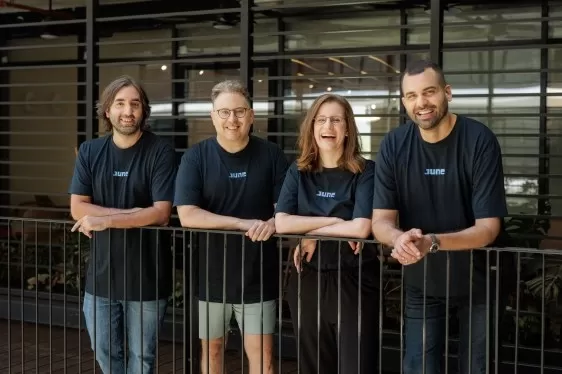 Marc Benioff-backed startup aims to solve AI deployment challenges
Big enterprises face such steep challenges in deploying reliable AI tools that entire teams of forward-deployed engineers—specialists embedded within client companies to operationalize AI systems—are emerging to bridge the gap.“Paradoxically, AI driv
 Robotics Startup Generalist Hits $3B Valuation, Sources Say
Robotics startup Generalist has reached a $3 billion valuation following a new funding round led by 8VC, according to two individuals familiar with the deal.Regulatory filings indicate the latest injection of capital amounts to nearly $200 million. T

2026 Latest Top-rated AI Illustration Tools: Our curated list features the best powerfully designed tools for creating stunning editorial scenes and eye-catching cover art quickly. Each option has gone through rigorous real-world tests, offering a free vs paid comparison to help you find the perfect match for your workflow. Try these must-try solutions today to unlock your AI edge and boost your creative productivity. Explore now at XIX.AI.
10 tools
xix.ai

2026 Latest Top-Rated Best AI Tutors for Exam Prep are here on XIX.AI! Our curated list features powerful game-changing tools that offer free vs paid comparison, real-world tests, and weekly updated rankings. They help boost your writing efficiency, simplify complex topic learning, and unlock your academic potential. Explore now to Discover your perfect exam prep tool and Start creating today to Unlock your AI edge!
10 tools
xix.ai

2026 Latest Best Top-Rated AI Budget Planning Tools for Personal Money Management are here on XIX.AI! This curated collection features powerful, game-changing solutions that help you conduct real-world tests, understand spending habits, and create personalized plans to boost productivity. Enjoy a free vs paid comparison along with detailed rankings. Must-try tools designed to simplify money management and unlock your AI edge. Explore now!
11 tools
xix.ai

2026 Latest Best Top-Rated AI Sleep Tracking Assistants curated for ultimate recovery. This fully updated weekly guide features powerful tools that deliver real-world tests, free vs paid comparison, and detailed rankings to help you find the must-try solution that boosts sleep quality and supports better bedtime habits. Explore now at XIX.AI to Unlock your AI edge.
10 tools
xix.ai

2026 Latest Best Top-Rated AI SQL Copilots for Product and Revenue Analytics! XIX.AI has curated a powerful, game-changing collection of must-try tools that undergo real-world tests through weekly updated rankings. These tools help users boost productivity significantly by accelerating data analysis, streamlining complex queries, and generating accurate insights to drive smarter business decisions. Explore now to Discover your perfect tool for unlocking your AI edge!
14 tools
xix.ai

2026 Latest Best Top-Rated AI Homework Helpers That Teach Core Concepts Not Just Answers Powerful Tools for Students Must-Try Curated List Weekly Updated Free vs Paid Comparison Real-World Tests Accurate Rankings to Help You Unlock Your Full Learning Potential Explore now to Discover your perfect tool for smarter studying.
10 tools
xix.ai












