


 Home
Home
Perplexity CEO Reveals Browser Will Track All User Activity to Sell Hyper-Personalized Ads

Perplexity’s Bold Move: Tracking Users Like Google to Sell Premium Ads
Perplexity isn’t just trying to compete with Google—it’s aiming to become Google.
In a recent episode of the TBPN podcast, CEO Aravind Srinivas dropped a bombshell: one of the key reasons Perplexity is developing its own browser is to gather data on users’ activities outside its app. Why? To fuel a premium ad business.
Why Perplexity Wants to Track Your Browsing Habits
Srinivas explained that while AI prompts within Perplexity’s app are often work-related, they don’t reveal much about users’ personal preferences.
“On the other hand, what are the things you’re buying; which hotels are you going to; which restaurants are you visiting; what are you spending time browsing—that tells us so much more about you.”
By tracking these behaviors, Perplexity hopes to build detailed user profiles, allowing it to serve hyper-targeted ads. Srinivas believes users won’t mind the surveillance—because, in theory, the ads will be more relevant to them.
“We plan to use all the context to build a better user profile and, maybe through our discover feed, we could show some ads there.”
The Comet Browser: A Setback, But Still Coming
Perplexity’s upcoming browser, Comet, faced some delays but is now expected to launch in May. The goal? To collect as much user data as possible—just like Google did with Chrome.
And speaking of Google, Srinivas didn’t shy away from the comparison.
“Quietly following users around the internet helped Google become the roughly $2 trillion market cap company it is today.”
Mobile Expansion: Partnerships with Motorola & Samsung
Perplexity isn’t stopping at browsers—it’s also pushing into mobile.
- A partnership with Motorola means Perplexity’s AI will be pre-installed on the Razr series, accessible via Moto AI by typing “Ask Perplexity.”
- Talks with Samsung are reportedly underway (as per Bloomberg), though Srinivas neither confirmed nor denied the discussions.
The Big Tech Privacy Paradox
Perplexity’s ambitions highlight a growing trend: even companies that position themselves as privacy-conscious eventually turn to data-driven ad models.
- Meta tracks users via Pixels, gathering data even from non-Facebook/Instagram users.
- Apple, despite its privacy-first branding, still defaults to location tracking for ad targeting in some apps.
Yet, this kind of tracking has fueled distrust in Big Tech, leading to regulatory crackdowns in the U.S. and Europe.
The Irony: Google’s Legal Battle & Perplexity’s Opportunism
Google is currently in court fighting the DOJ’s antitrust case, which accuses it of monopolistic practices in search and advertising. The government even wants Google to divest Chrome.
Interestingly, both OpenAI and Perplexity have expressed interest in buying Chrome if it goes up for sale—fitting, given Srinivas’ open admission that he wants to replicate Google’s playbook.
The Bottom Line
Perplexity is betting big on data-driven ads, following the same path that made Google a tech giant. But with growing scrutiny on user tracking, will users—and regulators—accept another company playing the same game?
One thing’s clear: The AI wars are turning into the next battle for your browsing data.
Related article
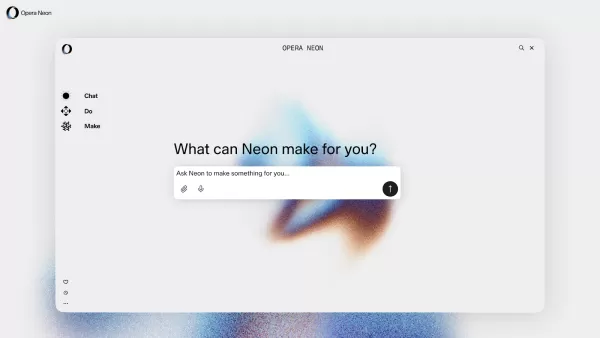
 Opera Browser Introduces AI-Powered Tool for Website and Game Development
Opera unveiled a new browser called Opera Neon on Tuesday, designed to enhance AI workflows and automate tasks like shopping, form filling, and coding.The browser is currently available through a waitlist, and the company announced that a subscriptio
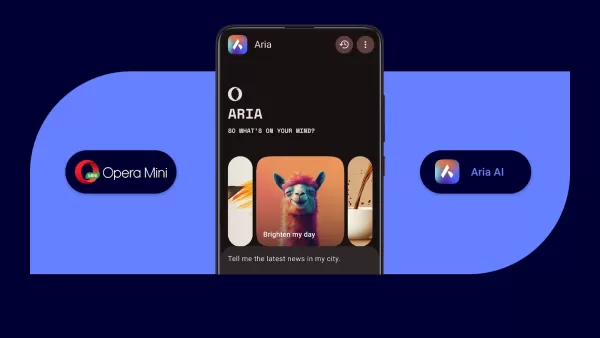
Opera adds its Aria AI assistant to Opera Mini browser
Norway's own Opera, the browser company, has just announced that it's rolling out its AI assistant, Aria, to Opera Mini users on Android. This is fantastic news for folks with less powerful devices and those watching their data usage, as they'll now have access to enhanced AI capabilities.
Aria AI
Motorola's Next Razr to Feature Perplexity as Key Element
Get ready for an exciting update from Motorola, as the much-anticipated Motorola Razr is set to be unveiled on April 24th. According to Bloomberg, the new Razr will feature Perplexity’s AI voice assistant, adding a smart edge to the foldable device. This news follows a teaser video Motorola shared o
Related Special Topic Recommendations
SEO
Opera Browser Introduces AI-Powered Tool for Website and Game Development
Opera unveiled a new browser called Opera Neon on Tuesday, designed to enhance AI workflows and automate tasks like shopping, form filling, and coding.The browser is currently available through a waitlist, and the company announced that a subscriptio
Opera adds its Aria AI assistant to Opera Mini browser
Norway's own Opera, the browser company, has just announced that it's rolling out its AI assistant, Aria, to Opera Mini users on Android. This is fantastic news for folks with less powerful devices and those watching their data usage, as they'll now have access to enhanced AI capabilities.
Aria AI
Motorola's Next Razr to Feature Perplexity as Key Element
Get ready for an exciting update from Motorola, as the much-anticipated Motorola Razr is set to be unveiled on April 24th. According to Bloomberg, the new Razr will feature Perplexity’s AI voice assistant, adding a smart edge to the foldable device. This news follows a teaser video Motorola shared o
Related Special Topic Recommendations
SEO
 Best AI SERP Analysis Tools for Search Strategy
2026 Latest Best Top-rated AI SERP Analysis Tools for Search Strategy are curated by XIX.AI through rigorous real-world tests and weekly updated rankings. These powerful tools help you unlock hidden optimization opportunities, boost content performance, and gain a competitive edge in search. Discover your perfect tool to elevate your search strategy today. Explore now!
 13 tools
 xix.ai
Data Analysis
Best AI Anomaly Detection Tools for KPI Monitoring across SaaS and Ecommerce Teams
xix.ai
Data Analysis
Best AI Anomaly Detection Tools for KPI Monitoring across SaaS and Ecommerce Teams
2026 Latest Best Top-rated AI Anomaly Detection Tools for KPI Monitoring in SaaS and Ecommerce teams! XIX.AI has curated a powerful, game-changing collection based on rigorous real-world tests and weekly updated rankings. You’ll find detailed free vs paid comparison insights to help you identify the must-try solution that boosts productivity and unlocks your AI edge. Explore now!
10 tools
xix.ai
writing
Best AI Outline Generators for Long-Form SEO Articles
2026 Latest Best Top-Rated AI Outline Generators for Long-Form SEO Articles, meticulously curated by XIX.AI. These powerful tools offer game-changing assistance in creating high-quality content quickly, boosting writing efficiency significantly. Get a free vs paid comparison along with real-world tests and detailed rankings to help you find the must-try option that suits your needs. Explore now to unlock your AI edge.
8 tools
xix.ai
Education and Learning
AI Study Tools for Homework and Exam Prep
2026 Latest Best AI Study Tools for Homework and Exam Prep! XIX.AI curates a top-rated list of powerful, game-changing tools that help students boost productivity, streamline homework completion, and ace exams through real-world tests. Get a free vs paid comparison, detailed rankings, and must-try options to unlock your AI edge. Explore now!
10 tools
xix.ai
Music composition
AI Vocal Demo Tools for Songwriters, Hooks, Toplines, and Multilingual Draft Sessions
2026 Latest Best AI Vocal Demo Tools for Songwriters, Hook Creators, and Multi-Language Content Teams! XIX.AI has curated a top-rated list of powerful game-changing tools that go through rigorous real-world tests. You’ll find detailed free vs paid comparison data, comprehensive rankings, and must-try options to help you boost writing efficiency and unlock your creative potential. Explore now to discover your perfect tool for all your content needs!
9 tools
xix.ai
Business
Best AI Competitive Research Tools for Small Businesses
2026 Latest Best Top-rated AI Competitive Research Tools for Small Businesses! XIX.AI has curated a highly powerful game-changing collection, updated weekly with rigorous real-world tests and detailed rankings. You can find a comprehensive free vs paid comparison to help you identify the must-try tools that boost your productivity and give you a competitive edge. Explore now to discover your perfect tool!
9 tools
xix.ai

 Comments (3)
0/500
Comments (3)
0/500
![HarperGreen]()
C'est complètement lunaire 😠 Ils promettent de ne pas vendre nos données puis copient le pire modèle de Google ? J’ai l’impression que chaque startup finit par devenir ce qu’elle prétend détruire. Perso je vais rester sur Firefox.
![WillieScott]()
Whoa, Perplexity’s browser tracking everything? That’s a bold play, but kinda creepy too. I get they want those sweet ad bucks, but isn’t this just Google 2.0? I’m curious how users will react—privacy’s a big deal these days! 😬
![OliviaBaker]()
Whoa, Perplexity's browser tracking everything for ads? Feels like Google 2.0, but creepier. Are we just trading one data-hungry giant for another? 😬
Perplexity’s Bold Move: Tracking Users Like Google to Sell Premium Ads
Perplexity isn’t just trying to compete with Google—it’s aiming to become Google.
In a recent episode of the TBPN podcast, CEO Aravind Srinivas dropped a bombshell: one of the key reasons Perplexity is developing its own browser is to gather data on users’ activities outside its app. Why? To fuel a premium ad business.
Why Perplexity Wants to Track Your Browsing Habits
Srinivas explained that while AI prompts within Perplexity’s app are often work-related, they don’t reveal much about users’ personal preferences.
“On the other hand, what are the things you’re buying; which hotels are you going to; which restaurants are you visiting; what are you spending time browsing—that tells us so much more about you.”
By tracking these behaviors, Perplexity hopes to build detailed user profiles, allowing it to serve hyper-targeted ads. Srinivas believes users won’t mind the surveillance—because, in theory, the ads will be more relevant to them.
“We plan to use all the context to build a better user profile and, maybe through our discover feed, we could show some ads there.”
The Comet Browser: A Setback, But Still Coming
Perplexity’s upcoming browser, Comet, faced some delays but is now expected to launch in May. The goal? To collect as much user data as possible—just like Google did with Chrome.
And speaking of Google, Srinivas didn’t shy away from the comparison.
“Quietly following users around the internet helped Google become the roughly $2 trillion market cap company it is today.”
Mobile Expansion: Partnerships with Motorola & Samsung
Perplexity isn’t stopping at browsers—it’s also pushing into mobile.
- A partnership with Motorola means Perplexity’s AI will be pre-installed on the Razr series, accessible via Moto AI by typing “Ask Perplexity.”
- Talks with Samsung are reportedly underway (as per Bloomberg), though Srinivas neither confirmed nor denied the discussions.
The Big Tech Privacy Paradox
Perplexity’s ambitions highlight a growing trend: even companies that position themselves as privacy-conscious eventually turn to data-driven ad models.
- Meta tracks users via Pixels, gathering data even from non-Facebook/Instagram users.
- Apple, despite its privacy-first branding, still defaults to location tracking for ad targeting in some apps.
Yet, this kind of tracking has fueled distrust in Big Tech, leading to regulatory crackdowns in the U.S. and Europe.
The Irony: Google’s Legal Battle & Perplexity’s Opportunism
Google is currently in court fighting the DOJ’s antitrust case, which accuses it of monopolistic practices in search and advertising. The government even wants Google to divest Chrome.
Interestingly, both OpenAI and Perplexity have expressed interest in buying Chrome if it goes up for sale—fitting, given Srinivas’ open admission that he wants to replicate Google’s playbook.
The Bottom Line
Perplexity is betting big on data-driven ads, following the same path that made Google a tech giant. But with growing scrutiny on user tracking, will users—and regulators—accept another company playing the same game?
One thing’s clear: The AI wars are turning into the next battle for your browsing data.








 Opera Browser Introduces AI-Powered Tool for Website and Game Development
Opera unveiled a new browser called Opera Neon on Tuesday, designed to enhance AI workflows and automate tasks like shopping, form filling, and coding.The browser is currently available through a waitlist, and the company announced that a subscriptio
Opera Browser Introduces AI-Powered Tool for Website and Game Development
Opera unveiled a new browser called Opera Neon on Tuesday, designed to enhance AI workflows and automate tasks like shopping, form filling, and coding.The browser is currently available through a waitlist, and the company announced that a subscriptio
 Opera adds its Aria AI assistant to Opera Mini browser
Norway's own Opera, the browser company, has just announced that it's rolling out its AI assistant, Aria, to Opera Mini users on Android. This is fantastic news for folks with less powerful devices and those watching their data usage, as they'll now have access to enhanced AI capabilities.
Aria AI
Opera adds its Aria AI assistant to Opera Mini browser
Norway's own Opera, the browser company, has just announced that it's rolling out its AI assistant, Aria, to Opera Mini users on Android. This is fantastic news for folks with less powerful devices and those watching their data usage, as they'll now have access to enhanced AI capabilities.
Aria AI
 Motorola's Next Razr to Feature Perplexity as Key Element
Get ready for an exciting update from Motorola, as the much-anticipated Motorola Razr is set to be unveiled on April 24th. According to Bloomberg, the new Razr will feature Perplexity’s AI voice assistant, adding a smart edge to the foldable device. This news follows a teaser video Motorola shared o
Motorola's Next Razr to Feature Perplexity as Key Element
Get ready for an exciting update from Motorola, as the much-anticipated Motorola Razr is set to be unveiled on April 24th. According to Bloomberg, the new Razr will feature Perplexity’s AI voice assistant, adding a smart edge to the foldable device. This news follows a teaser video Motorola shared o

2026 Latest Best Top-rated AI SERP Analysis Tools for Search Strategy are curated by XIX.AI through rigorous real-world tests and weekly updated rankings. These powerful tools help you unlock hidden optimization opportunities, boost content performance, and gain a competitive edge in search. Discover your perfect tool to elevate your search strategy today. Explore now!
13 tools
xix.ai

2026 Latest Best Top-rated AI Anomaly Detection Tools for KPI Monitoring in SaaS and Ecommerce teams! XIX.AI has curated a powerful, game-changing collection based on rigorous real-world tests and weekly updated rankings. You’ll find detailed free vs paid comparison insights to help you identify the must-try solution that boosts productivity and unlocks your AI edge. Explore now!
10 tools
xix.ai

2026 Latest Best Top-Rated AI Outline Generators for Long-Form SEO Articles, meticulously curated by XIX.AI. These powerful tools offer game-changing assistance in creating high-quality content quickly, boosting writing efficiency significantly. Get a free vs paid comparison along with real-world tests and detailed rankings to help you find the must-try option that suits your needs. Explore now to unlock your AI edge.
8 tools
xix.ai

2026 Latest Best AI Study Tools for Homework and Exam Prep! XIX.AI curates a top-rated list of powerful, game-changing tools that help students boost productivity, streamline homework completion, and ace exams through real-world tests. Get a free vs paid comparison, detailed rankings, and must-try options to unlock your AI edge. Explore now!
10 tools
xix.ai

2026 Latest Best AI Vocal Demo Tools for Songwriters, Hook Creators, and Multi-Language Content Teams! XIX.AI has curated a top-rated list of powerful game-changing tools that go through rigorous real-world tests. You’ll find detailed free vs paid comparison data, comprehensive rankings, and must-try options to help you boost writing efficiency and unlock your creative potential. Explore now to discover your perfect tool for all your content needs!
9 tools
xix.ai

2026 Latest Best Top-rated AI Competitive Research Tools for Small Businesses! XIX.AI has curated a highly powerful game-changing collection, updated weekly with rigorous real-world tests and detailed rankings. You can find a comprehensive free vs paid comparison to help you identify the must-try tools that boost your productivity and give you a competitive edge. Explore now to discover your perfect tool!
9 tools
xix.ai

C'est complètement lunaire 😠 Ils promettent de ne pas vendre nos données puis copient le pire modèle de Google ? J’ai l’impression que chaque startup finit par devenir ce qu’elle prétend détruire. Perso je vais rester sur Firefox.
Whoa, Perplexity’s browser tracking everything? That’s a bold play, but kinda creepy too. I get they want those sweet ad bucks, but isn’t this just Google 2.0? I’m curious how users will react—privacy’s a big deal these days! 😬
Whoa, Perplexity's browser tracking everything for ads? Feels like Google 2.0, but creepier. Are we just trading one data-hungry giant for another? 😬












