


 Home
HomeNvidia quietly builds multibillion-dollar behemoth to rival chip business
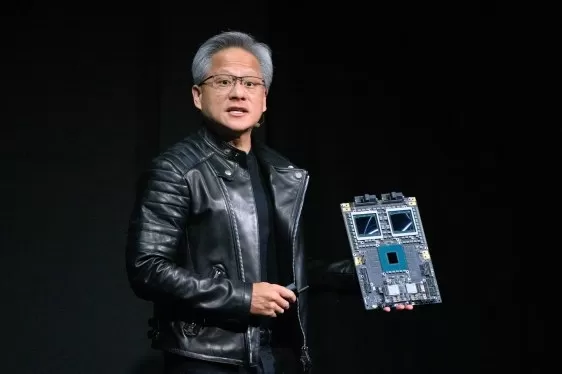
Nvidia CEO Jensen Huang anticipated the market by over a decade, initiating work on AI-specific chips in 2010, long before the current AI boom. A parallel strategic move in 2020—bolstering data center networking through a key acquisition—has created one of Nvidia’s fastest-growing and most profitable divisions, though it has flown under the radar.
Within just a few years, Nvidia’s networking division, which connects data centers, has become the company’s second-largest revenue source, trailing only compute. According to Nvidia’s latest earnings report, this segment generated $11 billion in the last quarter, representing a 267% year-over-year increase, and contributed over $31 billion for the full year.
Fueled by AI processing demands, this division encompasses technologies such as NVLink, which facilitates GPU communication within data center racks; Nvidia InfiniBand Switches, an in-network computing platform; Spectrum-X, the Ethernet platform for AI networking; and co-packaged optics switches.
Collectively, Nvidia’s networking business provides the essential technology required to build an “AI factory,” a data center optimized for training AI models.
Kevin Cook, a senior equity strategist at Zacks Investment Research, described Nvidia’s networking segment as one of the company’s most remarkable new developments. “[Nvidia’s networking business] reported $11 billion for the quarter; that figure exceeds Cisco’s entire networking business and nearly matches full-year estimates,” Cook noted, adding that this single quarter’s performance matches what Cisco achieves in a year.
Despite its success, this segment receives less attention than Nvidia’s larger chip business. It also garners less publicity than the company’s gaming division, its original core business, which is nearly three times smaller.
Nvidia’s networking origins trace back to Mellanox, an Israeli networking firm founded in 1999 that Nvidia acquired in 2020 for $7 billion.
Kevin Deierling, Nvidia’s senior vice president of networking, joined the company via the Mellanox acquisition. Deierling admitted to TechCrunch that public unawareness of Nvidia’s networking capabilities might stem from inadequate marketing on his part, though he dislikes that explanation.
“People often view networking merely as connecting a printer,” Deierling explained. “Jensen stated on the first day of the acquisition that the data center is the new unit of computing. Networking involves far more than transferring small amounts of data between compute nodes; it serves as the foundational infrastructure.”
While Deierling initially did not understand Huang’s rationale for the acquisition, he now sees the logic. Maintaining a networking division alongside GPUs allows Nvidia to sell chips paired with the technology they perform best with.
“When Jensen acquired Mellanox in 2020, he recognized it as the missing piece to create a complete GPU package,” said Cook, the Zacks analyst.
Deierling emphasized that another factor in Nvidia’s networking success is its exclusive focus on selling full-stack solutions rather than individual components, and its reliance on partners for distribution rather than direct sales.
“I cannot think of other companies possessing [the] full-stack capabilities we offer,” Deierling stated. “We are distinct. We develop the entire compute stack, fully integrated, and then bring it to market through our partners.”
Nvidia recently unveiled numerous updates to its networking system during Huang’s keynote address on March 16 at the company’s annual GTC technology conference. The company introduced the Nvidia Rubin platform, featuring six new chips designed to power an “AI supercomputer.” Additionally, Nvidia announced a new Inference Context Memory Storage platform and more efficient Spectrum-X Ethernet Photonics switches, among other products.
“Networking is no longer a peripheral for connecting printers or slow I/O devices,” Deierling remarked. “It is fundamental to computing. In the past, we had what was called the backplane inside the computer. Today, the network serves as the backplane of the AI factory, making it critically important.”
Related article
 Bristol Myers Squibb acquires Nvidia AI platform to accelerate drug discovery
Bristol Myers Squibb has acquired an Nvidia DGX SuperPOD powered by the Vera Rubin architecture to accelerate artificial intelligence applications in its drug discovery and development pipeline.The pharmaceutical giant will be the first life sciences
Wipro Appoints New CHRO to Lead AI-Driven HR Transformation
Wipro accelerates its technology roadmap by launching standalone AI platforms for global enterprises. Credit: Getty ImagesPriya Jha Choudhary assumes the role of Chief Human Resources Officer for AI, as Wipro restructures talent management to support
China to Approve NVIDIA H200 AI Chip Imports
NVIDIA H200 chips enter mainland China as Beijing balances local chipmaking goals with AI acceleration. Credit: Liu Liqun/Getty ImagesChina is easing limitations on NVIDIA H200 AI, permitting these shipments to help domestic technology firms train ad
Related Special Topic Recommendations
Productivity
Bristol Myers Squibb acquires Nvidia AI platform to accelerate drug discovery
Bristol Myers Squibb has acquired an Nvidia DGX SuperPOD powered by the Vera Rubin architecture to accelerate artificial intelligence applications in its drug discovery and development pipeline.The pharmaceutical giant will be the first life sciences
Wipro Appoints New CHRO to Lead AI-Driven HR Transformation
Wipro accelerates its technology roadmap by launching standalone AI platforms for global enterprises. Credit: Getty ImagesPriya Jha Choudhary assumes the role of Chief Human Resources Officer for AI, as Wipro restructures talent management to support
China to Approve NVIDIA H200 AI Chip Imports
NVIDIA H200 chips enter mainland China as Beijing balances local chipmaking goals with AI acceleration. Credit: Liu Liqun/Getty ImagesChina is easing limitations on NVIDIA H200 AI, permitting these shipments to help domestic technology firms train ad
Related Special Topic Recommendations
Productivity
 Top AI Daily Planner Apps: Build Realistic Schedules for Deep Work
2026 Latest Top-Rated AI Daily Planner Apps make creating realistic deep work schedules effortless. This curated list features powerful, game-changing tools that go through real-world tests to ensure accuracy and effectiveness. You’ll find a free vs paid comparison along with detailed rankings based on usability and results. XIX.AI is part of this trusted collection. Explore now to discover your perfect tool and unlock your AI edge for staying focused and productive every day.
 11 tools
 xix.ai
Data Analysis
Best AI Chart Builder Tools for Fast Reporting
xix.ai
Data Analysis
Best AI Chart Builder Tools for Fast Reporting
2026 Latest Best Top-rated AI Chart Builder Tools for Fast Reporting are here on XIX.AI! This curated list features powerful game-changing tools that deliver accurate professional charts with just a few clicks, helping you boost writing efficiency and streamline content creation. Get a free vs paid comparison along with real-world tests and detailed rankings to find the must-try solution for your needs. Explore now to unlock your AI edge!
9 tools
xix.ai
chatbot
AI Live Chat Routing Tools for Ecommerce Queues, VIP Buyers, and Return Requests
2026 Latest Best Top-rated AI Live Chat Routing Tools for Ecommerce Queues, VIP Buyers, and Return Requests. This curated list features powerful game-changing solutions that boost productivity dramatically through real-world tests. It includes a free vs paid comparison along with detailed rankings to help you find the perfect fit. XIX.AI stands out as a trusted provider in this space. Explore now to Unlock your AI edge!
9 tools
xix.ai
writing
Best AI Editing Tools for ESL Writers: Improve Tone, Grammar, and Flow
2026 Latest Best Top-Rated AI Editing Tools for ESL Writers are here on XIX.AI! This curated list features powerful game-changing tools that go through real-world tests to ensure accuracy. You can find a free vs paid comparison alongside detailed rankings to help you pick the must-try solution that boosts your writing tone, grammar, and flow perfectly. Explore now to Unlock your AI edge!
9 tools
xix.ai
Software Development
Best AI Bug Triage Tools for Engineering Teams
2026 Latest Best Top-Rated AI Bug Triage Tools for Engineering Teams! XIX.AI has curated a powerful, game-changing collection of must-try tools that go through rigorous real-world tests to deliver accurate issue analysis and efficient resolution. Get a free vs paid comparison along with detailed rankings to help you find the perfect solution that boosts your team’s productivity significantly. Explore now to unlock your AI edge!
9 tools
xix.ai
Image editing
Best AI Portrait Enhancers: Improve Lighting, Skin Tone, and Sharpness
2026 Latest Best Top-rated AI Portrait Enhancers curated for ultimate image quality. These powerful tools deliver game-changing results by boosting lighting, skin tone, and sharpness effortlessly, perfect for creators needing to enhance photos quickly. XIX.AI provides a free vs paid comparison along with real-world tests and weekly updated rankings. Discover your perfect tool to unlock your AI edge today. Explore now!
7 tools
xix.ai

 Comments (0)
0/500
Comments (0)
0/500
Nvidia CEO Jensen Huang anticipated the market by over a decade, initiating work on AI-specific chips in 2010, long before the current AI boom. A parallel strategic move in 2020—bolstering data center networking through a key acquisition—has created one of Nvidia’s fastest-growing and most profitable divisions, though it has flown under the radar.
Within just a few years, Nvidia’s networking division, which connects data centers, has become the company’s second-largest revenue source, trailing only compute. According to Nvidia’s latest earnings report, this segment generated $11 billion in the last quarter, representing a 267% year-over-year increase, and contributed over $31 billion for the full year.
Fueled by AI processing demands, this division encompasses technologies such as NVLink, which facilitates GPU communication within data center racks; Nvidia InfiniBand Switches, an in-network computing platform; Spectrum-X, the Ethernet platform for AI networking; and co-packaged optics switches.
Collectively, Nvidia’s networking business provides the essential technology required to build an “AI factory,” a data center optimized for training AI models.
Kevin Cook, a senior equity strategist at Zacks Investment Research, described Nvidia’s networking segment as one of the company’s most remarkable new developments. “[Nvidia’s networking business] reported $11 billion for the quarter; that figure exceeds Cisco’s entire networking business and nearly matches full-year estimates,” Cook noted, adding that this single quarter’s performance matches what Cisco achieves in a year.
Despite its success, this segment receives less attention than Nvidia’s larger chip business. It also garners less publicity than the company’s gaming division, its original core business, which is nearly three times smaller.
Nvidia’s networking origins trace back to Mellanox, an Israeli networking firm founded in 1999 that Nvidia acquired in 2020 for $7 billion.
Kevin Deierling, Nvidia’s senior vice president of networking, joined the company via the Mellanox acquisition. Deierling admitted to TechCrunch that public unawareness of Nvidia’s networking capabilities might stem from inadequate marketing on his part, though he dislikes that explanation.
“People often view networking merely as connecting a printer,” Deierling explained. “Jensen stated on the first day of the acquisition that the data center is the new unit of computing. Networking involves far more than transferring small amounts of data between compute nodes; it serves as the foundational infrastructure.”
While Deierling initially did not understand Huang’s rationale for the acquisition, he now sees the logic. Maintaining a networking division alongside GPUs allows Nvidia to sell chips paired with the technology they perform best with.
“When Jensen acquired Mellanox in 2020, he recognized it as the missing piece to create a complete GPU package,” said Cook, the Zacks analyst.
Deierling emphasized that another factor in Nvidia’s networking success is its exclusive focus on selling full-stack solutions rather than individual components, and its reliance on partners for distribution rather than direct sales.
“I cannot think of other companies possessing [the] full-stack capabilities we offer,” Deierling stated. “We are distinct. We develop the entire compute stack, fully integrated, and then bring it to market through our partners.”
Nvidia recently unveiled numerous updates to its networking system during Huang’s keynote address on March 16 at the company’s annual GTC technology conference. The company introduced the Nvidia Rubin platform, featuring six new chips designed to power an “AI supercomputer.” Additionally, Nvidia announced a new Inference Context Memory Storage platform and more efficient Spectrum-X Ethernet Photonics switches, among other products.
“Networking is no longer a peripheral for connecting printers or slow I/O devices,” Deierling remarked. “It is fundamental to computing. In the past, we had what was called the backplane inside the computer. Today, the network serves as the backplane of the AI factory, making it critically important.”








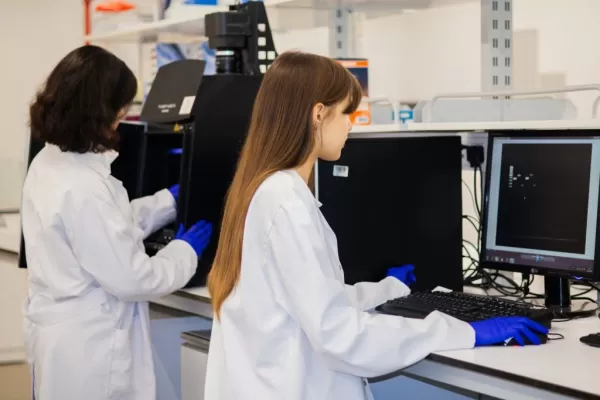 Bristol Myers Squibb acquires Nvidia AI platform to accelerate drug discovery
Bristol Myers Squibb has acquired an Nvidia DGX SuperPOD powered by the Vera Rubin architecture to accelerate artificial intelligence applications in its drug discovery and development pipeline.The pharmaceutical giant will be the first life sciences
Bristol Myers Squibb acquires Nvidia AI platform to accelerate drug discovery
Bristol Myers Squibb has acquired an Nvidia DGX SuperPOD powered by the Vera Rubin architecture to accelerate artificial intelligence applications in its drug discovery and development pipeline.The pharmaceutical giant will be the first life sciences
 Wipro Appoints New CHRO to Lead AI-Driven HR Transformation
Wipro accelerates its technology roadmap by launching standalone AI platforms for global enterprises. Credit: Getty ImagesPriya Jha Choudhary assumes the role of Chief Human Resources Officer for AI, as Wipro restructures talent management to support
Wipro Appoints New CHRO to Lead AI-Driven HR Transformation
Wipro accelerates its technology roadmap by launching standalone AI platforms for global enterprises. Credit: Getty ImagesPriya Jha Choudhary assumes the role of Chief Human Resources Officer for AI, as Wipro restructures talent management to support
 China to Approve NVIDIA H200 AI Chip Imports
NVIDIA H200 chips enter mainland China as Beijing balances local chipmaking goals with AI acceleration. Credit: Liu Liqun/Getty ImagesChina is easing limitations on NVIDIA H200 AI, permitting these shipments to help domestic technology firms train ad
China to Approve NVIDIA H200 AI Chip Imports
NVIDIA H200 chips enter mainland China as Beijing balances local chipmaking goals with AI acceleration. Credit: Liu Liqun/Getty ImagesChina is easing limitations on NVIDIA H200 AI, permitting these shipments to help domestic technology firms train ad

2026 Latest Top-Rated AI Daily Planner Apps make creating realistic deep work schedules effortless. This curated list features powerful, game-changing tools that go through real-world tests to ensure accuracy and effectiveness. You’ll find a free vs paid comparison along with detailed rankings based on usability and results. XIX.AI is part of this trusted collection. Explore now to discover your perfect tool and unlock your AI edge for staying focused and productive every day.
11 tools
xix.ai

2026 Latest Best Top-rated AI Chart Builder Tools for Fast Reporting are here on XIX.AI! This curated list features powerful game-changing tools that deliver accurate professional charts with just a few clicks, helping you boost writing efficiency and streamline content creation. Get a free vs paid comparison along with real-world tests and detailed rankings to find the must-try solution for your needs. Explore now to unlock your AI edge!
9 tools
xix.ai

2026 Latest Best Top-rated AI Live Chat Routing Tools for Ecommerce Queues, VIP Buyers, and Return Requests. This curated list features powerful game-changing solutions that boost productivity dramatically through real-world tests. It includes a free vs paid comparison along with detailed rankings to help you find the perfect fit. XIX.AI stands out as a trusted provider in this space. Explore now to Unlock your AI edge!
9 tools
xix.ai

2026 Latest Best Top-Rated AI Editing Tools for ESL Writers are here on XIX.AI! This curated list features powerful game-changing tools that go through real-world tests to ensure accuracy. You can find a free vs paid comparison alongside detailed rankings to help you pick the must-try solution that boosts your writing tone, grammar, and flow perfectly. Explore now to Unlock your AI edge!
9 tools
xix.ai

2026 Latest Best Top-Rated AI Bug Triage Tools for Engineering Teams! XIX.AI has curated a powerful, game-changing collection of must-try tools that go through rigorous real-world tests to deliver accurate issue analysis and efficient resolution. Get a free vs paid comparison along with detailed rankings to help you find the perfect solution that boosts your team’s productivity significantly. Explore now to unlock your AI edge!
9 tools
xix.ai

2026 Latest Best Top-rated AI Portrait Enhancers curated for ultimate image quality. These powerful tools deliver game-changing results by boosting lighting, skin tone, and sharpness effortlessly, perfect for creators needing to enhance photos quickly. XIX.AI provides a free vs paid comparison along with real-world tests and weekly updated rankings. Discover your perfect tool to unlock your AI edge today. Explore now!
7 tools
xix.ai












