


 Home
HomeNoam Brown: AI 'Reasoning' Models Could Have Emerged Decades Ago

Noam Brown, a leading researcher in AI reasoning at OpenAI, recently shared insights at Nvidia's GTC conference in San Jose, suggesting that advancements in "reasoning" AI could have been achieved 20 years earlier if the right methods and algorithms had been known. He explained, "There were various reasons why this research direction was neglected," highlighting a gap in the approach that could have been filled much sooner.
Reflecting on his research journey, Brown noted a crucial realization: "I noticed over the course of my research that, OK, there’s something missing. Humans spend a lot of time thinking before they act in a tough situation. Maybe this would be very useful [in AI]." This observation led him to develop AI models that mimic human-like reasoning, rather than relying solely on computational power.
His work at Carnegie Mellon University, particularly with the Pluribus AI, which bested top human poker players, exemplifies this approach. Pluribus was groundbreaking because it used reasoning to solve problems, contrasting with the more common brute-force methods at the time.
At OpenAI, Brown contributed to the development of o1, an AI model that uses a method known as test-time inference. This technique allows the AI to "think" before responding, enhancing its accuracy and reliability, especially in fields like mathematics and science.
During the panel discussion, Brown addressed the challenge of academic research competing with the scale of experiments conducted by large AI labs like OpenAI. He acknowledged the increasing difficulty due to the growing computational demands of modern models but suggested that academics could still contribute significantly by focusing on areas that require less computational power, such as designing model architectures.
He emphasized the potential for collaboration between academia and frontier labs, stating, "[T]here is an opportunity for collaboration between the frontier labs [and academia]. Certainly, the frontier labs are looking at academic publications and thinking carefully about, OK, does this make a compelling argument that, if this were scaled up further, it would be very effective. If there is that compelling argument from the paper, you know, we will investigate that in these labs."
Brown's comments are particularly timely as the Trump administration has proposed significant cuts to scientific funding, a move criticized by AI experts, including Geoffrey Hinton, who argue that such cuts could jeopardize AI research efforts globally.
He also pointed out the critical role of academia in improving AI benchmarking, noting, "The state of benchmarks in AI is really bad, and that doesn’t require a lot of compute to do." Current AI benchmarks often focus on obscure knowledge and fail to accurately reflect the capabilities that matter most to users, leading to confusion about AI models' true potential and progress.
*Updated 4:06 p.m. PT: An earlier version of this piece implied that Brown was referring to reasoning models like o1 in his initial remarks. In fact, he was referring to his work on game-playing AI prior to his time at OpenAI. We regret the error.*
Related article
 Sam Altman Sparks Debate Over AI's Deceleration
Listen onApple PodcastsListen onSpotifyOpenAI CEO Sam Altman recently suggested that it may be time to “pace the rate of AI development” to allow society to “harden around some of these new capability levels.”On the latest episode of TechCrunch’s Equ
OpenAI fights Apple trade secret lawsuit
OpenAI rebutted Apple’s trade secret allegations on Tuesday, arguing the lawsuit is unfounded.“We take these claims seriously but see no evidence supporting them,” OpenAI stated, as reported by Bloomberg’s Ed Ludlow on X. “We support fair competition
OpenAI robotics head Caitlin Kalinowski resigns over Pentagon partnership
OpenAI robotics leader Caitlin Kalinowski has stepped down following the company’s controversial partnership with the Department of Defense.“This wasn’t an easy call,” Kalinowski explained in a social media statement. “While AI plays a vital role in
Related Special Topic Recommendations
writing
Sam Altman Sparks Debate Over AI's Deceleration
Listen onApple PodcastsListen onSpotifyOpenAI CEO Sam Altman recently suggested that it may be time to “pace the rate of AI development” to allow society to “harden around some of these new capability levels.”On the latest episode of TechCrunch’s Equ
OpenAI fights Apple trade secret lawsuit
OpenAI rebutted Apple’s trade secret allegations on Tuesday, arguing the lawsuit is unfounded.“We take these claims seriously but see no evidence supporting them,” OpenAI stated, as reported by Bloomberg’s Ed Ludlow on X. “We support fair competition
OpenAI robotics head Caitlin Kalinowski resigns over Pentagon partnership
OpenAI robotics leader Caitlin Kalinowski has stepped down following the company’s controversial partnership with the Department of Defense.“This wasn’t an easy call,” Kalinowski explained in a social media statement. “While AI plays a vital role in
Related Special Topic Recommendations
writing
 Best AI Outline Generators for Long-Form SEO Articles
2026 Latest Best Top-Rated AI Outline Generators for Long-Form SEO Articles, meticulously curated by XIX.AI. These powerful tools offer game-changing assistance in creating high-quality content quickly, boosting writing efficiency significantly. Get a free vs paid comparison along with real-world tests and detailed rankings to help you find the must-try option that suits your needs. Explore now to unlock your AI edge.
 8 tools
 xix.ai
Education and Learning
AI Study Tools for Homework and Exam Prep
xix.ai
Education and Learning
AI Study Tools for Homework and Exam Prep
2026 Latest Best AI Study Tools for Homework and Exam Prep! XIX.AI curates a top-rated list of powerful, game-changing tools that help students boost productivity, streamline homework completion, and ace exams through real-world tests. Get a free vs paid comparison, detailed rankings, and must-try options to unlock your AI edge. Explore now!
10 tools
xix.ai
Music composition
AI Vocal Demo Tools for Songwriters, Hooks, Toplines, and Multilingual Draft Sessions
2026 Latest Best AI Vocal Demo Tools for Songwriters, Hook Creators, and Multi-Language Content Teams! XIX.AI has curated a top-rated list of powerful game-changing tools that go through rigorous real-world tests. You’ll find detailed free vs paid comparison data, comprehensive rankings, and must-try options to help you boost writing efficiency and unlock your creative potential. Explore now to discover your perfect tool for all your content needs!
9 tools
xix.ai
Business
Best AI Competitive Research Tools for Small Businesses
2026 Latest Best Top-rated AI Competitive Research Tools for Small Businesses! XIX.AI has curated a highly powerful game-changing collection, updated weekly with rigorous real-world tests and detailed rankings. You can find a comprehensive free vs paid comparison to help you identify the must-try tools that boost your productivity and give you a competitive edge. Explore now to discover your perfect tool!
9 tools
xix.ai
Image editing
Photoshop AI Retouch Tools for Ecommerce Apparel, Skin Cleanup, and Color Consistency
2026 Latest Best Photoshop AI retouch tools for ecommerce apparel, skin cleanup, and color consistency! This top-rated curated list features powerful game-changing solutions that help you boost writing efficiency, streamline content creation, and achieve perfect visual results effortlessly. Each tool has undergone real-world tests through weekly updated rankings, complete with free vs paid comparison details. Backed by XIX.AI, it’s the must-try guide for anyone aiming to unlock your AI edge. Explore now!
10 tools
xix.ai
Prompt
Best AI Prompt Libraries for ChatGPT Workflows
2026 Latest Best Top-Rated AI Prompt Libraries for optimizing all types of ChatGPT workflows. XIX.AI has curated a powerful, game-changing collection that goes through rigorous real-world tests to ensure top performance. You can find detailed free vs paid comparisons and expert rankings to help you choose the must-try tools that boost your productivity and unlock your AI edge. Explore now!
11 tools
xix.ai

 Comments (16)
0/500
Comments (16)
0/500
![AlbertWalker]()
Noam Brown這觀點真有意思!如果二十年前就有這些演算法,現在的AI發展會是什麼樣子?想想都覺得有點可惜,但也讓人好奇當時的研究者到底卡在哪個環節上。不過現在追上來也不晚吧?🤔
![NicholasClark]()
もし20年前にこのアルゴリズムが知られていたら...考えただけでゾクゾクするね!でも、今のAIブームが前倒しになってたら、社会の対応は間に合ってたのかな?ちょっと怖いかも😅 ブラウン氏の指摘は技術史のifを考える良いきっかけだと思う
![CharlesYoung]()
Increíble pensar que podríamos haber tenido IA 'razonadora' hace 20 años 😳. Me pregunto cómo habría cambiado el mundo tecnológico si esos algoritmos se hubieran descubierto antes... ¿Sería nuestro presente muy diferente? #RetroFuturo
![PatrickTaylor]()
Mind-blowing to think AI reasoning could’ve popped off 20 years ago! 🤯 Noam’s talk makes me wonder what other breakthroughs we’re sleeping on right now.
![JackMitchell]()
Mind-blowing to think AI reasoning could’ve been cracked 20 years ago! 🤯 Makes you wonder what else we’re sitting on, just waiting for the right spark. Noam’s talk sounds like a wake-up call for the AI world.
![AlbertScott]()
Mind-blowing to think AI reasoning could've been cracked decades ago! 🤯 Makes you wonder what else we’re sitting on that’s just a breakthrough away.








 Sam Altman Sparks Debate Over AI's Deceleration
Listen onApple PodcastsListen onSpotifyOpenAI CEO Sam Altman recently suggested that it may be time to “pace the rate of AI development” to allow society to “harden around some of these new capability levels.”On the latest episode of TechCrunch’s Equ
Sam Altman Sparks Debate Over AI's Deceleration
Listen onApple PodcastsListen onSpotifyOpenAI CEO Sam Altman recently suggested that it may be time to “pace the rate of AI development” to allow society to “harden around some of these new capability levels.”On the latest episode of TechCrunch’s Equ
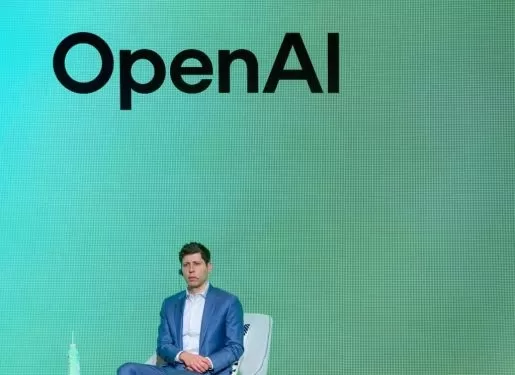 OpenAI fights Apple trade secret lawsuit
OpenAI rebutted Apple’s trade secret allegations on Tuesday, arguing the lawsuit is unfounded.“We take these claims seriously but see no evidence supporting them,” OpenAI stated, as reported by Bloomberg’s Ed Ludlow on X. “We support fair competition
OpenAI fights Apple trade secret lawsuit
OpenAI rebutted Apple’s trade secret allegations on Tuesday, arguing the lawsuit is unfounded.“We take these claims seriously but see no evidence supporting them,” OpenAI stated, as reported by Bloomberg’s Ed Ludlow on X. “We support fair competition
 OpenAI robotics head Caitlin Kalinowski resigns over Pentagon partnership
OpenAI robotics leader Caitlin Kalinowski has stepped down following the company’s controversial partnership with the Department of Defense.“This wasn’t an easy call,” Kalinowski explained in a social media statement. “While AI plays a vital role in
OpenAI robotics head Caitlin Kalinowski resigns over Pentagon partnership
OpenAI robotics leader Caitlin Kalinowski has stepped down following the company’s controversial partnership with the Department of Defense.“This wasn’t an easy call,” Kalinowski explained in a social media statement. “While AI plays a vital role in

2026 Latest Best Top-Rated AI Outline Generators for Long-Form SEO Articles, meticulously curated by XIX.AI. These powerful tools offer game-changing assistance in creating high-quality content quickly, boosting writing efficiency significantly. Get a free vs paid comparison along with real-world tests and detailed rankings to help you find the must-try option that suits your needs. Explore now to unlock your AI edge.
8 tools
xix.ai

2026 Latest Best AI Study Tools for Homework and Exam Prep! XIX.AI curates a top-rated list of powerful, game-changing tools that help students boost productivity, streamline homework completion, and ace exams through real-world tests. Get a free vs paid comparison, detailed rankings, and must-try options to unlock your AI edge. Explore now!
10 tools
xix.ai

2026 Latest Best AI Vocal Demo Tools for Songwriters, Hook Creators, and Multi-Language Content Teams! XIX.AI has curated a top-rated list of powerful game-changing tools that go through rigorous real-world tests. You’ll find detailed free vs paid comparison data, comprehensive rankings, and must-try options to help you boost writing efficiency and unlock your creative potential. Explore now to discover your perfect tool for all your content needs!
9 tools
xix.ai

2026 Latest Best Top-rated AI Competitive Research Tools for Small Businesses! XIX.AI has curated a highly powerful game-changing collection, updated weekly with rigorous real-world tests and detailed rankings. You can find a comprehensive free vs paid comparison to help you identify the must-try tools that boost your productivity and give you a competitive edge. Explore now to discover your perfect tool!
9 tools
xix.ai

2026 Latest Best Photoshop AI retouch tools for ecommerce apparel, skin cleanup, and color consistency! This top-rated curated list features powerful game-changing solutions that help you boost writing efficiency, streamline content creation, and achieve perfect visual results effortlessly. Each tool has undergone real-world tests through weekly updated rankings, complete with free vs paid comparison details. Backed by XIX.AI, it’s the must-try guide for anyone aiming to unlock your AI edge. Explore now!
10 tools
xix.ai
2026 Latest Best Top-Rated AI Prompt Libraries for optimizing all types of ChatGPT workflows. XIX.AI has curated a powerful, game-changing collection that goes through rigorous real-world tests to ensure top performance. You can find detailed free vs paid comparisons and expert rankings to help you choose the must-try tools that boost your productivity and unlock your AI edge. Explore now!
11 tools
xix.ai

Noam Brown這觀點真有意思!如果二十年前就有這些演算法,現在的AI發展會是什麼樣子?想想都覺得有點可惜,但也讓人好奇當時的研究者到底卡在哪個環節上。不過現在追上來也不晚吧?🤔
もし20年前にこのアルゴリズムが知られていたら...考えただけでゾクゾクするね!でも、今のAIブームが前倒しになってたら、社会の対応は間に合ってたのかな?ちょっと怖いかも😅 ブラウン氏の指摘は技術史のifを考える良いきっかけだと思う
Increíble pensar que podríamos haber tenido IA 'razonadora' hace 20 años 😳. Me pregunto cómo habría cambiado el mundo tecnológico si esos algoritmos se hubieran descubierto antes... ¿Sería nuestro presente muy diferente? #RetroFuturo
Mind-blowing to think AI reasoning could’ve popped off 20 years ago! 🤯 Noam’s talk makes me wonder what other breakthroughs we’re sleeping on right now.
Mind-blowing to think AI reasoning could’ve been cracked 20 years ago! 🤯 Makes you wonder what else we’re sitting on, just waiting for the right spark. Noam’s talk sounds like a wake-up call for the AI world.
Mind-blowing to think AI reasoning could've been cracked decades ago! 🤯 Makes you wonder what else we’re sitting on that’s just a breakthrough away.












