


 Home
HomeHow to build a Commander deck in 2026? Step-by-step guide for beginners.
Creating a Commander deck for Magic: The Gathering can feel like a monumental challenge. With a hundred cards to choose from, countless strategies to consider, and the critical need for synergy, it's easy to get lost. This guide offers a clear, methodical process for constructing a powerful and enjoyable Commander deck, moving beyond random card selection to build a cohesive game plan. Let's dive into the art of Commander deck construction.
Key Points
Start with the Commander: Your commander choice is the bedrock of your entire deck.
Read the Card Text: Thoroughly comprehend your commander's abilities.
Color Identity Matters: Construct your deck strictly within your commander's color identity.
Payoff vs. Engine: Identify whether your commander is a payoff or an engine and build around that role.
Mana Production: Emphasize ramp and mana fixing for a consistent game flow.
Fun Stuff: Blend strategic synergy with your personal flair for a more rewarding experience.
Foundation for Effective Commander Deck Building
Starting with the Commander
The heart of any Commander deck is, of course, the Commander itself. This legendary creature defines your deck's color identity and heavily shapes your overall strategy.
Many players begin by selecting a Commander that sparks their interest and then design the deck to complement its unique strengths. Since your Commander influences so many of your card choices, picking one that matches your preferred way of playing is essential.
Consider the following when choosing your Commander:
- Color Identity: Your Commander's colors determine which cards you can include. For instance, a Boros (Red/White) Commander restricts you to Red, White, and colorless cards.
- Abilities: Your Commander's abilities provide a strategic blueprint. Is it a Voltron-style commander, designed to be enhanced with auras and equipment? Or is it a value engine that generates card advantage or mana? Knowing its primary function helps streamline your deck-building process.
- Synergy: Consider how your Commander interacts with other cards. Does it work well with specific card types, strategies, or keywords? A synergistic Commander leads to a more powerful and consistent deck.
While some experienced players build decks that aren't entirely dependent on the Commander, focusing on your Commander's strengths is a reliable and effective strategy for most. As you gain experience, you can experiment with decks that are less Commander-centric. For now, concentrate on maximizing your Commander's potential.
Consider commanders like:
- Kuja, Genome Sorcerer: A legendary creature ideal for a black wizard deck focused on controlling the game and disrupting opponents.
- Selvala, Explorer Returned: An elf scout designed for mana ramping, perfectly suited for green-white decks aiming to accelerate into powerful late-game plays.
Read the Card Text Carefully
Carefully reading and interpreting your commander's card text is absolutely crucial. This may seem self-evident, but many players rush into selecting cards without fully understanding the subtleties of their Commander's powers. In Magic: The Gathering, every word carries weight, and overlooking a detail can severely hinder your deck's performance. Pay close attention to keywords, triggered abilities, and any specific conditions that must be met.
Let's use Ragost, Deft Gastronaut as an example
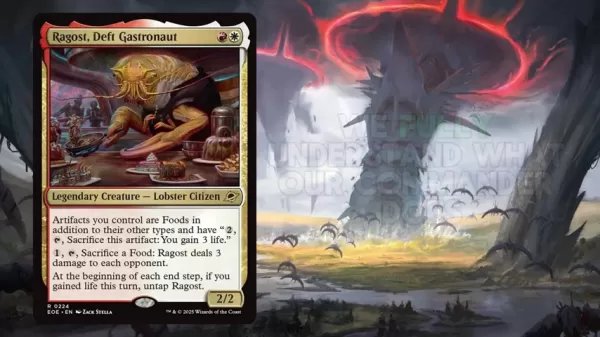
. A superficial reading might make you focus only on food token synergies. However, a deeper analysis shows that:
- All artifacts become food: This unlocks a broad range of artifact synergies beyond just dedicated food tokens.
- The ability to pay mana and deal damage: He can deal 3 damage to each opponent by sacrificing a food.
- Untapping: You can untap him during every end step if you gained life that turn, regardless of the source.
Grasping the finer details of your commander's text can revolutionize your deckbuilding approach. It's vital to study the card meticulously, understand its full potential, and discover how to leverage it for maximum value.
Investing time to truly comprehend your commander will directly inform your strategic decisions.
Understanding Color Identity
In Commander, color identity is a stricter concept than mere color. While a card's mana cost and effects show its colors, its color identity includes every mana symbol on the card, even those in reminder text. This rule profoundly impacts deck construction, as it dictates the exact colors permitted in your deck.
The color pie defines what each color typically does best. For example, Red and White offer artifact and direct damage synergies. White is often associated with life gain and untapping effects
. Understanding these roles helps you identify what a deck might be missing.
In a red/white deck like Ragost, Deft Gastronaut, red could handle artifacts and burn, while white provides life gain and untapping. Knowing these functions clarifies what will and won't work in a given deck archetype.
Payoff or Engine
Consider what role your commander plays in your deck. Is your Commander the payoff or the engine? Payoff commanders are designed to win the game through their powerful abilities. Engine commanders generate ongoing value or create opportunities for other cards to excel. Identifying this core role determines your deck's fundamental structure.- Payoff: The Commander is the central piece needed to execute your primary strategy. They are often versatile and can win games single-handedly.
- Engine: The Commander works in combination with a suite of other cards. It's vital to include cards that support the commander to ensure your win conditions are met.
A commander like[[Atraxa, Praetors' Voice]] can function in multiple ways. You can use it to advance planeswalkers and proliferate counters. Because of this flexibility, it can act as both an engine and a payoff
.
If your commander is a payoff, balance your deck with engine cards to ensure you can reliably cast it. If your commander is an engine, include enough payoff cards to capitalize on the advantages it generates.
Managing Mana
In every deck, mana is the key to success in Commander. Mana issues can cripple your game plan if not addressed properly. There's little point in having a brilliant strategy if you never have the mana to execute it. This makes mana production a top priority, so a significant part of your deck should be dedicated to ramp and mana fixing.
Prioritize the following to ensure you have the mana you need:
- Land Count: Aim for around 35 lands to consistently hit your land drops each turn.
- Ramp Spells: The more ramp, the better, with a general recommendation of 15-20 ramp pieces.
These numbers can vary based on personal preference and deck strategy, but the important thing is to ensure your deck has the mana foundation it requires.
Following these guidelines will prepare your deck to effectively reach and compete in the late game.
Putting it All Together
Draft
Now that you understand the fundamentals of Commander deck building, let's assemble the pieces to ensure everything connects.
As you build, make sure you can answer "yes" to these key questions:
- Does this deck have a clear strategy for its Commander?
- Do I fully understand the text on my commander's card?
- Am I correctly adhering to the color identity rules?
- Is my deck properly balanced?
- Do I have sufficient ramp?
If you've addressed all these points, your deck should not only function well but also position you as a formidable player. Keep practicing and refining your skills!
How to Implement These Concepts
Start with a Commander
Select a commander that aligns with your playstyle. Identify what you enjoy about them and the strategies they enable.
Understand the Text
Take the time to sit down and thoroughly understand your commander's abilities. Without this understanding, building a strong, synergistic deck is much more difficult.
Think About Color Identity
Consider which colors best complement your commander. If a card excels with artifacts and burn, it pairs well with cards like Reckless Fireweaver or Goblin Welder.
Find The Correct Balance
Both payoff and engine cards are essential. The right balance between them dictates how your deck operates. A roughly equal ratio is a good starting point for newer players.
Ensure Mana Availability
Running out of mana is a common frustration. Having the right amount ensures you can play your game plan and respond to opponents effectively.
Balancing a Commander Deck
Pros
It results in decks that function smoothly and consistently.
The process is relatively easy to learn, even for newer players.
It ensures your commander's power level is justified and supported.
Cons
Finding the perfect balance between different card types can be challenging.
An unbalanced deck can lead to weak and inconsistent draws.
If the engine is too weak, the payoff cards become ineffective.
FAQ
What is a Voltron Commander?
A Voltron Commander strategy focuses on making your commander incredibly powerful by stacking it with auras and equipment.
How much ramp and land should you have?
Lands and ramp serve different purposes, though both are crucial. A solid mix ensures your deck runs smoothly. A good baseline is 35 lands and 15-20 ramp pieces.
Why should you read all the card text for a commander?
Cards often contain small details or nuances that can dramatically alter your strategy if missed. A thorough reading reveals synergies you might otherwise overlook.
Related Questions
Are there alternatives to just using Lands?
Absolutely. Mana rocks and mana dorks are excellent additions for ramping your mana. Many mana rocks are artifacts, and many mana dorks are creatures, allowing you to build synergies with other cards that buff them in various ways. Never limit yourself to a single type of mana source.
How important is card draw for commanders?
Card draw is arguably one of the most critical elements for a functioning deck. It provides options, ways to respond to opponents, and additional power. There's little value in having a powerful commander if you can't draw the supporting cards to play alongside it.
Related article
 Musk Considered Leaving OpenAI to His Kids as Altman Testifies
This morning, OpenAI CEO Sam Altman took the stand to address former co-founder Elon Musk’s lawsuit challenging the company’s corporate structure.When asked about Musk’s claim that other founders “stole a charity” by launching a for-profit subsidiary
Sam Altman Sparks Debate Over AI's Deceleration
Listen onApple PodcastsListen onSpotifyOpenAI CEO Sam Altman recently suggested that it may be time to “pace the rate of AI development” to allow society to “harden around some of these new capability levels.”On the latest episode of TechCrunch’s Equ
Anthropic Opens Doors to EU Cybersecurity Agency as Mythos5 Model Faces Compliance Exam
Artificial intelligence compliance regulations are advancing significantly. Leading AI firm Anthropic has officially granted the European Union's cybersecurity authority access to its Mythos AI model, a pivotal move for this advanced large language m
Related Special Topic Recommendations
Prompt
Musk Considered Leaving OpenAI to His Kids as Altman Testifies
This morning, OpenAI CEO Sam Altman took the stand to address former co-founder Elon Musk’s lawsuit challenging the company’s corporate structure.When asked about Musk’s claim that other founders “stole a charity” by launching a for-profit subsidiary
Sam Altman Sparks Debate Over AI's Deceleration
Listen onApple PodcastsListen onSpotifyOpenAI CEO Sam Altman recently suggested that it may be time to “pace the rate of AI development” to allow society to “harden around some of these new capability levels.”On the latest episode of TechCrunch’s Equ
Anthropic Opens Doors to EU Cybersecurity Agency as Mythos5 Model Faces Compliance Exam
Artificial intelligence compliance regulations are advancing significantly. Leading AI firm Anthropic has officially granted the European Union's cybersecurity authority access to its Mythos AI model, a pivotal move for this advanced large language m
Related Special Topic Recommendations
Prompt
 Best AI Prompt Libraries for ChatGPT Workflows
2026 Latest Best Top-Rated AI Prompt Libraries for optimizing all types of ChatGPT workflows. XIX.AI has curated a powerful, game-changing collection that goes through rigorous real-world tests to ensure top performance. You can find detailed free vs paid comparisons and expert rankings to help you choose the must-try tools that boost your productivity and unlock your AI edge. Explore now!
 11 tools
 xix.ai
Education and Learning
AI Quiz Builder Platforms for Teachers, Tutors, and Cohort-Based Learning Programs
xix.ai
Education and Learning
AI Quiz Builder Platforms for Teachers, Tutors, and Cohort-Based Learning Programs
2026 Latest Best AI Quiz Builder Platforms for Teachers, Tutors, and Cohort-Based Learning Programs! XIX.AI has curated a top-rated list of powerful game-changing tools that go through real-world tests to deliver accurate rankings. These must-try platforms help boost writing efficiency, streamline content creation, and simplify quiz design across all learning scenarios. Explore now to discover your perfect tool for unlocking your AI edge in teaching!
13 tools
xix.ai
code
AI Pull Request Review Tools for GitHub Teams Handling Refactors, Bugs, and Security Gaps
2026 Latest Best AI Pull Request Review Tools for GitHub Teams are here on XIX.AI! This top-rated curated list showcases powerful game-changing solutions that streamline refactoring, bug fixing, and security gap detection across all team workflows. Enjoy a free vs paid comparison along with real-world tests and detailed rankings to help you find the perfect tool that boosts productivity significantly. Explore now to unlock your AI edge!
12 tools
xix.ai
Text-to-speech
Best AI Text to Speech Tools for Natural Voiceovers
2026 Latest Best Top-rated AI Text to Speech Tools for Natural Voiceovers are here on XIX.AI! This curated list features powerful, game-changing options that deliver crystal-clear voices for every use case, backed by real-world tests and weekly updated rankings. Get a free vs paid comparison to find the must-try solution that boosts your productivity instantly. Explore now to Unlock your AI edge!
11 tools
xix.ai
Comic Creation
Manga AI Background Generators for Serialized Chapters, Covers, and Promo Art
2026 Latest Best Manga AI Background Generators Ranked Top-Rated! This curated collection showcases powerful game-changing tools perfect for creating high-quality chapter backgrounds, book covers, and promotional art. Every option has undergone rigorous real-world tests to ensure reliability. Get a free vs paid comparison along with detailed insights. Explore now to discover your perfect tool and unlock your AI edge in manga creation.
6 tools
xix.ai
Image editing
AI Object Removal Editors: Clean Up Portraits, Travel, and Product Shots
2026 Latest Best Top-rated AI Object Removal Editors for portraits travel product shots! XIX.AI curates a powerful game-changing collection regularly updated with weekly rankings. These tools offer real-world tests to help you quickly remove unwanted elements, boost content quality, and save tons of time without compromising results. Must-try for anyone aiming to unlock their AI creation edge. Explore now!
10 tools
xix.ai

 Comments (0)
0/500
Comments (0)
0/500
Creating a Commander deck for Magic: The Gathering can feel like a monumental challenge. With a hundred cards to choose from, countless strategies to consider, and the critical need for synergy, it's easy to get lost. This guide offers a clear, methodical process for constructing a powerful and enjoyable Commander deck, moving beyond random card selection to build a cohesive game plan. Let's dive into the art of Commander deck construction.
Key Points
Start with the Commander: Your commander choice is the bedrock of your entire deck.
Read the Card Text: Thoroughly comprehend your commander's abilities.
Color Identity Matters: Construct your deck strictly within your commander's color identity.
Payoff vs. Engine: Identify whether your commander is a payoff or an engine and build around that role.
Mana Production: Emphasize ramp and mana fixing for a consistent game flow.
Fun Stuff: Blend strategic synergy with your personal flair for a more rewarding experience.
Foundation for Effective Commander Deck Building
Starting with the Commander
The heart of any Commander deck is, of course, the Commander itself. This legendary creature defines your deck's color identity and heavily shapes your overall strategy.
Many players begin by selecting a Commander that sparks their interest and then design the deck to complement its unique strengths. Since your Commander influences so many of your card choices, picking one that matches your preferred way of playing is essential.
Consider the following when choosing your Commander:
- Color Identity: Your Commander's colors determine which cards you can include. For instance, a Boros (Red/White) Commander restricts you to Red, White, and colorless cards.
- Abilities: Your Commander's abilities provide a strategic blueprint. Is it a Voltron-style commander, designed to be enhanced with auras and equipment? Or is it a value engine that generates card advantage or mana? Knowing its primary function helps streamline your deck-building process.
- Synergy: Consider how your Commander interacts with other cards. Does it work well with specific card types, strategies, or keywords? A synergistic Commander leads to a more powerful and consistent deck.
While some experienced players build decks that aren't entirely dependent on the Commander, focusing on your Commander's strengths is a reliable and effective strategy for most. As you gain experience, you can experiment with decks that are less Commander-centric. For now, concentrate on maximizing your Commander's potential.
Consider commanders like:
- Kuja, Genome Sorcerer: A legendary creature ideal for a black wizard deck focused on controlling the game and disrupting opponents.
- Selvala, Explorer Returned: An elf scout designed for mana ramping, perfectly suited for green-white decks aiming to accelerate into powerful late-game plays.
Read the Card Text Carefully
Carefully reading and interpreting your commander's card text is absolutely crucial. This may seem self-evident, but many players rush into selecting cards without fully understanding the subtleties of their Commander's powers. In Magic: The Gathering, every word carries weight, and overlooking a detail can severely hinder your deck's performance. Pay close attention to keywords, triggered abilities, and any specific conditions that must be met.
Let's use Ragost, Deft Gastronaut as an example
. A superficial reading might make you focus only on food token synergies. However, a deeper analysis shows that:
- All artifacts become food: This unlocks a broad range of artifact synergies beyond just dedicated food tokens.
- The ability to pay mana and deal damage: He can deal 3 damage to each opponent by sacrificing a food.
- Untapping: You can untap him during every end step if you gained life that turn, regardless of the source.
Grasping the finer details of your commander's text can revolutionize your deckbuilding approach. It's vital to study the card meticulously, understand its full potential, and discover how to leverage it for maximum value.
Investing time to truly comprehend your commander will directly inform your strategic decisions.
Understanding Color Identity
In Commander, color identity is a stricter concept than mere color. While a card's mana cost and effects show its colors, its color identity includes every mana symbol on the card, even those in reminder text. This rule profoundly impacts deck construction, as it dictates the exact colors permitted in your deck.
The color pie defines what each color typically does best. For example, Red and White offer artifact and direct damage synergies. White is often associated with life gain and untapping effects
. Understanding these roles helps you identify what a deck might be missing.
In a red/white deck like Ragost, Deft Gastronaut, red could handle artifacts and burn, while white provides life gain and untapping. Knowing these functions clarifies what will and won't work in a given deck archetype.
Payoff or Engine
Consider what role your commander plays in your deck. Is your Commander the payoff or the engine? Payoff commanders are designed to win the game through their powerful abilities. Engine commanders generate ongoing value or create opportunities for other cards to excel. Identifying this core role determines your deck's fundamental structure.- Payoff: The Commander is the central piece needed to execute your primary strategy. They are often versatile and can win games single-handedly.
- Engine: The Commander works in combination with a suite of other cards. It's vital to include cards that support the commander to ensure your win conditions are met.
A commander like[[Atraxa, Praetors' Voice]] can function in multiple ways. You can use it to advance planeswalkers and proliferate counters. Because of this flexibility, it can act as both an engine and a payoff
.
If your commander is a payoff, balance your deck with engine cards to ensure you can reliably cast it. If your commander is an engine, include enough payoff cards to capitalize on the advantages it generates.
Managing Mana
In every deck, mana is the key to success in Commander. Mana issues can cripple your game plan if not addressed properly. There's little point in having a brilliant strategy if you never have the mana to execute it. This makes mana production a top priority, so a significant part of your deck should be dedicated to ramp and mana fixing.
Prioritize the following to ensure you have the mana you need:
- Land Count: Aim for around 35 lands to consistently hit your land drops each turn.
- Ramp Spells: The more ramp, the better, with a general recommendation of 15-20 ramp pieces.
These numbers can vary based on personal preference and deck strategy, but the important thing is to ensure your deck has the mana foundation it requires.
Following these guidelines will prepare your deck to effectively reach and compete in the late game.
Putting it All Together
Draft
Now that you understand the fundamentals of Commander deck building, let's assemble the pieces to ensure everything connects.
As you build, make sure you can answer "yes" to these key questions:
- Does this deck have a clear strategy for its Commander?
- Do I fully understand the text on my commander's card?
- Am I correctly adhering to the color identity rules?
- Is my deck properly balanced?
- Do I have sufficient ramp?
If you've addressed all these points, your deck should not only function well but also position you as a formidable player. Keep practicing and refining your skills!
How to Implement These Concepts
Start with a Commander
Select a commander that aligns with your playstyle. Identify what you enjoy about them and the strategies they enable.
Understand the Text
Take the time to sit down and thoroughly understand your commander's abilities. Without this understanding, building a strong, synergistic deck is much more difficult.
Think About Color Identity
Consider which colors best complement your commander. If a card excels with artifacts and burn, it pairs well with cards like Reckless Fireweaver or Goblin Welder.
Find The Correct Balance
Both payoff and engine cards are essential. The right balance between them dictates how your deck operates. A roughly equal ratio is a good starting point for newer players.
Ensure Mana Availability
Running out of mana is a common frustration. Having the right amount ensures you can play your game plan and respond to opponents effectively.
Balancing a Commander Deck
Pros
It results in decks that function smoothly and consistently.
The process is relatively easy to learn, even for newer players.
It ensures your commander's power level is justified and supported.
Cons
Finding the perfect balance between different card types can be challenging.
An unbalanced deck can lead to weak and inconsistent draws.
If the engine is too weak, the payoff cards become ineffective.
FAQ
What is a Voltron Commander?
A Voltron Commander strategy focuses on making your commander incredibly powerful by stacking it with auras and equipment.
How much ramp and land should you have?
Lands and ramp serve different purposes, though both are crucial. A solid mix ensures your deck runs smoothly. A good baseline is 35 lands and 15-20 ramp pieces.
Why should you read all the card text for a commander?
Cards often contain small details or nuances that can dramatically alter your strategy if missed. A thorough reading reveals synergies you might otherwise overlook.
Related Questions
Are there alternatives to just using Lands?
Absolutely. Mana rocks and mana dorks are excellent additions for ramping your mana. Many mana rocks are artifacts, and many mana dorks are creatures, allowing you to build synergies with other cards that buff them in various ways. Never limit yourself to a single type of mana source.
How important is card draw for commanders?
Card draw is arguably one of the most critical elements for a functioning deck. It provides options, ways to respond to opponents, and additional power. There's little value in having a powerful commander if you can't draw the supporting cards to play alongside it.








 Musk Considered Leaving OpenAI to His Kids as Altman Testifies
This morning, OpenAI CEO Sam Altman took the stand to address former co-founder Elon Musk’s lawsuit challenging the company’s corporate structure.When asked about Musk’s claim that other founders “stole a charity” by launching a for-profit subsidiary
Musk Considered Leaving OpenAI to His Kids as Altman Testifies
This morning, OpenAI CEO Sam Altman took the stand to address former co-founder Elon Musk’s lawsuit challenging the company’s corporate structure.When asked about Musk’s claim that other founders “stole a charity” by launching a for-profit subsidiary
 Sam Altman Sparks Debate Over AI's Deceleration
Listen onApple PodcastsListen onSpotifyOpenAI CEO Sam Altman recently suggested that it may be time to “pace the rate of AI development” to allow society to “harden around some of these new capability levels.”On the latest episode of TechCrunch’s Equ
Sam Altman Sparks Debate Over AI's Deceleration
Listen onApple PodcastsListen onSpotifyOpenAI CEO Sam Altman recently suggested that it may be time to “pace the rate of AI development” to allow society to “harden around some of these new capability levels.”On the latest episode of TechCrunch’s Equ
 Anthropic Opens Doors to EU Cybersecurity Agency as Mythos5 Model Faces Compliance Exam
Artificial intelligence compliance regulations are advancing significantly. Leading AI firm Anthropic has officially granted the European Union's cybersecurity authority access to its Mythos AI model, a pivotal move for this advanced large language m
Anthropic Opens Doors to EU Cybersecurity Agency as Mythos5 Model Faces Compliance Exam
Artificial intelligence compliance regulations are advancing significantly. Leading AI firm Anthropic has officially granted the European Union's cybersecurity authority access to its Mythos AI model, a pivotal move for this advanced large language m

2026 Latest Best Top-Rated AI Prompt Libraries for optimizing all types of ChatGPT workflows. XIX.AI has curated a powerful, game-changing collection that goes through rigorous real-world tests to ensure top performance. You can find detailed free vs paid comparisons and expert rankings to help you choose the must-try tools that boost your productivity and unlock your AI edge. Explore now!
11 tools
xix.ai

2026 Latest Best AI Quiz Builder Platforms for Teachers, Tutors, and Cohort-Based Learning Programs! XIX.AI has curated a top-rated list of powerful game-changing tools that go through real-world tests to deliver accurate rankings. These must-try platforms help boost writing efficiency, streamline content creation, and simplify quiz design across all learning scenarios. Explore now to discover your perfect tool for unlocking your AI edge in teaching!
13 tools
xix.ai

2026 Latest Best AI Pull Request Review Tools for GitHub Teams are here on XIX.AI! This top-rated curated list showcases powerful game-changing solutions that streamline refactoring, bug fixing, and security gap detection across all team workflows. Enjoy a free vs paid comparison along with real-world tests and detailed rankings to help you find the perfect tool that boosts productivity significantly. Explore now to unlock your AI edge!
12 tools
xix.ai

2026 Latest Best Top-rated AI Text to Speech Tools for Natural Voiceovers are here on XIX.AI! This curated list features powerful, game-changing options that deliver crystal-clear voices for every use case, backed by real-world tests and weekly updated rankings. Get a free vs paid comparison to find the must-try solution that boosts your productivity instantly. Explore now to Unlock your AI edge!
11 tools
xix.ai

2026 Latest Best Manga AI Background Generators Ranked Top-Rated! This curated collection showcases powerful game-changing tools perfect for creating high-quality chapter backgrounds, book covers, and promotional art. Every option has undergone rigorous real-world tests to ensure reliability. Get a free vs paid comparison along with detailed insights. Explore now to discover your perfect tool and unlock your AI edge in manga creation.
6 tools
xix.ai

2026 Latest Best Top-rated AI Object Removal Editors for portraits travel product shots! XIX.AI curates a powerful game-changing collection regularly updated with weekly rankings. These tools offer real-world tests to help you quickly remove unwanted elements, boost content quality, and save tons of time without compromising results. Must-try for anyone aiming to unlock their AI creation edge. Explore now!
10 tools
xix.ai












