


 Home
HomeWhat is image annotation for AI and machine learning in 2026?
Image annotation serves as a foundational step in computer vision, crucial for training AI and machine learning systems. This guide explores what image annotation is, its uses across different sectors, the various annotation methods available, and its vital contribution to advancing artificial intelligence. By grasping the fundamentals of image annotation, we can harness the capabilities of computer vision, allowing machines to perceive and interpret visual information much like humans.
Key Points
Image annotation is an essential function within computer vision, supplying labeled data necessary for teaching machine learning algorithms.
Computer vision technology is revolutionizing multiple fields, from automotive and security to retail.
Self-driving cars depend extensively on image annotation for identifying objects and comprehending their environment.
Facial recognition systems utilize image annotation for identity verification and enhancing security measures.
Stock management solutions employ image annotation to monitor products and improve logistics in storage facilities.
Several annotation formats exist, such as bounding boxes, image classification, lines and splines, polygons, and semantic segmentation.
The precision and dependability of AI-driven applications hinge on the quality of the image annotations used during training.
Understanding Image Annotation
What is Image Annotation?
Image annotation involves tagging images to give machine learning models context and understanding. Human annotators attach metadata to pictures, which can include marking objects, outlining them with boxes, or dividing images into specific areas.
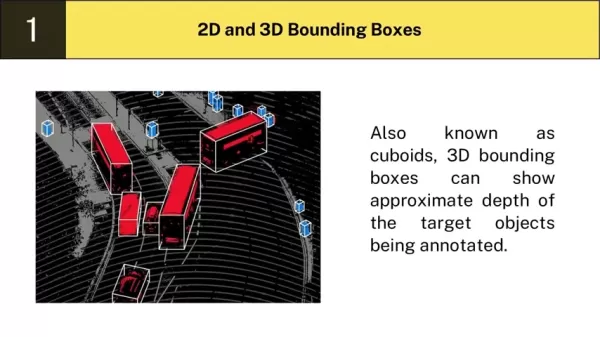
This processed data then trains computer vision models, equipping them to identify and categorize items in new, unfamiliar images. Without proper annotation, machine learning systems would struggle to interpret visual content, making them unsuitable for functions like object detection, image recognition, or autonomous navigation.
The value of image annotation comes from its role in converting raw visual information into a format that machines can process. It turns simple images into organized, labeled datasets that help build strong and precise computer vision models. The effectiveness of these models is directly influenced by the annotation quality; errors or omissions can result in unreliable outcomes. This human-driven process involves applying predefined labels, set by AI developers, to educate the model about the contents of each image.
Image annotation supports a broad spectrum of uses, establishing itself as a key element in contemporary AI and machine learning. As computer vision progresses, the need for top-tier image annotation will keep rising, fostering innovation and creating new opportunities across various sectors. Well-annotated data is fundamental for developing AI solutions that are both accurate and trustworthy.
The Importance of Image Annotation in Computer Vision
Computer vision seeks to grant machines the ability to see and analyze images as humans do. To accomplish this, systems must learn from extensive datasets, and image annotation supplies this essential training material.

Image annotation is indispensable for many computer vision applications, such as:
- Object Detection: Locating and identifying objects inside an image.
- Image Classification: Assigning a category to a whole image based on what it contains.
- Semantic Segmentation: Labeling every pixel in an image to gain a thorough comprehension of the scene.
- Instance Segmentation: Differentiating between multiple occurrences of the same object in a single image.
All these applications depend on annotated data to educate machine learning models. For example, an object detection model learns from images where relevant items are enclosed in bounding boxes. A classification model needs correctly tagged images to understand categories. Semantic segmentation models rely on pixel-level labels to classify each image segment accurately.
With ongoing advancements in computer vision, the need for annotated image data is expanding rapidly. Image annotation is more than just an initial phase; it is a continuous and vital part of the computer vision workflow. The success and reliability of computer vision tools are deeply connected to the standard of image annotation.
Common Image Annotation Types
Various image annotation techniques are available, each designed for particular computer vision objectives.
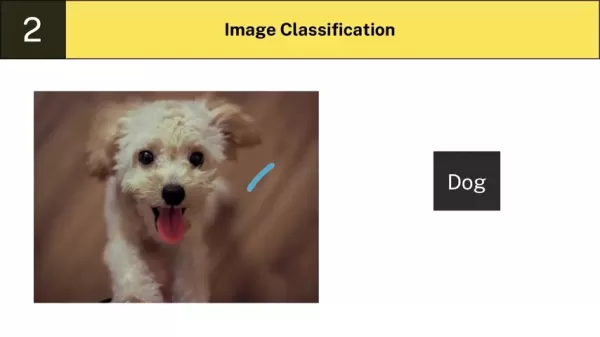
Here are the most frequently used approaches:
- 2D and 3D Bounding Boxes:Annotators place boxes around objects in a picture. 2D boxes specify an object's position in two dimensions (height and width), while 3D boxes add depth details, which are especially helpful for applications like self-driving car guidance.In 2D bounding box annotation, a rectangular frame is drawn around the target object.3D bounding boxes, or cuboids, help convey the depth and spatial dimensions of annotated objects.
- Image Classification: A single label is assigned to the entire image.Providing this labeled image data to a computer vision model helps it learn the distinct visual traits associated with each object category.
- Lines and Splines: This technique marks straight or curved lines in images.As the name implies, lines and splines annotation involves marking linear or curved elements in pictures. It is applied in numerous situations, from self-driving cars and drones to robotics in industrial settings.
- Polygons: This approach enables precise annotation of an object's outline, no matter how irregular its form.
- Semantic Segmentation: Every pixel in the image is labeled.Each section is typically marked with a distinct color. The final output appears as a detailed, color-coded map.
Selecting the best annotation method depends on the unique needs of the computer vision project. Each type provides a different degree of detail and precision, which influences the performance and accuracy of the resulting machine learning model.
Real-World Applications of Computer Vision and Image Annotation
Transforming Industries Through Computer Vision
Computer vision, supported by image annotation, is reshaping numerous industries. Consider these prominent cases:
- Autonomous Vehicles: Self-driving cars use computer vision to understand their environment, spot objects such as people, traffic lights, and other cars, and drive safely.

Image annotation is key for teaching the models that perform these tasks.
- Facial Recognition:Facial recognition is commonly used for unlocking mobile devices and applications, as well as for biometric authentication. Sectors like banking, retail, and transport security use this technology to combat fraud and improve safety. It is also implemented in security setups, phone access systems, and personalized advertising.
- Inventory Management: By observing products and their placement on shelves via video feeds.This technology can detect gaps on racks, alert when stock is low, and find items that are out of place. Computer vision automates stock monitoring, improves warehouse organization, and minimizes mistakes in inventory control.
The influence of computer vision reaches well beyond these instances. It is fostering progress in healthcare, agriculture, production, and many other areas. The capacity of machines to see and analyze images is creating fresh opportunities and changing how we live and work. The potential applications for computer vision are virtually limitless .
How to Get Started with Image Annotation
Step-by-Step Guide to Basic Image Annotation
If you want to experiment with image annotation, here is a straightforward process to begin:
- Choose an Annotation Tool: Multiple software options exist, from free, open-source programs to paid platforms. Well-known tools include LabelImg, VGG Image Annotator (VIA), and RectLabel.
- Define Your Project Requirements: Decide exactly which objects or features you need to annotate and what annotation style (e.g., bounding boxes, polygons) is appropriate.
- Gather Your Images: Assemble a varied collection of images that reflect the situations and objects your machine learning model should recognize.
- Annotate Your Images: Apply your selected annotation tool to label the objects in your images based on your project specs.
- Review and Validate: After annotating a batch of images, check and confirm your work to guarantee correctness and uniformity.
- Export Your Annotations: Save your annotations in a format that works with your machine learning framework (for example, Pascal VOC or COCO).
- Train Your Model: Use your annotated dataset to train your computer vision model.
This is a general outline; exact steps might differ based on your project and the tools you select.
Understanding Image Annotation Service Costs
Factors Affecting the Pricing of Image Annotation
The price of image annotation services can differ widely due to several elements:
- Annotation Type: More intricate annotation styles, like semantic segmentation, generally cost more than simpler ones such as bounding boxes.
- Image Complexity: Images containing numerous objects or fine details take longer to annotate, which raises the cost.
- Accuracy Requirements: Projects that need very high precision might require more skilled annotators and strict quality checks, increasing the price.
- Project Scale: Bigger projects with large image volumes might be eligible for bulk discounts.
- Turnaround Time: Rush projects with short deadlines could involve extra charges.
It's wise to request a detailed estimate from potential annotation service vendors, specifying the work scope, pricing details, and quality control procedures. Open communication and clarity are important for a successful and economical image annotation endeavor.
Evaluating Image Annotation: Pros
and Cons
Pros
Allows for the training of precise computer vision models.
Drives innovation in many industries.
Enhances the effectiveness of AI-based systems.
Supports automation in activities like object detection and image recognition.
Cons
Can be a lengthy and demanding process.
Needs substantial resources for large datasets.
Outcomes depend on annotation quality.
Scaling up can present difficulties.
Key Features of a High-Quality Image Annotation Service
Essential Elements of a Reliable Image Annotation Provider
When selecting an image annotation service, look for these important attributes:
- Experienced Annotators: The service should employ trained annotators with knowledge in computer vision and machine learning.
- Quality Control Processes: Solid quality assurance methods are critical for ensuring annotation accuracy and uniformity.
- Data Security: The provider must enforce strict data security policies to safeguard your sensitive image files.
- Scalability: The provider should have the capacity to handle your project's size, whether it involves hundreds or millions of images.
- Customization: The provider ought to be adaptable and ready to tailor their services to your project's unique needs.
- Communication: Consistent and clear communication is key to a smooth and productive annotation project.
These characteristics are crucial for securing high-quality, dependable data that fits your project's objectives.
Unlocking the Potential: Image Annotation Use Cases
How Different Industries Leverage Image Annotation
Image annotation is a flexible tool with uses in many sectors. Here are some notable examples:
- Healthcare: Image annotation aids in analyzing medical imagery, helping physicians identify conditions like cancer and other irregularities with greater precision and speed.
- Agriculture: Farmers apply image annotation to check crop condition, spot pests, and fine-tune watering, leading to better harvests and lower expenses.
- Retail: Stores use image annotation for product identification, automated payment systems, and enriched shopping experiences.
- Manufacturing: Producers utilize image annotation for quality assurance, flaw detection, and robotic automation.
- Security: Security setups incorporate image annotation for facial recognition, object detection, and spotting unusual activities, boosting safety in different settings.
These instances demonstrate the transformative effect of image annotation and its capacity to address practical challenges in various fields.
Frequently Asked Questions About Image Annotation
What are the benefits of using image annotation for machine learning?
Image annotation is a core requirement for training machine learning models in computer vision. It supplies the labeled data that lets models learn and accurately execute tasks like object detection, image classification, and semantic segmentation. Superior image annotation results in more precise and dependable AI-powered applications
How do I choose the right image annotation tool for my project?
Picking the right image annotation tool hinges on your project's specific needs, budget, and technical skill level.
Cons
ider aspects such as the kinds of annotations required, your dataset's size, and the presence of advanced functions like team collaboration and quality control. Compare both open-source and paid tools before deciding What are the challenges of image annotation?
Image annotation can be a slow and demanding task, particularly with large datasets. Ensuring accuracy and consistency across all annotations is another common difficulty. Overcoming these issues calls for thorough planning, strong quality control practices, and selecting suitable annotation software
Related Questions
How does image annotation contribute to the development of autonomous systems?
Image annotation is vital for educating the computer vision systems that run autonomous cars, drones, and robots. It lets these systems sense their environment, identify objects, and move safely. Without image annotation, autonomous systems would lack the visual perception needed to interact with the world effectively This requires building extensive collections of labeled images and videos that cover diverse driving situations, traffic conditions, and possible dangers. These annotations allow the AI to learn how to recognize and sort different parts of the visual field, such as people, vehicles, traffic signals, and lane markings. The safety and reliability of the autonomous system are directly affected by the quality and range of the annotation dataset. The information trains deep learning models to accurately carry out functions like object detection, semantic segmentation, and route planning. For example, annotated images help the system find and follow pedestrians, preventing accidents.Furthermore, image annotation supports the training of resilient models that can manage difficult conditions like bad weather, changing light, and blocked views. By learning from diverse, accurately annotated datasets, autonomous systems can operate safely and effectively in complicated real-world settings.
What is the future of image annotation in the age of AI?
As AI technology advances, image annotation will stay a critical element, though its techniques and tools are expected to evolve. Automation will become more prominent, with methods like active learning and semi-supervised learning decreasing the amount of manual annotation needed. Still, human input will be required to check and improve annotations, particularly in complex or unclear situations.Additionally, synthetic data creation might supplement real-world datasets, lessening the dependence on human annotators. Despite these shifts, image annotation will continue to be a key enabler for computer vision and AI, making sure machines can see and make sense of their surroundings. Automated annotation tools are growing more advanced, but human skill remains important for maintaining data quality, especially in complicated or unusual cases. Human supervision is needed to resolve uncertainties and preserve annotation accuracy and consistency.Moreover, the industry is moving toward more efficient and scalable annotation processes, allowing larger datasets to be processed faster and more affordably. New methods such as active learning and transfer learning are being tested to reduce the annotation workload and enhance computer vision model performance with fewer labeled examples. The goal is to build stronger, more adaptable models that function reliably in a wide range of real-life situations.
Related article
 Six Tech Giants Back Linux Foundation With $12.5M to Tackle AI Vulnerability Noise
To tackle the flood of low-quality security reports produced by AI automation tools, six major tech companies—Anthropic, Amazon (AWS), GitHub, Google, Microsoft, and OpenAI—have collectively contributed $12.5 million in funding to Linux Foundation in
Musk Considered Leaving OpenAI to His Kids as Altman Testifies
This morning, OpenAI CEO Sam Altman took the stand to address former co-founder Elon Musk’s lawsuit challenging the company’s corporate structure.When asked about Musk’s claim that other founders “stole a charity” by launching a for-profit subsidiary
Sam Altman Sparks Debate Over AI's Deceleration
Listen onApple PodcastsListen onSpotifyOpenAI CEO Sam Altman recently suggested that it may be time to “pace the rate of AI development” to allow society to “harden around some of these new capability levels.”On the latest episode of TechCrunch’s Equ
Related Special Topic Recommendations
Business
Six Tech Giants Back Linux Foundation With $12.5M to Tackle AI Vulnerability Noise
To tackle the flood of low-quality security reports produced by AI automation tools, six major tech companies—Anthropic, Amazon (AWS), GitHub, Google, Microsoft, and OpenAI—have collectively contributed $12.5 million in funding to Linux Foundation in
Musk Considered Leaving OpenAI to His Kids as Altman Testifies
This morning, OpenAI CEO Sam Altman took the stand to address former co-founder Elon Musk’s lawsuit challenging the company’s corporate structure.When asked about Musk’s claim that other founders “stole a charity” by launching a for-profit subsidiary
Sam Altman Sparks Debate Over AI's Deceleration
Listen onApple PodcastsListen onSpotifyOpenAI CEO Sam Altman recently suggested that it may be time to “pace the rate of AI development” to allow society to “harden around some of these new capability levels.”On the latest episode of TechCrunch’s Equ
Related Special Topic Recommendations
Business
 Best AI Competitive Research Tools for Small Businesses
2026 Latest Best Top-rated AI Competitive Research Tools for Small Businesses! XIX.AI has curated a highly powerful game-changing collection, updated weekly with rigorous real-world tests and detailed rankings. You can find a comprehensive free vs paid comparison to help you identify the must-try tools that boost your productivity and give you a competitive edge. Explore now to discover your perfect tool!
 9 tools
 xix.ai
Image editing
Photoshop AI Retouch Tools for Ecommerce Apparel, Skin Cleanup, and Color Consistency
xix.ai
Image editing
Photoshop AI Retouch Tools for Ecommerce Apparel, Skin Cleanup, and Color Consistency
2026 Latest Best Photoshop AI retouch tools for ecommerce apparel, skin cleanup, and color consistency! This top-rated curated list features powerful game-changing solutions that help you boost writing efficiency, streamline content creation, and achieve perfect visual results effortlessly. Each tool has undergone real-world tests through weekly updated rankings, complete with free vs paid comparison details. Backed by XIX.AI, it’s the must-try guide for anyone aiming to unlock your AI edge. Explore now!
10 tools
xix.ai
Prompt
Best AI Prompt Libraries for ChatGPT Workflows
2026 Latest Best Top-Rated AI Prompt Libraries for optimizing all types of ChatGPT workflows. XIX.AI has curated a powerful, game-changing collection that goes through rigorous real-world tests to ensure top performance. You can find detailed free vs paid comparisons and expert rankings to help you choose the must-try tools that boost your productivity and unlock your AI edge. Explore now!
11 tools
xix.ai
Education and Learning
AI Quiz Builder Platforms for Teachers, Tutors, and Cohort-Based Learning Programs
2026 Latest Best AI Quiz Builder Platforms for Teachers, Tutors, and Cohort-Based Learning Programs! XIX.AI has curated a top-rated list of powerful game-changing tools that go through real-world tests to deliver accurate rankings. These must-try platforms help boost writing efficiency, streamline content creation, and simplify quiz design across all learning scenarios. Explore now to discover your perfect tool for unlocking your AI edge in teaching!
13 tools
xix.ai
code
AI Pull Request Review Tools for GitHub Teams Handling Refactors, Bugs, and Security Gaps
2026 Latest Best AI Pull Request Review Tools for GitHub Teams are here on XIX.AI! This top-rated curated list showcases powerful game-changing solutions that streamline refactoring, bug fixing, and security gap detection across all team workflows. Enjoy a free vs paid comparison along with real-world tests and detailed rankings to help you find the perfect tool that boosts productivity significantly. Explore now to unlock your AI edge!
12 tools
xix.ai
Text-to-speech
Best AI Text to Speech Tools for Natural Voiceovers
2026 Latest Best Top-rated AI Text to Speech Tools for Natural Voiceovers are here on XIX.AI! This curated list features powerful, game-changing options that deliver crystal-clear voices for every use case, backed by real-world tests and weekly updated rankings. Get a free vs paid comparison to find the must-try solution that boosts your productivity instantly. Explore now to Unlock your AI edge!
11 tools
xix.ai

 Comments (1)
0/500
Comments (1)
0/500
![KevinPerez]()
Is image annotation really the backbone of computer vision? I always thought it was just about drawing boxes around things. 😅 This article opened my eyes to how much more goes into it—like segmentation and keypoints. But I wonder, with all these fancy AI models in 2026, do we still need humans to annotate everything? Seems like a bottleneck for scaling. 🤔 #machinelearning #computervision
Image annotation serves as a foundational step in computer vision, crucial for training AI and machine learning systems. This guide explores what image annotation is, its uses across different sectors, the various annotation methods available, and its vital contribution to advancing artificial intelligence. By grasping the fundamentals of image annotation, we can harness the capabilities of computer vision, allowing machines to perceive and interpret visual information much like humans.
Key Points
Image annotation is an essential function within computer vision, supplying labeled data necessary for teaching machine learning algorithms.
Computer vision technology is revolutionizing multiple fields, from automotive and security to retail.
Self-driving cars depend extensively on image annotation for identifying objects and comprehending their environment.
Facial recognition systems utilize image annotation for identity verification and enhancing security measures.
Stock management solutions employ image annotation to monitor products and improve logistics in storage facilities.
Several annotation formats exist, such as bounding boxes, image classification, lines and splines, polygons, and semantic segmentation.
The precision and dependability of AI-driven applications hinge on the quality of the image annotations used during training.
Understanding Image Annotation
What is Image Annotation?
Image annotation involves tagging images to give machine learning models context and understanding. Human annotators attach metadata to pictures, which can include marking objects, outlining them with boxes, or dividing images into specific areas.
This processed data then trains computer vision models, equipping them to identify and categorize items in new, unfamiliar images. Without proper annotation, machine learning systems would struggle to interpret visual content, making them unsuitable for functions like object detection, image recognition, or autonomous navigation.
The value of image annotation comes from its role in converting raw visual information into a format that machines can process. It turns simple images into organized, labeled datasets that help build strong and precise computer vision models. The effectiveness of these models is directly influenced by the annotation quality; errors or omissions can result in unreliable outcomes. This human-driven process involves applying predefined labels, set by AI developers, to educate the model about the contents of each image.
Image annotation supports a broad spectrum of uses, establishing itself as a key element in contemporary AI and machine learning. As computer vision progresses, the need for top-tier image annotation will keep rising, fostering innovation and creating new opportunities across various sectors. Well-annotated data is fundamental for developing AI solutions that are both accurate and trustworthy.
The Importance of Image Annotation in Computer Vision
Computer vision seeks to grant machines the ability to see and analyze images as humans do. To accomplish this, systems must learn from extensive datasets, and image annotation supplies this essential training material.
Image annotation is indispensable for many computer vision applications, such as:
- Object Detection: Locating and identifying objects inside an image.
- Image Classification: Assigning a category to a whole image based on what it contains.
- Semantic Segmentation: Labeling every pixel in an image to gain a thorough comprehension of the scene.
- Instance Segmentation: Differentiating between multiple occurrences of the same object in a single image.
All these applications depend on annotated data to educate machine learning models. For example, an object detection model learns from images where relevant items are enclosed in bounding boxes. A classification model needs correctly tagged images to understand categories. Semantic segmentation models rely on pixel-level labels to classify each image segment accurately.
With ongoing advancements in computer vision, the need for annotated image data is expanding rapidly. Image annotation is more than just an initial phase; it is a continuous and vital part of the computer vision workflow. The success and reliability of computer vision tools are deeply connected to the standard of image annotation.
Common Image Annotation Types
Various image annotation techniques are available, each designed for particular computer vision objectives.
Here are the most frequently used approaches:
- 2D and 3D Bounding Boxes:Annotators place boxes around objects in a picture. 2D boxes specify an object's position in two dimensions (height and width), while 3D boxes add depth details, which are especially helpful for applications like self-driving car guidance.In 2D bounding box annotation, a rectangular frame is drawn around the target object.3D bounding boxes, or cuboids, help convey the depth and spatial dimensions of annotated objects.
- Image Classification: A single label is assigned to the entire image.Providing this labeled image data to a computer vision model helps it learn the distinct visual traits associated with each object category.
- Lines and Splines: This technique marks straight or curved lines in images.As the name implies, lines and splines annotation involves marking linear or curved elements in pictures. It is applied in numerous situations, from self-driving cars and drones to robotics in industrial settings.
- Polygons: This approach enables precise annotation of an object's outline, no matter how irregular its form.
- Semantic Segmentation: Every pixel in the image is labeled.Each section is typically marked with a distinct color. The final output appears as a detailed, color-coded map.
Selecting the best annotation method depends on the unique needs of the computer vision project. Each type provides a different degree of detail and precision, which influences the performance and accuracy of the resulting machine learning model.
Real-World Applications of Computer Vision and Image Annotation
Transforming Industries Through Computer Vision
Computer vision, supported by image annotation, is reshaping numerous industries. Consider these prominent cases:
- Autonomous Vehicles: Self-driving cars use computer vision to understand their environment, spot objects such as people, traffic lights, and other cars, and drive safely.
Image annotation is key for teaching the models that perform these tasks.
- Facial Recognition:Facial recognition is commonly used for unlocking mobile devices and applications, as well as for biometric authentication. Sectors like banking, retail, and transport security use this technology to combat fraud and improve safety. It is also implemented in security setups, phone access systems, and personalized advertising.
- Inventory Management: By observing products and their placement on shelves via video feeds.This technology can detect gaps on racks, alert when stock is low, and find items that are out of place. Computer vision automates stock monitoring, improves warehouse organization, and minimizes mistakes in inventory control.
The influence of computer vision reaches well beyond these instances. It is fostering progress in healthcare, agriculture, production, and many other areas. The capacity of machines to see and analyze images is creating fresh opportunities and changing how we live and work. The potential applications for computer vision are virtually limitless .
How to Get Started with Image Annotation
Step-by-Step Guide to Basic Image Annotation
If you want to experiment with image annotation, here is a straightforward process to begin:
- Choose an Annotation Tool: Multiple software options exist, from free, open-source programs to paid platforms. Well-known tools include LabelImg, VGG Image Annotator (VIA), and RectLabel.
- Define Your Project Requirements: Decide exactly which objects or features you need to annotate and what annotation style (e.g., bounding boxes, polygons) is appropriate.
- Gather Your Images: Assemble a varied collection of images that reflect the situations and objects your machine learning model should recognize.
- Annotate Your Images: Apply your selected annotation tool to label the objects in your images based on your project specs.
- Review and Validate: After annotating a batch of images, check and confirm your work to guarantee correctness and uniformity.
- Export Your Annotations: Save your annotations in a format that works with your machine learning framework (for example, Pascal VOC or COCO).
- Train Your Model: Use your annotated dataset to train your computer vision model.
This is a general outline; exact steps might differ based on your project and the tools you select.
Understanding Image Annotation Service Costs
Factors Affecting the Pricing of Image Annotation
The price of image annotation services can differ widely due to several elements:
- Annotation Type: More intricate annotation styles, like semantic segmentation, generally cost more than simpler ones such as bounding boxes.
- Image Complexity: Images containing numerous objects or fine details take longer to annotate, which raises the cost.
- Accuracy Requirements: Projects that need very high precision might require more skilled annotators and strict quality checks, increasing the price.
- Project Scale: Bigger projects with large image volumes might be eligible for bulk discounts.
- Turnaround Time: Rush projects with short deadlines could involve extra charges.
It's wise to request a detailed estimate from potential annotation service vendors, specifying the work scope, pricing details, and quality control procedures. Open communication and clarity are important for a successful and economical image annotation endeavor.
Evaluating Image Annotation: Pros
and Cons
Pros
Allows for the training of precise computer vision models.
Drives innovation in many industries.
Enhances the effectiveness of AI-based systems.
Supports automation in activities like object detection and image recognition.
Cons
Can be a lengthy and demanding process.
Needs substantial resources for large datasets.
Outcomes depend on annotation quality.
Scaling up can present difficulties.
Key Features of a High-Quality Image Annotation Service
Essential Elements of a Reliable Image Annotation Provider
When selecting an image annotation service, look for these important attributes:
- Experienced Annotators: The service should employ trained annotators with knowledge in computer vision and machine learning.
- Quality Control Processes: Solid quality assurance methods are critical for ensuring annotation accuracy and uniformity.
- Data Security: The provider must enforce strict data security policies to safeguard your sensitive image files.
- Scalability: The provider should have the capacity to handle your project's size, whether it involves hundreds or millions of images.
- Customization: The provider ought to be adaptable and ready to tailor their services to your project's unique needs.
- Communication: Consistent and clear communication is key to a smooth and productive annotation project.
These characteristics are crucial for securing high-quality, dependable data that fits your project's objectives.
Unlocking the Potential: Image Annotation Use Cases
How Different Industries Leverage Image Annotation
Image annotation is a flexible tool with uses in many sectors. Here are some notable examples:
- Healthcare: Image annotation aids in analyzing medical imagery, helping physicians identify conditions like cancer and other irregularities with greater precision and speed.
- Agriculture: Farmers apply image annotation to check crop condition, spot pests, and fine-tune watering, leading to better harvests and lower expenses.
- Retail: Stores use image annotation for product identification, automated payment systems, and enriched shopping experiences.
- Manufacturing: Producers utilize image annotation for quality assurance, flaw detection, and robotic automation.
- Security: Security setups incorporate image annotation for facial recognition, object detection, and spotting unusual activities, boosting safety in different settings.
These instances demonstrate the transformative effect of image annotation and its capacity to address practical challenges in various fields.
Frequently Asked Questions About Image Annotation
What are the benefits of using image annotation for machine learning?
Image annotation is a core requirement for training machine learning models in computer vision. It supplies the labeled data that lets models learn and accurately execute tasks like object detection, image classification, and semantic segmentation. Superior image annotation results in more precise and dependable AI-powered applications
How do I choose the right image annotation tool for my project?
Picking the right image annotation tool hinges on your project's specific needs, budget, and technical skill level.
Cons
ider aspects such as the kinds of annotations required, your dataset's size, and the presence of advanced functions like team collaboration and quality control. Compare both open-source and paid tools before decidingWhat are the challenges of image annotation?
Image annotation can be a slow and demanding task, particularly with large datasets. Ensuring accuracy and consistency across all annotations is another common difficulty. Overcoming these issues calls for thorough planning, strong quality control practices, and selecting suitable annotation software
Related Questions
How does image annotation contribute to the development of autonomous systems?
Image annotation is vital for educating the computer vision systems that run autonomous cars, drones, and robots. It lets these systems sense their environment, identify objects, and move safely. Without image annotation, autonomous systems would lack the visual perception needed to interact with the world effectively This requires building extensive collections of labeled images and videos that cover diverse driving situations, traffic conditions, and possible dangers. These annotations allow the AI to learn how to recognize and sort different parts of the visual field, such as people, vehicles, traffic signals, and lane markings. The safety and reliability of the autonomous system are directly affected by the quality and range of the annotation dataset. The information trains deep learning models to accurately carry out functions like object detection, semantic segmentation, and route planning. For example, annotated images help the system find and follow pedestrians, preventing accidents.Furthermore, image annotation supports the training of resilient models that can manage difficult conditions like bad weather, changing light, and blocked views. By learning from diverse, accurately annotated datasets, autonomous systems can operate safely and effectively in complicated real-world settings.
What is the future of image annotation in the age of AI?
As AI technology advances, image annotation will stay a critical element, though its techniques and tools are expected to evolve. Automation will become more prominent, with methods like active learning and semi-supervised learning decreasing the amount of manual annotation needed. Still, human input will be required to check and improve annotations, particularly in complex or unclear situations.Additionally, synthetic data creation might supplement real-world datasets, lessening the dependence on human annotators. Despite these shifts, image annotation will continue to be a key enabler for computer vision and AI, making sure machines can see and make sense of their surroundings. Automated annotation tools are growing more advanced, but human skill remains important for maintaining data quality, especially in complicated or unusual cases. Human supervision is needed to resolve uncertainties and preserve annotation accuracy and consistency.Moreover, the industry is moving toward more efficient and scalable annotation processes, allowing larger datasets to be processed faster and more affordably. New methods such as active learning and transfer learning are being tested to reduce the annotation workload and enhance computer vision model performance with fewer labeled examples. The goal is to build stronger, more adaptable models that function reliably in a wide range of real-life situations.








 Six Tech Giants Back Linux Foundation With $12.5M to Tackle AI Vulnerability Noise
To tackle the flood of low-quality security reports produced by AI automation tools, six major tech companies—Anthropic, Amazon (AWS), GitHub, Google, Microsoft, and OpenAI—have collectively contributed $12.5 million in funding to Linux Foundation in
Six Tech Giants Back Linux Foundation With $12.5M to Tackle AI Vulnerability Noise
To tackle the flood of low-quality security reports produced by AI automation tools, six major tech companies—Anthropic, Amazon (AWS), GitHub, Google, Microsoft, and OpenAI—have collectively contributed $12.5 million in funding to Linux Foundation in
 Musk Considered Leaving OpenAI to His Kids as Altman Testifies
This morning, OpenAI CEO Sam Altman took the stand to address former co-founder Elon Musk’s lawsuit challenging the company’s corporate structure.When asked about Musk’s claim that other founders “stole a charity” by launching a for-profit subsidiary
Musk Considered Leaving OpenAI to His Kids as Altman Testifies
This morning, OpenAI CEO Sam Altman took the stand to address former co-founder Elon Musk’s lawsuit challenging the company’s corporate structure.When asked about Musk’s claim that other founders “stole a charity” by launching a for-profit subsidiary
 Sam Altman Sparks Debate Over AI's Deceleration
Listen onApple PodcastsListen onSpotifyOpenAI CEO Sam Altman recently suggested that it may be time to “pace the rate of AI development” to allow society to “harden around some of these new capability levels.”On the latest episode of TechCrunch’s Equ
Sam Altman Sparks Debate Over AI's Deceleration
Listen onApple PodcastsListen onSpotifyOpenAI CEO Sam Altman recently suggested that it may be time to “pace the rate of AI development” to allow society to “harden around some of these new capability levels.”On the latest episode of TechCrunch’s Equ

2026 Latest Best Top-rated AI Competitive Research Tools for Small Businesses! XIX.AI has curated a highly powerful game-changing collection, updated weekly with rigorous real-world tests and detailed rankings. You can find a comprehensive free vs paid comparison to help you identify the must-try tools that boost your productivity and give you a competitive edge. Explore now to discover your perfect tool!
9 tools
xix.ai

2026 Latest Best Photoshop AI retouch tools for ecommerce apparel, skin cleanup, and color consistency! This top-rated curated list features powerful game-changing solutions that help you boost writing efficiency, streamline content creation, and achieve perfect visual results effortlessly. Each tool has undergone real-world tests through weekly updated rankings, complete with free vs paid comparison details. Backed by XIX.AI, it’s the must-try guide for anyone aiming to unlock your AI edge. Explore now!
10 tools
xix.ai

2026 Latest Best Top-Rated AI Prompt Libraries for optimizing all types of ChatGPT workflows. XIX.AI has curated a powerful, game-changing collection that goes through rigorous real-world tests to ensure top performance. You can find detailed free vs paid comparisons and expert rankings to help you choose the must-try tools that boost your productivity and unlock your AI edge. Explore now!
11 tools
xix.ai

2026 Latest Best AI Quiz Builder Platforms for Teachers, Tutors, and Cohort-Based Learning Programs! XIX.AI has curated a top-rated list of powerful game-changing tools that go through real-world tests to deliver accurate rankings. These must-try platforms help boost writing efficiency, streamline content creation, and simplify quiz design across all learning scenarios. Explore now to discover your perfect tool for unlocking your AI edge in teaching!
13 tools
xix.ai

2026 Latest Best AI Pull Request Review Tools for GitHub Teams are here on XIX.AI! This top-rated curated list showcases powerful game-changing solutions that streamline refactoring, bug fixing, and security gap detection across all team workflows. Enjoy a free vs paid comparison along with real-world tests and detailed rankings to help you find the perfect tool that boosts productivity significantly. Explore now to unlock your AI edge!
12 tools
xix.ai

2026 Latest Best Top-rated AI Text to Speech Tools for Natural Voiceovers are here on XIX.AI! This curated list features powerful, game-changing options that deliver crystal-clear voices for every use case, backed by real-world tests and weekly updated rankings. Get a free vs paid comparison to find the must-try solution that boosts your productivity instantly. Explore now to Unlock your AI edge!
11 tools
xix.ai

Is image annotation really the backbone of computer vision? I always thought it was just about drawing boxes around things. 😅 This article opened my eyes to how much more goes into it—like segmentation and keypoints. But I wonder, with all these fancy AI models in 2026, do we still need humans to annotate everything? Seems like a bottleneck for scaling. 🤔 #machinelearning #computervision












