


 Home
HomeHow does Yahoo Japan SEO ranking work in 2024?
AI-powered image search has evolved from a novelty into a daily essential for millions, yet most users operate under outdated assumptions.
The disconnect between what this technology actually achieves and public perception is surprisingly vast.
While AI face search has transformed how we locate and verify identities online, it represents only one facet of a much broader technological shift.
Here are ten common misconceptions that need correction.
1. It Only Matches Identical Pictures
Early reverse image search tools relied on pixel-level comparisons, essentially searching for near-duplicate files.
Modern AI image search operates on an entirely different principle.
It utilizes deep neural networks, including convolutional neural networks and vision transformers, to interpret the actual content within a photo.
Whether it's a golden retriever on a beach, a parked sedan, or a crowd at a football stadium,
the system identifies objects, scenes, and context rather than matching raw file data.
This capability allows you to upload a rough sketch and receive real photographs depicting the same concept.
2. AI Image Search and Text-Based Image Search Are the Same Thing
They are not, and confusing them often leads to poor search results.
Text-based image search depends on metadata such as filenames, alt tags, captions, and surrounding page content.
AI image search bypasses text entirely.
It analyzes the visual content itself using embedding vectors, which are numerical representations of the image's contents.
You don't need words.
You need pixels.
The practical difference is significant when searching for something difficult to describe, such as a specific fabric pattern, an unusual building, or a face you recognize but cannot name.
3. It Can't Really Recognize Faces
Many people underestimate the advancements in facial recognition within AI image search.
Dedicated platforms now allow you to upload a portrait photo and scan billions of indexed images across the open web to find visual matches.
Law enforcement agencies utilize this capability.
Journalists use it to verify identities.
Even genealogy researchers rely on it to locate old family photos scattered across archival databases.
The accuracy has reached a level where matching works across different lighting conditions, angles, and even years of aging.
While not perfect, dismissing it as unreliable ignores the current state of the technology.
4. You Need High-Quality Images for It to Work
A perfectly lit, high-resolution photo certainly helps.
However, modern AI-powered visual search engines are trained on massive datasets that include grainy surveillance footage, compressed JPEG thumbnails, and poorly framed smartphone snapshots.
The neural networks behind these tools have learned to extract meaningful features even when input quality is marginal.
So, if you've been holding off because your source photo isn't sharp enough, just try it.
You'll likely be surprised by how resilient the matching algorithms actually are.
5. Reverse Image Search and AI Image Search Are Interchangeable Terms
Reverse image search is a subset of AI image search, not a synonym.
Traditional reverse search asks one question: "Where else does this exact image appear online?"
AI image search asks something broader: "What does this image contain, and what else is visually or semantically similar?"
This distinction matters.
Reverse search is excellent for tracking image theft or sourcing a meme.
AI image search handles more complex tasks like identifying products in a lifestyle photo, finding visually related artwork, or matching a face across unrelated databases.
One is a lookup tool, while the other is a recognition system.
6. It's Only Useful for Finding Stolen Photos
Copyright enforcement was one of the first practical applications, and it remains important.
However, reducing AI image search to a piracy detector ignores most of its current capabilities.
E-commerce platforms use visual search to let shoppers find products by snapping a photo.
Medical imaging teams use it to compare diagnostic scans against databases of known conditions.
Wildlife conservation groups use it to identify individual animals by their unique markings.
The technology impacts retail, healthcare, security, and scientific research, none of which have anything to do with stolen photos.
7. There's Only One AI Image Search Tool Worth Using
Treating any single platform as the only option means missing specialized tools that outperform it in specific domains.
Some engines handle product identification particularly well.
Others excel at face-based matching across specific regions of the web.
Tools like whoarethey.ai focus on people search by letting users locate someone's online presence through a single photo.
The best tool depends entirely on what you're actually searching for.
There is no universal winner, and relying on just one means you're leaving results on the table.
8. AI Image Search Doesn't Raise Serious Privacy Concerns
This assumption is dangerously wrong.
The ability to upload someone's photo and instantly locate their social media profiles, public appearances, and other indexed images raises real ethical questions.
Several countries and U.S. states have passed legislation restricting facial recognition in commercial contexts.
The European Union's AI Act classifies real-time biometric identification in public spaces as high-risk.
If you're using AI image search tools, especially for identifying people, understanding the legal and ethical landscape isn't optional.
It's a prerequisite for responsible use.
9. It Doesn't Work Well With Non-Photographic Images
Many people assume AI visual search only handles photographs.
That hasn't been true for years.
Current models process illustrations, diagrams, screenshots, medical scans, and even hand-drawn sketches with surprising accuracy.
Visual search engines can identify a plant species from a botanical illustration or return results for a sketched furniture concept.
The underlying vision models don't discriminate between a photograph and a drawing.
They extract features from any visual input.
If it has shapes, colors, and spatial relationships, modern AI image search can work with it.
10. The Technology Has Peaked
Multimodal AI models are rewriting the rules faster than most people realize.
The next generation of AI image search won't just match visual features.
It will understand the meaning behind them.
Search for "a photo that conveys loneliness" and get results based on emotional interpretation, not pixel analysis.
Combine a voice description with a rough sketch and get precise visual matches.
The underlying transformer architectures keep scaling, the training datasets keep growing, and the accuracy benchmarks keep climbing.
Calling this technology "mature" dramatically understates where it's headed.
The Bigger Picture
Most of these misconceptions stem from the same source: people's mental model of AI image search is stuck several years in the past.
The technology has moved well beyond simple file matching into genuine visual comprehension.
Whether you're using it for product discovery, identity verification, medical research, or creative inspiration, understanding what it actually does puts you in a much better position to use it effectively.
Related article
 Universal Music, ElevenLabs Forge Co-Created AI Music Platform for Fans and Artists
Universal Music Group (UMG) announced on the 10th (US time) that it has entered into a multi-year licensing agreement and a broader strategic partnership with ElevenLabs, an AI audio research and product company. This marks ElevenLabs' first collabor
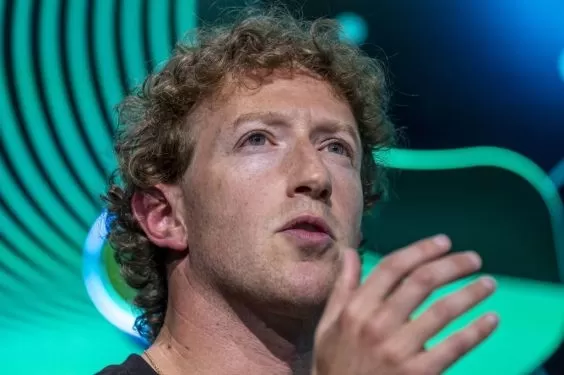
Zuckerberg expands Meta’s enterprise AI vision beyond agents
In June, Meta launched a new AI agent for enterprises, designed to assist with customer service, support, and daily operations. However, CEO Mark Zuckerberg revealed to investors on Wednesday’s second-quarter earnings call that the company’s enterpri
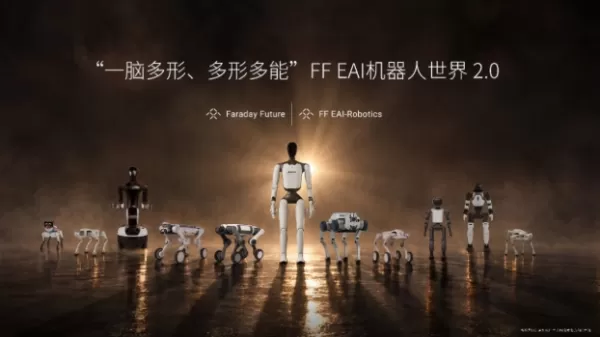
Jia Yuezhi FF Unveils Nine EAI Robots, Top Model Priced Above 920,000 Yuan
Faraday Future (FF) unveiled its 919 FF EAI Robot "Four-Core Full Intelligence" lineup on September 19, US time. The launch introduced five core models and nine configurations of EAI robot bodies, including the FF All-New Futurist, FF Master Mini, FX
Related Special Topic Recommendations
Design & Art
Universal Music, ElevenLabs Forge Co-Created AI Music Platform for Fans and Artists
Universal Music Group (UMG) announced on the 10th (US time) that it has entered into a multi-year licensing agreement and a broader strategic partnership with ElevenLabs, an AI audio research and product company. This marks ElevenLabs' first collabor
Zuckerberg expands Meta’s enterprise AI vision beyond agents
In June, Meta launched a new AI agent for enterprises, designed to assist with customer service, support, and daily operations. However, CEO Mark Zuckerberg revealed to investors on Wednesday’s second-quarter earnings call that the company’s enterpri
Jia Yuezhi FF Unveils Nine EAI Robots, Top Model Priced Above 920,000 Yuan
Faraday Future (FF) unveiled its 919 FF EAI Robot "Four-Core Full Intelligence" lineup on September 19, US time. The launch introduced five core models and nine configurations of EAI robot bodies, including the FF All-New Futurist, FF Master Mini, FX
Related Special Topic Recommendations
Design & Art
 Top AI Illustration Tools: Create Editorial Scenes and Cover Art Faster
2026 Latest Top-rated AI Illustration Tools: Our curated list features the best powerfully designed tools for creating stunning editorial scenes and eye-catching cover art quickly. Each option has gone through rigorous real-world tests, offering a free vs paid comparison to help you find the perfect match for your workflow. Try these must-try solutions today to unlock your AI edge and boost your creative productivity. Explore now at XIX.AI.
 10 tools
 xix.ai
Education and Learning
Top AI Tutors for Exam Prep: Practice Math, Science, and English
xix.ai
Education and Learning
Top AI Tutors for Exam Prep: Practice Math, Science, and English
2026 Latest Top-Rated Best AI Tutors for Exam Prep are here on XIX.AI! Our curated list features powerful game-changing tools that offer free vs paid comparison, real-world tests, and weekly updated rankings. They help boost your writing efficiency, simplify complex topic learning, and unlock your academic potential. Explore now to Discover your perfect exam prep tool and Start creating today to Unlock your AI edge!
10 tools
xix.ai
Finance
AI Budget Planning Tools for Personal Money Management
2026 Latest Best Top-Rated AI Budget Planning Tools for Personal Money Management are here on XIX.AI! This curated collection features powerful, game-changing solutions that help you conduct real-world tests, understand spending habits, and create personalized plans to boost productivity. Enjoy a free vs paid comparison along with detailed rankings. Must-try tools designed to simplify money management and unlock your AI edge. Explore now!
11 tools
xix.ai
Health & Wellness
AI Sleep Tracking Assistants: Improve Recovery with Better Bedtime Habits
2026 Latest Best Top-Rated AI Sleep Tracking Assistants curated for ultimate recovery. This fully updated weekly guide features powerful tools that deliver real-world tests, free vs paid comparison, and detailed rankings to help you find the must-try solution that boosts sleep quality and supports better bedtime habits. Explore now at XIX.AI to Unlock your AI edge.
10 tools
xix.ai
Data Analysis
AI SQL Copilots for Product and Revenue Analytics
2026 Latest Best Top-Rated AI SQL Copilots for Product and Revenue Analytics! XIX.AI has curated a powerful, game-changing collection of must-try tools that undergo real-world tests through weekly updated rankings. These tools help users boost productivity significantly by accelerating data analysis, streamlining complex queries, and generating accurate insights to drive smarter business decisions. Explore now to Discover your perfect tool for unlocking your AI edge!
14 tools
xix.ai
Education and Learning
Best AI Homework Helpers That Teach: Learn Concepts, Not Just Answers
2026 Latest Best Top-Rated AI Homework Helpers That Teach Core Concepts Not Just Answers Powerful Tools for Students Must-Try Curated List Weekly Updated Free vs Paid Comparison Real-World Tests Accurate Rankings to Help You Unlock Your Full Learning Potential Explore now to Discover your perfect tool for smarter studying.
10 tools
xix.ai

 Comments (0)
0/500
Comments (0)
0/500
AI-powered image search has evolved from a novelty into a daily essential for millions, yet most users operate under outdated assumptions.
The disconnect between what this technology actually achieves and public perception is surprisingly vast.
While AI face search has transformed how we locate and verify identities online, it represents only one facet of a much broader technological shift.
Here are ten common misconceptions that need correction.
1. It Only Matches Identical Pictures
Early reverse image search tools relied on pixel-level comparisons, essentially searching for near-duplicate files.
Modern AI image search operates on an entirely different principle.
It utilizes deep neural networks, including convolutional neural networks and vision transformers, to interpret the actual content within a photo.
Whether it's a golden retriever on a beach, a parked sedan, or a crowd at a football stadium,
the system identifies objects, scenes, and context rather than matching raw file data.
This capability allows you to upload a rough sketch and receive real photographs depicting the same concept.
2. AI Image Search and Text-Based Image Search Are the Same Thing
They are not, and confusing them often leads to poor search results.
Text-based image search depends on metadata such as filenames, alt tags, captions, and surrounding page content.
AI image search bypasses text entirely.
It analyzes the visual content itself using embedding vectors, which are numerical representations of the image's contents.
You don't need words.
You need pixels.
The practical difference is significant when searching for something difficult to describe, such as a specific fabric pattern, an unusual building, or a face you recognize but cannot name.
3. It Can't Really Recognize Faces
Many people underestimate the advancements in facial recognition within AI image search.
Dedicated platforms now allow you to upload a portrait photo and scan billions of indexed images across the open web to find visual matches.
Law enforcement agencies utilize this capability.
Journalists use it to verify identities.
Even genealogy researchers rely on it to locate old family photos scattered across archival databases.
The accuracy has reached a level where matching works across different lighting conditions, angles, and even years of aging.
While not perfect, dismissing it as unreliable ignores the current state of the technology.
4. You Need High-Quality Images for It to Work
A perfectly lit, high-resolution photo certainly helps.
However, modern AI-powered visual search engines are trained on massive datasets that include grainy surveillance footage, compressed JPEG thumbnails, and poorly framed smartphone snapshots.
The neural networks behind these tools have learned to extract meaningful features even when input quality is marginal.
So, if you've been holding off because your source photo isn't sharp enough, just try it.
You'll likely be surprised by how resilient the matching algorithms actually are.
5. Reverse Image Search and AI Image Search Are Interchangeable Terms
Reverse image search is a subset of AI image search, not a synonym.
Traditional reverse search asks one question: "Where else does this exact image appear online?"
AI image search asks something broader: "What does this image contain, and what else is visually or semantically similar?"
This distinction matters.
Reverse search is excellent for tracking image theft or sourcing a meme.
AI image search handles more complex tasks like identifying products in a lifestyle photo, finding visually related artwork, or matching a face across unrelated databases.
One is a lookup tool, while the other is a recognition system.
6. It's Only Useful for Finding Stolen Photos
Copyright enforcement was one of the first practical applications, and it remains important.
However, reducing AI image search to a piracy detector ignores most of its current capabilities.
E-commerce platforms use visual search to let shoppers find products by snapping a photo.
Medical imaging teams use it to compare diagnostic scans against databases of known conditions.
Wildlife conservation groups use it to identify individual animals by their unique markings.
The technology impacts retail, healthcare, security, and scientific research, none of which have anything to do with stolen photos.
7. There's Only One AI Image Search Tool Worth Using
Treating any single platform as the only option means missing specialized tools that outperform it in specific domains.
Some engines handle product identification particularly well.
Others excel at face-based matching across specific regions of the web.
Tools like whoarethey.ai focus on people search by letting users locate someone's online presence through a single photo.
The best tool depends entirely on what you're actually searching for.
There is no universal winner, and relying on just one means you're leaving results on the table.
8. AI Image Search Doesn't Raise Serious Privacy Concerns
This assumption is dangerously wrong.
The ability to upload someone's photo and instantly locate their social media profiles, public appearances, and other indexed images raises real ethical questions.
Several countries and U.S. states have passed legislation restricting facial recognition in commercial contexts.
The European Union's AI Act classifies real-time biometric identification in public spaces as high-risk.
If you're using AI image search tools, especially for identifying people, understanding the legal and ethical landscape isn't optional.
It's a prerequisite for responsible use.
9. It Doesn't Work Well With Non-Photographic Images
Many people assume AI visual search only handles photographs.
That hasn't been true for years.
Current models process illustrations, diagrams, screenshots, medical scans, and even hand-drawn sketches with surprising accuracy.
Visual search engines can identify a plant species from a botanical illustration or return results for a sketched furniture concept.
The underlying vision models don't discriminate between a photograph and a drawing.
They extract features from any visual input.
If it has shapes, colors, and spatial relationships, modern AI image search can work with it.
10. The Technology Has Peaked
Multimodal AI models are rewriting the rules faster than most people realize.
The next generation of AI image search won't just match visual features.
It will understand the meaning behind them.
Search for "a photo that conveys loneliness" and get results based on emotional interpretation, not pixel analysis.
Combine a voice description with a rough sketch and get precise visual matches.
The underlying transformer architectures keep scaling, the training datasets keep growing, and the accuracy benchmarks keep climbing.
Calling this technology "mature" dramatically understates where it's headed.
The Bigger Picture
Most of these misconceptions stem from the same source: people's mental model of AI image search is stuck several years in the past.
The technology has moved well beyond simple file matching into genuine visual comprehension.
Whether you're using it for product discovery, identity verification, medical research, or creative inspiration, understanding what it actually does puts you in a much better position to use it effectively.








 Universal Music, ElevenLabs Forge Co-Created AI Music Platform for Fans and Artists
Universal Music Group (UMG) announced on the 10th (US time) that it has entered into a multi-year licensing agreement and a broader strategic partnership with ElevenLabs, an AI audio research and product company. This marks ElevenLabs' first collabor
Universal Music, ElevenLabs Forge Co-Created AI Music Platform for Fans and Artists
Universal Music Group (UMG) announced on the 10th (US time) that it has entered into a multi-year licensing agreement and a broader strategic partnership with ElevenLabs, an AI audio research and product company. This marks ElevenLabs' first collabor
 Zuckerberg expands Meta’s enterprise AI vision beyond agents
In June, Meta launched a new AI agent for enterprises, designed to assist with customer service, support, and daily operations. However, CEO Mark Zuckerberg revealed to investors on Wednesday’s second-quarter earnings call that the company’s enterpri
Zuckerberg expands Meta’s enterprise AI vision beyond agents
In June, Meta launched a new AI agent for enterprises, designed to assist with customer service, support, and daily operations. However, CEO Mark Zuckerberg revealed to investors on Wednesday’s second-quarter earnings call that the company’s enterpri
 Jia Yuezhi FF Unveils Nine EAI Robots, Top Model Priced Above 920,000 Yuan
Faraday Future (FF) unveiled its 919 FF EAI Robot "Four-Core Full Intelligence" lineup on September 19, US time. The launch introduced five core models and nine configurations of EAI robot bodies, including the FF All-New Futurist, FF Master Mini, FX
Jia Yuezhi FF Unveils Nine EAI Robots, Top Model Priced Above 920,000 Yuan
Faraday Future (FF) unveiled its 919 FF EAI Robot "Four-Core Full Intelligence" lineup on September 19, US time. The launch introduced five core models and nine configurations of EAI robot bodies, including the FF All-New Futurist, FF Master Mini, FX

2026 Latest Top-rated AI Illustration Tools: Our curated list features the best powerfully designed tools for creating stunning editorial scenes and eye-catching cover art quickly. Each option has gone through rigorous real-world tests, offering a free vs paid comparison to help you find the perfect match for your workflow. Try these must-try solutions today to unlock your AI edge and boost your creative productivity. Explore now at XIX.AI.
10 tools
xix.ai

2026 Latest Top-Rated Best AI Tutors for Exam Prep are here on XIX.AI! Our curated list features powerful game-changing tools that offer free vs paid comparison, real-world tests, and weekly updated rankings. They help boost your writing efficiency, simplify complex topic learning, and unlock your academic potential. Explore now to Discover your perfect exam prep tool and Start creating today to Unlock your AI edge!
10 tools
xix.ai

2026 Latest Best Top-Rated AI Budget Planning Tools for Personal Money Management are here on XIX.AI! This curated collection features powerful, game-changing solutions that help you conduct real-world tests, understand spending habits, and create personalized plans to boost productivity. Enjoy a free vs paid comparison along with detailed rankings. Must-try tools designed to simplify money management and unlock your AI edge. Explore now!
11 tools
xix.ai

2026 Latest Best Top-Rated AI Sleep Tracking Assistants curated for ultimate recovery. This fully updated weekly guide features powerful tools that deliver real-world tests, free vs paid comparison, and detailed rankings to help you find the must-try solution that boosts sleep quality and supports better bedtime habits. Explore now at XIX.AI to Unlock your AI edge.
10 tools
xix.ai

2026 Latest Best Top-Rated AI SQL Copilots for Product and Revenue Analytics! XIX.AI has curated a powerful, game-changing collection of must-try tools that undergo real-world tests through weekly updated rankings. These tools help users boost productivity significantly by accelerating data analysis, streamlining complex queries, and generating accurate insights to drive smarter business decisions. Explore now to Discover your perfect tool for unlocking your AI edge!
14 tools
xix.ai

2026 Latest Best Top-Rated AI Homework Helpers That Teach Core Concepts Not Just Answers Powerful Tools for Students Must-Try Curated List Weekly Updated Free vs Paid Comparison Real-World Tests Accurate Rankings to Help You Unlock Your Full Learning Potential Explore now to Discover your perfect tool for smarter studying.
10 tools
xix.ai












