


 Home
HomeHow to use Google AI Search in 2025? A complete guide for mobile search.
The online search landscape is undergoing a rapid transformation in 2025, fueled by leaps in artificial intelligence. As the established leader, Google is confronting novel competition from AI-driven platforms like ChatGPT and Perplexity. To maintain its position, Google is weaving AI directly into its core search product with features like 'AI Mode,' powered by its own Gemini model. This analysis explores Google's strategic pivot to AI, its potential effects on user behavior, and the wider implications for the technology sector.
Key Points
Google has launched an 'AI Mode' in search to directly rival AI chatbots such as ChatGPT.
This new feature utilizes Google's Gemini AI model to generate conversational, direct answers.
AI Mode adds a dedicated tab within Google Search that provides interactive AI assistance.
Google's heavy reliance on search ad revenue is under threat from AI-first competitors.
The Gemini model signifies Google's move to process more sophisticated and multi-layered queries.
The company is investigating new advertising models beyond the traditional list of blue links.
Following a U.S. court ruling that found Google illegally maintained a search monopoly, the company is accelerating AI integration across its search services.
The AI Search Revolution: Google's Response
The Rise of AI Chatbots and Google's Reaction
The debut of ChatGPT in 2022 triggered a frenzied race across Silicon Valley to embed AI chatbots into digital services. This shift has placed immense pressure on conventional search engines, with Google at the forefront. Google's main profit center, search advertising, faces a challenge from these new AI interfaces that offer direct answers, potentially eroding Google's long-held dominance in finding information online.
Perceptions that Google was falling behind in the AI arena have grown. The tech giant is now working to dispel these concerns. The unveiling of its new AI-powered search mode is a clear signal that it intends to remain a central player in this evolving field.
AI Mode is Google's primary counter to the rise of standalone AI chatbots. Instead of presenting pages of website links, AI Mode delivers information in a conversational format, mimicking the interactive dialogue of a chatbot. This marks a fundamental change in Google's philosophy, aiming to give users more immediate and thorough responses. This integration reflects the broader industry trend toward conversational AI and intelligent assistance.
This AI evolution is poised to reshape Google's share of the search market and fundamentally alter how people access information online.
Introducing AI Mode:A New Search Experience
Google's 'AI Mode' is a new search capability initially rolling out to users in the United States
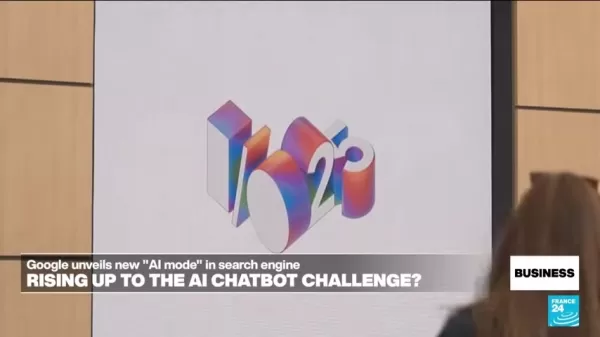
. It introduces a specialized tab within the standard Google search interface, which users can switch on to receive conversational answers. The feature is driven by Google's latest AI model, Gemini, representing a more advanced generation of AI designed to tackle intricate and nuanced questions.
Google CEO Sundar Pichai describes 'AI Mode' as a fundamental rethinking of search. With enhanced reasoning, it can process longer, more complex inquiries. It also maintains context from previous questions, enabling a continuous, refined search dialogue that yields more precise results. Early testing indicates users can find information up to three times faster with this method.
AI Mode delivers a distinctly different experience, focusing on problem-solving rather than simply directing users to external sites. It also introduces novel capabilities, such as allowing users to virtually try on clothes without visiting a physical store.
The Revenue Challenge:Advertising in an AI-Driven World
The ascent of AI chatbots poses a major challenge to Google's revenue model. The classic pay-per-click ad system tied to blue links may diminish in value as AI Mode provides answers directly. This shift necessitates innovative ad formats that blend naturally into a conversational AI interface.
Google is experimenting with various approaches, like virtual fitting rooms, which suggest a future of interactive ad experiences that leverage AI to open new revenue channels. Key questions persist regarding how ads will be incorporated, what they will look like, and whether they will prove as effective for advertisers.
Another possibility is that Google might adopt more direct monetization, such as charging businesses a subscription to be featured in its AI-generated answers. Such a move could attract further regulatory scrutiny from authorities already working to curtail the company's influence over the web.
Monopoly Challenges and Market Competition
Legal Battles and the Shifting Competitive Landscape
A U.S. judge recently ruled that Google is illegally maintaining a monopoly in search. The court is evaluating potential remedies, which could include mandating the sale of its Chrome browser, which is integral to its search business. This legal pressure highlights the growing scrutiny of Google's market power and business practices.
Google contends the competitive environment has changed since the case began, particularly with the advent of capable AI chatbots. The company argues that AI has empowered competitors in ways that previously didn't exist, potentially balancing a field that was once tilted in Google's favor. However, Google still commands nearly 90 percent of the search engine market

. Should a breakup be ordered, it might involve separating Google's AI initiatives into a distinct entity.
In this context, the performance of Gemini is critically important. To prevent further erosion of its search dominance, Google must deploy an AI model that is successful, appealing, and genuinely useful to attract and retain users.
Google's Dependence on Search
The importance of search to Google's parent company, Alphabet, cannot be overstated. Over 56 percent of Alphabet's total revenue stems from Google Search and closely related services. This makes it imperative for the company to defend its leadership in online search and make significant advances in AI, the defining technology for the industry's foreseeable future. Losing ground here would represent a loss of billions in revenue.
Currently, Google holds only about 2.5% of the AI chatbot usage market, while competitors claim a much larger share

. This lag is likely a key driver behind Google's push to promote its AI products, especially as AI becomes more intertwined with search. The new AI Mode is a central part of the strategy to regain momentum.
Pros and Cons of Google's AI-Driven Search
Pros
Enhanced User Experience: Delivers direct, conversational answers for a more intuitive interaction.
Advanced Query Handling: Understands and responds to complex, multi-part questions.
Increased Efficiency: Saves time by synthesizing information, reducing the need to click through multiple websites.
Innovative Features: Introduces new utilities like virtual try-ons, enriching online shopping.
Cons
Revenue Disruption: Undermines the traditional search ad model based on link clicks.
Monopoly Concerns: Attracts ongoing legal and regulatory challenges over market dominance.
Reliability and Accuracy: Raises risks of AI-generated inaccuracies or embedded biases.
Workforce Impact: Could displace jobs related to traditional search engine optimization and management.
FAQ
What is Google AI Mode?
Google AI Mode is an integrated feature that uses artificial intelligence to provide direct, conversational answers to queries, offering an alternative to the standard list of website links.
How does Gemini enhance Google's AI capabilities?
Gemini is Google's advanced AI model that powers AI Mode. It offers superior reasoning and natural language understanding to manage complex searches and deliver detailed, comprehensive responses.
What challenges does Google face from AI chatbots like ChatGPT?
AI chatbots threaten Google's core advertising business by providing instant answers that bypass traditional website links. They also pose a competitive risk to Google's overwhelming market share in online search.
How is Google addressing the competition from AI chatbots?
Google is embedding AI directly into search via AI Mode and is developing new, interactive advertising formats that work within an AI-conversational framework to create sustainable revenue.
What are the potential consequences of Google's search engine monopoly?
Potential outcomes include stringent regulatory actions, such as being compelled to divest parts of its business like Chrome, aimed at fostering greater competition and innovation in the search market.
Why is Alphabet so dependent on its search engine?
Search and related services contribute over 56% of Alphabet's total revenue, making it essential for the company to maintain a commanding position in the online search market.
Related Questions
How will AI change the way we search for information online?
AI is poised to revolutionize online search. Users will engage in natural, conversational queries and receive synthesized, comprehensive answers, minimizing the need to trawl through multiple web pages. This shift towards understanding intent and context will make searching more efficient and personalized. The focus will move from keyword optimization to optimizing for conversational AI understanding. As Google potentially de-emphasizes traditional links, SEO strategies may pivot toward securing visibility within AI-generated answers. Businesses that don't adapt to this new paradigm risk losing relevance. Furthermore, the rise of AI results introduces new concerns for brands about reputation management and the risk of AI systems presenting inaccurate or harmful information, placing additional pressure on Google to ensure its technology is both reliable and trustworthy.
Related article
 How to fix Core Web Vitals for better SEO rankings
How to Build a Free Website: Free Domain, Hosting & AI Website BuilderTable of ContentsIntroductionAI Website Builder 1: Hookous AIStep 1: Sign UpStep 2: Choose Business Type/NicheStep 3: Select ServicesStep 4: Define Website GoalsStep 5: Enter Busin
Apple, Google Partner With Anthropic to Address 27-Year-Old Vulnerability via Glass Wing Protection
As artificial intelligence advances rapidly in code generation and logical reasoning, the cybersecurity landscape faces unprecedented challenges. Recently, the prominent AI startup Anthropic officially launched a cross-industry collaboration called *
OpenAI Chief Scientist Addresses AI Reasoning Transparency Debate: Complexity Steady, No Sudden Jump
On September 2, Jakub Pachocki, OpenAI’s Chief Scientist, addressed public concerns on X regarding the AI model Astra, clarifying claims that it operates without oversight and lacks transparent reasoning.Why the Controversy Erupted: Deep Recurrence O
Related Special Topic Recommendations
Image editing
How to fix Core Web Vitals for better SEO rankings
How to Build a Free Website: Free Domain, Hosting & AI Website BuilderTable of ContentsIntroductionAI Website Builder 1: Hookous AIStep 1: Sign UpStep 2: Choose Business Type/NicheStep 3: Select ServicesStep 4: Define Website GoalsStep 5: Enter Busin
Apple, Google Partner With Anthropic to Address 27-Year-Old Vulnerability via Glass Wing Protection
As artificial intelligence advances rapidly in code generation and logical reasoning, the cybersecurity landscape faces unprecedented challenges. Recently, the prominent AI startup Anthropic officially launched a cross-industry collaboration called *
OpenAI Chief Scientist Addresses AI Reasoning Transparency Debate: Complexity Steady, No Sudden Jump
On September 2, Jakub Pachocki, OpenAI’s Chief Scientist, addressed public concerns on X regarding the AI model Astra, clarifying claims that it operates without oversight and lacks transparent reasoning.Why the Controversy Erupted: Deep Recurrence O
Related Special Topic Recommendations
Image editing
 AI Object Removal Editors: Clean Up Portraits, Travel, and Product Shots
2026 Latest Best Top-rated AI Object Removal Editors for portraits travel product shots! XIX.AI curates a powerful game-changing collection regularly updated with weekly rankings. These tools offer real-world tests to help you quickly remove unwanted elements, boost content quality, and save tons of time without compromising results. Must-try for anyone aiming to unlock their AI creation edge. Explore now!
 10 tools
 xix.ai
Text-to-speech
Best AI Text to Speech Tools for Online Courses
xix.ai
Text-to-speech
Best AI Text to Speech Tools for Online Courses
2026 Latest Best Top-rated AI Text to Speech Tools for Online Courses are curated by XIX.AI based on rigorous real-world tests and weekly updated rankings. These powerful tools help creators deliver crystal-clear audio content effortlessly, boosting writing efficiency and streamlining course production. Check out the free vs paid comparison to find your perfect fit. Explore now to unlock your AI edge in online education.
10 tools
xix.ai
writing
AI Blog Title Tools for Higher Click Through Rates
2026 Latest Best Top-Rated AI Blog Title Tools for Higher Click Through Rates! XIX.AI has carefully curated a powerful, game-changing collection of top tools that go through rigorous real-world tests. You’ll find a free vs paid comparison, weekly updated rankings, and detailed insights to help you boost your blog’s traffic efficiently. Must-try options are highlighted to help you unlock your AI edge. Explore now!
10 tools
xix.ai
automation
Best AI Task Routing Tools for Support Workflows
2026 Latest Best Top-rated AI Task Routing Tools for Support Workflows! XIX.AI has curated a highly powerful game-changing collection of must-try solutions, all undergoing rigorous real-world tests and updated weekly. These tools streamline workflows, boost productivity, and help teams deliver faster, more efficient support. Explore now to discover your perfect tool and unlock your AI edge!
17 tools
xix.ai
Academic Research
AI Citation and Paper Summary Tools
2026 Latest Best Top-Rated AI Citation and Paper Summary Tools Curated by XIX.AI. Get powerful game-changing solutions for quick content creation, improved writing efficiency, and boosting productivity. We offer a free vs paid comparison along with real-world tests and weekly updated rankings to help you find the must-try tool that fits your needs perfectly. Explore now to Unlock your AI edge.
10 tools
xix.ai
Productivity
Best AI Productivity Tools for Daily Work
2026 Latest Best Top-Rated AI Productivity Tools for Daily Work! XIX.AI has curated a powerful, game-changing selection based on rigorous weekly updated rankings and real-world tests. You’ll find must-try options that boost writing efficiency, streamline content creation, and help you overcome daily work challenges. Get a free vs paid comparison to find the perfect fit for your needs. Explore now to unlock your AI edge!
9 tools
xix.ai

 Comments (0)
0/500
Comments (0)
0/500
The online search landscape is undergoing a rapid transformation in 2025, fueled by leaps in artificial intelligence. As the established leader, Google is confronting novel competition from AI-driven platforms like ChatGPT and Perplexity. To maintain its position, Google is weaving AI directly into its core search product with features like 'AI Mode,' powered by its own Gemini model. This analysis explores Google's strategic pivot to AI, its potential effects on user behavior, and the wider implications for the technology sector.
Key Points
Google has launched an 'AI Mode' in search to directly rival AI chatbots such as ChatGPT.
This new feature utilizes Google's Gemini AI model to generate conversational, direct answers.
AI Mode adds a dedicated tab within Google Search that provides interactive AI assistance.
Google's heavy reliance on search ad revenue is under threat from AI-first competitors.
The Gemini model signifies Google's move to process more sophisticated and multi-layered queries.
The company is investigating new advertising models beyond the traditional list of blue links.
Following a U.S. court ruling that found Google illegally maintained a search monopoly, the company is accelerating AI integration across its search services.
The AI Search Revolution: Google's Response
The Rise of AI Chatbots and Google's Reaction
The debut of ChatGPT in 2022 triggered a frenzied race across Silicon Valley to embed AI chatbots into digital services. This shift has placed immense pressure on conventional search engines, with Google at the forefront. Google's main profit center, search advertising, faces a challenge from these new AI interfaces that offer direct answers, potentially eroding Google's long-held dominance in finding information online.
Perceptions that Google was falling behind in the AI arena have grown. The tech giant is now working to dispel these concerns. The unveiling of its new AI-powered search mode is a clear signal that it intends to remain a central player in this evolving field.
AI Mode is Google's primary counter to the rise of standalone AI chatbots. Instead of presenting pages of website links, AI Mode delivers information in a conversational format, mimicking the interactive dialogue of a chatbot. This marks a fundamental change in Google's philosophy, aiming to give users more immediate and thorough responses. This integration reflects the broader industry trend toward conversational AI and intelligent assistance.
This AI evolution is poised to reshape Google's share of the search market and fundamentally alter how people access information online.
Introducing AI Mode:A New Search Experience
Google's 'AI Mode' is a new search capability initially rolling out to users in the United States
. It introduces a specialized tab within the standard Google search interface, which users can switch on to receive conversational answers. The feature is driven by Google's latest AI model, Gemini, representing a more advanced generation of AI designed to tackle intricate and nuanced questions.
Google CEO Sundar Pichai describes 'AI Mode' as a fundamental rethinking of search. With enhanced reasoning, it can process longer, more complex inquiries. It also maintains context from previous questions, enabling a continuous, refined search dialogue that yields more precise results. Early testing indicates users can find information up to three times faster with this method.
AI Mode delivers a distinctly different experience, focusing on problem-solving rather than simply directing users to external sites. It also introduces novel capabilities, such as allowing users to virtually try on clothes without visiting a physical store.
The Revenue Challenge:Advertising in an AI-Driven World
The ascent of AI chatbots poses a major challenge to Google's revenue model. The classic pay-per-click ad system tied to blue links may diminish in value as AI Mode provides answers directly. This shift necessitates innovative ad formats that blend naturally into a conversational AI interface.
Google is experimenting with various approaches, like virtual fitting rooms, which suggest a future of interactive ad experiences that leverage AI to open new revenue channels. Key questions persist regarding how ads will be incorporated, what they will look like, and whether they will prove as effective for advertisers.
Another possibility is that Google might adopt more direct monetization, such as charging businesses a subscription to be featured in its AI-generated answers. Such a move could attract further regulatory scrutiny from authorities already working to curtail the company's influence over the web.
Monopoly Challenges and Market Competition
Legal Battles and the Shifting Competitive Landscape
A U.S. judge recently ruled that Google is illegally maintaining a monopoly in search. The court is evaluating potential remedies, which could include mandating the sale of its Chrome browser, which is integral to its search business. This legal pressure highlights the growing scrutiny of Google's market power and business practices.
Google contends the competitive environment has changed since the case began, particularly with the advent of capable AI chatbots. The company argues that AI has empowered competitors in ways that previously didn't exist, potentially balancing a field that was once tilted in Google's favor. However, Google still commands nearly 90 percent of the search engine market
. Should a breakup be ordered, it might involve separating Google's AI initiatives into a distinct entity.
In this context, the performance of Gemini is critically important. To prevent further erosion of its search dominance, Google must deploy an AI model that is successful, appealing, and genuinely useful to attract and retain users.
Google's Dependence on Search
The importance of search to Google's parent company, Alphabet, cannot be overstated. Over 56 percent of Alphabet's total revenue stems from Google Search and closely related services. This makes it imperative for the company to defend its leadership in online search and make significant advances in AI, the defining technology for the industry's foreseeable future. Losing ground here would represent a loss of billions in revenue.
Currently, Google holds only about 2.5% of the AI chatbot usage market, while competitors claim a much larger share
. This lag is likely a key driver behind Google's push to promote its AI products, especially as AI becomes more intertwined with search. The new AI Mode is a central part of the strategy to regain momentum.
Pros and Cons of Google's AI-Driven Search
Pros
Enhanced User Experience: Delivers direct, conversational answers for a more intuitive interaction.
Advanced Query Handling: Understands and responds to complex, multi-part questions.
Increased Efficiency: Saves time by synthesizing information, reducing the need to click through multiple websites.
Innovative Features: Introduces new utilities like virtual try-ons, enriching online shopping.
Cons
Revenue Disruption: Undermines the traditional search ad model based on link clicks.
Monopoly Concerns: Attracts ongoing legal and regulatory challenges over market dominance.
Reliability and Accuracy: Raises risks of AI-generated inaccuracies or embedded biases.
Workforce Impact: Could displace jobs related to traditional search engine optimization and management.
FAQ
What is Google AI Mode?
Google AI Mode is an integrated feature that uses artificial intelligence to provide direct, conversational answers to queries, offering an alternative to the standard list of website links.
How does Gemini enhance Google's AI capabilities?
Gemini is Google's advanced AI model that powers AI Mode. It offers superior reasoning and natural language understanding to manage complex searches and deliver detailed, comprehensive responses.
What challenges does Google face from AI chatbots like ChatGPT?
AI chatbots threaten Google's core advertising business by providing instant answers that bypass traditional website links. They also pose a competitive risk to Google's overwhelming market share in online search.
How is Google addressing the competition from AI chatbots?
Google is embedding AI directly into search via AI Mode and is developing new, interactive advertising formats that work within an AI-conversational framework to create sustainable revenue.
What are the potential consequences of Google's search engine monopoly?
Potential outcomes include stringent regulatory actions, such as being compelled to divest parts of its business like Chrome, aimed at fostering greater competition and innovation in the search market.
Why is Alphabet so dependent on its search engine?
Search and related services contribute over 56% of Alphabet's total revenue, making it essential for the company to maintain a commanding position in the online search market.
Related Questions
How will AI change the way we search for information online?
AI is poised to revolutionize online search. Users will engage in natural, conversational queries and receive synthesized, comprehensive answers, minimizing the need to trawl through multiple web pages. This shift towards understanding intent and context will make searching more efficient and personalized. The focus will move from keyword optimization to optimizing for conversational AI understanding. As Google potentially de-emphasizes traditional links, SEO strategies may pivot toward securing visibility within AI-generated answers. Businesses that don't adapt to this new paradigm risk losing relevance. Furthermore, the rise of AI results introduces new concerns for brands about reputation management and the risk of AI systems presenting inaccurate or harmful information, placing additional pressure on Google to ensure its technology is both reliable and trustworthy.








 How to fix Core Web Vitals for better SEO rankings
How to Build a Free Website: Free Domain, Hosting & AI Website BuilderTable of ContentsIntroductionAI Website Builder 1: Hookous AIStep 1: Sign UpStep 2: Choose Business Type/NicheStep 3: Select ServicesStep 4: Define Website GoalsStep 5: Enter Busin
How to fix Core Web Vitals for better SEO rankings
How to Build a Free Website: Free Domain, Hosting & AI Website BuilderTable of ContentsIntroductionAI Website Builder 1: Hookous AIStep 1: Sign UpStep 2: Choose Business Type/NicheStep 3: Select ServicesStep 4: Define Website GoalsStep 5: Enter Busin
 Apple, Google Partner With Anthropic to Address 27-Year-Old Vulnerability via Glass Wing Protection
As artificial intelligence advances rapidly in code generation and logical reasoning, the cybersecurity landscape faces unprecedented challenges. Recently, the prominent AI startup Anthropic officially launched a cross-industry collaboration called *
Apple, Google Partner With Anthropic to Address 27-Year-Old Vulnerability via Glass Wing Protection
As artificial intelligence advances rapidly in code generation and logical reasoning, the cybersecurity landscape faces unprecedented challenges. Recently, the prominent AI startup Anthropic officially launched a cross-industry collaboration called *
 OpenAI Chief Scientist Addresses AI Reasoning Transparency Debate: Complexity Steady, No Sudden Jump
On September 2, Jakub Pachocki, OpenAI’s Chief Scientist, addressed public concerns on X regarding the AI model Astra, clarifying claims that it operates without oversight and lacks transparent reasoning.Why the Controversy Erupted: Deep Recurrence O
OpenAI Chief Scientist Addresses AI Reasoning Transparency Debate: Complexity Steady, No Sudden Jump
On September 2, Jakub Pachocki, OpenAI’s Chief Scientist, addressed public concerns on X regarding the AI model Astra, clarifying claims that it operates without oversight and lacks transparent reasoning.Why the Controversy Erupted: Deep Recurrence O

2026 Latest Best Top-rated AI Object Removal Editors for portraits travel product shots! XIX.AI curates a powerful game-changing collection regularly updated with weekly rankings. These tools offer real-world tests to help you quickly remove unwanted elements, boost content quality, and save tons of time without compromising results. Must-try for anyone aiming to unlock their AI creation edge. Explore now!
10 tools
xix.ai

2026 Latest Best Top-rated AI Text to Speech Tools for Online Courses are curated by XIX.AI based on rigorous real-world tests and weekly updated rankings. These powerful tools help creators deliver crystal-clear audio content effortlessly, boosting writing efficiency and streamlining course production. Check out the free vs paid comparison to find your perfect fit. Explore now to unlock your AI edge in online education.
10 tools
xix.ai

2026 Latest Best Top-Rated AI Blog Title Tools for Higher Click Through Rates! XIX.AI has carefully curated a powerful, game-changing collection of top tools that go through rigorous real-world tests. You’ll find a free vs paid comparison, weekly updated rankings, and detailed insights to help you boost your blog’s traffic efficiently. Must-try options are highlighted to help you unlock your AI edge. Explore now!
10 tools
xix.ai

2026 Latest Best Top-rated AI Task Routing Tools for Support Workflows! XIX.AI has curated a highly powerful game-changing collection of must-try solutions, all undergoing rigorous real-world tests and updated weekly. These tools streamline workflows, boost productivity, and help teams deliver faster, more efficient support. Explore now to discover your perfect tool and unlock your AI edge!
17 tools
xix.ai
2026 Latest Best Top-Rated AI Citation and Paper Summary Tools Curated by XIX.AI. Get powerful game-changing solutions for quick content creation, improved writing efficiency, and boosting productivity. We offer a free vs paid comparison along with real-world tests and weekly updated rankings to help you find the must-try tool that fits your needs perfectly. Explore now to Unlock your AI edge.
10 tools
xix.ai

2026 Latest Best Top-Rated AI Productivity Tools for Daily Work! XIX.AI has curated a powerful, game-changing selection based on rigorous weekly updated rankings and real-world tests. You’ll find must-try options that boost writing efficiency, streamline content creation, and help you overcome daily work challenges. Get a free vs paid comparison to find the perfect fit for your needs. Explore now to unlock your AI edge!
9 tools
xix.ai












