


 Home
HomeFallen power line exposes AI data center problem. Here’s the fix.
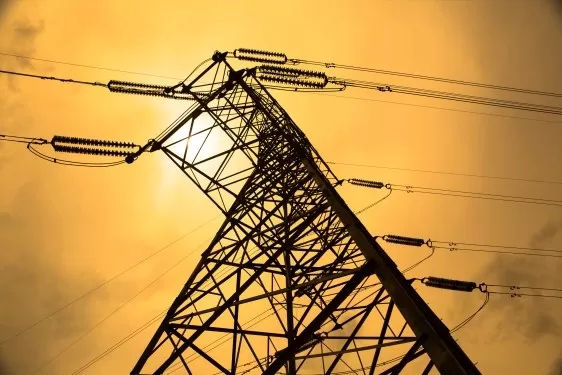
A power line failure occurred near Washington, D.C., this week. Under normal circumstances, the grid would recover in seconds, but this time it took over ten minutes because more than three gigawatts of data center load dropped off nearly at the same time.
According to data from Ting Labs, a startup operating an IoT sensor network through household electrical sockets, the incident caused voltage spikes across the PJM grid from Northern Virginia to Chicago.
While the event didn't trigger a blackout, it caused lights to flicker across the region. It highlighted the growing impact data centers can have on the grid, a trend experts expect to become more common.
Northern Virginia, part of PJM's territory, hosts the world's densest concentration of data centers.
“It’s the canary in the coal mine,” said Ricardo de Azevedo, CTO of ON.Energy, in an interview with TechCrunch. He added that such events involving large loads like data centers are “happening more and more.”
This incident mirrors one that occurred two years ago on the same PJM grid, and could foreshadow larger disruptions if data centers are not designed to handle power supply disturbances more gracefully. PJM Interconnection, the largest grid operator in the U.S., manages grids from New Jersey to Illinois and serves 67 million customers.
According to PJM data, when the power line failed, data centers switched to backup power, causing approximately 3.1 gigawatts of load to disappear within 30 seconds. The grid initially seemed to recover, but shortly afterward additional loads dropped off. At its peak, PJM's grid had an excess of 3.49 gigawatts. It took another 11 minutes to stabilize. Reuters reported that the disconnected data centers accounted for about 3% of PJM's total demand at the time.
A few percent might not seem significant, but the electrical grid requires near-perfect balance between supply and demand. Imbalances cause voltage sags or spikes. While the grid and connected devices can handle minor fluctuations, larger ones trigger failsafes in the grid or individual facilities, leading to disconnections.
When data centers in Northern Virginia detected the voltage fluctuation from the failed power line, they switched to backup power, removing their load from the grid. As more data centers did the same, the cumulative load reduction turned a small supply drop into a larger demand drop, causing a surge in supply and flickering lights.
Most data centers operate on split-second decisions, and those that disconnected this week were no exception. According to Ali Zain Banatwala, senior market models specialist at the Independent Electricity System Operator, when the voltage dip hit, they all decided to disconnect within seconds of each other.
“We need to find a way for these loads that are located close to each other to disconnect or reconnect sequentially,” he said. A more orderly approach would enable grid operators to develop stronger procedures in advance.
Alternatively, data centers could be designed to absorb disruptions rather than disconnect. One startup, ON.Energy, has been developing a product to help data centers and the grid ride through events like this week's.
The company has created an uninterruptible power supply for an entire data center campus, covering servers, chillers, and other equipment. Essentially, it places the data center behind a bank of batteries linked to advanced power conversion hardware. The grid sees only a single, consistent, well-behaved load, avoiding the peaks and valleys from individual components. ON.Energy's system enables data centers to adjust computing workloads — including AI training — up or down without disturbing the grid.
More importantly, it allows data centers to absorb power fluctuations from the grid. Instead of disconnecting, ON.Energy's system can use excess power to charge batteries, and when power drops, it can supply servers. It can also follow the grid's lead within milliseconds, preventing the sags or surges that caused this week's issue for PJM.
De Azevedo said ON.Energy is currently installing 3 gigawatts worth of its systems across four data center campuses.
Grid managers have also become aware of the problem.
For example, de Azevedo noted that ERCOT will require large loads like data centers to “ride through” disruptions.
Time is running out. This week's mass disconnection was twice as large as a similar event in 2024, when 60 data centers disconnected simultaneously, removing 1.5 gigawatts from the grid. According to Synapse Energy Economics, data centers then represented about 6% of PJM's load. By 2040, that share is expected to reach 24%. If the issue is not addressed soon, the situation could become much worse.
Related article
 Does Mark Zuckerberg Really Believe AI Is for Everyone?
Loading the player…Meta introduced Glimmer this week, an open-weight AI model that anyone can download and run on personal hardware—a sharp contrast to Muse Spark, the company’s more powerful model, which remains locked behind its own APIs. The relea
Meta borrows Tesla’s tent strategy to construct data centers
Just when you thought the AI data center boom couldn’t get any crazier, Meta has gone and built data centers in tents. The strategy appears to borrow in equal parts from Tesla and xAI.In a bid to cut construction time in half, Meta has built six tent
Groq raises $350M to fuel its pivot from AI chips to neocloud
AI infrastructure firm Groq has secured $350 million in fresh funding, marking its ongoing transition from a specialized chip developer to a neocloud provider offering robust GPU and AI infrastructure services.Backed by Disruptive Technologies, with
Related Special Topic Recommendations
Education and Learning
Does Mark Zuckerberg Really Believe AI Is for Everyone?
Loading the player…Meta introduced Glimmer this week, an open-weight AI model that anyone can download and run on personal hardware—a sharp contrast to Muse Spark, the company’s more powerful model, which remains locked behind its own APIs. The relea
Meta borrows Tesla’s tent strategy to construct data centers
Just when you thought the AI data center boom couldn’t get any crazier, Meta has gone and built data centers in tents. The strategy appears to borrow in equal parts from Tesla and xAI.In a bid to cut construction time in half, Meta has built six tent
Groq raises $350M to fuel its pivot from AI chips to neocloud
AI infrastructure firm Groq has secured $350 million in fresh funding, marking its ongoing transition from a specialized chip developer to a neocloud provider offering robust GPU and AI infrastructure services.Backed by Disruptive Technologies, with
Related Special Topic Recommendations
Education and Learning
 AI Study Tools for Homework and Exam Prep
2026 Latest Best AI Study Tools for Homework and Exam Prep! XIX.AI curates a top-rated list of powerful, game-changing tools that help students boost productivity, streamline homework completion, and ace exams through real-world tests. Get a free vs paid comparison, detailed rankings, and must-try options to unlock your AI edge. Explore now!
 10 tools
 xix.ai
Music composition
AI Vocal Demo Tools for Songwriters, Hooks, Toplines, and Multilingual Draft Sessions
xix.ai
Music composition
AI Vocal Demo Tools for Songwriters, Hooks, Toplines, and Multilingual Draft Sessions
2026 Latest Best AI Vocal Demo Tools for Songwriters, Hook Creators, and Multi-Language Content Teams! XIX.AI has curated a top-rated list of powerful game-changing tools that go through rigorous real-world tests. You’ll find detailed free vs paid comparison data, comprehensive rankings, and must-try options to help you boost writing efficiency and unlock your creative potential. Explore now to discover your perfect tool for all your content needs!
9 tools
xix.ai
Business
Best AI Competitive Research Tools for Small Businesses
2026 Latest Best Top-rated AI Competitive Research Tools for Small Businesses! XIX.AI has curated a highly powerful game-changing collection, updated weekly with rigorous real-world tests and detailed rankings. You can find a comprehensive free vs paid comparison to help you identify the must-try tools that boost your productivity and give you a competitive edge. Explore now to discover your perfect tool!
9 tools
xix.ai
Image editing
Photoshop AI Retouch Tools for Ecommerce Apparel, Skin Cleanup, and Color Consistency
2026 Latest Best Photoshop AI retouch tools for ecommerce apparel, skin cleanup, and color consistency! This top-rated curated list features powerful game-changing solutions that help you boost writing efficiency, streamline content creation, and achieve perfect visual results effortlessly. Each tool has undergone real-world tests through weekly updated rankings, complete with free vs paid comparison details. Backed by XIX.AI, it’s the must-try guide for anyone aiming to unlock your AI edge. Explore now!
10 tools
xix.ai
Prompt
Best AI Prompt Libraries for ChatGPT Workflows
2026 Latest Best Top-Rated AI Prompt Libraries for optimizing all types of ChatGPT workflows. XIX.AI has curated a powerful, game-changing collection that goes through rigorous real-world tests to ensure top performance. You can find detailed free vs paid comparisons and expert rankings to help you choose the must-try tools that boost your productivity and unlock your AI edge. Explore now!
11 tools
xix.ai
Education and Learning
AI Quiz Builder Platforms for Teachers, Tutors, and Cohort-Based Learning Programs
2026 Latest Best AI Quiz Builder Platforms for Teachers, Tutors, and Cohort-Based Learning Programs! XIX.AI has curated a top-rated list of powerful game-changing tools that go through real-world tests to deliver accurate rankings. These must-try platforms help boost writing efficiency, streamline content creation, and simplify quiz design across all learning scenarios. Explore now to discover your perfect tool for unlocking your AI edge in teaching!
13 tools
xix.ai

 Comments (0)
0/500
Comments (0)
0/500
A power line failure occurred near Washington, D.C., this week. Under normal circumstances, the grid would recover in seconds, but this time it took over ten minutes because more than three gigawatts of data center load dropped off nearly at the same time.
According to data from Ting Labs, a startup operating an IoT sensor network through household electrical sockets, the incident caused voltage spikes across the PJM grid from Northern Virginia to Chicago.
While the event didn't trigger a blackout, it caused lights to flicker across the region. It highlighted the growing impact data centers can have on the grid, a trend experts expect to become more common.
Northern Virginia, part of PJM's territory, hosts the world's densest concentration of data centers.
“It’s the canary in the coal mine,” said Ricardo de Azevedo, CTO of ON.Energy, in an interview with TechCrunch. He added that such events involving large loads like data centers are “happening more and more.”
This incident mirrors one that occurred two years ago on the same PJM grid, and could foreshadow larger disruptions if data centers are not designed to handle power supply disturbances more gracefully. PJM Interconnection, the largest grid operator in the U.S., manages grids from New Jersey to Illinois and serves 67 million customers.
According to PJM data, when the power line failed, data centers switched to backup power, causing approximately 3.1 gigawatts of load to disappear within 30 seconds. The grid initially seemed to recover, but shortly afterward additional loads dropped off. At its peak, PJM's grid had an excess of 3.49 gigawatts. It took another 11 minutes to stabilize. Reuters reported that the disconnected data centers accounted for about 3% of PJM's total demand at the time.
A few percent might not seem significant, but the electrical grid requires near-perfect balance between supply and demand. Imbalances cause voltage sags or spikes. While the grid and connected devices can handle minor fluctuations, larger ones trigger failsafes in the grid or individual facilities, leading to disconnections.
When data centers in Northern Virginia detected the voltage fluctuation from the failed power line, they switched to backup power, removing their load from the grid. As more data centers did the same, the cumulative load reduction turned a small supply drop into a larger demand drop, causing a surge in supply and flickering lights.
Most data centers operate on split-second decisions, and those that disconnected this week were no exception. According to Ali Zain Banatwala, senior market models specialist at the Independent Electricity System Operator, when the voltage dip hit, they all decided to disconnect within seconds of each other.
“We need to find a way for these loads that are located close to each other to disconnect or reconnect sequentially,” he said. A more orderly approach would enable grid operators to develop stronger procedures in advance.
Alternatively, data centers could be designed to absorb disruptions rather than disconnect. One startup, ON.Energy, has been developing a product to help data centers and the grid ride through events like this week's.
The company has created an uninterruptible power supply for an entire data center campus, covering servers, chillers, and other equipment. Essentially, it places the data center behind a bank of batteries linked to advanced power conversion hardware. The grid sees only a single, consistent, well-behaved load, avoiding the peaks and valleys from individual components. ON.Energy's system enables data centers to adjust computing workloads — including AI training — up or down without disturbing the grid.
More importantly, it allows data centers to absorb power fluctuations from the grid. Instead of disconnecting, ON.Energy's system can use excess power to charge batteries, and when power drops, it can supply servers. It can also follow the grid's lead within milliseconds, preventing the sags or surges that caused this week's issue for PJM.
De Azevedo said ON.Energy is currently installing 3 gigawatts worth of its systems across four data center campuses.
Grid managers have also become aware of the problem.
For example, de Azevedo noted that ERCOT will require large loads like data centers to “ride through” disruptions.
Time is running out. This week's mass disconnection was twice as large as a similar event in 2024, when 60 data centers disconnected simultaneously, removing 1.5 gigawatts from the grid. According to Synapse Energy Economics, data centers then represented about 6% of PJM's load. By 2040, that share is expected to reach 24%. If the issue is not addressed soon, the situation could become much worse.








 Does Mark Zuckerberg Really Believe AI Is for Everyone?
Loading the player…Meta introduced Glimmer this week, an open-weight AI model that anyone can download and run on personal hardware—a sharp contrast to Muse Spark, the company’s more powerful model, which remains locked behind its own APIs. The relea
Does Mark Zuckerberg Really Believe AI Is for Everyone?
Loading the player…Meta introduced Glimmer this week, an open-weight AI model that anyone can download and run on personal hardware—a sharp contrast to Muse Spark, the company’s more powerful model, which remains locked behind its own APIs. The relea
 Meta borrows Tesla’s tent strategy to construct data centers
Just when you thought the AI data center boom couldn’t get any crazier, Meta has gone and built data centers in tents. The strategy appears to borrow in equal parts from Tesla and xAI.In a bid to cut construction time in half, Meta has built six tent
Meta borrows Tesla’s tent strategy to construct data centers
Just when you thought the AI data center boom couldn’t get any crazier, Meta has gone and built data centers in tents. The strategy appears to borrow in equal parts from Tesla and xAI.In a bid to cut construction time in half, Meta has built six tent
 Groq raises $350M to fuel its pivot from AI chips to neocloud
AI infrastructure firm Groq has secured $350 million in fresh funding, marking its ongoing transition from a specialized chip developer to a neocloud provider offering robust GPU and AI infrastructure services.Backed by Disruptive Technologies, with
Groq raises $350M to fuel its pivot from AI chips to neocloud
AI infrastructure firm Groq has secured $350 million in fresh funding, marking its ongoing transition from a specialized chip developer to a neocloud provider offering robust GPU and AI infrastructure services.Backed by Disruptive Technologies, with

2026 Latest Best AI Study Tools for Homework and Exam Prep! XIX.AI curates a top-rated list of powerful, game-changing tools that help students boost productivity, streamline homework completion, and ace exams through real-world tests. Get a free vs paid comparison, detailed rankings, and must-try options to unlock your AI edge. Explore now!
10 tools
xix.ai

2026 Latest Best AI Vocal Demo Tools for Songwriters, Hook Creators, and Multi-Language Content Teams! XIX.AI has curated a top-rated list of powerful game-changing tools that go through rigorous real-world tests. You’ll find detailed free vs paid comparison data, comprehensive rankings, and must-try options to help you boost writing efficiency and unlock your creative potential. Explore now to discover your perfect tool for all your content needs!
9 tools
xix.ai

2026 Latest Best Top-rated AI Competitive Research Tools for Small Businesses! XIX.AI has curated a highly powerful game-changing collection, updated weekly with rigorous real-world tests and detailed rankings. You can find a comprehensive free vs paid comparison to help you identify the must-try tools that boost your productivity and give you a competitive edge. Explore now to discover your perfect tool!
9 tools
xix.ai

2026 Latest Best Photoshop AI retouch tools for ecommerce apparel, skin cleanup, and color consistency! This top-rated curated list features powerful game-changing solutions that help you boost writing efficiency, streamline content creation, and achieve perfect visual results effortlessly. Each tool has undergone real-world tests through weekly updated rankings, complete with free vs paid comparison details. Backed by XIX.AI, it’s the must-try guide for anyone aiming to unlock your AI edge. Explore now!
10 tools
xix.ai

2026 Latest Best Top-Rated AI Prompt Libraries for optimizing all types of ChatGPT workflows. XIX.AI has curated a powerful, game-changing collection that goes through rigorous real-world tests to ensure top performance. You can find detailed free vs paid comparisons and expert rankings to help you choose the must-try tools that boost your productivity and unlock your AI edge. Explore now!
11 tools
xix.ai

2026 Latest Best AI Quiz Builder Platforms for Teachers, Tutors, and Cohort-Based Learning Programs! XIX.AI has curated a top-rated list of powerful game-changing tools that go through real-world tests to deliver accurate rankings. These must-try platforms help boost writing efficiency, streamline content creation, and simplify quiz design across all learning scenarios. Explore now to discover your perfect tool for unlocking your AI edge in teaching!
13 tools
xix.ai












