


 Home
HomeGroq raises $350M to fuel its pivot from AI chips to neocloud

AI infrastructure firm Groq has secured $350 million in fresh funding, marking its ongoing transition from a specialized chip developer to a neocloud provider offering robust GPU and AI infrastructure services.
Backed by Disruptive Technologies, with Nvidia expected to participate, the latest round values Groq at $3.5 billion. This figure represents a significant drop from the $6.9 billion valuation recorded last September, shortly before Nvidia acquired the startup’s founder and CEO, Jonathan Ross, along with key team members, through a licensing agreement.
A company spokesperson clarified to TechCrunch that the reduced valuation does not constitute a down round. Instead, it reflects a new baseline for Groq’s business model following the Nvidia licensing deal.
Originally, Groq focused on developing its proprietary LPUs (Language Processing Units) to challenge Nvidia in AI inference, which handles real-time AI workloads. Following the departure of its core team, Groq pivoted to become a cloud and data center operator utilizing Nvidia systems, effectively becoming a customer of the tech giant it once aimed to compete with.
In June, Groq initiated this strategic shift with a $650 million funding round. The company plans to expand its capacity from 54 megawatts to over 200 megawatts by 2027.
Currently, Groq manages 13 data centers across North America, Europe, the Middle East, and Asia Pacific, supporting over 6 million developers, enterprises, and AI-native businesses. The new capital will enable Groq to serve clients requiring medium to large-scale Nvidia accelerated computing clusters for both training and inference tasks.
“We are positioning Groq as the premier AI inference cloud,” stated Alex Davis, Groq’s chairman and CEO of Disruptive. “Inference is poised to become the most critical and expansive layer of AI infrastructure.”
While demand for inference is surging as companies scale their AI operations, the long-term profitability of neoclouds remains uncertain. CoreWeave recently reported strong Q2 revenue growth and secured major contracts with Meta and Anthropic. However, investors remain wary of its high capital expenditures, significant debt load, exposure to rapidly depreciating hardware, and challenges in converting growth into free cash flow.
Groq’s financial details remain private, but its strategic pivot integrates it directly into Nvidia’s AI infrastructure ecosystem. This is a common dynamic among neocloud providers today. Nvidia supplies the GPUs for clouds like CoreWeave, Lambda, and Nebius, while also investing billions into these companies as they compete to expand capacity.
TechCrunch has contacted Groq for additional comments.
Related article
![Nvidia CEO Jensen Huang tells Trump ‘we’re not going to let [an AI slowdown] happen’](data:image/gif;base64,R0lGODlhAQABAIAAAAAAAP///yH5BAEAAAAALAAAAAABAAEAAAIBRAA7) Nvidia CEO Jensen Huang tells Trump ‘we’re not going to let [an AI slowdown] happen’
During his appearance at the All-In Summit in Los Angeles on Monday, Nvidia CEO Jensen Huang received an unexpected call from President Donald Trump, one he couldn’t simply ignore.“I’m on stage with the besties,” Huang explained to Trump, referencing
Jensen Huang Reveals Nvidia’s ‘Brand New’ $200B Market Opportunity
Nvidia founder and CEO Jensen Huang stands out as one of the most compelling corporate visionaries, if not the greatest, in driving his company’s narrative. He may even eclipse Salesforce’s Marc Benioff in his unwavering optimism regarding the firm’s
AI chipmaker Groq confirms $650M raise, re-staffs after Nvidia’s $20B not-acqui-hire deal
After an acqui-hire deal where a competitor pays a substantial IP licensing fee while recruiting key staff, what does an AI firm do next? For Groq, an AI chipmaker, the strategy involves securing additional investor funding—following a profitable Dec
Related Special Topic Recommendations
Data Analysis
Nvidia CEO Jensen Huang tells Trump ‘we’re not going to let [an AI slowdown] happen’
During his appearance at the All-In Summit in Los Angeles on Monday, Nvidia CEO Jensen Huang received an unexpected call from President Donald Trump, one he couldn’t simply ignore.“I’m on stage with the besties,” Huang explained to Trump, referencing
Jensen Huang Reveals Nvidia’s ‘Brand New’ $200B Market Opportunity
Nvidia founder and CEO Jensen Huang stands out as one of the most compelling corporate visionaries, if not the greatest, in driving his company’s narrative. He may even eclipse Salesforce’s Marc Benioff in his unwavering optimism regarding the firm’s
AI chipmaker Groq confirms $650M raise, re-staffs after Nvidia’s $20B not-acqui-hire deal
After an acqui-hire deal where a competitor pays a substantial IP licensing fee while recruiting key staff, what does an AI firm do next? For Groq, an AI chipmaker, the strategy involves securing additional investor funding—following a profitable Dec
Related Special Topic Recommendations
Data Analysis
 Best AI Anomaly Detection Tools for KPI Monitoring across SaaS and Ecommerce Teams
2026 Latest Best Top-rated AI Anomaly Detection Tools for KPI Monitoring in SaaS and Ecommerce teams! XIX.AI has curated a powerful, game-changing collection based on rigorous real-world tests and weekly updated rankings. You’ll find detailed free vs paid comparison insights to help you identify the must-try solution that boosts productivity and unlocks your AI edge. Explore now!
 10 tools
 xix.ai
writing
Best AI Outline Generators for Long-Form SEO Articles
xix.ai
writing
Best AI Outline Generators for Long-Form SEO Articles
2026 Latest Best Top-Rated AI Outline Generators for Long-Form SEO Articles, meticulously curated by XIX.AI. These powerful tools offer game-changing assistance in creating high-quality content quickly, boosting writing efficiency significantly. Get a free vs paid comparison along with real-world tests and detailed rankings to help you find the must-try option that suits your needs. Explore now to unlock your AI edge.
8 tools
xix.ai
Education and Learning
AI Study Tools for Homework and Exam Prep
2026 Latest Best AI Study Tools for Homework and Exam Prep! XIX.AI curates a top-rated list of powerful, game-changing tools that help students boost productivity, streamline homework completion, and ace exams through real-world tests. Get a free vs paid comparison, detailed rankings, and must-try options to unlock your AI edge. Explore now!
10 tools
xix.ai
Music composition
AI Vocal Demo Tools for Songwriters, Hooks, Toplines, and Multilingual Draft Sessions
2026 Latest Best AI Vocal Demo Tools for Songwriters, Hook Creators, and Multi-Language Content Teams! XIX.AI has curated a top-rated list of powerful game-changing tools that go through rigorous real-world tests. You’ll find detailed free vs paid comparison data, comprehensive rankings, and must-try options to help you boost writing efficiency and unlock your creative potential. Explore now to discover your perfect tool for all your content needs!
9 tools
xix.ai
Business
Best AI Competitive Research Tools for Small Businesses
2026 Latest Best Top-rated AI Competitive Research Tools for Small Businesses! XIX.AI has curated a highly powerful game-changing collection, updated weekly with rigorous real-world tests and detailed rankings. You can find a comprehensive free vs paid comparison to help you identify the must-try tools that boost your productivity and give you a competitive edge. Explore now to discover your perfect tool!
9 tools
xix.ai
Image editing
Photoshop AI Retouch Tools for Ecommerce Apparel, Skin Cleanup, and Color Consistency
2026 Latest Best Photoshop AI retouch tools for ecommerce apparel, skin cleanup, and color consistency! This top-rated curated list features powerful game-changing solutions that help you boost writing efficiency, streamline content creation, and achieve perfect visual results effortlessly. Each tool has undergone real-world tests through weekly updated rankings, complete with free vs paid comparison details. Backed by XIX.AI, it’s the must-try guide for anyone aiming to unlock your AI edge. Explore now!
10 tools
xix.ai

 Comments (0)
0/500
Comments (0)
0/500
AI infrastructure firm Groq has secured $350 million in fresh funding, marking its ongoing transition from a specialized chip developer to a neocloud provider offering robust GPU and AI infrastructure services.
Backed by Disruptive Technologies, with Nvidia expected to participate, the latest round values Groq at $3.5 billion. This figure represents a significant drop from the $6.9 billion valuation recorded last September, shortly before Nvidia acquired the startup’s founder and CEO, Jonathan Ross, along with key team members, through a licensing agreement.
A company spokesperson clarified to TechCrunch that the reduced valuation does not constitute a down round. Instead, it reflects a new baseline for Groq’s business model following the Nvidia licensing deal.
Originally, Groq focused on developing its proprietary LPUs (Language Processing Units) to challenge Nvidia in AI inference, which handles real-time AI workloads. Following the departure of its core team, Groq pivoted to become a cloud and data center operator utilizing Nvidia systems, effectively becoming a customer of the tech giant it once aimed to compete with.
In June, Groq initiated this strategic shift with a $650 million funding round. The company plans to expand its capacity from 54 megawatts to over 200 megawatts by 2027.
Currently, Groq manages 13 data centers across North America, Europe, the Middle East, and Asia Pacific, supporting over 6 million developers, enterprises, and AI-native businesses. The new capital will enable Groq to serve clients requiring medium to large-scale Nvidia accelerated computing clusters for both training and inference tasks.
“We are positioning Groq as the premier AI inference cloud,” stated Alex Davis, Groq’s chairman and CEO of Disruptive. “Inference is poised to become the most critical and expansive layer of AI infrastructure.”
While demand for inference is surging as companies scale their AI operations, the long-term profitability of neoclouds remains uncertain. CoreWeave recently reported strong Q2 revenue growth and secured major contracts with Meta and Anthropic. However, investors remain wary of its high capital expenditures, significant debt load, exposure to rapidly depreciating hardware, and challenges in converting growth into free cash flow.
Groq’s financial details remain private, but its strategic pivot integrates it directly into Nvidia’s AI infrastructure ecosystem. This is a common dynamic among neocloud providers today. Nvidia supplies the GPUs for clouds like CoreWeave, Lambda, and Nebius, while also investing billions into these companies as they compete to expand capacity.
TechCrunch has contacted Groq for additional comments.








![Nvidia CEO Jensen Huang tells Trump ‘we’re not going to let [an AI slowdown] happen’](https://img.xix.ai/uploads/79/6aa87327d0e12.webp) Nvidia CEO Jensen Huang tells Trump ‘we’re not going to let [an AI slowdown] happen’
During his appearance at the All-In Summit in Los Angeles on Monday, Nvidia CEO Jensen Huang received an unexpected call from President Donald Trump, one he couldn’t simply ignore.“I’m on stage with the besties,” Huang explained to Trump, referencing
Nvidia CEO Jensen Huang tells Trump ‘we’re not going to let [an AI slowdown] happen’
During his appearance at the All-In Summit in Los Angeles on Monday, Nvidia CEO Jensen Huang received an unexpected call from President Donald Trump, one he couldn’t simply ignore.“I’m on stage with the besties,” Huang explained to Trump, referencing
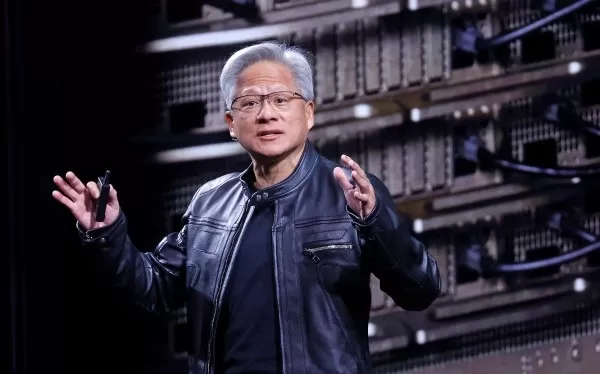 Jensen Huang Reveals Nvidia’s ‘Brand New’ $200B Market Opportunity
Nvidia founder and CEO Jensen Huang stands out as one of the most compelling corporate visionaries, if not the greatest, in driving his company’s narrative. He may even eclipse Salesforce’s Marc Benioff in his unwavering optimism regarding the firm’s
Jensen Huang Reveals Nvidia’s ‘Brand New’ $200B Market Opportunity
Nvidia founder and CEO Jensen Huang stands out as one of the most compelling corporate visionaries, if not the greatest, in driving his company’s narrative. He may even eclipse Salesforce’s Marc Benioff in his unwavering optimism regarding the firm’s
 AI chipmaker Groq confirms $650M raise, re-staffs after Nvidia’s $20B not-acqui-hire deal
After an acqui-hire deal where a competitor pays a substantial IP licensing fee while recruiting key staff, what does an AI firm do next? For Groq, an AI chipmaker, the strategy involves securing additional investor funding—following a profitable Dec
AI chipmaker Groq confirms $650M raise, re-staffs after Nvidia’s $20B not-acqui-hire deal
After an acqui-hire deal where a competitor pays a substantial IP licensing fee while recruiting key staff, what does an AI firm do next? For Groq, an AI chipmaker, the strategy involves securing additional investor funding—following a profitable Dec

2026 Latest Best Top-rated AI Anomaly Detection Tools for KPI Monitoring in SaaS and Ecommerce teams! XIX.AI has curated a powerful, game-changing collection based on rigorous real-world tests and weekly updated rankings. You’ll find detailed free vs paid comparison insights to help you identify the must-try solution that boosts productivity and unlocks your AI edge. Explore now!
10 tools
xix.ai

2026 Latest Best Top-Rated AI Outline Generators for Long-Form SEO Articles, meticulously curated by XIX.AI. These powerful tools offer game-changing assistance in creating high-quality content quickly, boosting writing efficiency significantly. Get a free vs paid comparison along with real-world tests and detailed rankings to help you find the must-try option that suits your needs. Explore now to unlock your AI edge.
8 tools
xix.ai

2026 Latest Best AI Study Tools for Homework and Exam Prep! XIX.AI curates a top-rated list of powerful, game-changing tools that help students boost productivity, streamline homework completion, and ace exams through real-world tests. Get a free vs paid comparison, detailed rankings, and must-try options to unlock your AI edge. Explore now!
10 tools
xix.ai

2026 Latest Best AI Vocal Demo Tools for Songwriters, Hook Creators, and Multi-Language Content Teams! XIX.AI has curated a top-rated list of powerful game-changing tools that go through rigorous real-world tests. You’ll find detailed free vs paid comparison data, comprehensive rankings, and must-try options to help you boost writing efficiency and unlock your creative potential. Explore now to discover your perfect tool for all your content needs!
9 tools
xix.ai

2026 Latest Best Top-rated AI Competitive Research Tools for Small Businesses! XIX.AI has curated a highly powerful game-changing collection, updated weekly with rigorous real-world tests and detailed rankings. You can find a comprehensive free vs paid comparison to help you identify the must-try tools that boost your productivity and give you a competitive edge. Explore now to discover your perfect tool!
9 tools
xix.ai

2026 Latest Best Photoshop AI retouch tools for ecommerce apparel, skin cleanup, and color consistency! This top-rated curated list features powerful game-changing solutions that help you boost writing efficiency, streamline content creation, and achieve perfect visual results effortlessly. Each tool has undergone real-world tests through weekly updated rankings, complete with free vs paid comparison details. Backed by XIX.AI, it’s the must-try guide for anyone aiming to unlock your AI edge. Explore now!
10 tools
xix.ai












