


 Home
HomeEx-SpaceX engineers bring rocket-launch software to factory floor with Sift Stack
Last week, the rallying cry “atoms, not bits!” — a phrase that captures Silicon Valley’s increasing focus on physical manufacturing rather than digital products — reached a peak when news broke that Jeff Bezos is assembling a $100 billion fund to consolidate and automate factories.
However, factory automation is not solely a hardware challenge. It increasingly relies on advanced software and AI tools, and this shift is transforming the companies building the infrastructure for physical manufacturing.
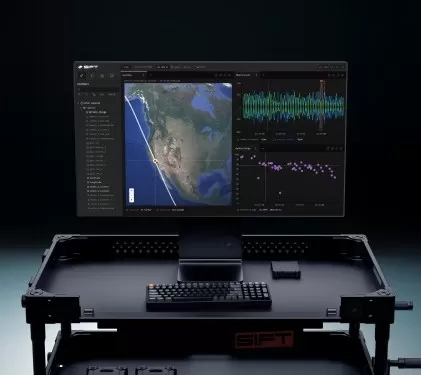
Karthik Gollapudi, CEO of Sift Stack — an El Segundo, California-based company whose tools aid in designing and manufacturing complex machines such as spacecraft and cars — senses the ground shifting beneath his feet. He says these changes have reoriented his company’s priorities over the past six months.
Gollapudi and his co-founder and CTO, Austin Spiegel, launched the company in 2022 after working on software tools at SpaceX that handled enormous volumes of telemetry data — real-time performance data streamed from sensors on physical components — during testing, manufacturing, and launch.
Most companies that build advanced machines rely on off-the-shelf database tools or custom Python scripts, but Sift identified an opportunity to offer a best-in-class solution. Its customers include United Launch Alliance, a major U.S. rocket builder, other defense contractors, as well as robotics and power grid management startups.
However, Gollapudi says the emergence of AI tools for data analysis compelled a shift in his business. The customized workflows that once defined the company’s signature offering have become table stakes in an era of AI and deep learning. Meanwhile, the company’s ability to manage data infrastructure suddenly became far more valuable.
“Our long-term vision of how this would unfold over five years is actually happening this year,” Gollapudi told TechCrunch.
This means handling the massive data flow from today’s software-intensive machines. Some vehicles the company works with have over 1.5 million sensors streaming data simultaneously, across multiple formats and time scales.
The company’s goal is to organize and store that data for AI applications — “a lot of the value is in making it machine-readable,” Gollapudi said. If AI agents are to make decisions about manufacturing or analyze test data to flag potential issues, Sift aims to make that data accessible to them.
Jeff Dexter, VP of software at Astranis — a satellite company that uses Sift to manage testing, manufacturing, and operations — said that robust data infrastructure is critical for companies like his, which may run 10 million automated software tests in a single day.
“Inevitably, we reach a point where it’s costing us millions of dollars each month just to store data,” Dexter said. “It really becomes a question of whether that million dollars is well spent. With technology like Sift, I don’t worry about how much data is there.”
Gollapudi told TechCrunch that Sift raised a $42 million Series B in 2025 at a $274 million post-money valuation, led by StepStone with participation from GV (Google’s venture arm), Riot Ventures, Fika Ventures, and CIV.
Related article
 Former Infosys Chief’s AI Startup Secures Another $53M
Hang Ten Systems, an AI startup established by former Infosys CEO Vishal Sikka just four months ago, has secured an additional $53 million in seed funding. This latest investment round was finalized merely five weeks after the initial $32 million see
Crypto exchange OKX aims to empower AI agents to hire and pay each other
As AI agents start serving individuals and collaborating with each other, they require mechanisms to locate tasks, compensate for services, and establish credibility. Crypto exchange OKX anticipates this future is arriving sooner than anticipated, in
Thiel-backed startup claims AI can judge journalism, despite risks to whistleblowers
Following his role in the lawsuit that led to Gawker’s bankruptcy, Aron D’Souza identified a critical flaw in the American media landscape: individuals harmed by coverage lacked effective means to respond.His answer is technology. D’Souza’s new ventu
Related Special Topic Recommendations
Education and Learning
Former Infosys Chief’s AI Startup Secures Another $53M
Hang Ten Systems, an AI startup established by former Infosys CEO Vishal Sikka just four months ago, has secured an additional $53 million in seed funding. This latest investment round was finalized merely five weeks after the initial $32 million see
Crypto exchange OKX aims to empower AI agents to hire and pay each other
As AI agents start serving individuals and collaborating with each other, they require mechanisms to locate tasks, compensate for services, and establish credibility. Crypto exchange OKX anticipates this future is arriving sooner than anticipated, in
Thiel-backed startup claims AI can judge journalism, despite risks to whistleblowers
Following his role in the lawsuit that led to Gawker’s bankruptcy, Aron D’Souza identified a critical flaw in the American media landscape: individuals harmed by coverage lacked effective means to respond.His answer is technology. D’Souza’s new ventu
Related Special Topic Recommendations
Education and Learning
 AI Study Tools for Homework and Exam Prep
2026 Latest Best AI Study Tools for Homework and Exam Prep! XIX.AI curates a top-rated list of powerful, game-changing tools that help students boost productivity, streamline homework completion, and ace exams through real-world tests. Get a free vs paid comparison, detailed rankings, and must-try options to unlock your AI edge. Explore now!
 10 tools
 xix.ai
Music composition
AI Vocal Demo Tools for Songwriters, Hooks, Toplines, and Multilingual Draft Sessions
xix.ai
Music composition
AI Vocal Demo Tools for Songwriters, Hooks, Toplines, and Multilingual Draft Sessions
2026 Latest Best AI Vocal Demo Tools for Songwriters, Hook Creators, and Multi-Language Content Teams! XIX.AI has curated a top-rated list of powerful game-changing tools that go through rigorous real-world tests. You’ll find detailed free vs paid comparison data, comprehensive rankings, and must-try options to help you boost writing efficiency and unlock your creative potential. Explore now to discover your perfect tool for all your content needs!
9 tools
xix.ai
Business
Best AI Competitive Research Tools for Small Businesses
2026 Latest Best Top-rated AI Competitive Research Tools for Small Businesses! XIX.AI has curated a highly powerful game-changing collection, updated weekly with rigorous real-world tests and detailed rankings. You can find a comprehensive free vs paid comparison to help you identify the must-try tools that boost your productivity and give you a competitive edge. Explore now to discover your perfect tool!
9 tools
xix.ai
Image editing
Photoshop AI Retouch Tools for Ecommerce Apparel, Skin Cleanup, and Color Consistency
2026 Latest Best Photoshop AI retouch tools for ecommerce apparel, skin cleanup, and color consistency! This top-rated curated list features powerful game-changing solutions that help you boost writing efficiency, streamline content creation, and achieve perfect visual results effortlessly. Each tool has undergone real-world tests through weekly updated rankings, complete with free vs paid comparison details. Backed by XIX.AI, it’s the must-try guide for anyone aiming to unlock your AI edge. Explore now!
10 tools
xix.ai
Prompt
Best AI Prompt Libraries for ChatGPT Workflows
2026 Latest Best Top-Rated AI Prompt Libraries for optimizing all types of ChatGPT workflows. XIX.AI has curated a powerful, game-changing collection that goes through rigorous real-world tests to ensure top performance. You can find detailed free vs paid comparisons and expert rankings to help you choose the must-try tools that boost your productivity and unlock your AI edge. Explore now!
11 tools
xix.ai
Education and Learning
AI Quiz Builder Platforms for Teachers, Tutors, and Cohort-Based Learning Programs
2026 Latest Best AI Quiz Builder Platforms for Teachers, Tutors, and Cohort-Based Learning Programs! XIX.AI has curated a top-rated list of powerful game-changing tools that go through real-world tests to deliver accurate rankings. These must-try platforms help boost writing efficiency, streamline content creation, and simplify quiz design across all learning scenarios. Explore now to discover your perfect tool for unlocking your AI edge in teaching!
13 tools
xix.ai

 Comments (0)
0/500
Comments (0)
0/500
Last week, the rallying cry “atoms, not bits!” — a phrase that captures Silicon Valley’s increasing focus on physical manufacturing rather than digital products — reached a peak when news broke that Jeff Bezos is assembling a $100 billion fund to consolidate and automate factories.
However, factory automation is not solely a hardware challenge. It increasingly relies on advanced software and AI tools, and this shift is transforming the companies building the infrastructure for physical manufacturing.
Karthik Gollapudi, CEO of Sift Stack — an El Segundo, California-based company whose tools aid in designing and manufacturing complex machines such as spacecraft and cars — senses the ground shifting beneath his feet. He says these changes have reoriented his company’s priorities over the past six months.
Gollapudi and his co-founder and CTO, Austin Spiegel, launched the company in 2022 after working on software tools at SpaceX that handled enormous volumes of telemetry data — real-time performance data streamed from sensors on physical components — during testing, manufacturing, and launch.
Most companies that build advanced machines rely on off-the-shelf database tools or custom Python scripts, but Sift identified an opportunity to offer a best-in-class solution. Its customers include United Launch Alliance, a major U.S. rocket builder, other defense contractors, as well as robotics and power grid management startups.
However, Gollapudi says the emergence of AI tools for data analysis compelled a shift in his business. The customized workflows that once defined the company’s signature offering have become table stakes in an era of AI and deep learning. Meanwhile, the company’s ability to manage data infrastructure suddenly became far more valuable.
“Our long-term vision of how this would unfold over five years is actually happening this year,” Gollapudi told TechCrunch.
This means handling the massive data flow from today’s software-intensive machines. Some vehicles the company works with have over 1.5 million sensors streaming data simultaneously, across multiple formats and time scales.
The company’s goal is to organize and store that data for AI applications — “a lot of the value is in making it machine-readable,” Gollapudi said. If AI agents are to make decisions about manufacturing or analyze test data to flag potential issues, Sift aims to make that data accessible to them.
Jeff Dexter, VP of software at Astranis — a satellite company that uses Sift to manage testing, manufacturing, and operations — said that robust data infrastructure is critical for companies like his, which may run 10 million automated software tests in a single day.
“Inevitably, we reach a point where it’s costing us millions of dollars each month just to store data,” Dexter said. “It really becomes a question of whether that million dollars is well spent. With technology like Sift, I don’t worry about how much data is there.”
Gollapudi told TechCrunch that Sift raised a $42 million Series B in 2025 at a $274 million post-money valuation, led by StepStone with participation from GV (Google’s venture arm), Riot Ventures, Fika Ventures, and CIV.








 Former Infosys Chief’s AI Startup Secures Another $53M
Hang Ten Systems, an AI startup established by former Infosys CEO Vishal Sikka just four months ago, has secured an additional $53 million in seed funding. This latest investment round was finalized merely five weeks after the initial $32 million see
Former Infosys Chief’s AI Startup Secures Another $53M
Hang Ten Systems, an AI startup established by former Infosys CEO Vishal Sikka just four months ago, has secured an additional $53 million in seed funding. This latest investment round was finalized merely five weeks after the initial $32 million see
 Crypto exchange OKX aims to empower AI agents to hire and pay each other
As AI agents start serving individuals and collaborating with each other, they require mechanisms to locate tasks, compensate for services, and establish credibility. Crypto exchange OKX anticipates this future is arriving sooner than anticipated, in
Crypto exchange OKX aims to empower AI agents to hire and pay each other
As AI agents start serving individuals and collaborating with each other, they require mechanisms to locate tasks, compensate for services, and establish credibility. Crypto exchange OKX anticipates this future is arriving sooner than anticipated, in
 Thiel-backed startup claims AI can judge journalism, despite risks to whistleblowers
Following his role in the lawsuit that led to Gawker’s bankruptcy, Aron D’Souza identified a critical flaw in the American media landscape: individuals harmed by coverage lacked effective means to respond.His answer is technology. D’Souza’s new ventu
Thiel-backed startup claims AI can judge journalism, despite risks to whistleblowers
Following his role in the lawsuit that led to Gawker’s bankruptcy, Aron D’Souza identified a critical flaw in the American media landscape: individuals harmed by coverage lacked effective means to respond.His answer is technology. D’Souza’s new ventu

2026 Latest Best AI Study Tools for Homework and Exam Prep! XIX.AI curates a top-rated list of powerful, game-changing tools that help students boost productivity, streamline homework completion, and ace exams through real-world tests. Get a free vs paid comparison, detailed rankings, and must-try options to unlock your AI edge. Explore now!
10 tools
xix.ai

2026 Latest Best AI Vocal Demo Tools for Songwriters, Hook Creators, and Multi-Language Content Teams! XIX.AI has curated a top-rated list of powerful game-changing tools that go through rigorous real-world tests. You’ll find detailed free vs paid comparison data, comprehensive rankings, and must-try options to help you boost writing efficiency and unlock your creative potential. Explore now to discover your perfect tool for all your content needs!
9 tools
xix.ai

2026 Latest Best Top-rated AI Competitive Research Tools for Small Businesses! XIX.AI has curated a highly powerful game-changing collection, updated weekly with rigorous real-world tests and detailed rankings. You can find a comprehensive free vs paid comparison to help you identify the must-try tools that boost your productivity and give you a competitive edge. Explore now to discover your perfect tool!
9 tools
xix.ai

2026 Latest Best Photoshop AI retouch tools for ecommerce apparel, skin cleanup, and color consistency! This top-rated curated list features powerful game-changing solutions that help you boost writing efficiency, streamline content creation, and achieve perfect visual results effortlessly. Each tool has undergone real-world tests through weekly updated rankings, complete with free vs paid comparison details. Backed by XIX.AI, it’s the must-try guide for anyone aiming to unlock your AI edge. Explore now!
10 tools
xix.ai
2026 Latest Best Top-Rated AI Prompt Libraries for optimizing all types of ChatGPT workflows. XIX.AI has curated a powerful, game-changing collection that goes through rigorous real-world tests to ensure top performance. You can find detailed free vs paid comparisons and expert rankings to help you choose the must-try tools that boost your productivity and unlock your AI edge. Explore now!
11 tools
xix.ai

2026 Latest Best AI Quiz Builder Platforms for Teachers, Tutors, and Cohort-Based Learning Programs! XIX.AI has curated a top-rated list of powerful game-changing tools that go through real-world tests to deliver accurate rankings. These must-try platforms help boost writing efficiency, streamline content creation, and simplify quiz design across all learning scenarios. Explore now to discover your perfect tool for unlocking your AI edge in teaching!
13 tools
xix.ai












