


 Home
HomeExplaining the Executive Exodus at OpenAI
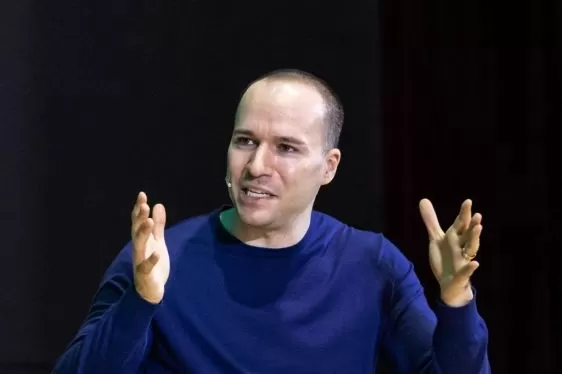
OpenAI remains the pioneer in frontier AI development. Its latest public model, GPT-5.6, stands out for its exceptional capability and efficiency. The company’s desktop application, designed for agentic coding and workplace productivity, has attracted approximately 15 million new subscribers over the past two months.
Despite OpenAI’s recent filing for an initial public offering, a wave of executive departures has raised questions about the company’s internal stability.
Since January, more than a dozen senior leaders have left, including Sam Altman’s chief operating officer, the chief revenue officer, the chief marketing officer, and several team leads. Recently, it was reported that Chris Malone, head of data centers, departed last week, shortly after joining in March 2025.
While some exits were attributed to health concerns or restructuring efforts to eliminate costly side projects in favor of revenue-generating initiatives, Malone’s exit remains notable.
OpenAI’s competitive edge over rivals like Anthropic and SpaceX lies heavily in its compute infrastructure. The company clarified to TechCrunch that Malone’s departure coincides with a restructuring of its infrastructure team, now led by Vice President Sachin Katti, who replaced Malone’s previous reporting line to President Greg Brockman. Such a demotion often prompts senior executives to seek opportunities elsewhere.
OpenAI declined to discuss broader organizational changes, but it appears Greg Brockman is reclaiming his leadership role. As co-founder and president, Brockman was instrumental in building OpenAI’s early infrastructure before stepping back from management duties in 2019 when Altman assumed the CEO role.
According to Karen Hao’s book “Empire of AI,” Brockman played a disruptive role in the company’s history. While his contributions to projects like GPT-4 were significant, he also fueled internal rivalries that contributed to the 2023 “Blip,” during which the board briefly removed Altman as CEO. Brockman took a sabbatical in 2024 before returning to the company.
Currently, both infrastructure and product teams report directly to him. “I like to say that everyone reports to Greg at the end of the day,” Thibault Sottiaux, who oversees the company’s API and app offerings, told TechCrunch last week.
The looming IPO casts a shadow over these developments. In June, OpenAI confidentially filed for public listing with the SEC. Access to public markets would provide crucial capital for this resource-intensive lab, but it also requires financial transparency around the same time as rival Anthropic, which is also preparing for its public debut. Reports suggest Anthropic is already profitable, whereas OpenAI’s losses are growing alongside its revenue. Consequently, OpenAI’s IPO is now projected for 2027, significantly later than the typical five-month timeline for confidential filings, and much slower than SpaceX’s sub-two-year process.
Altman’s recent comments regarding a challenging past year and the ongoing restructuring align with the narrative that OpenAI overextended itself with its IPO filing and is now streamlining operations to boost revenue and reduce inefficiencies.
This situation mirrors a common pattern in tech startups: visionary founders create the product, then hire experienced CEOs to scale operations and prepare for an IPO. This dynamic was evident when OpenAI recruited seasoned executives like Fidji Simo and Kevin Weil, who brought extensive tech industry experience. Now, as Brockman’s influence expands, this pattern is repeating itself. Before OpenAI, Brockman was renowned for scaling Stripe’s business and championing go-to-market strategies internally.
Amidst high-level turnover, OpenAI needs strong leadership to fill the resulting vacuum. The company must also optimize its operations ahead of the IPO by increasing revenue and minimizing costs. In this context, Brockman’s growing influence may be arriving at the ideal time.
Related article
 OpenAI robotics head Caitlin Kalinowski resigns over Pentagon partnership
OpenAI robotics leader Caitlin Kalinowski has stepped down following the company’s controversial partnership with the Department of Defense.“This wasn’t an easy call,” Kalinowski explained in a social media statement. “While AI plays a vital role in
OpenAI Closes Gap With Anthropic Among Business Users, New Data Shows
With OpenAI and Anthropic still distant from their anticipated IPOs and the release of detailed financial reports, we must turn to alternative indicators to gauge their business performance. Ramp, a corporate credit card and expense management platfo
OpenAI launches safer ChatGPT for teens years after they started using it
Following a series of lawsuits regarding the absence of safety protocols in AI chatbots—which contributed to teen suicides and other mental health crises—OpenAI unveiled ChatGPT for Teens on Monday. This new offering incorporates enhanced safety feat
Related Special Topic Recommendations
Text-to-speech
OpenAI robotics head Caitlin Kalinowski resigns over Pentagon partnership
OpenAI robotics leader Caitlin Kalinowski has stepped down following the company’s controversial partnership with the Department of Defense.“This wasn’t an easy call,” Kalinowski explained in a social media statement. “While AI plays a vital role in
OpenAI Closes Gap With Anthropic Among Business Users, New Data Shows
With OpenAI and Anthropic still distant from their anticipated IPOs and the release of detailed financial reports, we must turn to alternative indicators to gauge their business performance. Ramp, a corporate credit card and expense management platfo
OpenAI launches safer ChatGPT for teens years after they started using it
Following a series of lawsuits regarding the absence of safety protocols in AI chatbots—which contributed to teen suicides and other mental health crises—OpenAI unveiled ChatGPT for Teens on Monday. This new offering incorporates enhanced safety feat
Related Special Topic Recommendations
Text-to-speech
 Best AI Text to Speech Tools for Online Courses
2026 Latest Best Top-rated AI Text to Speech Tools for Online Courses are curated by XIX.AI based on rigorous real-world tests and weekly updated rankings. These powerful tools help creators deliver crystal-clear audio content effortlessly, boosting writing efficiency and streamlining course production. Check out the free vs paid comparison to find your perfect fit. Explore now to unlock your AI edge in online education.
 10 tools
 xix.ai
writing
AI Blog Title Tools for Higher Click Through Rates
xix.ai
writing
AI Blog Title Tools for Higher Click Through Rates
2026 Latest Best Top-Rated AI Blog Title Tools for Higher Click Through Rates! XIX.AI has carefully curated a powerful, game-changing collection of top tools that go through rigorous real-world tests. You’ll find a free vs paid comparison, weekly updated rankings, and detailed insights to help you boost your blog’s traffic efficiently. Must-try options are highlighted to help you unlock your AI edge. Explore now!
10 tools
xix.ai
automation
Best AI Task Routing Tools for Support Workflows
2026 Latest Best Top-rated AI Task Routing Tools for Support Workflows! XIX.AI has curated a highly powerful game-changing collection of must-try solutions, all undergoing rigorous real-world tests and updated weekly. These tools streamline workflows, boost productivity, and help teams deliver faster, more efficient support. Explore now to discover your perfect tool and unlock your AI edge!
17 tools
xix.ai
Academic Research
AI Citation and Paper Summary Tools
2026 Latest Best Top-Rated AI Citation and Paper Summary Tools Curated by XIX.AI. Get powerful game-changing solutions for quick content creation, improved writing efficiency, and boosting productivity. We offer a free vs paid comparison along with real-world tests and weekly updated rankings to help you find the must-try tool that fits your needs perfectly. Explore now to Unlock your AI edge.
10 tools
xix.ai
Productivity
Best AI Productivity Tools for Daily Work
2026 Latest Best Top-Rated AI Productivity Tools for Daily Work! XIX.AI has curated a powerful, game-changing selection based on rigorous weekly updated rankings and real-world tests. You’ll find must-try options that boost writing efficiency, streamline content creation, and help you overcome daily work challenges. Get a free vs paid comparison to find the perfect fit for your needs. Explore now to unlock your AI edge!
9 tools
xix.ai
Academic Research
AI Systematic Review Tools for Research Screening
2026 Latest Best Top-Rated AI Systematic Review Tools for Research Screening are here on XIX.AI! This curated collection includes powerful, game-changing solutions that go through rigorous real-world tests to deliver accurate results. We also offer a free vs paid comparison along with weekly updated rankings to help you find the must-try option that boosts your research efficiency significantly. Explore now to unlock your AI edge in academic work!
11 tools
xix.ai

 Comments (0)
0/500
Comments (0)
0/500
OpenAI remains the pioneer in frontier AI development. Its latest public model, GPT-5.6, stands out for its exceptional capability and efficiency. The company’s desktop application, designed for agentic coding and workplace productivity, has attracted approximately 15 million new subscribers over the past two months.
Despite OpenAI’s recent filing for an initial public offering, a wave of executive departures has raised questions about the company’s internal stability.
Since January, more than a dozen senior leaders have left, including Sam Altman’s chief operating officer, the chief revenue officer, the chief marketing officer, and several team leads. Recently, it was reported that Chris Malone, head of data centers, departed last week, shortly after joining in March 2025.
While some exits were attributed to health concerns or restructuring efforts to eliminate costly side projects in favor of revenue-generating initiatives, Malone’s exit remains notable.
OpenAI’s competitive edge over rivals like Anthropic and SpaceX lies heavily in its compute infrastructure. The company clarified to TechCrunch that Malone’s departure coincides with a restructuring of its infrastructure team, now led by Vice President Sachin Katti, who replaced Malone’s previous reporting line to President Greg Brockman. Such a demotion often prompts senior executives to seek opportunities elsewhere.
OpenAI declined to discuss broader organizational changes, but it appears Greg Brockman is reclaiming his leadership role. As co-founder and president, Brockman was instrumental in building OpenAI’s early infrastructure before stepping back from management duties in 2019 when Altman assumed the CEO role.
According to Karen Hao’s book “Empire of AI,” Brockman played a disruptive role in the company’s history. While his contributions to projects like GPT-4 were significant, he also fueled internal rivalries that contributed to the 2023 “Blip,” during which the board briefly removed Altman as CEO. Brockman took a sabbatical in 2024 before returning to the company.
Currently, both infrastructure and product teams report directly to him. “I like to say that everyone reports to Greg at the end of the day,” Thibault Sottiaux, who oversees the company’s API and app offerings, told TechCrunch last week.
The looming IPO casts a shadow over these developments. In June, OpenAI confidentially filed for public listing with the SEC. Access to public markets would provide crucial capital for this resource-intensive lab, but it also requires financial transparency around the same time as rival Anthropic, which is also preparing for its public debut. Reports suggest Anthropic is already profitable, whereas OpenAI’s losses are growing alongside its revenue. Consequently, OpenAI’s IPO is now projected for 2027, significantly later than the typical five-month timeline for confidential filings, and much slower than SpaceX’s sub-two-year process.
Altman’s recent comments regarding a challenging past year and the ongoing restructuring align with the narrative that OpenAI overextended itself with its IPO filing and is now streamlining operations to boost revenue and reduce inefficiencies.
This situation mirrors a common pattern in tech startups: visionary founders create the product, then hire experienced CEOs to scale operations and prepare for an IPO. This dynamic was evident when OpenAI recruited seasoned executives like Fidji Simo and Kevin Weil, who brought extensive tech industry experience. Now, as Brockman’s influence expands, this pattern is repeating itself. Before OpenAI, Brockman was renowned for scaling Stripe’s business and championing go-to-market strategies internally.
Amidst high-level turnover, OpenAI needs strong leadership to fill the resulting vacuum. The company must also optimize its operations ahead of the IPO by increasing revenue and minimizing costs. In this context, Brockman’s growing influence may be arriving at the ideal time.








 OpenAI robotics head Caitlin Kalinowski resigns over Pentagon partnership
OpenAI robotics leader Caitlin Kalinowski has stepped down following the company’s controversial partnership with the Department of Defense.“This wasn’t an easy call,” Kalinowski explained in a social media statement. “While AI plays a vital role in
OpenAI robotics head Caitlin Kalinowski resigns over Pentagon partnership
OpenAI robotics leader Caitlin Kalinowski has stepped down following the company’s controversial partnership with the Department of Defense.“This wasn’t an easy call,” Kalinowski explained in a social media statement. “While AI plays a vital role in
 OpenAI Closes Gap With Anthropic Among Business Users, New Data Shows
With OpenAI and Anthropic still distant from their anticipated IPOs and the release of detailed financial reports, we must turn to alternative indicators to gauge their business performance. Ramp, a corporate credit card and expense management platfo
OpenAI Closes Gap With Anthropic Among Business Users, New Data Shows
With OpenAI and Anthropic still distant from their anticipated IPOs and the release of detailed financial reports, we must turn to alternative indicators to gauge their business performance. Ramp, a corporate credit card and expense management platfo
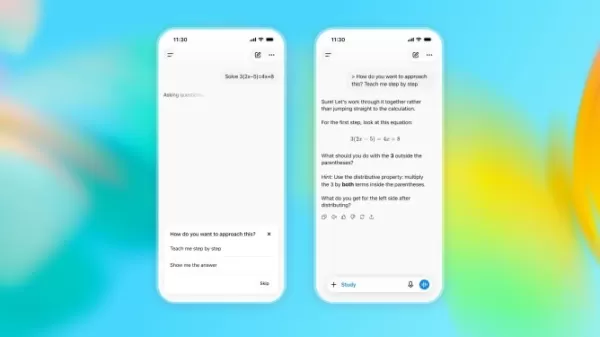 OpenAI launches safer ChatGPT for teens years after they started using it
Following a series of lawsuits regarding the absence of safety protocols in AI chatbots—which contributed to teen suicides and other mental health crises—OpenAI unveiled ChatGPT for Teens on Monday. This new offering incorporates enhanced safety feat
OpenAI launches safer ChatGPT for teens years after they started using it
Following a series of lawsuits regarding the absence of safety protocols in AI chatbots—which contributed to teen suicides and other mental health crises—OpenAI unveiled ChatGPT for Teens on Monday. This new offering incorporates enhanced safety feat

2026 Latest Best Top-rated AI Text to Speech Tools for Online Courses are curated by XIX.AI based on rigorous real-world tests and weekly updated rankings. These powerful tools help creators deliver crystal-clear audio content effortlessly, boosting writing efficiency and streamlining course production. Check out the free vs paid comparison to find your perfect fit. Explore now to unlock your AI edge in online education.
10 tools
xix.ai

2026 Latest Best Top-Rated AI Blog Title Tools for Higher Click Through Rates! XIX.AI has carefully curated a powerful, game-changing collection of top tools that go through rigorous real-world tests. You’ll find a free vs paid comparison, weekly updated rankings, and detailed insights to help you boost your blog’s traffic efficiently. Must-try options are highlighted to help you unlock your AI edge. Explore now!
10 tools
xix.ai

2026 Latest Best Top-rated AI Task Routing Tools for Support Workflows! XIX.AI has curated a highly powerful game-changing collection of must-try solutions, all undergoing rigorous real-world tests and updated weekly. These tools streamline workflows, boost productivity, and help teams deliver faster, more efficient support. Explore now to discover your perfect tool and unlock your AI edge!
17 tools
xix.ai
2026 Latest Best Top-Rated AI Citation and Paper Summary Tools Curated by XIX.AI. Get powerful game-changing solutions for quick content creation, improved writing efficiency, and boosting productivity. We offer a free vs paid comparison along with real-world tests and weekly updated rankings to help you find the must-try tool that fits your needs perfectly. Explore now to Unlock your AI edge.
10 tools
xix.ai

2026 Latest Best Top-Rated AI Productivity Tools for Daily Work! XIX.AI has curated a powerful, game-changing selection based on rigorous weekly updated rankings and real-world tests. You’ll find must-try options that boost writing efficiency, streamline content creation, and help you overcome daily work challenges. Get a free vs paid comparison to find the perfect fit for your needs. Explore now to unlock your AI edge!
9 tools
xix.ai
2026 Latest Best Top-Rated AI Systematic Review Tools for Research Screening are here on XIX.AI! This curated collection includes powerful, game-changing solutions that go through rigorous real-world tests to deliver accurate results. We also offer a free vs paid comparison along with weekly updated rankings to help you find the must-try option that boosts your research efficiency significantly. Explore now to unlock your AI edge in academic work!
11 tools
xix.ai












