


 Home
HomeHow to create custom album artwork with ChatGPT in 2025? Quick guide.
Creating standout album artwork is essential for musicians and artists aiming to capture attention in today's digital space. With the help of AI, designing custom visuals is now faster and more accessible. This guide walks you through using ChatGPT to craft unique album covers, focusing on effective prompt strategies, commercial usage rights, and ways to enhance your creative workflow. Skip the high costs of hiring designers and embrace instant, personalized album art!
Key Points
ChatGPT can create custom album artwork within seconds.
Detailed prompts are essential for achieving your desired art style.
You maintain full commercial rights to artwork generated through ChatGPT.
Both free and premium versions of ChatGPT offer identical commercial usage permissions.
Try out various prompts to unlock original and diverse results.
Refining prompts based on initial outputs can greatly enhance the final artwork quality.
Generating Album Artwork with ChatGPT: A Step-by-Step Guide
Crafting the Perfect Prompt for Your Album Artwork
Effective prompt design is the key to producing compelling album artwork using ChatGPT. A well-structured prompt gives ChatGPT the direction needed to generate images that match your artistic vision.
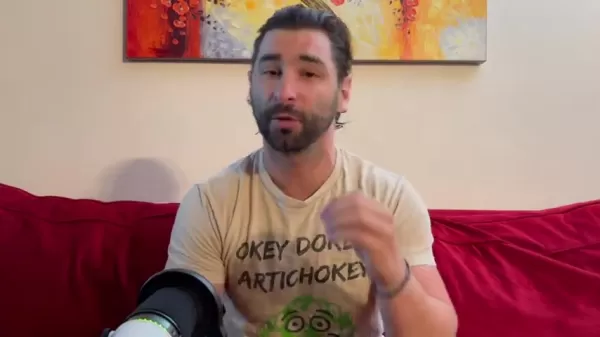
Let's break down the essential components of an effective prompt.
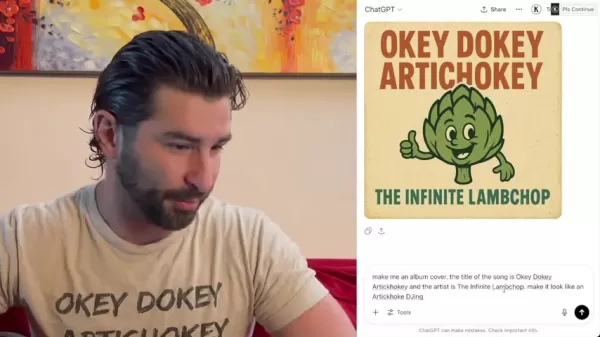
Start by clearly stating your album or song title, artist name, and any specific themes or ideas you want to express. For example:
Make me an album cover. The title of the song is [Song Title]. The artist is [Artist Name].
Also, define the visual style you’re aiming for—whether photorealistic, abstract, vintage-inspired, or something else. Use descriptive language to guide the AI. For instance:
Make me an album cover. The title of the song is 'Okey Dokey Artichokey'. The artist is The Infinite Lambchop. Make it look like an Artichoke DJing.
Supplying precise and detailed instructions increases the chances of receiving high-quality, relevant artwork. Remember, prompt crafting is an iterative process. Feel free to test different prompts and adjust them based on what you get.
Iterating on Your Prompts for Optimal Results
The first draft from ChatGPT might not match your vision perfectly, and that’s okay. Prompt iteration is a vital step for fine-tuning and refining the artwork to fit your style.
Begin by evaluating the initial results. Identify both what works well and what could be improved. Then, adjust your prompt accordingly.
If the colors are too bright, for example, try adding:
Make the colors more muted and pastel-like.
If the composition seems off, you might specify:
Focus on a close-up shot of the [subject] in the center of the frame.
Through repeated tweaking and feedback, you’ll guide ChatGPT toward your ideal result. This experimental and refining approach unlocks the real power of AI for album artwork creation.
Enhancing Your ChatGPT Album Artwork with Additional Tools
Leveraging AI Photo Editors for Enhanced Artwork
Although ChatGPT can produce impressive visuals alone, you can take your artwork further by using AI photo editors. These tools add professional polish and refinement. Typical editing tasks include:
- Upscaling: Boost image resolution without sacrificing clarity.
- Color Correction: Fine-tune color balance and tonal quality.
- Detail Enhancement: Sharpen and add texture to specific areas.
- Background Removal: Isolate key elements by removing distracting backgrounds.
Popular AI-powered editing tools include:
- Adobe Photoshop: Professional-grade software with AI tools.
- Luminar AI: Intuitive editor built around AI automation.
- Remini: Mobile app that uses AI to restore and enhance photos.
By pairing ChatGPT’s creativity with AI editing tools, you can produce album art that truly stands out. Keep in mind, that final tweaks can be tricky without prior graphic design experience. You might also explore other AI tools for creating music videos or lyric visuals.
Pros and Cons of Using ChatGPT for Album Artwork
Pros
Quick and efficient artwork generation.
More affordable than commissioning a designer.
Encourages creative experimentation and freedom.
You retain full commercial rights to all generated artwork.
Simple, prompt-based interface is easy to use.
Cons
Art quality can be inconsistent depending on your prompts.
Often requires multiple revisions to meet expectations.
Limited ability to control fine details.
Possible risk of generating generic or unoriginal designs.
Requires some familiarity with AI image generation basics.
Frequently Asked Questions about ChatGPT Album Artwork
Does the AI Album Art look good?
AI-generated images often look impressive and can improve as you refine your prompts. Even if the initial result isn’t perfect, AI art serves as a solid creative foundation. It gives you a starting point that can be further developed using your preferred design tools.
Can I use a music visualizer?
Absolutely. You can use a music visualizer to animate your album art. Many artists animate their covers with visualizers for platforms like Spotify or Apple Music.
Can I use AI to make album art?
Yes, and it’s highly recommended. AI offers a fast, low-cost way to produce exactly the image you want—all you need is a descriptive text prompt.
What if someone has the same Album Art?
There is a small chance AI might replicate existing imagery. To minimize this, continuously refine your prompts and artwork to ensure originality and uniqueness.
Related Questions
What are the legal implications of using AI-generated album art for commercial purposes?
Legally, using AI-generated album art for commercial purposes is generally straightforward. ChatGPT, along with many other AI image platforms, gives users full commercial rights to the images they create, whether using the free or paid tier. This means you can legally use the generated art for album covers, singles, EPs, or other commercial releases without worrying about copyright claims from OpenAI. However, be sure your prompts don’t reference copyrighted characters, logos, or existing artworks, as this could create legal complications. Although ChatGPT produces original images, it’s still possible—though rare—for results to resemble existing works. To reduce this risk, carefully review your outputs and make adjustments to ensure your art is unique. It’s also wise to keep a record of your prompts and generated images to document your creative process and show your intent to produce original work.
Related article
 Six Tech Giants Back Linux Foundation With $12.5M to Tackle AI Vulnerability Noise
To tackle the flood of low-quality security reports produced by AI automation tools, six major tech companies—Anthropic, Amazon (AWS), GitHub, Google, Microsoft, and OpenAI—have collectively contributed $12.5 million in funding to Linux Foundation in
Musk Considered Leaving OpenAI to His Kids as Altman Testifies
This morning, OpenAI CEO Sam Altman took the stand to address former co-founder Elon Musk’s lawsuit challenging the company’s corporate structure.When asked about Musk’s claim that other founders “stole a charity” by launching a for-profit subsidiary
Sam Altman Sparks Debate Over AI's Deceleration
Listen onApple PodcastsListen onSpotifyOpenAI CEO Sam Altman recently suggested that it may be time to “pace the rate of AI development” to allow society to “harden around some of these new capability levels.”On the latest episode of TechCrunch’s Equ
Related Special Topic Recommendations
Music composition
Six Tech Giants Back Linux Foundation With $12.5M to Tackle AI Vulnerability Noise
To tackle the flood of low-quality security reports produced by AI automation tools, six major tech companies—Anthropic, Amazon (AWS), GitHub, Google, Microsoft, and OpenAI—have collectively contributed $12.5 million in funding to Linux Foundation in
Musk Considered Leaving OpenAI to His Kids as Altman Testifies
This morning, OpenAI CEO Sam Altman took the stand to address former co-founder Elon Musk’s lawsuit challenging the company’s corporate structure.When asked about Musk’s claim that other founders “stole a charity” by launching a for-profit subsidiary
Sam Altman Sparks Debate Over AI's Deceleration
Listen onApple PodcastsListen onSpotifyOpenAI CEO Sam Altman recently suggested that it may be time to “pace the rate of AI development” to allow society to “harden around some of these new capability levels.”On the latest episode of TechCrunch’s Equ
Related Special Topic Recommendations
Music composition
 AI Vocal Demo Tools for Songwriters, Hooks, Toplines, and Multilingual Draft Sessions
2026 Latest Best AI Vocal Demo Tools for Songwriters, Hook Creators, and Multi-Language Content Teams! XIX.AI has curated a top-rated list of powerful game-changing tools that go through rigorous real-world tests. You’ll find detailed free vs paid comparison data, comprehensive rankings, and must-try options to help you boost writing efficiency and unlock your creative potential. Explore now to discover your perfect tool for all your content needs!
 9 tools
 xix.ai
Business
Best AI Competitive Research Tools for Small Businesses
xix.ai
Business
Best AI Competitive Research Tools for Small Businesses
2026 Latest Best Top-rated AI Competitive Research Tools for Small Businesses! XIX.AI has curated a highly powerful game-changing collection, updated weekly with rigorous real-world tests and detailed rankings. You can find a comprehensive free vs paid comparison to help you identify the must-try tools that boost your productivity and give you a competitive edge. Explore now to discover your perfect tool!
9 tools
xix.ai
Image editing
Photoshop AI Retouch Tools for Ecommerce Apparel, Skin Cleanup, and Color Consistency
2026 Latest Best Photoshop AI retouch tools for ecommerce apparel, skin cleanup, and color consistency! This top-rated curated list features powerful game-changing solutions that help you boost writing efficiency, streamline content creation, and achieve perfect visual results effortlessly. Each tool has undergone real-world tests through weekly updated rankings, complete with free vs paid comparison details. Backed by XIX.AI, it’s the must-try guide for anyone aiming to unlock your AI edge. Explore now!
10 tools
xix.ai
Prompt
Best AI Prompt Libraries for ChatGPT Workflows
2026 Latest Best Top-Rated AI Prompt Libraries for optimizing all types of ChatGPT workflows. XIX.AI has curated a powerful, game-changing collection that goes through rigorous real-world tests to ensure top performance. You can find detailed free vs paid comparisons and expert rankings to help you choose the must-try tools that boost your productivity and unlock your AI edge. Explore now!
11 tools
xix.ai
Education and Learning
AI Quiz Builder Platforms for Teachers, Tutors, and Cohort-Based Learning Programs
2026 Latest Best AI Quiz Builder Platforms for Teachers, Tutors, and Cohort-Based Learning Programs! XIX.AI has curated a top-rated list of powerful game-changing tools that go through real-world tests to deliver accurate rankings. These must-try platforms help boost writing efficiency, streamline content creation, and simplify quiz design across all learning scenarios. Explore now to discover your perfect tool for unlocking your AI edge in teaching!
13 tools
xix.ai
code
AI Pull Request Review Tools for GitHub Teams Handling Refactors, Bugs, and Security Gaps
2026 Latest Best AI Pull Request Review Tools for GitHub Teams are here on XIX.AI! This top-rated curated list showcases powerful game-changing solutions that streamline refactoring, bug fixing, and security gap detection across all team workflows. Enjoy a free vs paid comparison along with real-world tests and detailed rankings to help you find the perfect tool that boosts productivity significantly. Explore now to unlock your AI edge!
12 tools
xix.ai

 Comments (1)
0/500
Comments (1)
0/500
![CharlesScott]()
This is actually pretty clever! I've been messing around with DALL·E for cover art, but using ChatGPT to refine the prompt feels like a cheat code. 🎨 Just hope the results don't end up looking like generic stock imagery though. Anyone tried it yet?
Creating standout album artwork is essential for musicians and artists aiming to capture attention in today's digital space. With the help of AI, designing custom visuals is now faster and more accessible. This guide walks you through using ChatGPT to craft unique album covers, focusing on effective prompt strategies, commercial usage rights, and ways to enhance your creative workflow. Skip the high costs of hiring designers and embrace instant, personalized album art!
Key Points
ChatGPT can create custom album artwork within seconds.
Detailed prompts are essential for achieving your desired art style.
You maintain full commercial rights to artwork generated through ChatGPT.
Both free and premium versions of ChatGPT offer identical commercial usage permissions.
Try out various prompts to unlock original and diverse results.
Refining prompts based on initial outputs can greatly enhance the final artwork quality.
Generating Album Artwork with ChatGPT: A Step-by-Step Guide
Crafting the Perfect Prompt for Your Album Artwork
Effective prompt design is the key to producing compelling album artwork using ChatGPT. A well-structured prompt gives ChatGPT the direction needed to generate images that match your artistic vision.
Let's break down the essential components of an effective prompt.
Start by clearly stating your album or song title, artist name, and any specific themes or ideas you want to express. For example:
Make me an album cover. The title of the song is [Song Title]. The artist is [Artist Name].
Also, define the visual style you’re aiming for—whether photorealistic, abstract, vintage-inspired, or something else. Use descriptive language to guide the AI. For instance:
Make me an album cover. The title of the song is 'Okey Dokey Artichokey'. The artist is The Infinite Lambchop. Make it look like an Artichoke DJing.
Supplying precise and detailed instructions increases the chances of receiving high-quality, relevant artwork. Remember, prompt crafting is an iterative process. Feel free to test different prompts and adjust them based on what you get.
Iterating on Your Prompts for Optimal Results
The first draft from ChatGPT might not match your vision perfectly, and that’s okay. Prompt iteration is a vital step for fine-tuning and refining the artwork to fit your style.
Begin by evaluating the initial results. Identify both what works well and what could be improved. Then, adjust your prompt accordingly.
If the colors are too bright, for example, try adding:
Make the colors more muted and pastel-like.
If the composition seems off, you might specify:
Focus on a close-up shot of the [subject] in the center of the frame.
Through repeated tweaking and feedback, you’ll guide ChatGPT toward your ideal result. This experimental and refining approach unlocks the real power of AI for album artwork creation.
Enhancing Your ChatGPT Album Artwork with Additional Tools
Leveraging AI Photo Editors for Enhanced Artwork
Although ChatGPT can produce impressive visuals alone, you can take your artwork further by using AI photo editors. These tools add professional polish and refinement. Typical editing tasks include:
- Upscaling: Boost image resolution without sacrificing clarity.
- Color Correction: Fine-tune color balance and tonal quality.
- Detail Enhancement: Sharpen and add texture to specific areas.
- Background Removal: Isolate key elements by removing distracting backgrounds.
Popular AI-powered editing tools include:
- Adobe Photoshop: Professional-grade software with AI tools.
- Luminar AI: Intuitive editor built around AI automation.
- Remini: Mobile app that uses AI to restore and enhance photos.
By pairing ChatGPT’s creativity with AI editing tools, you can produce album art that truly stands out. Keep in mind, that final tweaks can be tricky without prior graphic design experience. You might also explore other AI tools for creating music videos or lyric visuals.
Pros and Cons of Using ChatGPT for Album Artwork
Pros
Quick and efficient artwork generation.
More affordable than commissioning a designer.
Encourages creative experimentation and freedom.
You retain full commercial rights to all generated artwork.
Simple, prompt-based interface is easy to use.
Cons
Art quality can be inconsistent depending on your prompts.
Often requires multiple revisions to meet expectations.
Limited ability to control fine details.
Possible risk of generating generic or unoriginal designs.
Requires some familiarity with AI image generation basics.
Frequently Asked Questions about ChatGPT Album Artwork
Does the AI Album Art look good?
AI-generated images often look impressive and can improve as you refine your prompts. Even if the initial result isn’t perfect, AI art serves as a solid creative foundation. It gives you a starting point that can be further developed using your preferred design tools.
Can I use a music visualizer?
Absolutely. You can use a music visualizer to animate your album art. Many artists animate their covers with visualizers for platforms like Spotify or Apple Music.
Can I use AI to make album art?
Yes, and it’s highly recommended. AI offers a fast, low-cost way to produce exactly the image you want—all you need is a descriptive text prompt.
What if someone has the same Album Art?
There is a small chance AI might replicate existing imagery. To minimize this, continuously refine your prompts and artwork to ensure originality and uniqueness.
Related Questions
What are the legal implications of using AI-generated album art for commercial purposes?
Legally, using AI-generated album art for commercial purposes is generally straightforward. ChatGPT, along with many other AI image platforms, gives users full commercial rights to the images they create, whether using the free or paid tier. This means you can legally use the generated art for album covers, singles, EPs, or other commercial releases without worrying about copyright claims from OpenAI. However, be sure your prompts don’t reference copyrighted characters, logos, or existing artworks, as this could create legal complications. Although ChatGPT produces original images, it’s still possible—though rare—for results to resemble existing works. To reduce this risk, carefully review your outputs and make adjustments to ensure your art is unique. It’s also wise to keep a record of your prompts and generated images to document your creative process and show your intent to produce original work.








 Six Tech Giants Back Linux Foundation With $12.5M to Tackle AI Vulnerability Noise
To tackle the flood of low-quality security reports produced by AI automation tools, six major tech companies—Anthropic, Amazon (AWS), GitHub, Google, Microsoft, and OpenAI—have collectively contributed $12.5 million in funding to Linux Foundation in
Six Tech Giants Back Linux Foundation With $12.5M to Tackle AI Vulnerability Noise
To tackle the flood of low-quality security reports produced by AI automation tools, six major tech companies—Anthropic, Amazon (AWS), GitHub, Google, Microsoft, and OpenAI—have collectively contributed $12.5 million in funding to Linux Foundation in
 Musk Considered Leaving OpenAI to His Kids as Altman Testifies
This morning, OpenAI CEO Sam Altman took the stand to address former co-founder Elon Musk’s lawsuit challenging the company’s corporate structure.When asked about Musk’s claim that other founders “stole a charity” by launching a for-profit subsidiary
Musk Considered Leaving OpenAI to His Kids as Altman Testifies
This morning, OpenAI CEO Sam Altman took the stand to address former co-founder Elon Musk’s lawsuit challenging the company’s corporate structure.When asked about Musk’s claim that other founders “stole a charity” by launching a for-profit subsidiary
 Sam Altman Sparks Debate Over AI's Deceleration
Listen onApple PodcastsListen onSpotifyOpenAI CEO Sam Altman recently suggested that it may be time to “pace the rate of AI development” to allow society to “harden around some of these new capability levels.”On the latest episode of TechCrunch’s Equ
Sam Altman Sparks Debate Over AI's Deceleration
Listen onApple PodcastsListen onSpotifyOpenAI CEO Sam Altman recently suggested that it may be time to “pace the rate of AI development” to allow society to “harden around some of these new capability levels.”On the latest episode of TechCrunch’s Equ

2026 Latest Best AI Vocal Demo Tools for Songwriters, Hook Creators, and Multi-Language Content Teams! XIX.AI has curated a top-rated list of powerful game-changing tools that go through rigorous real-world tests. You’ll find detailed free vs paid comparison data, comprehensive rankings, and must-try options to help you boost writing efficiency and unlock your creative potential. Explore now to discover your perfect tool for all your content needs!
9 tools
xix.ai

2026 Latest Best Top-rated AI Competitive Research Tools for Small Businesses! XIX.AI has curated a highly powerful game-changing collection, updated weekly with rigorous real-world tests and detailed rankings. You can find a comprehensive free vs paid comparison to help you identify the must-try tools that boost your productivity and give you a competitive edge. Explore now to discover your perfect tool!
9 tools
xix.ai
2026 Latest Best Photoshop AI retouch tools for ecommerce apparel, skin cleanup, and color consistency! This top-rated curated list features powerful game-changing solutions that help you boost writing efficiency, streamline content creation, and achieve perfect visual results effortlessly. Each tool has undergone real-world tests through weekly updated rankings, complete with free vs paid comparison details. Backed by XIX.AI, it’s the must-try guide for anyone aiming to unlock your AI edge. Explore now!
10 tools
xix.ai
2026 Latest Best Top-Rated AI Prompt Libraries for optimizing all types of ChatGPT workflows. XIX.AI has curated a powerful, game-changing collection that goes through rigorous real-world tests to ensure top performance. You can find detailed free vs paid comparisons and expert rankings to help you choose the must-try tools that boost your productivity and unlock your AI edge. Explore now!
11 tools
xix.ai
2026 Latest Best AI Quiz Builder Platforms for Teachers, Tutors, and Cohort-Based Learning Programs! XIX.AI has curated a top-rated list of powerful game-changing tools that go through real-world tests to deliver accurate rankings. These must-try platforms help boost writing efficiency, streamline content creation, and simplify quiz design across all learning scenarios. Explore now to discover your perfect tool for unlocking your AI edge in teaching!
13 tools
xix.ai
2026 Latest Best AI Pull Request Review Tools for GitHub Teams are here on XIX.AI! This top-rated curated list showcases powerful game-changing solutions that streamline refactoring, bug fixing, and security gap detection across all team workflows. Enjoy a free vs paid comparison along with real-world tests and detailed rankings to help you find the perfect tool that boosts productivity significantly. Explore now to unlock your AI edge!
12 tools
xix.ai

This is actually pretty clever! I've been messing around with DALL·E for cover art, but using ChatGPT to refine the prompt feels like a cheat code. 🎨 Just hope the results don't end up looking like generic stock imagery though. Anyone tried it yet?












