


 Home
Home
Codex Joins ChatGPT Mobile: A Programming Assistant for Developers, Unveiling Its Ecosystem Strategy
When coding is no longer tied to a desk, but can be reviewed and submitted during a subway commute or debugged in a coffee shop, the traditional boundaries of programming work are dissolving. OpenAI recently announced that Codex is now fully integrated into the ChatGPT iOS and Android apps. This allows developers to review code changes, handle simple tasks, or approve automated plans directly from their phones, without needing to open a laptop—marking a pivotal shift for AI programming tools from "desktop productivity" to "always-available companion."
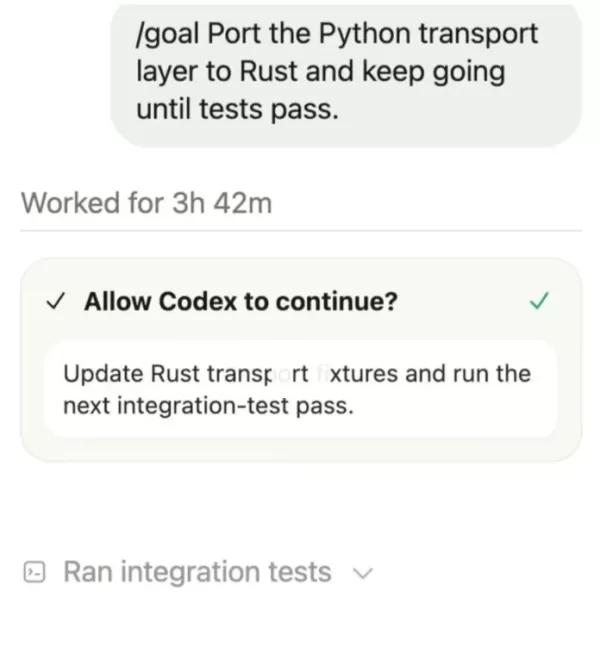
Mobile-Exclusive Experience: A Rethink, Not a Port
Rather than simply copying desktop features, OpenAI has deeply adapted the experience for mobile use:
Lighter Interactions: Messages are more concise to prevent reading fatigue on smaller screens.
More Efficient Decisions: The focus is on fragmented scenarios like "approving plans," "confirming changes," and answering quick questions.
More Flexible Input: It supports voice-to-code instructions, overcoming the inconvenience of typing on mobile devices.
Early user feedback indicates that while the mobile version currently lacks advanced features like Slash Commands or Skills prompts, and the text box only accepts plain string input, for developers on the move, the ability to manage project progress anytime already delivers significant value.
Free Access: Build Habits First, Then Barriers
Notably, the Codex mobile feature is available in the free version of ChatGPT. One user commented on Hacker News: "I assumed it required a Plus subscription, but it works for free—though all interactions are used for model training."
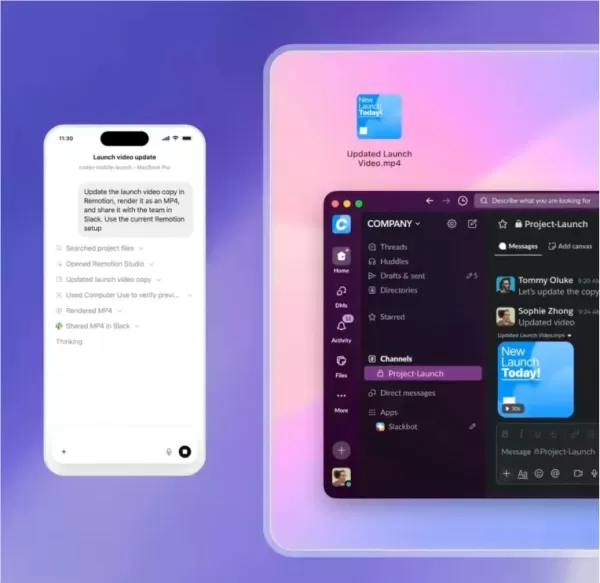
This strategy follows the classic internet playbook of "free first, charge later": lowering the barrier to entry to quickly build user dependency. Once "reviewing code on a phone" becomes a habit, OpenAI can monetize through advanced features, enterprise permissions, or dedicated compute resources. For OpenAI, user habits themselves form the most durable competitive moat.
Competitive Comparison: Stability as the Key Differentiator
In side-by-side comparisons with similar products, Codex mobile's connection stability stands out as a major advantage. A developer noted that Claude's Remote Control feature often suffers from session drops and context loss, while OpenAI's implementation "just works consistently." Although there's room for improvement in feature richness (such as lacking shortcut prompt support), this foundational experience of "reliability" is precisely what professional users prioritize most.
The Significance: A Shift from "Tool" to "Workflow"
The true value of Codex mobile isn't about replacing desktop development, but in bridging the collaboration gap during non-desk hours. When developers can quickly address urgent bugs while traveling or confirm automation script logic during meetings, programming evolves from a "fixed-scenario task" into "round-the-clock collaborative work."
This may be a landmark step toward "accessibility by design" for AI programming tools: technology no longer demands that people adapt to machines, but instead, machines seamlessly integrate into human rhythms.
Of course, the "data-for-service" model behind the free offering also sparks privacy discussions. Users must balance convenience against ethical boundaries—but regardless, when code review is just a tap away on a phone, the future of software development has already quietly transformed.
Related article
 South Korea Breaks Ground on National AI Computing Center, Investing 2.5 Trillion Won with 2028 Target
South Korean outlet EtNews reports that groundbreaking for the Korea AI Computing Center (KOACC) took place on August 3 at the Solar City data center park in Sunan, Jeollanam-do. Backed by a total investment of 2.5 trillion KRW (roughly 11.838 billio
Six Tech Giants Back Linux Foundation With $12.5M to Tackle AI Vulnerability Noise
To tackle the flood of low-quality security reports produced by AI automation tools, six major tech companies—Anthropic, Amazon (AWS), GitHub, Google, Microsoft, and OpenAI—have collectively contributed $12.5 million in funding to Linux Foundation in
Musk Considered Leaving OpenAI to His Kids as Altman Testifies
This morning, OpenAI CEO Sam Altman took the stand to address former co-founder Elon Musk’s lawsuit challenging the company’s corporate structure.When asked about Musk’s claim that other founders “stole a charity” by launching a for-profit subsidiary
Related Special Topic Recommendations
Music composition
South Korea Breaks Ground on National AI Computing Center, Investing 2.5 Trillion Won with 2028 Target
South Korean outlet EtNews reports that groundbreaking for the Korea AI Computing Center (KOACC) took place on August 3 at the Solar City data center park in Sunan, Jeollanam-do. Backed by a total investment of 2.5 trillion KRW (roughly 11.838 billio
Six Tech Giants Back Linux Foundation With $12.5M to Tackle AI Vulnerability Noise
To tackle the flood of low-quality security reports produced by AI automation tools, six major tech companies—Anthropic, Amazon (AWS), GitHub, Google, Microsoft, and OpenAI—have collectively contributed $12.5 million in funding to Linux Foundation in
Musk Considered Leaving OpenAI to His Kids as Altman Testifies
This morning, OpenAI CEO Sam Altman took the stand to address former co-founder Elon Musk’s lawsuit challenging the company’s corporate structure.When asked about Musk’s claim that other founders “stole a charity” by launching a for-profit subsidiary
Related Special Topic Recommendations
Music composition
 AI Vocal Demo Tools for Songwriters, Hooks, Toplines, and Multilingual Draft Sessions
2026 Latest Best AI Vocal Demo Tools for Songwriters, Hook Creators, and Multi-Language Content Teams! XIX.AI has curated a top-rated list of powerful game-changing tools that go through rigorous real-world tests. You’ll find detailed free vs paid comparison data, comprehensive rankings, and must-try options to help you boost writing efficiency and unlock your creative potential. Explore now to discover your perfect tool for all your content needs!
 9 tools
 xix.ai
Business
Best AI Competitive Research Tools for Small Businesses
xix.ai
Business
Best AI Competitive Research Tools for Small Businesses
2026 Latest Best Top-rated AI Competitive Research Tools for Small Businesses! XIX.AI has curated a highly powerful game-changing collection, updated weekly with rigorous real-world tests and detailed rankings. You can find a comprehensive free vs paid comparison to help you identify the must-try tools that boost your productivity and give you a competitive edge. Explore now to discover your perfect tool!
9 tools
xix.ai
Image editing
Photoshop AI Retouch Tools for Ecommerce Apparel, Skin Cleanup, and Color Consistency
2026 Latest Best Photoshop AI retouch tools for ecommerce apparel, skin cleanup, and color consistency! This top-rated curated list features powerful game-changing solutions that help you boost writing efficiency, streamline content creation, and achieve perfect visual results effortlessly. Each tool has undergone real-world tests through weekly updated rankings, complete with free vs paid comparison details. Backed by XIX.AI, it’s the must-try guide for anyone aiming to unlock your AI edge. Explore now!
10 tools
xix.ai
Prompt
Best AI Prompt Libraries for ChatGPT Workflows
2026 Latest Best Top-Rated AI Prompt Libraries for optimizing all types of ChatGPT workflows. XIX.AI has curated a powerful, game-changing collection that goes through rigorous real-world tests to ensure top performance. You can find detailed free vs paid comparisons and expert rankings to help you choose the must-try tools that boost your productivity and unlock your AI edge. Explore now!
11 tools
xix.ai
Education and Learning
AI Quiz Builder Platforms for Teachers, Tutors, and Cohort-Based Learning Programs
2026 Latest Best AI Quiz Builder Platforms for Teachers, Tutors, and Cohort-Based Learning Programs! XIX.AI has curated a top-rated list of powerful game-changing tools that go through real-world tests to deliver accurate rankings. These must-try platforms help boost writing efficiency, streamline content creation, and simplify quiz design across all learning scenarios. Explore now to discover your perfect tool for unlocking your AI edge in teaching!
13 tools
xix.ai
code
AI Pull Request Review Tools for GitHub Teams Handling Refactors, Bugs, and Security Gaps
2026 Latest Best AI Pull Request Review Tools for GitHub Teams are here on XIX.AI! This top-rated curated list showcases powerful game-changing solutions that streamline refactoring, bug fixing, and security gap detection across all team workflows. Enjoy a free vs paid comparison along with real-world tests and detailed rankings to help you find the perfect tool that boosts productivity significantly. Explore now to unlock your AI edge!
12 tools
xix.ai

 Comments (0)
0/500
Comments (0)
0/500
When coding is no longer tied to a desk, but can be reviewed and submitted during a subway commute or debugged in a coffee shop, the traditional boundaries of programming work are dissolving. OpenAI recently announced that Codex is now fully integrated into the ChatGPT iOS and Android apps. This allows developers to review code changes, handle simple tasks, or approve automated plans directly from their phones, without needing to open a laptop—marking a pivotal shift for AI programming tools from "desktop productivity" to "always-available companion."
Mobile-Exclusive Experience: A Rethink, Not a Port
Rather than simply copying desktop features, OpenAI has deeply adapted the experience for mobile use:
Lighter Interactions: Messages are more concise to prevent reading fatigue on smaller screens.
More Efficient Decisions: The focus is on fragmented scenarios like "approving plans," "confirming changes," and answering quick questions.
More Flexible Input: It supports voice-to-code instructions, overcoming the inconvenience of typing on mobile devices.
Early user feedback indicates that while the mobile version currently lacks advanced features like Slash Commands or Skills prompts, and the text box only accepts plain string input, for developers on the move, the ability to manage project progress anytime already delivers significant value.
Free Access: Build Habits First, Then Barriers
Notably, the Codex mobile feature is available in the free version of ChatGPT. One user commented on Hacker News: "I assumed it required a Plus subscription, but it works for free—though all interactions are used for model training."
This strategy follows the classic internet playbook of "free first, charge later": lowering the barrier to entry to quickly build user dependency. Once "reviewing code on a phone" becomes a habit, OpenAI can monetize through advanced features, enterprise permissions, or dedicated compute resources. For OpenAI, user habits themselves form the most durable competitive moat.
Competitive Comparison: Stability as the Key Differentiator
In side-by-side comparisons with similar products, Codex mobile's connection stability stands out as a major advantage. A developer noted that Claude's Remote Control feature often suffers from session drops and context loss, while OpenAI's implementation "just works consistently." Although there's room for improvement in feature richness (such as lacking shortcut prompt support), this foundational experience of "reliability" is precisely what professional users prioritize most.
The Significance: A Shift from "Tool" to "Workflow"
The true value of Codex mobile isn't about replacing desktop development, but in bridging the collaboration gap during non-desk hours. When developers can quickly address urgent bugs while traveling or confirm automation script logic during meetings, programming evolves from a "fixed-scenario task" into "round-the-clock collaborative work."
This may be a landmark step toward "accessibility by design" for AI programming tools: technology no longer demands that people adapt to machines, but instead, machines seamlessly integrate into human rhythms.
Of course, the "data-for-service" model behind the free offering also sparks privacy discussions. Users must balance convenience against ethical boundaries—but regardless, when code review is just a tap away on a phone, the future of software development has already quietly transformed.








 South Korea Breaks Ground on National AI Computing Center, Investing 2.5 Trillion Won with 2028 Target
South Korean outlet EtNews reports that groundbreaking for the Korea AI Computing Center (KOACC) took place on August 3 at the Solar City data center park in Sunan, Jeollanam-do. Backed by a total investment of 2.5 trillion KRW (roughly 11.838 billio
South Korea Breaks Ground on National AI Computing Center, Investing 2.5 Trillion Won with 2028 Target
South Korean outlet EtNews reports that groundbreaking for the Korea AI Computing Center (KOACC) took place on August 3 at the Solar City data center park in Sunan, Jeollanam-do. Backed by a total investment of 2.5 trillion KRW (roughly 11.838 billio
 Six Tech Giants Back Linux Foundation With $12.5M to Tackle AI Vulnerability Noise
To tackle the flood of low-quality security reports produced by AI automation tools, six major tech companies—Anthropic, Amazon (AWS), GitHub, Google, Microsoft, and OpenAI—have collectively contributed $12.5 million in funding to Linux Foundation in
Six Tech Giants Back Linux Foundation With $12.5M to Tackle AI Vulnerability Noise
To tackle the flood of low-quality security reports produced by AI automation tools, six major tech companies—Anthropic, Amazon (AWS), GitHub, Google, Microsoft, and OpenAI—have collectively contributed $12.5 million in funding to Linux Foundation in
 Musk Considered Leaving OpenAI to His Kids as Altman Testifies
This morning, OpenAI CEO Sam Altman took the stand to address former co-founder Elon Musk’s lawsuit challenging the company’s corporate structure.When asked about Musk’s claim that other founders “stole a charity” by launching a for-profit subsidiary
Musk Considered Leaving OpenAI to His Kids as Altman Testifies
This morning, OpenAI CEO Sam Altman took the stand to address former co-founder Elon Musk’s lawsuit challenging the company’s corporate structure.When asked about Musk’s claim that other founders “stole a charity” by launching a for-profit subsidiary

2026 Latest Best AI Vocal Demo Tools for Songwriters, Hook Creators, and Multi-Language Content Teams! XIX.AI has curated a top-rated list of powerful game-changing tools that go through rigorous real-world tests. You’ll find detailed free vs paid comparison data, comprehensive rankings, and must-try options to help you boost writing efficiency and unlock your creative potential. Explore now to discover your perfect tool for all your content needs!
9 tools
xix.ai

2026 Latest Best Top-rated AI Competitive Research Tools for Small Businesses! XIX.AI has curated a highly powerful game-changing collection, updated weekly with rigorous real-world tests and detailed rankings. You can find a comprehensive free vs paid comparison to help you identify the must-try tools that boost your productivity and give you a competitive edge. Explore now to discover your perfect tool!
9 tools
xix.ai

2026 Latest Best Photoshop AI retouch tools for ecommerce apparel, skin cleanup, and color consistency! This top-rated curated list features powerful game-changing solutions that help you boost writing efficiency, streamline content creation, and achieve perfect visual results effortlessly. Each tool has undergone real-world tests through weekly updated rankings, complete with free vs paid comparison details. Backed by XIX.AI, it’s the must-try guide for anyone aiming to unlock your AI edge. Explore now!
10 tools
xix.ai

2026 Latest Best Top-Rated AI Prompt Libraries for optimizing all types of ChatGPT workflows. XIX.AI has curated a powerful, game-changing collection that goes through rigorous real-world tests to ensure top performance. You can find detailed free vs paid comparisons and expert rankings to help you choose the must-try tools that boost your productivity and unlock your AI edge. Explore now!
11 tools
xix.ai

2026 Latest Best AI Quiz Builder Platforms for Teachers, Tutors, and Cohort-Based Learning Programs! XIX.AI has curated a top-rated list of powerful game-changing tools that go through real-world tests to deliver accurate rankings. These must-try platforms help boost writing efficiency, streamline content creation, and simplify quiz design across all learning scenarios. Explore now to discover your perfect tool for unlocking your AI edge in teaching!
13 tools
xix.ai
2026 Latest Best AI Pull Request Review Tools for GitHub Teams are here on XIX.AI! This top-rated curated list showcases powerful game-changing solutions that streamline refactoring, bug fixing, and security gap detection across all team workflows. Enjoy a free vs paid comparison along with real-world tests and detailed rankings to help you find the perfect tool that boosts productivity significantly. Explore now to unlock your AI edge!
12 tools
xix.ai












