


 Home
HomeBrowser wars no longer about search: top alternatives to Chrome and Safari
The browser wars have taken a new turn this year: the battle is no longer just about search results — it's about which company's AI can act on your behalf directly inside the browser. Google Chrome and Apple's Safari still dominate the market, with Chrome's edge largely due to how aggressively it has integrated generative AI into search. But 2026 has brought a wave of new entrants, from well-funded startups to Big Tech players, all betting that the browser will evolve from a window into the web into a personal assistant that gets things done for you.
Users seeking alternatives to Chrome and Safari can choose from a growing selection of browsers designed to challenge the industry giants. To help navigate this competitive landscape, we've compiled an overview of some of the top alternative browsers available today. This includes browsers powered by AI, open source browsers that emphasize customization and privacy, and "mindful browsers" — a new term for browsers created to support user well-being.
AI-powered browsers
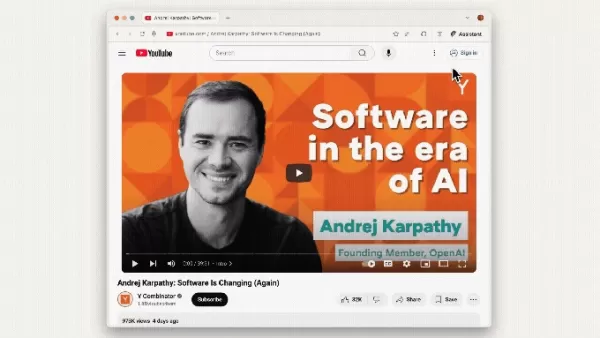
Image Credits:Perplexity
Perplexity’s Comet
Perplexity is the latest startup to launch an AI-powered web browser. Called Comet, the product acts as a chatbot-based search engine and can perform tasks like summarizing emails, browsing web pages, and sending calendar invites. It’s currently available only to users on Perplexity’s $200/month Max plan, though there is also a waitlist for sign-ups.
The Browser Company’s Dia
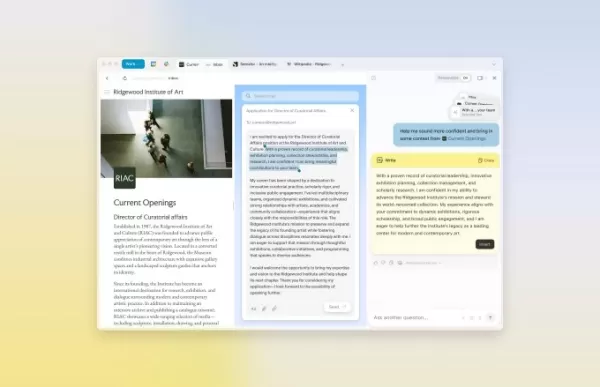
Image Credits:The Browser Company
The Browser Company, the team behind Arc, recently introduced Dia, an AI-centric browser that resembles Google Chrome but includes an AI chat tool.
Currently available as an invite-only beta, Dia is designed to help users navigate the web more easily. It can see every website a user has visited and every site they’re logged into, allowing it to help find information and perform tasks. For example, Dia can provide details about the page you’re browsing, answer questions about a product, and summarize uploaded files.
To get early access to Dia, users must be Arc members. Non-members can join the waitlist.
Opera’s Neon
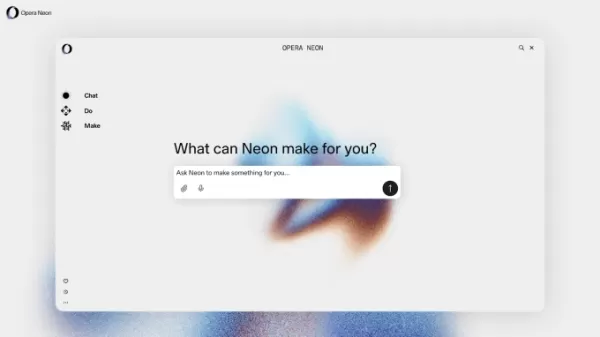
Image Credits:Opera
Another recent entry in the AI agentic browser war is Opera’s Neon, which has contextual awareness and can handle tasks like researching, shopping, and writing code snippets. Notably, it can even perform tasks while the user is offline.
Neon is currently available on macOS and Windows. The subscription costs $19.90 per month.
OpenAI’s Atlas

Image Credits:Bryce Durbin / TechCrunch
OpenAI recently launched its AI-powered web browser, Atlas. The browser allows users to ask ChatGPT about search results and browse websites within the chatbot rather than being directed to external links. There’s also an "agent mode" for users to ask ChatGPT to complete tasks on their behalf.
Atlas was first rumored to launch in July, but it became available on macOS in October. It’s expected to arrive on Windows, iOS, and Android devices soon.
Aside
Backed by Y Combinator, Aside is an upcoming AI-first, browser-native automation platform designed to autonomously complete tasks, fill out forms, and manage data on behalf of users. The company describes the experience simply: "Give it your passwords, browsing history, and browser context." Unlike traditional automation tools that rely on integrations, Aside operates directly within the browser, allowing it to work across Gmail, Notion, Slack, Figma, and banking platforms.
Users can sign up for the waitlist ahead of launch.
Jatter
Jatter launched its AI-powered browser in June, giving users the ability to ask questions about any webpage, uncover relevant insights, and receive personalized recommendations based on their browsing activity. Additionally, Jatter offers an integrated Notes app, so it can learn from that content, summarize notes, and surface key details.
Jatter is currently available on Mac, Windows, iOS, and Android devices. It’s free to use, but there’s also an optional subscription for $10 per month.
Privacy-focused browsers

Image Credits:Brave
Brave
Brave is one of the most well-known privacy-first browsers, popular for its built-in ad and tracker blocking capabilities. It also takes a gamified approach to browsing, rewarding users with its own cryptocurrency called Basic Attention Token (BAT). When users opt in to view ads and support their favorite websites, they receive a share of the ad revenue. Additional features include a VPN service, an AI assistant, and a video calling feature.
DuckDuckGo
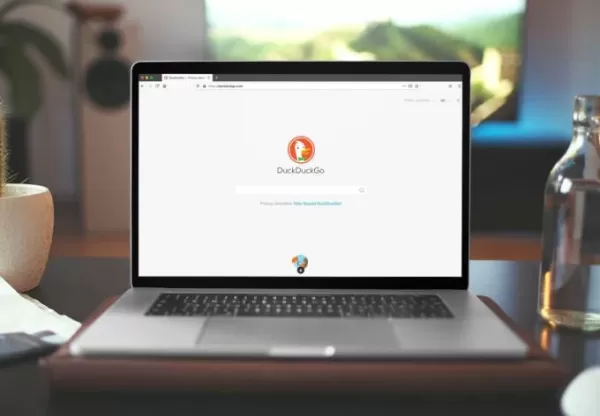
Image Credits:DuckDuckGo
DuckDuckGo is another browser many people are already familiar with, thanks to its search engine of the same name. Launched in 2008, the company recently made significant investments in its browser to stay competitive by introducing generative AI features, such as a chatbot. It also enhanced its scam blocker to detect a wider range of scams, including fake cryptocurrency exchanges, scareware tactics, and fraudulent e-commerce websites. In addition to blocking scams, DuckDuckGo prevents trackers and ads, and it doesn’t track user data, resulting in fewer pop-ups for users.
Ladybird

Image Credits:Ladybird
Ladybird, led by GitHub co-founder and former CEO Chris Wanstrath, has an ambitious mission compared to other rivals: It aims to build an entirely new open source browser from scratch. This means it will not rely on code from existing browsers, a feat rarely accomplished. Most alternative web browsers depend on the Chromium open source project maintained by Google, which is the most widely used base for many browsers.
Like other privacy-focused browsers, Ladybird will offer features to minimize data collection, such as a built-in ad blocker and the ability to block third-party cookies. The browser has yet to be launched, with an alpha version scheduled for release in 2026 for early adopters on Linux and macOS.
Vivaldi
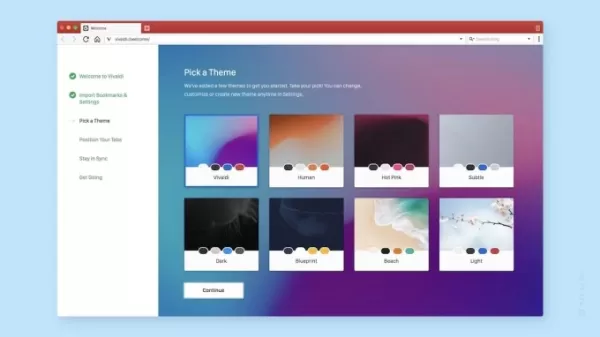
Image Credits:Vivaldi
Vivaldi is a Chromium-based browser created by one of the original developers of the Opera browser. Its biggest selling point is its customizable user interface, which allows users to change the appearance and enable or disable features. One unique feature is that the browser window changes color to match the website being viewed. Other key features include ad blocking, a password manager, no user data tracking, and productivity tools such as a calendar and notes.
Niche browsers
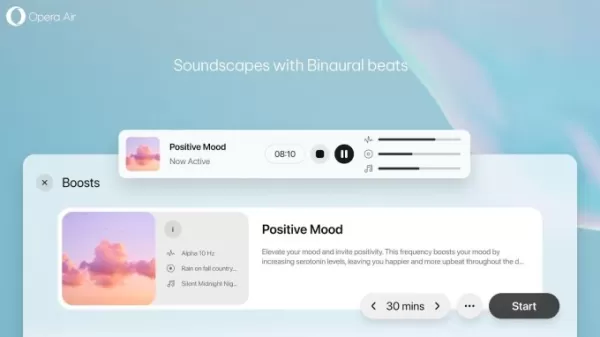
Image Credits:Opera
Opera Air
Opera launched the Air browser in February, becoming one of the first mindfulness-themed browsers in the space. While Opera Air functions like a typical web browser, it includes unique features designed to support mental well-being. These include break reminders and breathing exercises. Another feature, called "Boosts," offers a selection of binaural beats to help improve focus or relaxation.
SigmaOS

Image Credits:SigmaOS
SigmaOS is a Mac-only browser with a workspace-style interface that emphasizes productivity. It displays tabs vertically, allowing users to treat them like a to-do list that can be marked as complete or snoozed for later. Users can create workspaces — essentially groups of tabs — to better organize different activities, such as separating work from entertainment.
This Y Combinator-backed browser has been around for a few years and has recently begun introducing more AI features, including the ability to summarize various elements of a web page, such as ratings, reviews, and prices. It also has an AI assistant that can answer questions, translate text, and rewrite content.
SigmaOS is free to use, but users who want more than three workspaces can subscribe to a plan for $8 per month, which provides unlimited workspaces.
Zen Browser

Image Credits:Zen Browser
Zen Browser aims to create a "calmer internet" with its open source browser. Zen lets users organize tabs into Workspaces, and offers Split View to view two tabs side by side, among other productivity-focused features. Users can also enhance their browsing experience with community-made plug-ins and themes, such as a mod that makes the tab background transparent.
This story has been updated after publication to include newly launched browsers.
Related article
 Top Alternative Browsers Rivaling Chrome and Safari in Ongoing Browser Market Competition
Google Chrome and Apple’s Safari remain the dominant forces in the web browser market, with Chrome holding a substantial share thanks to continuous innovation from Google, especially in integrating generative AI into its search capabilities.For those
The Year's Biggest AI Stories So Far
You can track a year by product launches, but the bigger moments that reshape our understanding of AI matter more. The AI industry keeps generating headlines—major acquisitions, indie developer wins, backlash against questionable products, and high-s
ChatGPT launches app integrations for DoorDash, Spotify, Uber and more
OpenAI’s ChatGPT now supports app integrations, letting you link your accounts directly and ask the assistant to take actions on your behalf. With the Spotify integration, for example, you can request personalized playlists that appear instantly in y
Related Special Topic Recommendations
Data Analysis
Top Alternative Browsers Rivaling Chrome and Safari in Ongoing Browser Market Competition
Google Chrome and Apple’s Safari remain the dominant forces in the web browser market, with Chrome holding a substantial share thanks to continuous innovation from Google, especially in integrating generative AI into its search capabilities.For those
The Year's Biggest AI Stories So Far
You can track a year by product launches, but the bigger moments that reshape our understanding of AI matter more. The AI industry keeps generating headlines—major acquisitions, indie developer wins, backlash against questionable products, and high-s
ChatGPT launches app integrations for DoorDash, Spotify, Uber and more
OpenAI’s ChatGPT now supports app integrations, letting you link your accounts directly and ask the assistant to take actions on your behalf. With the Spotify integration, for example, you can request personalized playlists that appear instantly in y
Related Special Topic Recommendations
Data Analysis
 Best AI Anomaly Detection Tools for KPI Monitoring across SaaS and Ecommerce Teams
2026 Latest Best Top-rated AI Anomaly Detection Tools for KPI Monitoring in SaaS and Ecommerce teams! XIX.AI has curated a powerful, game-changing collection based on rigorous real-world tests and weekly updated rankings. You’ll find detailed free vs paid comparison insights to help you identify the must-try solution that boosts productivity and unlocks your AI edge. Explore now!
 10 tools
 xix.ai
writing
Best AI Outline Generators for Long-Form SEO Articles
xix.ai
writing
Best AI Outline Generators for Long-Form SEO Articles
2026 Latest Best Top-Rated AI Outline Generators for Long-Form SEO Articles, meticulously curated by XIX.AI. These powerful tools offer game-changing assistance in creating high-quality content quickly, boosting writing efficiency significantly. Get a free vs paid comparison along with real-world tests and detailed rankings to help you find the must-try option that suits your needs. Explore now to unlock your AI edge.
8 tools
xix.ai
Education and Learning
AI Study Tools for Homework and Exam Prep
2026 Latest Best AI Study Tools for Homework and Exam Prep! XIX.AI curates a top-rated list of powerful, game-changing tools that help students boost productivity, streamline homework completion, and ace exams through real-world tests. Get a free vs paid comparison, detailed rankings, and must-try options to unlock your AI edge. Explore now!
10 tools
xix.ai
Music composition
AI Vocal Demo Tools for Songwriters, Hooks, Toplines, and Multilingual Draft Sessions
2026 Latest Best AI Vocal Demo Tools for Songwriters, Hook Creators, and Multi-Language Content Teams! XIX.AI has curated a top-rated list of powerful game-changing tools that go through rigorous real-world tests. You’ll find detailed free vs paid comparison data, comprehensive rankings, and must-try options to help you boost writing efficiency and unlock your creative potential. Explore now to discover your perfect tool for all your content needs!
9 tools
xix.ai
Business
Best AI Competitive Research Tools for Small Businesses
2026 Latest Best Top-rated AI Competitive Research Tools for Small Businesses! XIX.AI has curated a highly powerful game-changing collection, updated weekly with rigorous real-world tests and detailed rankings. You can find a comprehensive free vs paid comparison to help you identify the must-try tools that boost your productivity and give you a competitive edge. Explore now to discover your perfect tool!
9 tools
xix.ai
Image editing
Photoshop AI Retouch Tools for Ecommerce Apparel, Skin Cleanup, and Color Consistency
2026 Latest Best Photoshop AI retouch tools for ecommerce apparel, skin cleanup, and color consistency! This top-rated curated list features powerful game-changing solutions that help you boost writing efficiency, streamline content creation, and achieve perfect visual results effortlessly. Each tool has undergone real-world tests through weekly updated rankings, complete with free vs paid comparison details. Backed by XIX.AI, it’s the must-try guide for anyone aiming to unlock your AI edge. Explore now!
10 tools
xix.ai

 Comments (1)
0/500
Comments (1)
0/500
![ScottKing]()
ブラウザの覇権争いが検索からAIエージェントへシフトしてるの面白いですね。ChromeやSafariが強いのは分かるけど、ユーザーの代わりに行動してくれるAIの実装が本格化したら、プライバシーとセキュリティのバランスが心配です。次はどのブラウザが勝つのか、目が離せません👀✨
The browser wars have taken a new turn this year: the battle is no longer just about search results — it's about which company's AI can act on your behalf directly inside the browser. Google Chrome and Apple's Safari still dominate the market, with Chrome's edge largely due to how aggressively it has integrated generative AI into search. But 2026 has brought a wave of new entrants, from well-funded startups to Big Tech players, all betting that the browser will evolve from a window into the web into a personal assistant that gets things done for you.
Users seeking alternatives to Chrome and Safari can choose from a growing selection of browsers designed to challenge the industry giants. To help navigate this competitive landscape, we've compiled an overview of some of the top alternative browsers available today. This includes browsers powered by AI, open source browsers that emphasize customization and privacy, and "mindful browsers" — a new term for browsers created to support user well-being.
AI-powered browsers
Image Credits:Perplexity
Perplexity’s Comet
Perplexity is the latest startup to launch an AI-powered web browser. Called Comet, the product acts as a chatbot-based search engine and can perform tasks like summarizing emails, browsing web pages, and sending calendar invites. It’s currently available only to users on Perplexity’s $200/month Max plan, though there is also a waitlist for sign-ups.
The Browser Company’s Dia
Image Credits:The Browser Company
The Browser Company, the team behind Arc, recently introduced Dia, an AI-centric browser that resembles Google Chrome but includes an AI chat tool.
Currently available as an invite-only beta, Dia is designed to help users navigate the web more easily. It can see every website a user has visited and every site they’re logged into, allowing it to help find information and perform tasks. For example, Dia can provide details about the page you’re browsing, answer questions about a product, and summarize uploaded files.
To get early access to Dia, users must be Arc members. Non-members can join the waitlist.
Opera’s Neon
Image Credits:Opera
Another recent entry in the AI agentic browser war is Opera’s Neon, which has contextual awareness and can handle tasks like researching, shopping, and writing code snippets. Notably, it can even perform tasks while the user is offline.
Neon is currently available on macOS and Windows. The subscription costs $19.90 per month.
OpenAI’s Atlas
Image Credits:Bryce Durbin / TechCrunch
OpenAI recently launched its AI-powered web browser, Atlas. The browser allows users to ask ChatGPT about search results and browse websites within the chatbot rather than being directed to external links. There’s also an "agent mode" for users to ask ChatGPT to complete tasks on their behalf.
Atlas was first rumored to launch in July, but it became available on macOS in October. It’s expected to arrive on Windows, iOS, and Android devices soon.
Aside
Backed by Y Combinator, Aside is an upcoming AI-first, browser-native automation platform designed to autonomously complete tasks, fill out forms, and manage data on behalf of users. The company describes the experience simply: "Give it your passwords, browsing history, and browser context." Unlike traditional automation tools that rely on integrations, Aside operates directly within the browser, allowing it to work across Gmail, Notion, Slack, Figma, and banking platforms.
Users can sign up for the waitlist ahead of launch.
Jatter
Jatter launched its AI-powered browser in June, giving users the ability to ask questions about any webpage, uncover relevant insights, and receive personalized recommendations based on their browsing activity. Additionally, Jatter offers an integrated Notes app, so it can learn from that content, summarize notes, and surface key details.
Jatter is currently available on Mac, Windows, iOS, and Android devices. It’s free to use, but there’s also an optional subscription for $10 per month.
Privacy-focused browsers
Image Credits:Brave
Brave
Brave is one of the most well-known privacy-first browsers, popular for its built-in ad and tracker blocking capabilities. It also takes a gamified approach to browsing, rewarding users with its own cryptocurrency called Basic Attention Token (BAT). When users opt in to view ads and support their favorite websites, they receive a share of the ad revenue. Additional features include a VPN service, an AI assistant, and a video calling feature.
DuckDuckGo
Image Credits:DuckDuckGo
DuckDuckGo is another browser many people are already familiar with, thanks to its search engine of the same name. Launched in 2008, the company recently made significant investments in its browser to stay competitive by introducing generative AI features, such as a chatbot. It also enhanced its scam blocker to detect a wider range of scams, including fake cryptocurrency exchanges, scareware tactics, and fraudulent e-commerce websites. In addition to blocking scams, DuckDuckGo prevents trackers and ads, and it doesn’t track user data, resulting in fewer pop-ups for users.
Ladybird
Image Credits:Ladybird
Ladybird, led by GitHub co-founder and former CEO Chris Wanstrath, has an ambitious mission compared to other rivals: It aims to build an entirely new open source browser from scratch. This means it will not rely on code from existing browsers, a feat rarely accomplished. Most alternative web browsers depend on the Chromium open source project maintained by Google, which is the most widely used base for many browsers.
Like other privacy-focused browsers, Ladybird will offer features to minimize data collection, such as a built-in ad blocker and the ability to block third-party cookies. The browser has yet to be launched, with an alpha version scheduled for release in 2026 for early adopters on Linux and macOS.
Vivaldi
Image Credits:Vivaldi
Vivaldi is a Chromium-based browser created by one of the original developers of the Opera browser. Its biggest selling point is its customizable user interface, which allows users to change the appearance and enable or disable features. One unique feature is that the browser window changes color to match the website being viewed. Other key features include ad blocking, a password manager, no user data tracking, and productivity tools such as a calendar and notes.
Niche browsers
Image Credits:Opera
Opera Air
Opera launched the Air browser in February, becoming one of the first mindfulness-themed browsers in the space. While Opera Air functions like a typical web browser, it includes unique features designed to support mental well-being. These include break reminders and breathing exercises. Another feature, called "Boosts," offers a selection of binaural beats to help improve focus or relaxation.
SigmaOS
Image Credits:SigmaOS
SigmaOS is a Mac-only browser with a workspace-style interface that emphasizes productivity. It displays tabs vertically, allowing users to treat them like a to-do list that can be marked as complete or snoozed for later. Users can create workspaces — essentially groups of tabs — to better organize different activities, such as separating work from entertainment.
This Y Combinator-backed browser has been around for a few years and has recently begun introducing more AI features, including the ability to summarize various elements of a web page, such as ratings, reviews, and prices. It also has an AI assistant that can answer questions, translate text, and rewrite content.
SigmaOS is free to use, but users who want more than three workspaces can subscribe to a plan for $8 per month, which provides unlimited workspaces.
Zen Browser
Image Credits:Zen Browser
Zen Browser aims to create a "calmer internet" with its open source browser. Zen lets users organize tabs into Workspaces, and offers Split View to view two tabs side by side, among other productivity-focused features. Users can also enhance their browsing experience with community-made plug-ins and themes, such as a mod that makes the tab background transparent.
This story has been updated after publication to include newly launched browsers.








 Top Alternative Browsers Rivaling Chrome and Safari in Ongoing Browser Market Competition
Google Chrome and Apple’s Safari remain the dominant forces in the web browser market, with Chrome holding a substantial share thanks to continuous innovation from Google, especially in integrating generative AI into its search capabilities.For those
Top Alternative Browsers Rivaling Chrome and Safari in Ongoing Browser Market Competition
Google Chrome and Apple’s Safari remain the dominant forces in the web browser market, with Chrome holding a substantial share thanks to continuous innovation from Google, especially in integrating generative AI into its search capabilities.For those
 The Year's Biggest AI Stories So Far
You can track a year by product launches, but the bigger moments that reshape our understanding of AI matter more. The AI industry keeps generating headlines—major acquisitions, indie developer wins, backlash against questionable products, and high-s
The Year's Biggest AI Stories So Far
You can track a year by product launches, but the bigger moments that reshape our understanding of AI matter more. The AI industry keeps generating headlines—major acquisitions, indie developer wins, backlash against questionable products, and high-s
 ChatGPT launches app integrations for DoorDash, Spotify, Uber and more
OpenAI’s ChatGPT now supports app integrations, letting you link your accounts directly and ask the assistant to take actions on your behalf. With the Spotify integration, for example, you can request personalized playlists that appear instantly in y
ChatGPT launches app integrations for DoorDash, Spotify, Uber and more
OpenAI’s ChatGPT now supports app integrations, letting you link your accounts directly and ask the assistant to take actions on your behalf. With the Spotify integration, for example, you can request personalized playlists that appear instantly in y

2026 Latest Best Top-rated AI Anomaly Detection Tools for KPI Monitoring in SaaS and Ecommerce teams! XIX.AI has curated a powerful, game-changing collection based on rigorous real-world tests and weekly updated rankings. You’ll find detailed free vs paid comparison insights to help you identify the must-try solution that boosts productivity and unlocks your AI edge. Explore now!
10 tools
xix.ai

2026 Latest Best Top-Rated AI Outline Generators for Long-Form SEO Articles, meticulously curated by XIX.AI. These powerful tools offer game-changing assistance in creating high-quality content quickly, boosting writing efficiency significantly. Get a free vs paid comparison along with real-world tests and detailed rankings to help you find the must-try option that suits your needs. Explore now to unlock your AI edge.
8 tools
xix.ai

2026 Latest Best AI Study Tools for Homework and Exam Prep! XIX.AI curates a top-rated list of powerful, game-changing tools that help students boost productivity, streamline homework completion, and ace exams through real-world tests. Get a free vs paid comparison, detailed rankings, and must-try options to unlock your AI edge. Explore now!
10 tools
xix.ai

2026 Latest Best AI Vocal Demo Tools for Songwriters, Hook Creators, and Multi-Language Content Teams! XIX.AI has curated a top-rated list of powerful game-changing tools that go through rigorous real-world tests. You’ll find detailed free vs paid comparison data, comprehensive rankings, and must-try options to help you boost writing efficiency and unlock your creative potential. Explore now to discover your perfect tool for all your content needs!
9 tools
xix.ai

2026 Latest Best Top-rated AI Competitive Research Tools for Small Businesses! XIX.AI has curated a highly powerful game-changing collection, updated weekly with rigorous real-world tests and detailed rankings. You can find a comprehensive free vs paid comparison to help you identify the must-try tools that boost your productivity and give you a competitive edge. Explore now to discover your perfect tool!
9 tools
xix.ai

2026 Latest Best Photoshop AI retouch tools for ecommerce apparel, skin cleanup, and color consistency! This top-rated curated list features powerful game-changing solutions that help you boost writing efficiency, streamline content creation, and achieve perfect visual results effortlessly. Each tool has undergone real-world tests through weekly updated rankings, complete with free vs paid comparison details. Backed by XIX.AI, it’s the must-try guide for anyone aiming to unlock your AI edge. Explore now!
10 tools
xix.ai

ブラウザの覇権争いが検索からAIエージェントへシフトしてるの面白いですね。ChromeやSafariが強いのは分かるけど、ユーザーの代わりに行動してくれるAIの実装が本格化したら、プライバシーとセキュリティのバランスが心配です。次はどのブラウザが勝つのか、目が離せません👀✨












