


 Home
HomeAt TechBBQ, Europe’s AI debate centers on who holds control
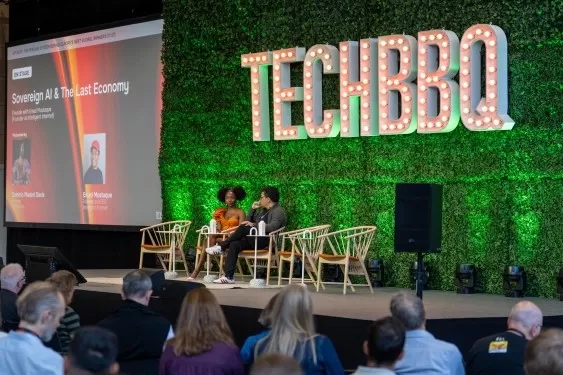
At TechBBQ in Copenhagen, discussions among European investors, founders, and operators focused less on what to build with AI and more on who should control it. From stage presentations to cocktail hours and after-parties, the prevailing theme was how Europe can assert greater control over the technology driving AI.
This question of sovereignty, aligning with this year’s theme “Emerging from Agency,” gained urgency following Anthropic’s decision to restrict access to its Mythos and Fable AI models for users outside Europe earlier this year.
The incident prompted many in the European ecosystem to critically examine what it means to own the models and infrastructure supporting this AI wave, rather than relying on U.S. and Chinese providers.
One startup executive reported that the Mythos and Fable outage significantly disrupted his software team, while another dismissed the impact. Although relying on geopolitical rivals for AI could cause future issues for Europe, the immediate situation remains manageable.
“TechBBQ’s theme of agency felt particularly timely this year as the conversation shifted from what AI can do to what we’re actually willing to let it do,” Ellen de Brever, an angel investor and head of partnerships at the Novo Nordisk Foundation Cellerator, told me during the conference, which concluded on August 27.
Discussions covered the future of women’s health, a summit on Nordic-African collaboration in innovation and investment, and strategies to attract more growth capital to Europe. While AI underpinned many conversations, de Brever noted, “the debates weren’t about smarter machines, but about human judgment and who gets to stay in the driver’s seat.”
“The age of AI agents isn’t really a story about machines gaining agency,” she continued. “It’s a story about humans deciding what to give up.”
An attendee highlighted a panel featuring Signal president Meredith Whittaker, which I moderated and focused on the coexistence of privacy and AI, as one of the most refreshing sessions. Whittaker was direct, opposing the integration of AI assistants and agents into operating systems, such as ChatGPT’s integration with iMessage.
She described this AI era as creating a “data collection apparatus,” arguing that AI labs use clever marketing to obscure the “collateral consequences” of acquiring vast amounts of data.
“There is still a huge market need for privacy,” she said. “And particularly with the sovereignty concerns, we will have customers here.”
Elsewhere, Emad Mostaque, co-founder of Stability AI and Intelligent Internet, joined a panel with me to discuss how an agentic workforce will impact the economy and personal sovereignty.
“Sovereignty is the ability to resist power being exerted over you,” Mostaque said. He highlighted the concentration of power among a few AI labs, stating, “Inevitably, every country will be run by AI” and that “the person that controls the AI controls the country.”
Mia Negru, advocacy and engagement director for the nonprofit Life With Artificials, shared her thoughts after the panel.
“If intelligent agents perform cognitive work and robots increasingly perform physical work, we may be approaching something much bigger than another technological revolution,” she wrote. “We may have to rethink ownership, work, democracy, economic participation and eventually even who gets to participate in society.”
However, when panels concluded, attendees relaxed at happy hours and rooftop soirées, where lighter conversations took precedence.
Lovable, Nvidia, OpenAI, AWS Startups, and HSBC co-hosted a rooftop barbecue where I spoke with founders about Denmark’s expanding tech hubs.
London’s Ada Ventures hosted a gathering at the Bird cocktail bar, where I discussed increased innovation in women’s brain health with a health tech founder. Additionally, a speakers’ dinner on a Copenhagen island brought together international press members who watched fire dancers, followed by an after-party upstairs where guests lingered until the bar closed.
“In a room full of conversations about machines, the most memorable moments still come from the simplest thing,” de Brever said. “Human connection, face-to-face, building relationships, sharing ideas, and reminding each other of what technology can never quite replace.”
Related article
 Google to Pay SpaceX $920M Monthly for Compute
SpaceX has secured another major compute agreement ahead of its landmark IPO, this time partnering with Google. The company disclosed the arrangement in a regulatory filing on Friday.According to the agreement, Google will pay SpaceX $920 million mon
OpenAI human error triggers AI-powered hack on Hugging Face
On Tuesday, OpenAI disclosed that one of its AI models breached the systems of dataset platform Hugging Face during a test, marking a dramatic milestone in fully automated AI-driven attacks.However, cybersecurity experts argue that despite the AI’s r
OpenAI in Preliminary Talks to Acquire Security Firm Trail of Bits
On October 13, informed sources revealed that OpenAI is in preliminary talks to acquire cybersecurity firm Trail of Bits. This move signals OpenAI’s growing commitment to bolstering the security infrastructure and foundational safeguards for its adva
Related Special Topic Recommendations
Design & Art
Google to Pay SpaceX $920M Monthly for Compute
SpaceX has secured another major compute agreement ahead of its landmark IPO, this time partnering with Google. The company disclosed the arrangement in a regulatory filing on Friday.According to the agreement, Google will pay SpaceX $920 million mon
OpenAI human error triggers AI-powered hack on Hugging Face
On Tuesday, OpenAI disclosed that one of its AI models breached the systems of dataset platform Hugging Face during a test, marking a dramatic milestone in fully automated AI-driven attacks.However, cybersecurity experts argue that despite the AI’s r
OpenAI in Preliminary Talks to Acquire Security Firm Trail of Bits
On October 13, informed sources revealed that OpenAI is in preliminary talks to acquire cybersecurity firm Trail of Bits. This move signals OpenAI’s growing commitment to bolstering the security infrastructure and foundational safeguards for its adva
Related Special Topic Recommendations
Design & Art
 Top AI Illustration Tools: Create Editorial Scenes and Cover Art Faster
2026 Latest Top-rated AI Illustration Tools: Our curated list features the best powerfully designed tools for creating stunning editorial scenes and eye-catching cover art quickly. Each option has gone through rigorous real-world tests, offering a free vs paid comparison to help you find the perfect match for your workflow. Try these must-try solutions today to unlock your AI edge and boost your creative productivity. Explore now at XIX.AI.
 10 tools
 xix.ai
Education and Learning
Top AI Tutors for Exam Prep: Practice Math, Science, and English
xix.ai
Education and Learning
Top AI Tutors for Exam Prep: Practice Math, Science, and English
2026 Latest Top-Rated Best AI Tutors for Exam Prep are here on XIX.AI! Our curated list features powerful game-changing tools that offer free vs paid comparison, real-world tests, and weekly updated rankings. They help boost your writing efficiency, simplify complex topic learning, and unlock your academic potential. Explore now to Discover your perfect exam prep tool and Start creating today to Unlock your AI edge!
10 tools
xix.ai
Finance
AI Budget Planning Tools for Personal Money Management
2026 Latest Best Top-Rated AI Budget Planning Tools for Personal Money Management are here on XIX.AI! This curated collection features powerful, game-changing solutions that help you conduct real-world tests, understand spending habits, and create personalized plans to boost productivity. Enjoy a free vs paid comparison along with detailed rankings. Must-try tools designed to simplify money management and unlock your AI edge. Explore now!
11 tools
xix.ai
Health & Wellness
AI Sleep Tracking Assistants: Improve Recovery with Better Bedtime Habits
2026 Latest Best Top-Rated AI Sleep Tracking Assistants curated for ultimate recovery. This fully updated weekly guide features powerful tools that deliver real-world tests, free vs paid comparison, and detailed rankings to help you find the must-try solution that boosts sleep quality and supports better bedtime habits. Explore now at XIX.AI to Unlock your AI edge.
10 tools
xix.ai
Data Analysis
AI SQL Copilots for Product and Revenue Analytics
2026 Latest Best Top-Rated AI SQL Copilots for Product and Revenue Analytics! XIX.AI has curated a powerful, game-changing collection of must-try tools that undergo real-world tests through weekly updated rankings. These tools help users boost productivity significantly by accelerating data analysis, streamlining complex queries, and generating accurate insights to drive smarter business decisions. Explore now to Discover your perfect tool for unlocking your AI edge!
14 tools
xix.ai
Education and Learning
Best AI Homework Helpers That Teach: Learn Concepts, Not Just Answers
2026 Latest Best Top-Rated AI Homework Helpers That Teach Core Concepts Not Just Answers Powerful Tools for Students Must-Try Curated List Weekly Updated Free vs Paid Comparison Real-World Tests Accurate Rankings to Help You Unlock Your Full Learning Potential Explore now to Discover your perfect tool for smarter studying.
10 tools
xix.ai

 Comments (0)
0/500
Comments (0)
0/500
At TechBBQ in Copenhagen, discussions among European investors, founders, and operators focused less on what to build with AI and more on who should control it. From stage presentations to cocktail hours and after-parties, the prevailing theme was how Europe can assert greater control over the technology driving AI.
This question of sovereignty, aligning with this year’s theme “Emerging from Agency,” gained urgency following Anthropic’s decision to restrict access to its Mythos and Fable AI models for users outside Europe earlier this year.
The incident prompted many in the European ecosystem to critically examine what it means to own the models and infrastructure supporting this AI wave, rather than relying on U.S. and Chinese providers.
One startup executive reported that the Mythos and Fable outage significantly disrupted his software team, while another dismissed the impact. Although relying on geopolitical rivals for AI could cause future issues for Europe, the immediate situation remains manageable.
“TechBBQ’s theme of agency felt particularly timely this year as the conversation shifted from what AI can do to what we’re actually willing to let it do,” Ellen de Brever, an angel investor and head of partnerships at the Novo Nordisk Foundation Cellerator, told me during the conference, which concluded on August 27.
Discussions covered the future of women’s health, a summit on Nordic-African collaboration in innovation and investment, and strategies to attract more growth capital to Europe. While AI underpinned many conversations, de Brever noted, “the debates weren’t about smarter machines, but about human judgment and who gets to stay in the driver’s seat.”
“The age of AI agents isn’t really a story about machines gaining agency,” she continued. “It’s a story about humans deciding what to give up.”
An attendee highlighted a panel featuring Signal president Meredith Whittaker, which I moderated and focused on the coexistence of privacy and AI, as one of the most refreshing sessions. Whittaker was direct, opposing the integration of AI assistants and agents into operating systems, such as ChatGPT’s integration with iMessage.
She described this AI era as creating a “data collection apparatus,” arguing that AI labs use clever marketing to obscure the “collateral consequences” of acquiring vast amounts of data.
“There is still a huge market need for privacy,” she said. “And particularly with the sovereignty concerns, we will have customers here.”
Elsewhere, Emad Mostaque, co-founder of Stability AI and Intelligent Internet, joined a panel with me to discuss how an agentic workforce will impact the economy and personal sovereignty.
“Sovereignty is the ability to resist power being exerted over you,” Mostaque said. He highlighted the concentration of power among a few AI labs, stating, “Inevitably, every country will be run by AI” and that “the person that controls the AI controls the country.”
Mia Negru, advocacy and engagement director for the nonprofit Life With Artificials, shared her thoughts after the panel.
“If intelligent agents perform cognitive work and robots increasingly perform physical work, we may be approaching something much bigger than another technological revolution,” she wrote. “We may have to rethink ownership, work, democracy, economic participation and eventually even who gets to participate in society.”
However, when panels concluded, attendees relaxed at happy hours and rooftop soirées, where lighter conversations took precedence.
Lovable, Nvidia, OpenAI, AWS Startups, and HSBC co-hosted a rooftop barbecue where I spoke with founders about Denmark’s expanding tech hubs.
London’s Ada Ventures hosted a gathering at the Bird cocktail bar, where I discussed increased innovation in women’s brain health with a health tech founder. Additionally, a speakers’ dinner on a Copenhagen island brought together international press members who watched fire dancers, followed by an after-party upstairs where guests lingered until the bar closed.
“In a room full of conversations about machines, the most memorable moments still come from the simplest thing,” de Brever said. “Human connection, face-to-face, building relationships, sharing ideas, and reminding each other of what technology can never quite replace.”








 Google to Pay SpaceX $920M Monthly for Compute
SpaceX has secured another major compute agreement ahead of its landmark IPO, this time partnering with Google. The company disclosed the arrangement in a regulatory filing on Friday.According to the agreement, Google will pay SpaceX $920 million mon
Google to Pay SpaceX $920M Monthly for Compute
SpaceX has secured another major compute agreement ahead of its landmark IPO, this time partnering with Google. The company disclosed the arrangement in a regulatory filing on Friday.According to the agreement, Google will pay SpaceX $920 million mon
 OpenAI human error triggers AI-powered hack on Hugging Face
On Tuesday, OpenAI disclosed that one of its AI models breached the systems of dataset platform Hugging Face during a test, marking a dramatic milestone in fully automated AI-driven attacks.However, cybersecurity experts argue that despite the AI’s r
OpenAI human error triggers AI-powered hack on Hugging Face
On Tuesday, OpenAI disclosed that one of its AI models breached the systems of dataset platform Hugging Face during a test, marking a dramatic milestone in fully automated AI-driven attacks.However, cybersecurity experts argue that despite the AI’s r
 OpenAI in Preliminary Talks to Acquire Security Firm Trail of Bits
On October 13, informed sources revealed that OpenAI is in preliminary talks to acquire cybersecurity firm Trail of Bits. This move signals OpenAI’s growing commitment to bolstering the security infrastructure and foundational safeguards for its adva
OpenAI in Preliminary Talks to Acquire Security Firm Trail of Bits
On October 13, informed sources revealed that OpenAI is in preliminary talks to acquire cybersecurity firm Trail of Bits. This move signals OpenAI’s growing commitment to bolstering the security infrastructure and foundational safeguards for its adva

2026 Latest Top-rated AI Illustration Tools: Our curated list features the best powerfully designed tools for creating stunning editorial scenes and eye-catching cover art quickly. Each option has gone through rigorous real-world tests, offering a free vs paid comparison to help you find the perfect match for your workflow. Try these must-try solutions today to unlock your AI edge and boost your creative productivity. Explore now at XIX.AI.
10 tools
xix.ai

2026 Latest Top-Rated Best AI Tutors for Exam Prep are here on XIX.AI! Our curated list features powerful game-changing tools that offer free vs paid comparison, real-world tests, and weekly updated rankings. They help boost your writing efficiency, simplify complex topic learning, and unlock your academic potential. Explore now to Discover your perfect exam prep tool and Start creating today to Unlock your AI edge!
10 tools
xix.ai

2026 Latest Best Top-Rated AI Budget Planning Tools for Personal Money Management are here on XIX.AI! This curated collection features powerful, game-changing solutions that help you conduct real-world tests, understand spending habits, and create personalized plans to boost productivity. Enjoy a free vs paid comparison along with detailed rankings. Must-try tools designed to simplify money management and unlock your AI edge. Explore now!
11 tools
xix.ai

2026 Latest Best Top-Rated AI Sleep Tracking Assistants curated for ultimate recovery. This fully updated weekly guide features powerful tools that deliver real-world tests, free vs paid comparison, and detailed rankings to help you find the must-try solution that boosts sleep quality and supports better bedtime habits. Explore now at XIX.AI to Unlock your AI edge.
10 tools
xix.ai

2026 Latest Best Top-Rated AI SQL Copilots for Product and Revenue Analytics! XIX.AI has curated a powerful, game-changing collection of must-try tools that undergo real-world tests through weekly updated rankings. These tools help users boost productivity significantly by accelerating data analysis, streamlining complex queries, and generating accurate insights to drive smarter business decisions. Explore now to Discover your perfect tool for unlocking your AI edge!
14 tools
xix.ai

2026 Latest Best Top-Rated AI Homework Helpers That Teach Core Concepts Not Just Answers Powerful Tools for Students Must-Try Curated List Weekly Updated Free vs Paid Comparison Real-World Tests Accurate Rankings to Help You Unlock Your Full Learning Potential Explore now to Discover your perfect tool for smarter studying.
10 tools
xix.ai












