


 Home
HomeARM Institute Secures $90M to Modernize Military Manufacturing Through 10 New Projects
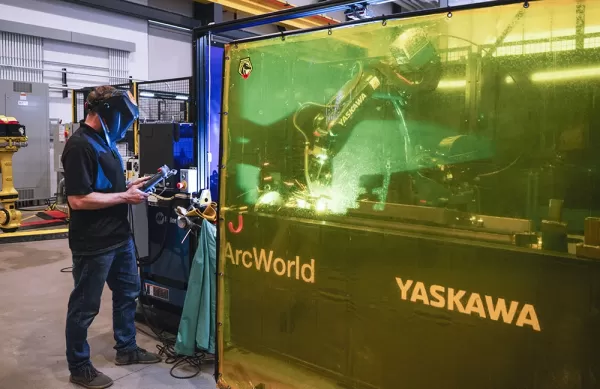
The ARM Institute collaborates with over 500 member organizations and partners spanning industry, academia, and government sectors. | Source: ARM Institute
This week, the Advanced Robotics for Manufacturing (ARM) Institute was awarded nearly $90 million in funding for 10 projects led by the consortium and its members.
The institute received this funding through an Organic Industrial Base (OIB) Modernization Challenge issued by the Office of the Undersecretary of War Manufacturing Technology Office (OSW ManTech). This initiative supports the U.S. Department of War’s (DoW) strategic focus on modernizing defense manufacturing through practical technology and workforce innovations.
Fifteen member organizations will deliver viable working solutions within a two-year timeframe, according to the ARM Institute. These projects aim to address complex automation and modernization challenges at 12 military manufacturing sites, commonly known as the “Organic Industrial Base” (OIB), across the United States.
“This funding award recognizes not only the leadership role the ARM Institute plays in modernizing manufacturing, but the key role our member consortium plays in these efforts,” stated Jorgen Pedersen, CEO of the ARM Institute. “We are honored to work on this important initiative for our nation, and we congratulate our members on the role they will play in this historic effort to modernize the Organic Industrial Base.”
ARM Institute Focuses on Enhancing Safety and Quality at OIB Facilities
The OIB comprises a network of arsenals, depots, and ammunition plants responsible for building and maintaining the U.S. military’s equipment. The DoW has launched an extensive strategic effort to modernize operations at these facilities, leveraging advanced technologies such as robotics and physical AI.
The Pittsburgh-based ARM Institute reported that its members responded to this challenge by bridging innovation with practicality to propose solutions addressing issues affecting each branch of the U.S. military. The selected projects include:
Improving safety in energetics production and increasing manufacturing quality using AIAccelerating mission readiness using dronesRemoving bottlenecks through roboticsTechnology innovations will only have impact if there is a prepared workforce ready to work alongside new systems and processes. Each solution plan includes a workforce readiness component that the Institute will lead with its workforce partners.
This work will center on identifying the skills workers need to operate these systems and, as necessary, identifying ways to upskill and/or recruit additional workers to support the new technologies.
“Innovation cannot exist in a vacuum. A skilled workforce is needed to support these technologies,” said Lisa Masciantonio, chief workforce officer at the ARM Institute. “We are thrilled that the Department of War recognizes the importance of the human workforce. We look forward to working with OIB sites across the nation to not only upgrade their technologies but also ensure that their workforce is ready for the forthcoming improvements to their operations.”
Related article
 Robots Don’t Run Themselves: The Workforce Powering Physical AI
Robotic scaling demands new workforce metrics, per HireArt. Source: Lee AI, via Adobe StockAs robotic systems transition from pilot phases to large-scale deployments, a critical pattern emerges: the bottleneck is rarely the hardware. It is the human
Amazon’s Bhavana Chandrashekhar to Address RoboBusiness Women in Robotics Lunch
From left to right: Bhavana Chandrashekhar and Joyce Sidopoulos.Women currently represent only 35% of the global STEM workforce and 22% of the global AI workforce, leaving many robotics professionals isolated from peer support.Join us at RoboBusiness
ARM Institute Launches Call for Innovation in Defense Manufacturing Technologies
The Project Call 27-01 is currently seeking out advanced technologies that can enhance U.S. defense manufacturing capabilities. This initiative was announced by the ARM Institute.Robotics is recognized as a critical factor in driving both economic co
Related Special Topic Recommendations
Image editing
Robots Don’t Run Themselves: The Workforce Powering Physical AI
Robotic scaling demands new workforce metrics, per HireArt. Source: Lee AI, via Adobe StockAs robotic systems transition from pilot phases to large-scale deployments, a critical pattern emerges: the bottleneck is rarely the hardware. It is the human
Amazon’s Bhavana Chandrashekhar to Address RoboBusiness Women in Robotics Lunch
From left to right: Bhavana Chandrashekhar and Joyce Sidopoulos.Women currently represent only 35% of the global STEM workforce and 22% of the global AI workforce, leaving many robotics professionals isolated from peer support.Join us at RoboBusiness
ARM Institute Launches Call for Innovation in Defense Manufacturing Technologies
The Project Call 27-01 is currently seeking out advanced technologies that can enhance U.S. defense manufacturing capabilities. This initiative was announced by the ARM Institute.Robotics is recognized as a critical factor in driving both economic co
Related Special Topic Recommendations
Image editing
 AI Object Removal Editors: Clean Up Portraits, Travel, and Product Shots
2026 Latest Best Top-rated AI Object Removal Editors for portraits travel product shots! XIX.AI curates a powerful game-changing collection regularly updated with weekly rankings. These tools offer real-world tests to help you quickly remove unwanted elements, boost content quality, and save tons of time without compromising results. Must-try for anyone aiming to unlock their AI creation edge. Explore now!
 10 tools
 xix.ai
Text-to-speech
Best AI Text to Speech Tools for Online Courses
xix.ai
Text-to-speech
Best AI Text to Speech Tools for Online Courses
2026 Latest Best Top-rated AI Text to Speech Tools for Online Courses are curated by XIX.AI based on rigorous real-world tests and weekly updated rankings. These powerful tools help creators deliver crystal-clear audio content effortlessly, boosting writing efficiency and streamlining course production. Check out the free vs paid comparison to find your perfect fit. Explore now to unlock your AI edge in online education.
10 tools
xix.ai
writing
AI Blog Title Tools for Higher Click Through Rates
2026 Latest Best Top-Rated AI Blog Title Tools for Higher Click Through Rates! XIX.AI has carefully curated a powerful, game-changing collection of top tools that go through rigorous real-world tests. You’ll find a free vs paid comparison, weekly updated rankings, and detailed insights to help you boost your blog’s traffic efficiently. Must-try options are highlighted to help you unlock your AI edge. Explore now!
10 tools
xix.ai
automation
Best AI Task Routing Tools for Support Workflows
2026 Latest Best Top-rated AI Task Routing Tools for Support Workflows! XIX.AI has curated a highly powerful game-changing collection of must-try solutions, all undergoing rigorous real-world tests and updated weekly. These tools streamline workflows, boost productivity, and help teams deliver faster, more efficient support. Explore now to discover your perfect tool and unlock your AI edge!
17 tools
xix.ai
Academic Research
AI Citation and Paper Summary Tools
2026 Latest Best Top-Rated AI Citation and Paper Summary Tools Curated by XIX.AI. Get powerful game-changing solutions for quick content creation, improved writing efficiency, and boosting productivity. We offer a free vs paid comparison along with real-world tests and weekly updated rankings to help you find the must-try tool that fits your needs perfectly. Explore now to Unlock your AI edge.
10 tools
xix.ai
Productivity
Best AI Productivity Tools for Daily Work
2026 Latest Best Top-Rated AI Productivity Tools for Daily Work! XIX.AI has curated a powerful, game-changing selection based on rigorous weekly updated rankings and real-world tests. You’ll find must-try options that boost writing efficiency, streamline content creation, and help you overcome daily work challenges. Get a free vs paid comparison to find the perfect fit for your needs. Explore now to unlock your AI edge!
9 tools
xix.ai

 Comments (0)
0/500
Comments (0)
0/500
The ARM Institute collaborates with over 500 member organizations and partners spanning industry, academia, and government sectors. | Source: ARM Institute
This week, the Advanced Robotics for Manufacturing (ARM) Institute was awarded nearly $90 million in funding for 10 projects led by the consortium and its members.
The institute received this funding through an Organic Industrial Base (OIB) Modernization Challenge issued by the Office of the Undersecretary of War Manufacturing Technology Office (OSW ManTech). This initiative supports the U.S. Department of War’s (DoW) strategic focus on modernizing defense manufacturing through practical technology and workforce innovations.
Fifteen member organizations will deliver viable working solutions within a two-year timeframe, according to the ARM Institute. These projects aim to address complex automation and modernization challenges at 12 military manufacturing sites, commonly known as the “Organic Industrial Base” (OIB), across the United States.
“This funding award recognizes not only the leadership role the ARM Institute plays in modernizing manufacturing, but the key role our member consortium plays in these efforts,” stated Jorgen Pedersen, CEO of the ARM Institute. “We are honored to work on this important initiative for our nation, and we congratulate our members on the role they will play in this historic effort to modernize the Organic Industrial Base.”
ARM Institute Focuses on Enhancing Safety and Quality at OIB Facilities
The OIB comprises a network of arsenals, depots, and ammunition plants responsible for building and maintaining the U.S. military’s equipment. The DoW has launched an extensive strategic effort to modernize operations at these facilities, leveraging advanced technologies such as robotics and physical AI.
The Pittsburgh-based ARM Institute reported that its members responded to this challenge by bridging innovation with practicality to propose solutions addressing issues affecting each branch of the U.S. military. The selected projects include:
Improving safety in energetics production and increasing manufacturing quality using AIAccelerating mission readiness using dronesRemoving bottlenecks through roboticsTechnology innovations will only have impact if there is a prepared workforce ready to work alongside new systems and processes. Each solution plan includes a workforce readiness component that the Institute will lead with its workforce partners.
This work will center on identifying the skills workers need to operate these systems and, as necessary, identifying ways to upskill and/or recruit additional workers to support the new technologies.
“Innovation cannot exist in a vacuum. A skilled workforce is needed to support these technologies,” said Lisa Masciantonio, chief workforce officer at the ARM Institute. “We are thrilled that the Department of War recognizes the importance of the human workforce. We look forward to working with OIB sites across the nation to not only upgrade their technologies but also ensure that their workforce is ready for the forthcoming improvements to their operations.”








 Robots Don’t Run Themselves: The Workforce Powering Physical AI
Robotic scaling demands new workforce metrics, per HireArt. Source: Lee AI, via Adobe StockAs robotic systems transition from pilot phases to large-scale deployments, a critical pattern emerges: the bottleneck is rarely the hardware. It is the human
Robots Don’t Run Themselves: The Workforce Powering Physical AI
Robotic scaling demands new workforce metrics, per HireArt. Source: Lee AI, via Adobe StockAs robotic systems transition from pilot phases to large-scale deployments, a critical pattern emerges: the bottleneck is rarely the hardware. It is the human
 Amazon’s Bhavana Chandrashekhar to Address RoboBusiness Women in Robotics Lunch
From left to right: Bhavana Chandrashekhar and Joyce Sidopoulos.Women currently represent only 35% of the global STEM workforce and 22% of the global AI workforce, leaving many robotics professionals isolated from peer support.Join us at RoboBusiness
Amazon’s Bhavana Chandrashekhar to Address RoboBusiness Women in Robotics Lunch
From left to right: Bhavana Chandrashekhar and Joyce Sidopoulos.Women currently represent only 35% of the global STEM workforce and 22% of the global AI workforce, leaving many robotics professionals isolated from peer support.Join us at RoboBusiness
 ARM Institute Launches Call for Innovation in Defense Manufacturing Technologies
The Project Call 27-01 is currently seeking out advanced technologies that can enhance U.S. defense manufacturing capabilities. This initiative was announced by the ARM Institute.Robotics is recognized as a critical factor in driving both economic co
ARM Institute Launches Call for Innovation in Defense Manufacturing Technologies
The Project Call 27-01 is currently seeking out advanced technologies that can enhance U.S. defense manufacturing capabilities. This initiative was announced by the ARM Institute.Robotics is recognized as a critical factor in driving both economic co

2026 Latest Best Top-rated AI Object Removal Editors for portraits travel product shots! XIX.AI curates a powerful game-changing collection regularly updated with weekly rankings. These tools offer real-world tests to help you quickly remove unwanted elements, boost content quality, and save tons of time without compromising results. Must-try for anyone aiming to unlock their AI creation edge. Explore now!
10 tools
xix.ai

2026 Latest Best Top-rated AI Text to Speech Tools for Online Courses are curated by XIX.AI based on rigorous real-world tests and weekly updated rankings. These powerful tools help creators deliver crystal-clear audio content effortlessly, boosting writing efficiency and streamlining course production. Check out the free vs paid comparison to find your perfect fit. Explore now to unlock your AI edge in online education.
10 tools
xix.ai

2026 Latest Best Top-Rated AI Blog Title Tools for Higher Click Through Rates! XIX.AI has carefully curated a powerful, game-changing collection of top tools that go through rigorous real-world tests. You’ll find a free vs paid comparison, weekly updated rankings, and detailed insights to help you boost your blog’s traffic efficiently. Must-try options are highlighted to help you unlock your AI edge. Explore now!
10 tools
xix.ai

2026 Latest Best Top-rated AI Task Routing Tools for Support Workflows! XIX.AI has curated a highly powerful game-changing collection of must-try solutions, all undergoing rigorous real-world tests and updated weekly. These tools streamline workflows, boost productivity, and help teams deliver faster, more efficient support. Explore now to discover your perfect tool and unlock your AI edge!
17 tools
xix.ai

2026 Latest Best Top-Rated AI Citation and Paper Summary Tools Curated by XIX.AI. Get powerful game-changing solutions for quick content creation, improved writing efficiency, and boosting productivity. We offer a free vs paid comparison along with real-world tests and weekly updated rankings to help you find the must-try tool that fits your needs perfectly. Explore now to Unlock your AI edge.
10 tools
xix.ai

2026 Latest Best Top-Rated AI Productivity Tools for Daily Work! XIX.AI has curated a powerful, game-changing selection based on rigorous weekly updated rankings and real-world tests. You’ll find must-try options that boost writing efficiency, streamline content creation, and help you overcome daily work challenges. Get a free vs paid comparison to find the perfect fit for your needs. Explore now to unlock your AI edge!
9 tools
xix.ai












