


 Home
HomeDanny Boyle's '28 Years Later' Shoots on 20-Camera iPhone Rig
The upcoming horror threequel 28 Years Later isn't the first Hollywood film to utilize an iPhone, but it might be the first shot with 20 of them. Director Danny Boyle mounted that many phones onto a specialized rig for select scenes in the movie, which hits theaters on June 20th.
For Boyle, using iPhones is more than a mere gimmick. Returning to helm the franchise after directing the 2002 original 28 Days Later—which was famously shot on a digital video camcorder as a nod to the home video aesthetic of that era—he and returning cinematographer Anthony Dod Mantle saw the phone as the modern equivalent. They took that as an "influence" for choosing to shoot portions of the sequel on the device.
Initial reports last year suggested Boyle filmed 28 Years Later solely on an iPhone 15 Pro Max. However, according to IGN, the production employs a mix of traditional cameras, drones, and iPhones. This includes three custom rigs designed to hold eight, 10, or 20 iPhones simultaneously.
"There is an incredible shot in the second half [of the film] where we use the 20-rig camera, and you’ll know it when you see it," Boyle told IGN. "It’s quite graphic but it’s a wonderful shot that uses that technique, and in a startling way that kind of kicks you into a new world rather than thinking you’ve seen it before."
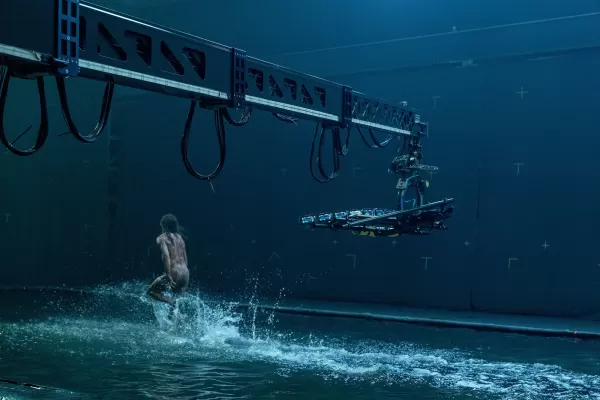
This isn’t how I shoot my home movies, I’m not gonna lie. Image: SonyBoyle describes the 20-phone rig as "basically a poor man’s bullet time," explaining it enabled the crew to capture the film's more violent sequences in innovative ways. "It gives you 180 degrees of vision of an action, and in the editing you can select any choice from it, either a conventional one-camera perspective or make your way instantly around reality, time-slicing the subject, jumping forward or backward for emphasis."
This isn't the film's only unconventional cinematographic choice. It was also shot in an extremely wide 2.76:1 aspect ratio, equivalent to 70mm film. The intention, Boyle says, is to keep audiences guessing about where the infected might appear: "If you’re on a widescreen format, they could be anywhere… you have to keep scanning, looking around for them."
Related article
 OpenAI fights Apple trade secret lawsuit
OpenAI rebutted Apple’s trade secret allegations on Tuesday, arguing the lawsuit is unfounded.“We take these claims seriously but see no evidence supporting them,” OpenAI stated, as reported by Bloomberg’s Ed Ludlow on X. “We support fair competition
Microsoft, Azure and AI Tech Combat California Wildfire Risks
Microsoft invests in AI-driven wildfire detection, with Juan Lavista Ferres, CVP and Chief Data Scientist, discussing strategies to mitigate environmental damage.According to NASA, climate change impacts everyone on Earth, manifesting as rising tempe
Microsoft CEO Slams AI Labs Over Distillation
Satya Nadella, Microsoft’s CEO, calls out AI labs for hypocrisy regarding distillation criticism, a remark widely interpreted as targeting Anthropic. Credit: Getty ImagesMicrosoft CEO Satya Nadella challenges AI developers for limiting model distilla
Related Special Topic Recommendations
writing
OpenAI fights Apple trade secret lawsuit
OpenAI rebutted Apple’s trade secret allegations on Tuesday, arguing the lawsuit is unfounded.“We take these claims seriously but see no evidence supporting them,” OpenAI stated, as reported by Bloomberg’s Ed Ludlow on X. “We support fair competition
Microsoft, Azure and AI Tech Combat California Wildfire Risks
Microsoft invests in AI-driven wildfire detection, with Juan Lavista Ferres, CVP and Chief Data Scientist, discussing strategies to mitigate environmental damage.According to NASA, climate change impacts everyone on Earth, manifesting as rising tempe
Microsoft CEO Slams AI Labs Over Distillation
Satya Nadella, Microsoft’s CEO, calls out AI labs for hypocrisy regarding distillation criticism, a remark widely interpreted as targeting Anthropic. Credit: Getty ImagesMicrosoft CEO Satya Nadella challenges AI developers for limiting model distilla
Related Special Topic Recommendations
writing
 Best AI Outline Generators for Long-Form SEO Articles
2026 Latest Best Top-Rated AI Outline Generators for Long-Form SEO Articles, meticulously curated by XIX.AI. These powerful tools offer game-changing assistance in creating high-quality content quickly, boosting writing efficiency significantly. Get a free vs paid comparison along with real-world tests and detailed rankings to help you find the must-try option that suits your needs. Explore now to unlock your AI edge.
 8 tools
 xix.ai
Education and Learning
AI Study Tools for Homework and Exam Prep
xix.ai
Education and Learning
AI Study Tools for Homework and Exam Prep
2026 Latest Best AI Study Tools for Homework and Exam Prep! XIX.AI curates a top-rated list of powerful, game-changing tools that help students boost productivity, streamline homework completion, and ace exams through real-world tests. Get a free vs paid comparison, detailed rankings, and must-try options to unlock your AI edge. Explore now!
10 tools
xix.ai
Music composition
AI Vocal Demo Tools for Songwriters, Hooks, Toplines, and Multilingual Draft Sessions
2026 Latest Best AI Vocal Demo Tools for Songwriters, Hook Creators, and Multi-Language Content Teams! XIX.AI has curated a top-rated list of powerful game-changing tools that go through rigorous real-world tests. You’ll find detailed free vs paid comparison data, comprehensive rankings, and must-try options to help you boost writing efficiency and unlock your creative potential. Explore now to discover your perfect tool for all your content needs!
9 tools
xix.ai
Business
Best AI Competitive Research Tools for Small Businesses
2026 Latest Best Top-rated AI Competitive Research Tools for Small Businesses! XIX.AI has curated a highly powerful game-changing collection, updated weekly with rigorous real-world tests and detailed rankings. You can find a comprehensive free vs paid comparison to help you identify the must-try tools that boost your productivity and give you a competitive edge. Explore now to discover your perfect tool!
9 tools
xix.ai
Image editing
Photoshop AI Retouch Tools for Ecommerce Apparel, Skin Cleanup, and Color Consistency
2026 Latest Best Photoshop AI retouch tools for ecommerce apparel, skin cleanup, and color consistency! This top-rated curated list features powerful game-changing solutions that help you boost writing efficiency, streamline content creation, and achieve perfect visual results effortlessly. Each tool has undergone real-world tests through weekly updated rankings, complete with free vs paid comparison details. Backed by XIX.AI, it’s the must-try guide for anyone aiming to unlock your AI edge. Explore now!
10 tools
xix.ai
Prompt
Best AI Prompt Libraries for ChatGPT Workflows
2026 Latest Best Top-Rated AI Prompt Libraries for optimizing all types of ChatGPT workflows. XIX.AI has curated a powerful, game-changing collection that goes through rigorous real-world tests to ensure top performance. You can find detailed free vs paid comparisons and expert rankings to help you choose the must-try tools that boost your productivity and unlock your AI edge. Explore now!
11 tools
xix.ai

 Comments (1)
0/500
Comments (1)
0/500
![BrianLewis]()
I can barely believe they used 20 iPhones to shoot a whole movie, it feels like a scene from a tech demo video rather than a horror film. Does this low-budget trick really add anything to the story?
The upcoming horror threequel 28 Years Later isn't the first Hollywood film to utilize an iPhone, but it might be the first shot with 20 of them. Director Danny Boyle mounted that many phones onto a specialized rig for select scenes in the movie, which hits theaters on June 20th.
For Boyle, using iPhones is more than a mere gimmick. Returning to helm the franchise after directing the 2002 original 28 Days Later—which was famously shot on a digital video camcorder as a nod to the home video aesthetic of that era—he and returning cinematographer Anthony Dod Mantle saw the phone as the modern equivalent. They took that as an "influence" for choosing to shoot portions of the sequel on the device.
Initial reports last year suggested Boyle filmed 28 Years Later solely on an iPhone 15 Pro Max. However, according to IGN, the production employs a mix of traditional cameras, drones, and iPhones. This includes three custom rigs designed to hold eight, 10, or 20 iPhones simultaneously.
"There is an incredible shot in the second half [of the film] where we use the 20-rig camera, and you’ll know it when you see it," Boyle told IGN. "It’s quite graphic but it’s a wonderful shot that uses that technique, and in a startling way that kind of kicks you into a new world rather than thinking you’ve seen it before."
Boyle describes the 20-phone rig as "basically a poor man’s bullet time," explaining it enabled the crew to capture the film's more violent sequences in innovative ways. "It gives you 180 degrees of vision of an action, and in the editing you can select any choice from it, either a conventional one-camera perspective or make your way instantly around reality, time-slicing the subject, jumping forward or backward for emphasis."
This isn't the film's only unconventional cinematographic choice. It was also shot in an extremely wide 2.76:1 aspect ratio, equivalent to 70mm film. The intention, Boyle says, is to keep audiences guessing about where the infected might appear: "If you’re on a widescreen format, they could be anywhere… you have to keep scanning, looking around for them."








 OpenAI fights Apple trade secret lawsuit
OpenAI rebutted Apple’s trade secret allegations on Tuesday, arguing the lawsuit is unfounded.“We take these claims seriously but see no evidence supporting them,” OpenAI stated, as reported by Bloomberg’s Ed Ludlow on X. “We support fair competition
OpenAI fights Apple trade secret lawsuit
OpenAI rebutted Apple’s trade secret allegations on Tuesday, arguing the lawsuit is unfounded.“We take these claims seriously but see no evidence supporting them,” OpenAI stated, as reported by Bloomberg’s Ed Ludlow on X. “We support fair competition
 Microsoft, Azure and AI Tech Combat California Wildfire Risks
Microsoft invests in AI-driven wildfire detection, with Juan Lavista Ferres, CVP and Chief Data Scientist, discussing strategies to mitigate environmental damage.According to NASA, climate change impacts everyone on Earth, manifesting as rising tempe
Microsoft, Azure and AI Tech Combat California Wildfire Risks
Microsoft invests in AI-driven wildfire detection, with Juan Lavista Ferres, CVP and Chief Data Scientist, discussing strategies to mitigate environmental damage.According to NASA, climate change impacts everyone on Earth, manifesting as rising tempe
 Microsoft CEO Slams AI Labs Over Distillation
Satya Nadella, Microsoft’s CEO, calls out AI labs for hypocrisy regarding distillation criticism, a remark widely interpreted as targeting Anthropic. Credit: Getty ImagesMicrosoft CEO Satya Nadella challenges AI developers for limiting model distilla
Microsoft CEO Slams AI Labs Over Distillation
Satya Nadella, Microsoft’s CEO, calls out AI labs for hypocrisy regarding distillation criticism, a remark widely interpreted as targeting Anthropic. Credit: Getty ImagesMicrosoft CEO Satya Nadella challenges AI developers for limiting model distilla

2026 Latest Best Top-Rated AI Outline Generators for Long-Form SEO Articles, meticulously curated by XIX.AI. These powerful tools offer game-changing assistance in creating high-quality content quickly, boosting writing efficiency significantly. Get a free vs paid comparison along with real-world tests and detailed rankings to help you find the must-try option that suits your needs. Explore now to unlock your AI edge.
8 tools
xix.ai

2026 Latest Best AI Study Tools for Homework and Exam Prep! XIX.AI curates a top-rated list of powerful, game-changing tools that help students boost productivity, streamline homework completion, and ace exams through real-world tests. Get a free vs paid comparison, detailed rankings, and must-try options to unlock your AI edge. Explore now!
10 tools
xix.ai

2026 Latest Best AI Vocal Demo Tools for Songwriters, Hook Creators, and Multi-Language Content Teams! XIX.AI has curated a top-rated list of powerful game-changing tools that go through rigorous real-world tests. You’ll find detailed free vs paid comparison data, comprehensive rankings, and must-try options to help you boost writing efficiency and unlock your creative potential. Explore now to discover your perfect tool for all your content needs!
9 tools
xix.ai

2026 Latest Best Top-rated AI Competitive Research Tools for Small Businesses! XIX.AI has curated a highly powerful game-changing collection, updated weekly with rigorous real-world tests and detailed rankings. You can find a comprehensive free vs paid comparison to help you identify the must-try tools that boost your productivity and give you a competitive edge. Explore now to discover your perfect tool!
9 tools
xix.ai

2026 Latest Best Photoshop AI retouch tools for ecommerce apparel, skin cleanup, and color consistency! This top-rated curated list features powerful game-changing solutions that help you boost writing efficiency, streamline content creation, and achieve perfect visual results effortlessly. Each tool has undergone real-world tests through weekly updated rankings, complete with free vs paid comparison details. Backed by XIX.AI, it’s the must-try guide for anyone aiming to unlock your AI edge. Explore now!
10 tools
xix.ai

2026 Latest Best Top-Rated AI Prompt Libraries for optimizing all types of ChatGPT workflows. XIX.AI has curated a powerful, game-changing collection that goes through rigorous real-world tests to ensure top performance. You can find detailed free vs paid comparisons and expert rankings to help you choose the must-try tools that boost your productivity and unlock your AI edge. Explore now!
11 tools
xix.ai

I can barely believe they used 20 iPhones to shoot a whole movie, it feels like a scene from a tech demo video rather than a horror film. Does this low-budget trick really add anything to the story?












