


 Home
HomeYann LeCun's AMI Labs Secures $1 Billion for World Model Development

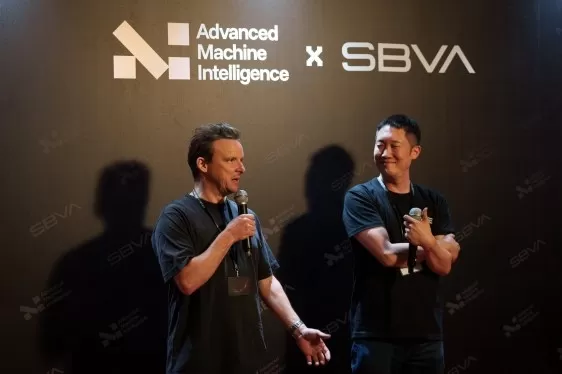
AMI Labs, the new AI venture co-founded by Turing Award recipient Yann LeCun following his departure from Meta, has secured $1.03 billion in funding at a pre-money valuation of $3.5 billion. The company is developing world models—AI systems that learn from real-world interactions rather than solely from language data.
This specialized field currently has fewer participants than generative AI, though that may soon change. "I anticipate 'world models' becoming the next major industry buzzword," AMI Labs CEO Alexandre LeBrun shared with TechCrunch. "Within six months, nearly every AI company will likely reposition themselves as world model developers to attract investment."
LeBrun delivered this observation with a smile, confident that AMI Labs maintains a fundamental distinction: its core mission focuses on genuine world understanding. This approach has promising applications in healthcare, demonstrated by its inaugural partnership with digital health startup Nabla, where LeBrun now serves as chairman.
During his tenure as Nabla's CEO, LeBrun reached similar conclusions to LeCun regarding large language models' limitations—particularly concerning hallucinations that could pose serious risks in medical contexts. However, he acknowledges the considerable timeline required to develop a practical alternative using JEPA (Joint Embedding Predictive Architecture), the framework LeCun introduced in 2022.
"AMI Labs represents an exceptionally ambitious undertaking since it begins with foundational research," LeBrun explained. "This isn't a conventional applied AI startup that can launch a product in three months, generate revenue in six, and achieve $10 million in annual recurring revenue within a year." Indeed, transitioning world models from theoretical concepts to commercial implementations might require multiple years.
Despite extended development horizons, world model specialists are attracting substantial investments. SpAItial secured a $13 million seed round—notably large for European startups—while Fei-Fei Li's World Labs obtained a remarkable $1 billion just last month. AMI Labs now joins this elite group with even greater funding than initially speculated.
Though the French AI lab was reportedly seeking approximately €500 million last December, it ultimately raised about €890 million, likely bolstered by its exceptional team. Beyond LeCun's involvement as chairman and LeBrun's entrepreneurial background, the organization features Meta's European VP Laurent Solly as COO, alongside distinguished researchers Saining Xie as Chief Science Officer, Pascale Fung as Chief Research & Innovation Officer, and Michael Rabbat as VP of World Models.
LeBrun noted that strong investor interest enabled the startup to selectively choose backers aligned with both expectations and expertise. The funding round was co-led by Cathay Innovation, Greycroft, Hiro Capital, HV Capital and Bezos Expeditions, with participation from multiple funds, industry-connected investors, and prominent individuals including Tim and Rosemary Berners-Lee, Jim Breyer, Mark Cuban, Mark Leslie, Xavier Niel and Eric Schmidt.
Beyond strategic value, this capital provides substantial runway for AMI Labs' primary expenditures: computational resources and talent acquisition. LeBrun emphasized quality-focused team building across four key locations: Paris (headquarters), New York (where LeCun teaches at NYU), Montreal (Rabbat's base), and Singapore (proximity to Asian talent and future clients).
While AMI Labs doesn't anticipate immediate revenue generation, it plans early engagement with potential customers. "We're creating world models designed to comprehend reality, which can't be achieved in isolation," LeBrun stated. "Eventually, we must test our models with real-world data and evaluations in authentic scenarios."
When ready for deployment, AMI Labs will collaborate with partners—Nabla being the first confirmed partner to access early models, though certainly not the last. "This strategic approach likely explains the strong interest from industrial players and potential partners in our investment round," LeBrun observed.
Alongside lead investors and angel supporters, AMI Labs counts NVIDIA, Samsung, Sea, Temasek and Toyota Ventures as backers, plus French entities Association Familiale Mulliez, Groupe Industriel Marcel Dassault and Publicis Groupe. Additional participants include Aglaé Lab, Alpha Intelligence Capital, Artémis, Bpifrance Digital Venture, New Legacy Ventures, SBVA and ZEBOX Ventures.
Commercial applications may require patience, but consistent with LeCun's principles, AMI Labs will publish research findings throughout its development process.
"We'll also open-source significant portions of our code," said LeBrun, who previously worked at Meta's FAIR research lab. Though open research practices are becoming "increasingly rare," the founders maintain their commitment. "We believe progress accelerates through openness, and building a collaborative research ecosystem around our work serves our long-term interests."
Related article
 Origin Lab Raises $8M to Help Game Firms Sell Data to World-Model Builders
As artificial intelligence moves into the physical realm, specialized labs are developing world models designed to control robotics or simulate physical objects. Without the abundant datasets available for large language models, these organizations a
General Intuition raises $2.3B betting video game tech can train AI for real-world applications
Walking onto General Intuition’s R&D floor in New York, co-founder and CEO Pim de Witte immediately pointed to a monitor on a standing desk. It looked like someone was playing Fortnite, but it wasn’t a person.“Our agent has been playing for 100 hours
Why AMI Labs’ Alexandre LeBrun avoids calling his AI ‘AGI’ or ‘superintelligence’
While other AI companies rush to call their work “AGI” or “superintelligence,” Alexandre LeBrun, CEO of Yann LeCun’s world model startup AMI Labs, avoids those terms entirely. In an interview with TechCrunch, LeBrun said the company never uses words
Related Special Topic Recommendations
SEO
Origin Lab Raises $8M to Help Game Firms Sell Data to World-Model Builders
As artificial intelligence moves into the physical realm, specialized labs are developing world models designed to control robotics or simulate physical objects. Without the abundant datasets available for large language models, these organizations a
General Intuition raises $2.3B betting video game tech can train AI for real-world applications
Walking onto General Intuition’s R&D floor in New York, co-founder and CEO Pim de Witte immediately pointed to a monitor on a standing desk. It looked like someone was playing Fortnite, but it wasn’t a person.“Our agent has been playing for 100 hours
Why AMI Labs’ Alexandre LeBrun avoids calling his AI ‘AGI’ or ‘superintelligence’
While other AI companies rush to call their work “AGI” or “superintelligence,” Alexandre LeBrun, CEO of Yann LeCun’s world model startup AMI Labs, avoids those terms entirely. In an interview with TechCrunch, LeBrun said the company never uses words
Related Special Topic Recommendations
SEO
 Best AI SERP Analysis Tools for Search Strategy
2026 Latest Best Top-rated AI SERP Analysis Tools for Search Strategy are curated by XIX.AI through rigorous real-world tests and weekly updated rankings. These powerful tools help you unlock hidden optimization opportunities, boost content performance, and gain a competitive edge in search. Discover your perfect tool to elevate your search strategy today. Explore now!
 13 tools
 xix.ai
Data Analysis
Best AI Anomaly Detection Tools for KPI Monitoring across SaaS and Ecommerce Teams
xix.ai
Data Analysis
Best AI Anomaly Detection Tools for KPI Monitoring across SaaS and Ecommerce Teams
2026 Latest Best Top-rated AI Anomaly Detection Tools for KPI Monitoring in SaaS and Ecommerce teams! XIX.AI has curated a powerful, game-changing collection based on rigorous real-world tests and weekly updated rankings. You’ll find detailed free vs paid comparison insights to help you identify the must-try solution that boosts productivity and unlocks your AI edge. Explore now!
10 tools
xix.ai
writing
Best AI Outline Generators for Long-Form SEO Articles
2026 Latest Best Top-Rated AI Outline Generators for Long-Form SEO Articles, meticulously curated by XIX.AI. These powerful tools offer game-changing assistance in creating high-quality content quickly, boosting writing efficiency significantly. Get a free vs paid comparison along with real-world tests and detailed rankings to help you find the must-try option that suits your needs. Explore now to unlock your AI edge.
8 tools
xix.ai
Education and Learning
AI Study Tools for Homework and Exam Prep
2026 Latest Best AI Study Tools for Homework and Exam Prep! XIX.AI curates a top-rated list of powerful, game-changing tools that help students boost productivity, streamline homework completion, and ace exams through real-world tests. Get a free vs paid comparison, detailed rankings, and must-try options to unlock your AI edge. Explore now!
10 tools
xix.ai
Music composition
AI Vocal Demo Tools for Songwriters, Hooks, Toplines, and Multilingual Draft Sessions
2026 Latest Best AI Vocal Demo Tools for Songwriters, Hook Creators, and Multi-Language Content Teams! XIX.AI has curated a top-rated list of powerful game-changing tools that go through rigorous real-world tests. You’ll find detailed free vs paid comparison data, comprehensive rankings, and must-try options to help you boost writing efficiency and unlock your creative potential. Explore now to discover your perfect tool for all your content needs!
9 tools
xix.ai
Business
Best AI Competitive Research Tools for Small Businesses
2026 Latest Best Top-rated AI Competitive Research Tools for Small Businesses! XIX.AI has curated a highly powerful game-changing collection, updated weekly with rigorous real-world tests and detailed rankings. You can find a comprehensive free vs paid comparison to help you identify the must-try tools that boost your productivity and give you a competitive edge. Explore now to discover your perfect tool!
9 tools
xix.ai

 Comments (3)
0/500
Comments (3)
0/500
![RichardSmith]()
$1 billion for world models? That's a lot of chips and electricity. 🤔 I'm curious how LeCun's approach differs from the current LLM arms race—will these 'world models' actually learn physics or just memorize more data? Also, leaving Meta to start a new lab feels like a big bet on a different paradigm. Hope it's not another vaporware hype cycle.
![NicholasAdams]()
Whoa, $1 billion for world models? That's insane! 🤯 I mean, Yann LeCun is a legend, but I hope this doesn't turn into another overhyped AI bubble. World models sound cool, but can they really learn like humans? Let's see if AMI Labs delivers something real. 🚀
![FrankBrown]()
Wow, a billion for world models? That's a massive bet on AGI infrastructure. While impressive, the gap between research and stable, scalable production is huge. I'd be more excited to see how they plan to make this economically viable long-term, not just technically dazzling.
AMI Labs, the new AI venture co-founded by Turing Award recipient Yann LeCun following his departure from Meta, has secured $1.03 billion in funding at a pre-money valuation of $3.5 billion. The company is developing world models—AI systems that learn from real-world interactions rather than solely from language data.
This specialized field currently has fewer participants than generative AI, though that may soon change. "I anticipate 'world models' becoming the next major industry buzzword," AMI Labs CEO Alexandre LeBrun shared with TechCrunch. "Within six months, nearly every AI company will likely reposition themselves as world model developers to attract investment."
LeBrun delivered this observation with a smile, confident that AMI Labs maintains a fundamental distinction: its core mission focuses on genuine world understanding. This approach has promising applications in healthcare, demonstrated by its inaugural partnership with digital health startup Nabla, where LeBrun now serves as chairman.
During his tenure as Nabla's CEO, LeBrun reached similar conclusions to LeCun regarding large language models' limitations—particularly concerning hallucinations that could pose serious risks in medical contexts. However, he acknowledges the considerable timeline required to develop a practical alternative using JEPA (Joint Embedding Predictive Architecture), the framework LeCun introduced in 2022.
"AMI Labs represents an exceptionally ambitious undertaking since it begins with foundational research," LeBrun explained. "This isn't a conventional applied AI startup that can launch a product in three months, generate revenue in six, and achieve $10 million in annual recurring revenue within a year." Indeed, transitioning world models from theoretical concepts to commercial implementations might require multiple years.
Despite extended development horizons, world model specialists are attracting substantial investments. SpAItial secured a $13 million seed round—notably large for European startups—while Fei-Fei Li's World Labs obtained a remarkable $1 billion just last month. AMI Labs now joins this elite group with even greater funding than initially speculated.
Though the French AI lab was reportedly seeking approximately €500 million last December, it ultimately raised about €890 million, likely bolstered by its exceptional team. Beyond LeCun's involvement as chairman and LeBrun's entrepreneurial background, the organization features Meta's European VP Laurent Solly as COO, alongside distinguished researchers Saining Xie as Chief Science Officer, Pascale Fung as Chief Research & Innovation Officer, and Michael Rabbat as VP of World Models.
LeBrun noted that strong investor interest enabled the startup to selectively choose backers aligned with both expectations and expertise. The funding round was co-led by Cathay Innovation, Greycroft, Hiro Capital, HV Capital and Bezos Expeditions, with participation from multiple funds, industry-connected investors, and prominent individuals including Tim and Rosemary Berners-Lee, Jim Breyer, Mark Cuban, Mark Leslie, Xavier Niel and Eric Schmidt.
Beyond strategic value, this capital provides substantial runway for AMI Labs' primary expenditures: computational resources and talent acquisition. LeBrun emphasized quality-focused team building across four key locations: Paris (headquarters), New York (where LeCun teaches at NYU), Montreal (Rabbat's base), and Singapore (proximity to Asian talent and future clients).
While AMI Labs doesn't anticipate immediate revenue generation, it plans early engagement with potential customers. "We're creating world models designed to comprehend reality, which can't be achieved in isolation," LeBrun stated. "Eventually, we must test our models with real-world data and evaluations in authentic scenarios."
When ready for deployment, AMI Labs will collaborate with partners—Nabla being the first confirmed partner to access early models, though certainly not the last. "This strategic approach likely explains the strong interest from industrial players and potential partners in our investment round," LeBrun observed.
Alongside lead investors and angel supporters, AMI Labs counts NVIDIA, Samsung, Sea, Temasek and Toyota Ventures as backers, plus French entities Association Familiale Mulliez, Groupe Industriel Marcel Dassault and Publicis Groupe. Additional participants include Aglaé Lab, Alpha Intelligence Capital, Artémis, Bpifrance Digital Venture, New Legacy Ventures, SBVA and ZEBOX Ventures.
Commercial applications may require patience, but consistent with LeCun's principles, AMI Labs will publish research findings throughout its development process.
"We'll also open-source significant portions of our code," said LeBrun, who previously worked at Meta's FAIR research lab. Though open research practices are becoming "increasingly rare," the founders maintain their commitment. "We believe progress accelerates through openness, and building a collaborative research ecosystem around our work serves our long-term interests."








 Origin Lab Raises $8M to Help Game Firms Sell Data to World-Model Builders
As artificial intelligence moves into the physical realm, specialized labs are developing world models designed to control robotics or simulate physical objects. Without the abundant datasets available for large language models, these organizations a
Origin Lab Raises $8M to Help Game Firms Sell Data to World-Model Builders
As artificial intelligence moves into the physical realm, specialized labs are developing world models designed to control robotics or simulate physical objects. Without the abundant datasets available for large language models, these organizations a
 General Intuition raises $2.3B betting video game tech can train AI for real-world applications
Walking onto General Intuition’s R&D floor in New York, co-founder and CEO Pim de Witte immediately pointed to a monitor on a standing desk. It looked like someone was playing Fortnite, but it wasn’t a person.“Our agent has been playing for 100 hours
General Intuition raises $2.3B betting video game tech can train AI for real-world applications
Walking onto General Intuition’s R&D floor in New York, co-founder and CEO Pim de Witte immediately pointed to a monitor on a standing desk. It looked like someone was playing Fortnite, but it wasn’t a person.“Our agent has been playing for 100 hours
 Why AMI Labs’ Alexandre LeBrun avoids calling his AI ‘AGI’ or ‘superintelligence’
While other AI companies rush to call their work “AGI” or “superintelligence,” Alexandre LeBrun, CEO of Yann LeCun’s world model startup AMI Labs, avoids those terms entirely. In an interview with TechCrunch, LeBrun said the company never uses words
Why AMI Labs’ Alexandre LeBrun avoids calling his AI ‘AGI’ or ‘superintelligence’
While other AI companies rush to call their work “AGI” or “superintelligence,” Alexandre LeBrun, CEO of Yann LeCun’s world model startup AMI Labs, avoids those terms entirely. In an interview with TechCrunch, LeBrun said the company never uses words

2026 Latest Best Top-rated AI SERP Analysis Tools for Search Strategy are curated by XIX.AI through rigorous real-world tests and weekly updated rankings. These powerful tools help you unlock hidden optimization opportunities, boost content performance, and gain a competitive edge in search. Discover your perfect tool to elevate your search strategy today. Explore now!
13 tools
xix.ai

2026 Latest Best Top-rated AI Anomaly Detection Tools for KPI Monitoring in SaaS and Ecommerce teams! XIX.AI has curated a powerful, game-changing collection based on rigorous real-world tests and weekly updated rankings. You’ll find detailed free vs paid comparison insights to help you identify the must-try solution that boosts productivity and unlocks your AI edge. Explore now!
10 tools
xix.ai

2026 Latest Best Top-Rated AI Outline Generators for Long-Form SEO Articles, meticulously curated by XIX.AI. These powerful tools offer game-changing assistance in creating high-quality content quickly, boosting writing efficiency significantly. Get a free vs paid comparison along with real-world tests and detailed rankings to help you find the must-try option that suits your needs. Explore now to unlock your AI edge.
8 tools
xix.ai

2026 Latest Best AI Study Tools for Homework and Exam Prep! XIX.AI curates a top-rated list of powerful, game-changing tools that help students boost productivity, streamline homework completion, and ace exams through real-world tests. Get a free vs paid comparison, detailed rankings, and must-try options to unlock your AI edge. Explore now!
10 tools
xix.ai

2026 Latest Best AI Vocal Demo Tools for Songwriters, Hook Creators, and Multi-Language Content Teams! XIX.AI has curated a top-rated list of powerful game-changing tools that go through rigorous real-world tests. You’ll find detailed free vs paid comparison data, comprehensive rankings, and must-try options to help you boost writing efficiency and unlock your creative potential. Explore now to discover your perfect tool for all your content needs!
9 tools
xix.ai

2026 Latest Best Top-rated AI Competitive Research Tools for Small Businesses! XIX.AI has curated a highly powerful game-changing collection, updated weekly with rigorous real-world tests and detailed rankings. You can find a comprehensive free vs paid comparison to help you identify the must-try tools that boost your productivity and give you a competitive edge. Explore now to discover your perfect tool!
9 tools
xix.ai

$1 billion for world models? That's a lot of chips and electricity. 🤔 I'm curious how LeCun's approach differs from the current LLM arms race—will these 'world models' actually learn physics or just memorize more data? Also, leaving Meta to start a new lab feels like a big bet on a different paradigm. Hope it's not another vaporware hype cycle.
Whoa, $1 billion for world models? That's insane! 🤯 I mean, Yann LeCun is a legend, but I hope this doesn't turn into another overhyped AI bubble. World models sound cool, but can they really learn like humans? Let's see if AMI Labs delivers something real. 🚀
Wow, a billion for world models? That's a massive bet on AGI infrastructure. While impressive, the gap between research and stable, scalable production is huge. I'd be more excited to see how they plan to make this economically viable long-term, not just technically dazzling.












