


 Home
HomexAI Emerges as a New Cloud Computing Contender

On Wednesday, xAI and Anthropic announced an unexpected partnership, with the creator of Claude acquiring "all of the compute capacity at [xAI's] Colossus 1 data center." This transfer of roughly 300MW of power allowed Anthropic to immediately raise its usage limits. The deal is a major win for xAI, likely valued in the billions. More significantly, it instantly monetized one of the company's most significant achievements, transforming xAI from a consumer of compute into a provider.
It's easy to view this arrangement as a strategic move against OpenAI amid their ongoing legal dispute. However, Elon Musk explained on X that xAI had already shifted its training operations to a newer facility, Colossus 2, and simply no longer required both data centers.
In the short term, the logic is clear. xAI's current products are largely centered on Grok, whose usage has declined sharply since the image generation controversies earlier this year. If xAI's data center capacity far exceeds what Grok needs, partnering with Anthropic provides a significant revenue stream. This is particularly valuable as the newly combined xAI-SpaceX entity accelerates toward an IPO. More broadly, securing Anthropic as a customer lends credibility to SpaceX's ambitious orbital data center initiative.
Beyond the immediate financial benefit, this partnership with Anthropic reveals an unusual priority within Elon Musk's strategy. It hints that the company's core business may be shifting toward constructing data center infrastructure rather than solely developing AI models.
This approach is uncommon among major tech firms. Companies like Google and Meta, which are also heavily invested in model training, are aggressively building more data centers for their own use. The distinction is subtle, as many of these companies operate simultaneously as enterprise AI vendors, online service providers, and cloud platforms. Yet, when forced to choose between selling excess compute capacity or reserving it for internal tool development, they consistently choose the latter.
Just last month, Sundar Pichai acknowledged on an earnings call that Google Cloud revenue was lower than potential because the company was "capacity constrained." Faced with the choice of leasing out their GPUs or using them to advance their own AI products, Google chose its products.
Facebook has encountered an even more pronounced version of this constraint, establishing an entirely new cloud infrastructure to ensure sufficient GPU power for Mark Zuckerberg's AI ambitions. As he stated when announcing Meta Compute in January, "How we engineer, invest, and partner to build this infrastructure will become a strategic advantage."
The crucial term is "strategic." Both Zuckerberg and Pichai are planning for a future where AI drives the world's most popular and profitable systems. Computing power isn't just about meeting today's inference demands; it's the foundation for building tomorrow's products. A shortage of compute means missing that opportunity.
By concentrating on data centers—both terrestrial and orbital—xAI is positioning itself more as a neocloud business: purchasing GPUs from Nvidia and leasing them to model developers like Anthropic. This is a far more challenging sector, pressured by chip suppliers and fluctuating demand cycles. The valuations of active neocloud companies reflect this reality: while xAI was valued at $230 billion in its January funding round, CoreWeave, which manages a comparable scale of computing power, is worth less than a third of that amount.
As one might expect, Musk's vision for a neocloud is more ambitious. Some data centers might eventually be in space—by 2035, if plans proceed. xAI will also manufacture its own chips at the Terafab, which could mitigate, though not eliminate, Nvidia's pricing influence. However, these innovations don't alter the fundamental economics of the neocloud business.
As recently as the February all-hands meeting, xAI demonstrated serious software ambitions. That presentation unveiled the orbital data center project but also hinted at major initiatives in coding (later reinforced by the Cursor partnership) and innovative concepts like creating full-scale digital twins from computer use (the unfortunately named Macrohard project). These are long-term ventures that require dedicated computing resources to succeed. As long as xAI is selling large volumes of compute to its competitors, it's difficult to see how such ambitious new projects can have a viable future.
Related article
 Anthropic Enters AI Legal Tech Market as Competition Intensifies
Anthropic unveiled a suite of new chatbot capabilities on Tuesday, aimed at delivering automated support to legal practices. These enhancements expand upon Claude for Legal, the firm-specific platform introduced earlier this year, by adding specializ
Cognition CEO dismisses reports of SpaceX acquisition bid
SpaceX, led by Elon Musk, explored purchasing AI coding firm Cognition to close the gap with rivals OpenAI, Anthropic, and Google, according to a Wednesday Bloomberg report citing informed sources.Cognition CEO Scott Wu quickly refuted the claim on X
OpenAI Closes Gap With Anthropic Among Business Users, New Data Shows
With OpenAI and Anthropic still distant from their anticipated IPOs and the release of detailed financial reports, we must turn to alternative indicators to gauge their business performance. Ramp, a corporate credit card and expense management platfo
Related Special Topic Recommendations
Text-to-speech
Anthropic Enters AI Legal Tech Market as Competition Intensifies
Anthropic unveiled a suite of new chatbot capabilities on Tuesday, aimed at delivering automated support to legal practices. These enhancements expand upon Claude for Legal, the firm-specific platform introduced earlier this year, by adding specializ
Cognition CEO dismisses reports of SpaceX acquisition bid
SpaceX, led by Elon Musk, explored purchasing AI coding firm Cognition to close the gap with rivals OpenAI, Anthropic, and Google, according to a Wednesday Bloomberg report citing informed sources.Cognition CEO Scott Wu quickly refuted the claim on X
OpenAI Closes Gap With Anthropic Among Business Users, New Data Shows
With OpenAI and Anthropic still distant from their anticipated IPOs and the release of detailed financial reports, we must turn to alternative indicators to gauge their business performance. Ramp, a corporate credit card and expense management platfo
Related Special Topic Recommendations
Text-to-speech
 Best AI Text to Speech Tools for Online Courses
2026 Latest Best Top-rated AI Text to Speech Tools for Online Courses are curated by XIX.AI based on rigorous real-world tests and weekly updated rankings. These powerful tools help creators deliver crystal-clear audio content effortlessly, boosting writing efficiency and streamlining course production. Check out the free vs paid comparison to find your perfect fit. Explore now to unlock your AI edge in online education.
 10 tools
 xix.ai
writing
AI Blog Title Tools for Higher Click Through Rates
xix.ai
writing
AI Blog Title Tools for Higher Click Through Rates
2026 Latest Best Top-Rated AI Blog Title Tools for Higher Click Through Rates! XIX.AI has carefully curated a powerful, game-changing collection of top tools that go through rigorous real-world tests. You’ll find a free vs paid comparison, weekly updated rankings, and detailed insights to help you boost your blog’s traffic efficiently. Must-try options are highlighted to help you unlock your AI edge. Explore now!
10 tools
xix.ai
automation
Best AI Task Routing Tools for Support Workflows
2026 Latest Best Top-rated AI Task Routing Tools for Support Workflows! XIX.AI has curated a highly powerful game-changing collection of must-try solutions, all undergoing rigorous real-world tests and updated weekly. These tools streamline workflows, boost productivity, and help teams deliver faster, more efficient support. Explore now to discover your perfect tool and unlock your AI edge!
17 tools
xix.ai
Academic Research
AI Citation and Paper Summary Tools
2026 Latest Best Top-Rated AI Citation and Paper Summary Tools Curated by XIX.AI. Get powerful game-changing solutions for quick content creation, improved writing efficiency, and boosting productivity. We offer a free vs paid comparison along with real-world tests and weekly updated rankings to help you find the must-try tool that fits your needs perfectly. Explore now to Unlock your AI edge.
10 tools
xix.ai
Productivity
Best AI Productivity Tools for Daily Work
2026 Latest Best Top-Rated AI Productivity Tools for Daily Work! XIX.AI has curated a powerful, game-changing selection based on rigorous weekly updated rankings and real-world tests. You’ll find must-try options that boost writing efficiency, streamline content creation, and help you overcome daily work challenges. Get a free vs paid comparison to find the perfect fit for your needs. Explore now to unlock your AI edge!
9 tools
xix.ai
Academic Research
AI Systematic Review Tools for Research Screening
2026 Latest Best Top-Rated AI Systematic Review Tools for Research Screening are here on XIX.AI! This curated collection includes powerful, game-changing solutions that go through rigorous real-world tests to deliver accurate results. We also offer a free vs paid comparison along with weekly updated rankings to help you find the must-try option that boosts your research efficiency significantly. Explore now to unlock your AI edge in academic work!
11 tools
xix.ai

 Comments (0)
0/500
Comments (0)
0/500
On Wednesday, xAI and Anthropic announced an unexpected partnership, with the creator of Claude acquiring "all of the compute capacity at [xAI's] Colossus 1 data center." This transfer of roughly 300MW of power allowed Anthropic to immediately raise its usage limits. The deal is a major win for xAI, likely valued in the billions. More significantly, it instantly monetized one of the company's most significant achievements, transforming xAI from a consumer of compute into a provider.
It's easy to view this arrangement as a strategic move against OpenAI amid their ongoing legal dispute. However, Elon Musk explained on X that xAI had already shifted its training operations to a newer facility, Colossus 2, and simply no longer required both data centers.
In the short term, the logic is clear. xAI's current products are largely centered on Grok, whose usage has declined sharply since the image generation controversies earlier this year. If xAI's data center capacity far exceeds what Grok needs, partnering with Anthropic provides a significant revenue stream. This is particularly valuable as the newly combined xAI-SpaceX entity accelerates toward an IPO. More broadly, securing Anthropic as a customer lends credibility to SpaceX's ambitious orbital data center initiative.
Beyond the immediate financial benefit, this partnership with Anthropic reveals an unusual priority within Elon Musk's strategy. It hints that the company's core business may be shifting toward constructing data center infrastructure rather than solely developing AI models.
This approach is uncommon among major tech firms. Companies like Google and Meta, which are also heavily invested in model training, are aggressively building more data centers for their own use. The distinction is subtle, as many of these companies operate simultaneously as enterprise AI vendors, online service providers, and cloud platforms. Yet, when forced to choose between selling excess compute capacity or reserving it for internal tool development, they consistently choose the latter.
Just last month, Sundar Pichai acknowledged on an earnings call that Google Cloud revenue was lower than potential because the company was "capacity constrained." Faced with the choice of leasing out their GPUs or using them to advance their own AI products, Google chose its products.
Facebook has encountered an even more pronounced version of this constraint, establishing an entirely new cloud infrastructure to ensure sufficient GPU power for Mark Zuckerberg's AI ambitions. As he stated when announcing Meta Compute in January, "How we engineer, invest, and partner to build this infrastructure will become a strategic advantage."
The crucial term is "strategic." Both Zuckerberg and Pichai are planning for a future where AI drives the world's most popular and profitable systems. Computing power isn't just about meeting today's inference demands; it's the foundation for building tomorrow's products. A shortage of compute means missing that opportunity.
By concentrating on data centers—both terrestrial and orbital—xAI is positioning itself more as a neocloud business: purchasing GPUs from Nvidia and leasing them to model developers like Anthropic. This is a far more challenging sector, pressured by chip suppliers and fluctuating demand cycles. The valuations of active neocloud companies reflect this reality: while xAI was valued at $230 billion in its January funding round, CoreWeave, which manages a comparable scale of computing power, is worth less than a third of that amount.
As one might expect, Musk's vision for a neocloud is more ambitious. Some data centers might eventually be in space—by 2035, if plans proceed. xAI will also manufacture its own chips at the Terafab, which could mitigate, though not eliminate, Nvidia's pricing influence. However, these innovations don't alter the fundamental economics of the neocloud business.
As recently as the February all-hands meeting, xAI demonstrated serious software ambitions. That presentation unveiled the orbital data center project but also hinted at major initiatives in coding (later reinforced by the Cursor partnership) and innovative concepts like creating full-scale digital twins from computer use (the unfortunately named Macrohard project). These are long-term ventures that require dedicated computing resources to succeed. As long as xAI is selling large volumes of compute to its competitors, it's difficult to see how such ambitious new projects can have a viable future.








 Anthropic Enters AI Legal Tech Market as Competition Intensifies
Anthropic unveiled a suite of new chatbot capabilities on Tuesday, aimed at delivering automated support to legal practices. These enhancements expand upon Claude for Legal, the firm-specific platform introduced earlier this year, by adding specializ
Anthropic Enters AI Legal Tech Market as Competition Intensifies
Anthropic unveiled a suite of new chatbot capabilities on Tuesday, aimed at delivering automated support to legal practices. These enhancements expand upon Claude for Legal, the firm-specific platform introduced earlier this year, by adding specializ
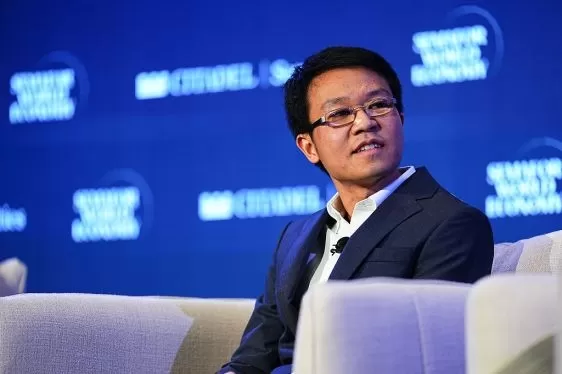 Cognition CEO dismisses reports of SpaceX acquisition bid
SpaceX, led by Elon Musk, explored purchasing AI coding firm Cognition to close the gap with rivals OpenAI, Anthropic, and Google, according to a Wednesday Bloomberg report citing informed sources.Cognition CEO Scott Wu quickly refuted the claim on X
Cognition CEO dismisses reports of SpaceX acquisition bid
SpaceX, led by Elon Musk, explored purchasing AI coding firm Cognition to close the gap with rivals OpenAI, Anthropic, and Google, according to a Wednesday Bloomberg report citing informed sources.Cognition CEO Scott Wu quickly refuted the claim on X
 OpenAI Closes Gap With Anthropic Among Business Users, New Data Shows
With OpenAI and Anthropic still distant from their anticipated IPOs and the release of detailed financial reports, we must turn to alternative indicators to gauge their business performance. Ramp, a corporate credit card and expense management platfo
OpenAI Closes Gap With Anthropic Among Business Users, New Data Shows
With OpenAI and Anthropic still distant from their anticipated IPOs and the release of detailed financial reports, we must turn to alternative indicators to gauge their business performance. Ramp, a corporate credit card and expense management platfo

2026 Latest Best Top-rated AI Text to Speech Tools for Online Courses are curated by XIX.AI based on rigorous real-world tests and weekly updated rankings. These powerful tools help creators deliver crystal-clear audio content effortlessly, boosting writing efficiency and streamlining course production. Check out the free vs paid comparison to find your perfect fit. Explore now to unlock your AI edge in online education.
10 tools
xix.ai

2026 Latest Best Top-Rated AI Blog Title Tools for Higher Click Through Rates! XIX.AI has carefully curated a powerful, game-changing collection of top tools that go through rigorous real-world tests. You’ll find a free vs paid comparison, weekly updated rankings, and detailed insights to help you boost your blog’s traffic efficiently. Must-try options are highlighted to help you unlock your AI edge. Explore now!
10 tools
xix.ai

2026 Latest Best Top-rated AI Task Routing Tools for Support Workflows! XIX.AI has curated a highly powerful game-changing collection of must-try solutions, all undergoing rigorous real-world tests and updated weekly. These tools streamline workflows, boost productivity, and help teams deliver faster, more efficient support. Explore now to discover your perfect tool and unlock your AI edge!
17 tools
xix.ai

2026 Latest Best Top-Rated AI Citation and Paper Summary Tools Curated by XIX.AI. Get powerful game-changing solutions for quick content creation, improved writing efficiency, and boosting productivity. We offer a free vs paid comparison along with real-world tests and weekly updated rankings to help you find the must-try tool that fits your needs perfectly. Explore now to Unlock your AI edge.
10 tools
xix.ai

2026 Latest Best Top-Rated AI Productivity Tools for Daily Work! XIX.AI has curated a powerful, game-changing selection based on rigorous weekly updated rankings and real-world tests. You’ll find must-try options that boost writing efficiency, streamline content creation, and help you overcome daily work challenges. Get a free vs paid comparison to find the perfect fit for your needs. Explore now to unlock your AI edge!
9 tools
xix.ai

2026 Latest Best Top-Rated AI Systematic Review Tools for Research Screening are here on XIX.AI! This curated collection includes powerful, game-changing solutions that go through rigorous real-world tests to deliver accurate results. We also offer a free vs paid comparison along with weekly updated rankings to help you find the must-try option that boosts your research efficiency significantly. Explore now to unlock your AI edge in academic work!
11 tools
xix.ai












