


 Home
HomeWordPress.com now allows AI agents to write and publish posts, plus more
WordPress.com, the popular web hosting and publishing platform, is now embracing AI agents—a move that could reshape the look and feel of the web. The company announced Friday that it will allow AI agents to draft, edit, and publish content on customer websites, as well as manage comments, update and fix metadata, and organize content with tags and categories.
All of this is controlled through an interface where the website owner explains what they want to do using natural language commands.
With these new capabilities, websites could be almost entirely created and operated by AI agents guided by humans. This lowers the barrier to setting up and maintaining websites; it may also help fill the web with content no longer written by people, but by machines.
As a publishing platform, WordPress powers over 43% of all websites on the internet. The hosted version at WordPress.com represents only a small fraction of that total. Still, its network of websites has a sizable footprint, seeing 20 billion pageviews and 409 million unique visitors every month.
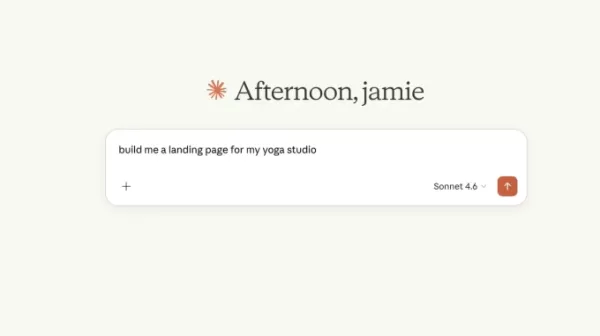
Image Credit: WordPress.com
The new AI capabilities follow the introduction of MCP support on WordPress.com last fall. MCP, or Model Context Protocol, is a newer standard that allows applications to provide context to large language models (LLMs). With WordPress.com’s MCP support, AI assistants have been able to connect to the platform to give customers visibility into their site’s content, settings, and analytics from their preferred AI app, like Claude Desktop, Cursor, VS Code, or others.
Now, WordPress.com will allow AI agents to not only read the site’s content but also create posts, landing pages, About pages, and make structural changes.

Image Credit: WordPress.com
At launch, the AI agents will also be able to approve, reply to, and clean up comments; create, rename, and restructure categories and tags across the site; and fix alt text, captions, and titles to improve the site’s SEO. These changes and others are all tracked through the site’s Activity Log, the company notes.
Customers can author drafts for their AI agent to publish, tag, and categorize, along with a meta description. But they can opt to allow their AI agent to create a post or page by describing what they want to publish. The company says all changes require the user’s approval, and posts written by AI are saved as drafts by default.
Even with these limitations, the expanded capabilities could greatly speed up the creation of websites where humans aren’t doing much of the content creation.
Image Credit: WordPress.com
The company also notes that the AI agent can search the site’s theme and design before it begins creating content, so it understands how to use the same colors, fonts, spacing, and block patterns.
To enable the new functionality on their account, WordPress.com customers will go to wordpress.com/mcp, then toggle on the capabilities they want to use. They can then connect their preferred AI client, such as Claude, Cursor, ChatGPT, or any other MCP-enabled tool, and begin creating.
While there are likely going to be concerns about what this means for the state of the web’s content, it’s worth noting that AI-authored posts can give human readers insight into how these models write and engage. Meta recently snapped up a social network called Moltbook, where AI agents were allowed to post, reply, and connect with one another. Anthropic has also experimented with letting an AI blog, with human oversight.
Related article
 Google Tests Remy AI Agent for Gemini as Focus Shifts to User Control
According to Business Insider, Google is testing Remy, a new AI personal agent for Gemini. This tool aims to execute tasks on behalf of users, streamlining both professional workflows and daily routines.Currently, Remy is undergoing testing in an int
Ollie bets privacy focus to win AI assistant race
To be genuinely helpful, an AI assistant must understand its user deeply. Ollie, a personal assistant designed for daily life, operates on the premise that this doesn’t require surrendering your data or compromising your privacy.While certain enterpr
How AI LIVE: London Will Explore AI & Industrial Automation
The summit will convene C-suite executives from around the globe to address pressing challenges in global industries, ranging from AI-driven disruption to economic volatility.AI LIVE: The London Summit will gather over 2,000 international leaders und
Related Special Topic Recommendations
writing
Google Tests Remy AI Agent for Gemini as Focus Shifts to User Control
According to Business Insider, Google is testing Remy, a new AI personal agent for Gemini. This tool aims to execute tasks on behalf of users, streamlining both professional workflows and daily routines.Currently, Remy is undergoing testing in an int
Ollie bets privacy focus to win AI assistant race
To be genuinely helpful, an AI assistant must understand its user deeply. Ollie, a personal assistant designed for daily life, operates on the premise that this doesn’t require surrendering your data or compromising your privacy.While certain enterpr
How AI LIVE: London Will Explore AI & Industrial Automation
The summit will convene C-suite executives from around the globe to address pressing challenges in global industries, ranging from AI-driven disruption to economic volatility.AI LIVE: The London Summit will gather over 2,000 international leaders und
Related Special Topic Recommendations
writing
 Best AI Outline Generators for Long-Form SEO Articles
2026 Latest Best Top-Rated AI Outline Generators for Long-Form SEO Articles, meticulously curated by XIX.AI. These powerful tools offer game-changing assistance in creating high-quality content quickly, boosting writing efficiency significantly. Get a free vs paid comparison along with real-world tests and detailed rankings to help you find the must-try option that suits your needs. Explore now to unlock your AI edge.
 8 tools
 xix.ai
Education and Learning
AI Study Tools for Homework and Exam Prep
xix.ai
Education and Learning
AI Study Tools for Homework and Exam Prep
2026 Latest Best AI Study Tools for Homework and Exam Prep! XIX.AI curates a top-rated list of powerful, game-changing tools that help students boost productivity, streamline homework completion, and ace exams through real-world tests. Get a free vs paid comparison, detailed rankings, and must-try options to unlock your AI edge. Explore now!
10 tools
xix.ai
Music composition
AI Vocal Demo Tools for Songwriters, Hooks, Toplines, and Multilingual Draft Sessions
2026 Latest Best AI Vocal Demo Tools for Songwriters, Hook Creators, and Multi-Language Content Teams! XIX.AI has curated a top-rated list of powerful game-changing tools that go through rigorous real-world tests. You’ll find detailed free vs paid comparison data, comprehensive rankings, and must-try options to help you boost writing efficiency and unlock your creative potential. Explore now to discover your perfect tool for all your content needs!
9 tools
xix.ai
Business
Best AI Competitive Research Tools for Small Businesses
2026 Latest Best Top-rated AI Competitive Research Tools for Small Businesses! XIX.AI has curated a highly powerful game-changing collection, updated weekly with rigorous real-world tests and detailed rankings. You can find a comprehensive free vs paid comparison to help you identify the must-try tools that boost your productivity and give you a competitive edge. Explore now to discover your perfect tool!
9 tools
xix.ai
Image editing
Photoshop AI Retouch Tools for Ecommerce Apparel, Skin Cleanup, and Color Consistency
2026 Latest Best Photoshop AI retouch tools for ecommerce apparel, skin cleanup, and color consistency! This top-rated curated list features powerful game-changing solutions that help you boost writing efficiency, streamline content creation, and achieve perfect visual results effortlessly. Each tool has undergone real-world tests through weekly updated rankings, complete with free vs paid comparison details. Backed by XIX.AI, it’s the must-try guide for anyone aiming to unlock your AI edge. Explore now!
10 tools
xix.ai
Prompt
Best AI Prompt Libraries for ChatGPT Workflows
2026 Latest Best Top-Rated AI Prompt Libraries for optimizing all types of ChatGPT workflows. XIX.AI has curated a powerful, game-changing collection that goes through rigorous real-world tests to ensure top performance. You can find detailed free vs paid comparisons and expert rankings to help you choose the must-try tools that boost your productivity and unlock your AI edge. Explore now!
11 tools
xix.ai

 Comments (0)
0/500
Comments (0)
0/500
WordPress.com, the popular web hosting and publishing platform, is now embracing AI agents—a move that could reshape the look and feel of the web. The company announced Friday that it will allow AI agents to draft, edit, and publish content on customer websites, as well as manage comments, update and fix metadata, and organize content with tags and categories.
All of this is controlled through an interface where the website owner explains what they want to do using natural language commands.
With these new capabilities, websites could be almost entirely created and operated by AI agents guided by humans. This lowers the barrier to setting up and maintaining websites; it may also help fill the web with content no longer written by people, but by machines.
As a publishing platform, WordPress powers over 43% of all websites on the internet. The hosted version at WordPress.com represents only a small fraction of that total. Still, its network of websites has a sizable footprint, seeing 20 billion pageviews and 409 million unique visitors every month.
Image Credit: WordPress.com
The new AI capabilities follow the introduction of MCP support on WordPress.com last fall. MCP, or Model Context Protocol, is a newer standard that allows applications to provide context to large language models (LLMs). With WordPress.com’s MCP support, AI assistants have been able to connect to the platform to give customers visibility into their site’s content, settings, and analytics from their preferred AI app, like Claude Desktop, Cursor, VS Code, or others.
Now, WordPress.com will allow AI agents to not only read the site’s content but also create posts, landing pages, About pages, and make structural changes.
Image Credit: WordPress.com
At launch, the AI agents will also be able to approve, reply to, and clean up comments; create, rename, and restructure categories and tags across the site; and fix alt text, captions, and titles to improve the site’s SEO. These changes and others are all tracked through the site’s Activity Log, the company notes.
Customers can author drafts for their AI agent to publish, tag, and categorize, along with a meta description. But they can opt to allow their AI agent to create a post or page by describing what they want to publish. The company says all changes require the user’s approval, and posts written by AI are saved as drafts by default.
Even with these limitations, the expanded capabilities could greatly speed up the creation of websites where humans aren’t doing much of the content creation.
Image Credit: WordPress.com
The company also notes that the AI agent can search the site’s theme and design before it begins creating content, so it understands how to use the same colors, fonts, spacing, and block patterns.
To enable the new functionality on their account, WordPress.com customers will go to wordpress.com/mcp, then toggle on the capabilities they want to use. They can then connect their preferred AI client, such as Claude, Cursor, ChatGPT, or any other MCP-enabled tool, and begin creating.
While there are likely going to be concerns about what this means for the state of the web’s content, it’s worth noting that AI-authored posts can give human readers insight into how these models write and engage. Meta recently snapped up a social network called Moltbook, where AI agents were allowed to post, reply, and connect with one another. Anthropic has also experimented with letting an AI blog, with human oversight.







 Google Tests Remy AI Agent for Gemini as Focus Shifts to User Control
According to Business Insider, Google is testing Remy, a new AI personal agent for Gemini. This tool aims to execute tasks on behalf of users, streamlining both professional workflows and daily routines.Currently, Remy is undergoing testing in an int
Google Tests Remy AI Agent for Gemini as Focus Shifts to User Control
According to Business Insider, Google is testing Remy, a new AI personal agent for Gemini. This tool aims to execute tasks on behalf of users, streamlining both professional workflows and daily routines.Currently, Remy is undergoing testing in an int
 Ollie bets privacy focus to win AI assistant race
To be genuinely helpful, an AI assistant must understand its user deeply. Ollie, a personal assistant designed for daily life, operates on the premise that this doesn’t require surrendering your data or compromising your privacy.While certain enterpr
Ollie bets privacy focus to win AI assistant race
To be genuinely helpful, an AI assistant must understand its user deeply. Ollie, a personal assistant designed for daily life, operates on the premise that this doesn’t require surrendering your data or compromising your privacy.While certain enterpr
 How AI LIVE: London Will Explore AI & Industrial Automation
The summit will convene C-suite executives from around the globe to address pressing challenges in global industries, ranging from AI-driven disruption to economic volatility.AI LIVE: The London Summit will gather over 2,000 international leaders und
How AI LIVE: London Will Explore AI & Industrial Automation
The summit will convene C-suite executives from around the globe to address pressing challenges in global industries, ranging from AI-driven disruption to economic volatility.AI LIVE: The London Summit will gather over 2,000 international leaders und

2026 Latest Best Top-Rated AI Outline Generators for Long-Form SEO Articles, meticulously curated by XIX.AI. These powerful tools offer game-changing assistance in creating high-quality content quickly, boosting writing efficiency significantly. Get a free vs paid comparison along with real-world tests and detailed rankings to help you find the must-try option that suits your needs. Explore now to unlock your AI edge.
8 tools
xix.ai

2026 Latest Best AI Study Tools for Homework and Exam Prep! XIX.AI curates a top-rated list of powerful, game-changing tools that help students boost productivity, streamline homework completion, and ace exams through real-world tests. Get a free vs paid comparison, detailed rankings, and must-try options to unlock your AI edge. Explore now!
10 tools
xix.ai

2026 Latest Best AI Vocal Demo Tools for Songwriters, Hook Creators, and Multi-Language Content Teams! XIX.AI has curated a top-rated list of powerful game-changing tools that go through rigorous real-world tests. You’ll find detailed free vs paid comparison data, comprehensive rankings, and must-try options to help you boost writing efficiency and unlock your creative potential. Explore now to discover your perfect tool for all your content needs!
9 tools
xix.ai

2026 Latest Best Top-rated AI Competitive Research Tools for Small Businesses! XIX.AI has curated a highly powerful game-changing collection, updated weekly with rigorous real-world tests and detailed rankings. You can find a comprehensive free vs paid comparison to help you identify the must-try tools that boost your productivity and give you a competitive edge. Explore now to discover your perfect tool!
9 tools
xix.ai

2026 Latest Best Photoshop AI retouch tools for ecommerce apparel, skin cleanup, and color consistency! This top-rated curated list features powerful game-changing solutions that help you boost writing efficiency, streamline content creation, and achieve perfect visual results effortlessly. Each tool has undergone real-world tests through weekly updated rankings, complete with free vs paid comparison details. Backed by XIX.AI, it’s the must-try guide for anyone aiming to unlock your AI edge. Explore now!
10 tools
xix.ai

2026 Latest Best Top-Rated AI Prompt Libraries for optimizing all types of ChatGPT workflows. XIX.AI has curated a powerful, game-changing collection that goes through rigorous real-world tests to ensure top performance. You can find detailed free vs paid comparisons and expert rankings to help you choose the must-try tools that boost your productivity and unlock your AI edge. Explore now!
11 tools
xix.ai












