


 Home
HomeWarren Slams Pentagon's Block of Anthropic as 'Retaliation'
Anthropic continues to gain support in its legal challenge against the U.S. Department of Defense. Last month, the DoD labeled the AI lab a supply chain risk following its refusal to compromise on potential military applications of its technology.
In a letter to Defense Secretary Lloyd Austin, U.S. Senator Elizabeth Warren (D-MA) characterized the Pentagon's move as a form of retaliation. She argued, as reported by CNBC, that the department could have simply ended its contract with Anthropic instead.
“I am deeply troubled that the DoD may be coercing American companies into providing tools for domestic surveillance or deploying autonomous weapons without proper safety measures,” Warren wrote. She further stated that barring Anthropic “appears to be retaliatory.”
Warren's stance aligns with various organizations criticizing the Defense Department's actions. Several tech firms—including employees from OpenAI, Google, and Microsoft—along with civil rights groups, have filed supporting briefs. They condemn the designation, a measure typically reserved for foreign adversaries, not American companies.
The conflict began when Anthropic informed the Pentagon it would not allow its AI systems to be used for mass surveillance of Americans. The company also stated its technology was not suitable for autonomous targeting or lethal engagement without human oversight. The Pentagon countered that a private entity should not impose conditions on military technology use, subsequently branding Anthropic a “supply chain risk.” This label mandates that any Pentagon contractor certify it does not use Anthropic's products, effectively blocking the AI lab from working with most government vendors.
Warren's letter arrives a day ahead of a crucial hearing in San Francisco. District Judge Rita Lin will consider Anthropic's request for a preliminary injunction to maintain the current situation pending litigation.
Anthropic's lawsuit alleges the DoD violated its First Amendment rights and acted on ideological grounds. The Defense Department maintains that Anthropic's restrictions on military use constitute a business choice, not protected speech, and that the designation was a national security decision, not a punitive measure.
Last week, the AI lab submitted court declarations arguing the government's case relies on technical inaccuracies and concerns never discussed during prior negotiations.
Senator Warren has also written to OpenAI CEO Sam Altman, seeking details about his company's agreement with the Pentagon, announced shortly after Anthropic's blacklisting.
Both Anthropic and the Defense Department declined to comment.
Related article
 Anthropic Enters AI Legal Tech Market as Competition Intensifies
Anthropic unveiled a suite of new chatbot capabilities on Tuesday, aimed at delivering automated support to legal practices. These enhancements expand upon Claude for Legal, the firm-specific platform introduced earlier this year, by adding specializ
OpenAI Closes Gap With Anthropic Among Business Users, New Data Shows
With OpenAI and Anthropic still distant from their anticipated IPOs and the release of detailed financial reports, we must turn to alternative indicators to gauge their business performance. Ramp, a corporate credit card and expense management platfo
Anthropic launches Opus 4.8 featuring new dynamic workflow tool
Anthropic unveiled Opus 4.8 on Thursday, marking the latest iteration of its premier public model. Priced identically to its predecessor, this update is now accessible across all platforms.Releasing just 41 days after Opus 4.7, Anthropic has accelera
Related Special Topic Recommendations
writing
Anthropic Enters AI Legal Tech Market as Competition Intensifies
Anthropic unveiled a suite of new chatbot capabilities on Tuesday, aimed at delivering automated support to legal practices. These enhancements expand upon Claude for Legal, the firm-specific platform introduced earlier this year, by adding specializ
OpenAI Closes Gap With Anthropic Among Business Users, New Data Shows
With OpenAI and Anthropic still distant from their anticipated IPOs and the release of detailed financial reports, we must turn to alternative indicators to gauge their business performance. Ramp, a corporate credit card and expense management platfo
Anthropic launches Opus 4.8 featuring new dynamic workflow tool
Anthropic unveiled Opus 4.8 on Thursday, marking the latest iteration of its premier public model. Priced identically to its predecessor, this update is now accessible across all platforms.Releasing just 41 days after Opus 4.7, Anthropic has accelera
Related Special Topic Recommendations
writing
 Best AI Outline Generators for Long-Form SEO Articles
2026 Latest Best Top-Rated AI Outline Generators for Long-Form SEO Articles, meticulously curated by XIX.AI. These powerful tools offer game-changing assistance in creating high-quality content quickly, boosting writing efficiency significantly. Get a free vs paid comparison along with real-world tests and detailed rankings to help you find the must-try option that suits your needs. Explore now to unlock your AI edge.
 8 tools
 xix.ai
Education and Learning
AI Study Tools for Homework and Exam Prep
xix.ai
Education and Learning
AI Study Tools for Homework and Exam Prep
2026 Latest Best AI Study Tools for Homework and Exam Prep! XIX.AI curates a top-rated list of powerful, game-changing tools that help students boost productivity, streamline homework completion, and ace exams through real-world tests. Get a free vs paid comparison, detailed rankings, and must-try options to unlock your AI edge. Explore now!
10 tools
xix.ai
Music composition
AI Vocal Demo Tools for Songwriters, Hooks, Toplines, and Multilingual Draft Sessions
2026 Latest Best AI Vocal Demo Tools for Songwriters, Hook Creators, and Multi-Language Content Teams! XIX.AI has curated a top-rated list of powerful game-changing tools that go through rigorous real-world tests. You’ll find detailed free vs paid comparison data, comprehensive rankings, and must-try options to help you boost writing efficiency and unlock your creative potential. Explore now to discover your perfect tool for all your content needs!
9 tools
xix.ai
Business
Best AI Competitive Research Tools for Small Businesses
2026 Latest Best Top-rated AI Competitive Research Tools for Small Businesses! XIX.AI has curated a highly powerful game-changing collection, updated weekly with rigorous real-world tests and detailed rankings. You can find a comprehensive free vs paid comparison to help you identify the must-try tools that boost your productivity and give you a competitive edge. Explore now to discover your perfect tool!
9 tools
xix.ai
Image editing
Photoshop AI Retouch Tools for Ecommerce Apparel, Skin Cleanup, and Color Consistency
2026 Latest Best Photoshop AI retouch tools for ecommerce apparel, skin cleanup, and color consistency! This top-rated curated list features powerful game-changing solutions that help you boost writing efficiency, streamline content creation, and achieve perfect visual results effortlessly. Each tool has undergone real-world tests through weekly updated rankings, complete with free vs paid comparison details. Backed by XIX.AI, it’s the must-try guide for anyone aiming to unlock your AI edge. Explore now!
10 tools
xix.ai
Prompt
Best AI Prompt Libraries for ChatGPT Workflows
2026 Latest Best Top-Rated AI Prompt Libraries for optimizing all types of ChatGPT workflows. XIX.AI has curated a powerful, game-changing collection that goes through rigorous real-world tests to ensure top performance. You can find detailed free vs paid comparisons and expert rankings to help you choose the must-try tools that boost your productivity and unlock your AI edge. Explore now!
11 tools
xix.ai

 Comments (0)
0/500
Comments (0)
0/500
Anthropic continues to gain support in its legal challenge against the U.S. Department of Defense. Last month, the DoD labeled the AI lab a supply chain risk following its refusal to compromise on potential military applications of its technology.
In a letter to Defense Secretary Lloyd Austin, U.S. Senator Elizabeth Warren (D-MA) characterized the Pentagon's move as a form of retaliation. She argued, as reported by CNBC, that the department could have simply ended its contract with Anthropic instead.
“I am deeply troubled that the DoD may be coercing American companies into providing tools for domestic surveillance or deploying autonomous weapons without proper safety measures,” Warren wrote. She further stated that barring Anthropic “appears to be retaliatory.”
Warren's stance aligns with various organizations criticizing the Defense Department's actions. Several tech firms—including employees from OpenAI, Google, and Microsoft—along with civil rights groups, have filed supporting briefs. They condemn the designation, a measure typically reserved for foreign adversaries, not American companies.
The conflict began when Anthropic informed the Pentagon it would not allow its AI systems to be used for mass surveillance of Americans. The company also stated its technology was not suitable for autonomous targeting or lethal engagement without human oversight. The Pentagon countered that a private entity should not impose conditions on military technology use, subsequently branding Anthropic a “supply chain risk.” This label mandates that any Pentagon contractor certify it does not use Anthropic's products, effectively blocking the AI lab from working with most government vendors.
Warren's letter arrives a day ahead of a crucial hearing in San Francisco. District Judge Rita Lin will consider Anthropic's request for a preliminary injunction to maintain the current situation pending litigation.
Anthropic's lawsuit alleges the DoD violated its First Amendment rights and acted on ideological grounds. The Defense Department maintains that Anthropic's restrictions on military use constitute a business choice, not protected speech, and that the designation was a national security decision, not a punitive measure.
Last week, the AI lab submitted court declarations arguing the government's case relies on technical inaccuracies and concerns never discussed during prior negotiations.
Senator Warren has also written to OpenAI CEO Sam Altman, seeking details about his company's agreement with the Pentagon, announced shortly after Anthropic's blacklisting.
Both Anthropic and the Defense Department declined to comment.








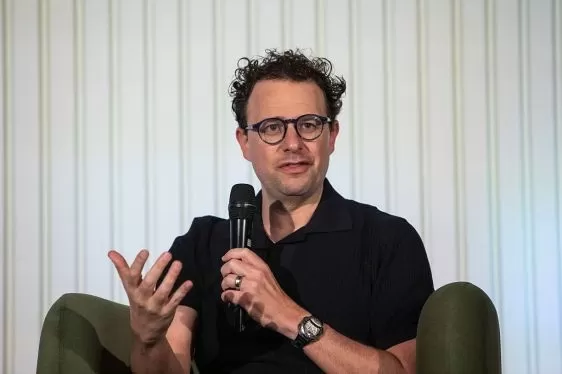 Anthropic Enters AI Legal Tech Market as Competition Intensifies
Anthropic unveiled a suite of new chatbot capabilities on Tuesday, aimed at delivering automated support to legal practices. These enhancements expand upon Claude for Legal, the firm-specific platform introduced earlier this year, by adding specializ
Anthropic Enters AI Legal Tech Market as Competition Intensifies
Anthropic unveiled a suite of new chatbot capabilities on Tuesday, aimed at delivering automated support to legal practices. These enhancements expand upon Claude for Legal, the firm-specific platform introduced earlier this year, by adding specializ
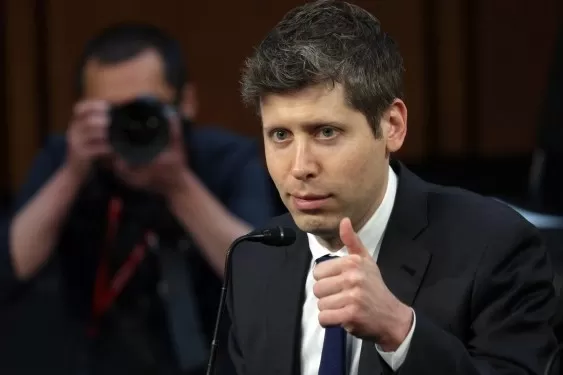 OpenAI Closes Gap With Anthropic Among Business Users, New Data Shows
With OpenAI and Anthropic still distant from their anticipated IPOs and the release of detailed financial reports, we must turn to alternative indicators to gauge their business performance. Ramp, a corporate credit card and expense management platfo
OpenAI Closes Gap With Anthropic Among Business Users, New Data Shows
With OpenAI and Anthropic still distant from their anticipated IPOs and the release of detailed financial reports, we must turn to alternative indicators to gauge their business performance. Ramp, a corporate credit card and expense management platfo
 Anthropic launches Opus 4.8 featuring new dynamic workflow tool
Anthropic unveiled Opus 4.8 on Thursday, marking the latest iteration of its premier public model. Priced identically to its predecessor, this update is now accessible across all platforms.Releasing just 41 days after Opus 4.7, Anthropic has accelera
Anthropic launches Opus 4.8 featuring new dynamic workflow tool
Anthropic unveiled Opus 4.8 on Thursday, marking the latest iteration of its premier public model. Priced identically to its predecessor, this update is now accessible across all platforms.Releasing just 41 days after Opus 4.7, Anthropic has accelera

2026 Latest Best Top-Rated AI Outline Generators for Long-Form SEO Articles, meticulously curated by XIX.AI. These powerful tools offer game-changing assistance in creating high-quality content quickly, boosting writing efficiency significantly. Get a free vs paid comparison along with real-world tests and detailed rankings to help you find the must-try option that suits your needs. Explore now to unlock your AI edge.
8 tools
xix.ai

2026 Latest Best AI Study Tools for Homework and Exam Prep! XIX.AI curates a top-rated list of powerful, game-changing tools that help students boost productivity, streamline homework completion, and ace exams through real-world tests. Get a free vs paid comparison, detailed rankings, and must-try options to unlock your AI edge. Explore now!
10 tools
xix.ai

2026 Latest Best AI Vocal Demo Tools for Songwriters, Hook Creators, and Multi-Language Content Teams! XIX.AI has curated a top-rated list of powerful game-changing tools that go through rigorous real-world tests. You’ll find detailed free vs paid comparison data, comprehensive rankings, and must-try options to help you boost writing efficiency and unlock your creative potential. Explore now to discover your perfect tool for all your content needs!
9 tools
xix.ai

2026 Latest Best Top-rated AI Competitive Research Tools for Small Businesses! XIX.AI has curated a highly powerful game-changing collection, updated weekly with rigorous real-world tests and detailed rankings. You can find a comprehensive free vs paid comparison to help you identify the must-try tools that boost your productivity and give you a competitive edge. Explore now to discover your perfect tool!
9 tools
xix.ai

2026 Latest Best Photoshop AI retouch tools for ecommerce apparel, skin cleanup, and color consistency! This top-rated curated list features powerful game-changing solutions that help you boost writing efficiency, streamline content creation, and achieve perfect visual results effortlessly. Each tool has undergone real-world tests through weekly updated rankings, complete with free vs paid comparison details. Backed by XIX.AI, it’s the must-try guide for anyone aiming to unlock your AI edge. Explore now!
10 tools
xix.ai

2026 Latest Best Top-Rated AI Prompt Libraries for optimizing all types of ChatGPT workflows. XIX.AI has curated a powerful, game-changing collection that goes through rigorous real-world tests to ensure top performance. You can find detailed free vs paid comparisons and expert rankings to help you choose the must-try tools that boost your productivity and unlock your AI edge. Explore now!
11 tools
xix.ai












