


 Home
HomeVint Cerf Advises Leaders on Thriving in AI-Enabled Future Internet
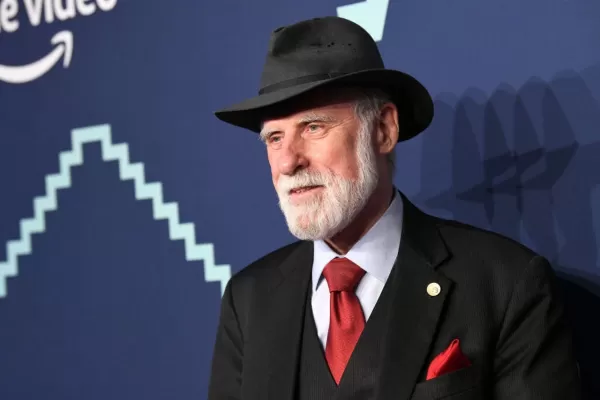
In a recent episode of my weekly podcast, DisrupTV, I had the pleasure of sitting down with Constellation Research's R "Ray" Wang to interview two luminaries who have profoundly influenced our digital world: Dr. Vinton G. Cerf, vice president and chief internet evangelist at Google, and Dr. David Bray, distinguished chair of the accelerator at the Henry L. Stimson Center and Principal/CEO of LeadDoAdapt Ventures, Inc. Their wisdom on navigating the AI era, leadership, and the intersection of technology with societal needs is invaluable for modern leaders.
As artificial intelligence reshapes our world, their experiences in marrying technological innovation with human-centric solutions provide a roadmap for executives. This blueprint is essential for those looking to leverage new technologies while sidestepping the traps that could harm business success and societal well-being.
The Internet's Journey and Future Horizons
Dr. Cerf, often hailed as a "Father of the Internet," recounted the evolution from ARPANET to a global network connecting 5.6 billion people. His vision for the internet's future includes increased capacity, broader accessibility, and even extending connectivity to space. Since 1998, Cerf has been instrumental in developing an "interplanetary internet backbone" at the Jet Propulsion Lab. He also highlighted the growing role of AI, noting that about 25% of Google's software is now generated using AI tools. Cerf envisions a future filled with "an abundance of computing and communication capability" that will fuel remarkable achievements.
Dr. Bray, who has collaborated with Cerf through the People-Centered Internet coalition from 2017 to 2021, emphasized the importance of digital resilience, bridging digital divides, and fostering community-driven innovation. He believes that "the most successful digital transformations occur when communities actively shape how technology meets their unique needs."
Bray also offered a balanced view on the internet's impact:
"The internet's ability to connect us globally and provide access to information is phenomenal. Yet, like radio and television before it, there's a risk that it could be used for propaganda or to create echo chambers where diverse ideas aren't encountered."
Leadership Insights from Pioneers
When asked about leadership lessons from his career, Dr. Cerf shared several guiding principles:
- Seek Collaboration: "If you want to achieve something significant, you need to collaborate."
- Sell Your Ideas: "Learn to pitch your ideas effectively so others are motivated to join your efforts."
- Stay Curious: "I hope to retain the same curiosity I had at 10 years old."
- Value Mentorship: Cerf acknowledged mentors like Bob Kahn and Steve Crocker, who "kept my curiosity alive and fueled my interests."
Dr. Bray, reflecting on his work with Cerf, outlined key leadership themes:
- Drive Positive Change: "Change agents must navigate resistance while pushing forward."
- Adaptable Leadership: "Effective leaders adapt their approach to different situations while maintaining core values."
- Diverse and Resilient Teams: "Complex challenges require teams with diverse thinking."
- Consistent Values Build Trust: "Leaders must demonstrate unwavering values, even as circumstances evolve."
People-Centered Technology and AI
Both leaders underscored the importance of technology serving humanity. Cerf pointed out that while the internet connects like-minded individuals, it's crucial to recognize that "like-mindedness doesn't always align with our best interests." He stressed the need for accountability, responsibility, and ethics—elements that "technology alone cannot solve. They require social norms, possibly laws, and enforcement."
Bray emphasized community engagement in shaping AI's future, asking, "How do communities want to use AI and the internet for work, education, and a new social contract?"
Both experts discussed necessary safeguards for AI and future technologies. Cerf advocated for interdisciplinary approaches, suggesting that "introducing technology should involve sociologists, psychologists, and anthropologists to understand its societal impact."
Cerf also warned about the persuasiveness of AI, which can be "more articulate than many people we know," making it crucial to critically assess AI-generated information and ensure its provenance.
Bray's approach focuses on empowering people: "We need spaces where individuals can actively shape their future, even amidst differing views and paths."
Guidance for Today's Leaders
For executives navigating digital transformation and AI integration, Cerf and Bray provided seven key insights:
- Reassess the Social Contract: "We must revisit the social contract to ensure accountability accompanies agency."
- Foster Human Connection: Create "electronic agoras" where diverse ideas can be shared and discussed.
- Balance Innovation and Responsibility: Technological advancements must be matched with ethical considerations and societal impact assessments.
- Collaborate Across Disciplines: Address future challenges by working with technologists, social scientists, ethicists, policymakers, and community leaders.
- Lead with Empathy: Understand how changes impact various stakeholders and address their concerns authentically.
- Promote Psychological Safety: "Innovation thrives in environments where people feel safe to take risks. Encourage calculated risks and view failures as learning opportunities."
- Anticipate Exponential Change: Prepare organizations for rapid technological advancements.
As we navigate the crossroads of the internet age and AI revolution, these insights from Cerf and Bray provide a guiding light for leaders. They envision a future where thoughtful leadership, inclusive dialogue, and a commitment to human dignity guide our journey forward, even as technology and data capabilities advance.
This article was co-authored by Dr. David Bray, principal and CEO at LeadDoAdapt (LDA) Ventures, chair of the Accelerator, and distinguished fellow at the Stimson Center.
Stay updated with the latest in tech by subscribing to our Tech Today newsletter.
Related article
 Google Tests Remy AI Agent for Gemini as Focus Shifts to User Control
According to Business Insider, Google is testing Remy, a new AI personal agent for Gemini. This tool aims to execute tasks on behalf of users, streamlining both professional workflows and daily routines.Currently, Remy is undergoing testing in an int
How to fix Core Web Vitals for better SEO rankings
Streamline Report Card Comments with AI ToolsIntroductionAI Tools for Generating Report Card CommentsMagic SchoolAlmanac AIChat GPTUsing Magic School to Generate Report Card CommentsLogging into Magic SchoolSelecting the Report Card Comments ToolCust
Slackbot Becomes an AI Agent
Slackbot, the automated assistant embedded in Salesforce’s corporate messaging platform Slack, is evolving into an AI agent. Salesforce CTO Parker Harris envisions it achieving viral status comparable to OpenAI’s ChatGPT.The cloud software giant laun
Related Special Topic Recommendations
writing
Google Tests Remy AI Agent for Gemini as Focus Shifts to User Control
According to Business Insider, Google is testing Remy, a new AI personal agent for Gemini. This tool aims to execute tasks on behalf of users, streamlining both professional workflows and daily routines.Currently, Remy is undergoing testing in an int
How to fix Core Web Vitals for better SEO rankings
Streamline Report Card Comments with AI ToolsIntroductionAI Tools for Generating Report Card CommentsMagic SchoolAlmanac AIChat GPTUsing Magic School to Generate Report Card CommentsLogging into Magic SchoolSelecting the Report Card Comments ToolCust
Slackbot Becomes an AI Agent
Slackbot, the automated assistant embedded in Salesforce’s corporate messaging platform Slack, is evolving into an AI agent. Salesforce CTO Parker Harris envisions it achieving viral status comparable to OpenAI’s ChatGPT.The cloud software giant laun
Related Special Topic Recommendations
writing
 Best AI Outline Generators for Long-Form SEO Articles
2026 Latest Best Top-Rated AI Outline Generators for Long-Form SEO Articles, meticulously curated by XIX.AI. These powerful tools offer game-changing assistance in creating high-quality content quickly, boosting writing efficiency significantly. Get a free vs paid comparison along with real-world tests and detailed rankings to help you find the must-try option that suits your needs. Explore now to unlock your AI edge.
 8 tools
 xix.ai
Education and Learning
AI Study Tools for Homework and Exam Prep
xix.ai
Education and Learning
AI Study Tools for Homework and Exam Prep
2026 Latest Best AI Study Tools for Homework and Exam Prep! XIX.AI curates a top-rated list of powerful, game-changing tools that help students boost productivity, streamline homework completion, and ace exams through real-world tests. Get a free vs paid comparison, detailed rankings, and must-try options to unlock your AI edge. Explore now!
10 tools
xix.ai
Music composition
AI Vocal Demo Tools for Songwriters, Hooks, Toplines, and Multilingual Draft Sessions
2026 Latest Best AI Vocal Demo Tools for Songwriters, Hook Creators, and Multi-Language Content Teams! XIX.AI has curated a top-rated list of powerful game-changing tools that go through rigorous real-world tests. You’ll find detailed free vs paid comparison data, comprehensive rankings, and must-try options to help you boost writing efficiency and unlock your creative potential. Explore now to discover your perfect tool for all your content needs!
9 tools
xix.ai
Business
Best AI Competitive Research Tools for Small Businesses
2026 Latest Best Top-rated AI Competitive Research Tools for Small Businesses! XIX.AI has curated a highly powerful game-changing collection, updated weekly with rigorous real-world tests and detailed rankings. You can find a comprehensive free vs paid comparison to help you identify the must-try tools that boost your productivity and give you a competitive edge. Explore now to discover your perfect tool!
9 tools
xix.ai
Image editing
Photoshop AI Retouch Tools for Ecommerce Apparel, Skin Cleanup, and Color Consistency
2026 Latest Best Photoshop AI retouch tools for ecommerce apparel, skin cleanup, and color consistency! This top-rated curated list features powerful game-changing solutions that help you boost writing efficiency, streamline content creation, and achieve perfect visual results effortlessly. Each tool has undergone real-world tests through weekly updated rankings, complete with free vs paid comparison details. Backed by XIX.AI, it’s the must-try guide for anyone aiming to unlock your AI edge. Explore now!
10 tools
xix.ai
Prompt
Best AI Prompt Libraries for ChatGPT Workflows
2026 Latest Best Top-Rated AI Prompt Libraries for optimizing all types of ChatGPT workflows. XIX.AI has curated a powerful, game-changing collection that goes through rigorous real-world tests to ensure top performance. You can find detailed free vs paid comparisons and expert rankings to help you choose the must-try tools that boost your productivity and unlock your AI edge. Explore now!
11 tools
xix.ai

 Comments (15)
0/500
Comments (15)
0/500
![RyanWalker]()
Винт Серф — легенда интернета. Его взгляд на будущее сети в эпоху ИИ очень ценен. Важно, что он говорит не только о технологиях, но и о безопасности и доступности. Спасибо за подкаст!
![AlbertRodriguez]()
Intervista fascinante! Vint Cerf traz uma visão crítica sobre como a IA pode transformar a internet sem destruir seus princípios fundamentais. É um alerta necessário para os líderes atuais.
![FrankSmith]()
Vint Cerf siempre aporta una perspectiva histórica invaluable. Es bueno escuchar que no todo es IA, sino también la evolución de la red. Un podcast muy recomendable para entender el futuro digital.
![JamesGreen]()
Endlich spricht jemand über die langfristigen Auswirkungen von KI auf die Internet-Infrastruktur. Vint Cerf hat als Pionier viel zu sagen. Diese Diskussion fehlt in der aktuellen Hype-Welle leider oft.
![RoyLopez]()
Vint Cerf 의 통찰력은 여전히 놀랍습니다. AI 시대에 인터넷의 본질을 유지하는 것이 중요하다는 점을 강조한 점이 인상적이었어요. 기술 발전보다 윤리적 고려가 더 필요해 보입니다.
![GaryTaylor]()
Une interview passionnante ! Vint Cerf rappelle que l'IA ne doit pas se faire au détriment de l'ouverture du web. C'est un rappel nécessaire pour les décideurs actuels. Merci pour ce contenu de qualité !
In a recent episode of my weekly podcast, DisrupTV, I had the pleasure of sitting down with Constellation Research's R "Ray" Wang to interview two luminaries who have profoundly influenced our digital world: Dr. Vinton G. Cerf, vice president and chief internet evangelist at Google, and Dr. David Bray, distinguished chair of the accelerator at the Henry L. Stimson Center and Principal/CEO of LeadDoAdapt Ventures, Inc. Their wisdom on navigating the AI era, leadership, and the intersection of technology with societal needs is invaluable for modern leaders.
As artificial intelligence reshapes our world, their experiences in marrying technological innovation with human-centric solutions provide a roadmap for executives. This blueprint is essential for those looking to leverage new technologies while sidestepping the traps that could harm business success and societal well-being.
The Internet's Journey and Future Horizons
Dr. Cerf, often hailed as a "Father of the Internet," recounted the evolution from ARPANET to a global network connecting 5.6 billion people. His vision for the internet's future includes increased capacity, broader accessibility, and even extending connectivity to space. Since 1998, Cerf has been instrumental in developing an "interplanetary internet backbone" at the Jet Propulsion Lab. He also highlighted the growing role of AI, noting that about 25% of Google's software is now generated using AI tools. Cerf envisions a future filled with "an abundance of computing and communication capability" that will fuel remarkable achievements.
Dr. Bray, who has collaborated with Cerf through the People-Centered Internet coalition from 2017 to 2021, emphasized the importance of digital resilience, bridging digital divides, and fostering community-driven innovation. He believes that "the most successful digital transformations occur when communities actively shape how technology meets their unique needs."
Bray also offered a balanced view on the internet's impact:
"The internet's ability to connect us globally and provide access to information is phenomenal. Yet, like radio and television before it, there's a risk that it could be used for propaganda or to create echo chambers where diverse ideas aren't encountered."
Leadership Insights from Pioneers
When asked about leadership lessons from his career, Dr. Cerf shared several guiding principles:
- Seek Collaboration: "If you want to achieve something significant, you need to collaborate."
- Sell Your Ideas: "Learn to pitch your ideas effectively so others are motivated to join your efforts."
- Stay Curious: "I hope to retain the same curiosity I had at 10 years old."
- Value Mentorship: Cerf acknowledged mentors like Bob Kahn and Steve Crocker, who "kept my curiosity alive and fueled my interests."
Dr. Bray, reflecting on his work with Cerf, outlined key leadership themes:
- Drive Positive Change: "Change agents must navigate resistance while pushing forward."
- Adaptable Leadership: "Effective leaders adapt their approach to different situations while maintaining core values."
- Diverse and Resilient Teams: "Complex challenges require teams with diverse thinking."
- Consistent Values Build Trust: "Leaders must demonstrate unwavering values, even as circumstances evolve."
People-Centered Technology and AI
Both leaders underscored the importance of technology serving humanity. Cerf pointed out that while the internet connects like-minded individuals, it's crucial to recognize that "like-mindedness doesn't always align with our best interests." He stressed the need for accountability, responsibility, and ethics—elements that "technology alone cannot solve. They require social norms, possibly laws, and enforcement."
Bray emphasized community engagement in shaping AI's future, asking, "How do communities want to use AI and the internet for work, education, and a new social contract?"
Both experts discussed necessary safeguards for AI and future technologies. Cerf advocated for interdisciplinary approaches, suggesting that "introducing technology should involve sociologists, psychologists, and anthropologists to understand its societal impact."
Cerf also warned about the persuasiveness of AI, which can be "more articulate than many people we know," making it crucial to critically assess AI-generated information and ensure its provenance.
Bray's approach focuses on empowering people: "We need spaces where individuals can actively shape their future, even amidst differing views and paths."
Guidance for Today's Leaders
For executives navigating digital transformation and AI integration, Cerf and Bray provided seven key insights:
- Reassess the Social Contract: "We must revisit the social contract to ensure accountability accompanies agency."
- Foster Human Connection: Create "electronic agoras" where diverse ideas can be shared and discussed.
- Balance Innovation and Responsibility: Technological advancements must be matched with ethical considerations and societal impact assessments.
- Collaborate Across Disciplines: Address future challenges by working with technologists, social scientists, ethicists, policymakers, and community leaders.
- Lead with Empathy: Understand how changes impact various stakeholders and address their concerns authentically.
- Promote Psychological Safety: "Innovation thrives in environments where people feel safe to take risks. Encourage calculated risks and view failures as learning opportunities."
- Anticipate Exponential Change: Prepare organizations for rapid technological advancements.
As we navigate the crossroads of the internet age and AI revolution, these insights from Cerf and Bray provide a guiding light for leaders. They envision a future where thoughtful leadership, inclusive dialogue, and a commitment to human dignity guide our journey forward, even as technology and data capabilities advance.
This article was co-authored by Dr. David Bray, principal and CEO at LeadDoAdapt (LDA) Ventures, chair of the Accelerator, and distinguished fellow at the Stimson Center.
Stay updated with the latest in tech by subscribing to our Tech Today newsletter.







 Google Tests Remy AI Agent for Gemini as Focus Shifts to User Control
According to Business Insider, Google is testing Remy, a new AI personal agent for Gemini. This tool aims to execute tasks on behalf of users, streamlining both professional workflows and daily routines.Currently, Remy is undergoing testing in an int
Google Tests Remy AI Agent for Gemini as Focus Shifts to User Control
According to Business Insider, Google is testing Remy, a new AI personal agent for Gemini. This tool aims to execute tasks on behalf of users, streamlining both professional workflows and daily routines.Currently, Remy is undergoing testing in an int
 How to fix Core Web Vitals for better SEO rankings
Streamline Report Card Comments with AI ToolsIntroductionAI Tools for Generating Report Card CommentsMagic SchoolAlmanac AIChat GPTUsing Magic School to Generate Report Card CommentsLogging into Magic SchoolSelecting the Report Card Comments ToolCust
How to fix Core Web Vitals for better SEO rankings
Streamline Report Card Comments with AI ToolsIntroductionAI Tools for Generating Report Card CommentsMagic SchoolAlmanac AIChat GPTUsing Magic School to Generate Report Card CommentsLogging into Magic SchoolSelecting the Report Card Comments ToolCust
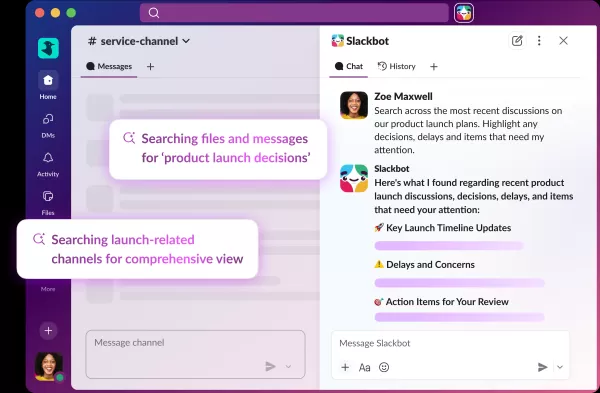 Slackbot Becomes an AI Agent
Slackbot, the automated assistant embedded in Salesforce’s corporate messaging platform Slack, is evolving into an AI agent. Salesforce CTO Parker Harris envisions it achieving viral status comparable to OpenAI’s ChatGPT.The cloud software giant laun
Slackbot Becomes an AI Agent
Slackbot, the automated assistant embedded in Salesforce’s corporate messaging platform Slack, is evolving into an AI agent. Salesforce CTO Parker Harris envisions it achieving viral status comparable to OpenAI’s ChatGPT.The cloud software giant laun

2026 Latest Best Top-Rated AI Outline Generators for Long-Form SEO Articles, meticulously curated by XIX.AI. These powerful tools offer game-changing assistance in creating high-quality content quickly, boosting writing efficiency significantly. Get a free vs paid comparison along with real-world tests and detailed rankings to help you find the must-try option that suits your needs. Explore now to unlock your AI edge.
8 tools
xix.ai

2026 Latest Best AI Study Tools for Homework and Exam Prep! XIX.AI curates a top-rated list of powerful, game-changing tools that help students boost productivity, streamline homework completion, and ace exams through real-world tests. Get a free vs paid comparison, detailed rankings, and must-try options to unlock your AI edge. Explore now!
10 tools
xix.ai

2026 Latest Best AI Vocal Demo Tools for Songwriters, Hook Creators, and Multi-Language Content Teams! XIX.AI has curated a top-rated list of powerful game-changing tools that go through rigorous real-world tests. You’ll find detailed free vs paid comparison data, comprehensive rankings, and must-try options to help you boost writing efficiency and unlock your creative potential. Explore now to discover your perfect tool for all your content needs!
9 tools
xix.ai

2026 Latest Best Top-rated AI Competitive Research Tools for Small Businesses! XIX.AI has curated a highly powerful game-changing collection, updated weekly with rigorous real-world tests and detailed rankings. You can find a comprehensive free vs paid comparison to help you identify the must-try tools that boost your productivity and give you a competitive edge. Explore now to discover your perfect tool!
9 tools
xix.ai

2026 Latest Best Photoshop AI retouch tools for ecommerce apparel, skin cleanup, and color consistency! This top-rated curated list features powerful game-changing solutions that help you boost writing efficiency, streamline content creation, and achieve perfect visual results effortlessly. Each tool has undergone real-world tests through weekly updated rankings, complete with free vs paid comparison details. Backed by XIX.AI, it’s the must-try guide for anyone aiming to unlock your AI edge. Explore now!
10 tools
xix.ai
2026 Latest Best Top-Rated AI Prompt Libraries for optimizing all types of ChatGPT workflows. XIX.AI has curated a powerful, game-changing collection that goes through rigorous real-world tests to ensure top performance. You can find detailed free vs paid comparisons and expert rankings to help you choose the must-try tools that boost your productivity and unlock your AI edge. Explore now!
11 tools
xix.ai

Винт Серф — легенда интернета. Его взгляд на будущее сети в эпоху ИИ очень ценен. Важно, что он говорит не только о технологиях, но и о безопасности и доступности. Спасибо за подкаст!
Intervista fascinante! Vint Cerf traz uma visão crítica sobre como a IA pode transformar a internet sem destruir seus princípios fundamentais. É um alerta necessário para os líderes atuais.
Vint Cerf siempre aporta una perspectiva histórica invaluable. Es bueno escuchar que no todo es IA, sino también la evolución de la red. Un podcast muy recomendable para entender el futuro digital.
Endlich spricht jemand über die langfristigen Auswirkungen von KI auf die Internet-Infrastruktur. Vint Cerf hat als Pionier viel zu sagen. Diese Diskussion fehlt in der aktuellen Hype-Welle leider oft.
Vint Cerf 의 통찰력은 여전히 놀랍습니다. AI 시대에 인터넷의 본질을 유지하는 것이 중요하다는 점을 강조한 점이 인상적이었어요. 기술 발전보다 윤리적 고려가 더 필요해 보입니다.
Une interview passionnante ! Vint Cerf rappelle que l'IA ne doit pas se faire au détriment de l'ouverture du web. C'est un rappel nécessaire pour les décideurs actuels. Merci pour ce contenu de qualité !












