


 Home
HomeU.S. ban on Anthropic models wasn’t about AI jailbreaking

A recent enforcement letter from the U.S. government to Anthropic, which effectively compelled the company to take its newest AI models offline just before the weekend, should serve as a stark warning for any U.S. tech firm — whether an AI lab or not.
Here’s a quick recap: On Friday afternoon, the U.S. Commerce Department sent Anthropic a letter citing a little-known export control rule that barred non-Americans — including Anthropic’s own employees — from accessing Fable 5 and Mythos 5, citing an unspecified national security concern. Anthropic said it believes the letter relates to a bypass of the model’s safety guardrails but is uncertain because the letter lacks specific details. The letter has not been made public.
In response, Anthropic shut down both of its flagship models for all customers to ensure compliance with the directive. As a result, the U.S. government successfully forced a tech company to take its models offline through a swift, unilateral action that appeared to require no court approval.
Friday’s intervention by the Trump administration shows that the AI industry is not immune to government interference. It also sends a broader message to the tech world: comply, or we can shut down both you and your products.
Citing sources, Axios described a tense situation over the weekend between the two major parties, suggesting that “personality differences” between Anthropic and the Trump administration — rather than a technical flaw in the AI products — triggered the export directive.
New details that emerged over the weekend now further cast doubt on the government’s already questionable reasoning.
Katie Moussouris, a cybersecurity veteran, researcher, and founder of Luta Security, wrote in a blog post that Anthropic recently shared with her a private copy of a paper by security researchers describing an alleged guardrail bypass in Fable 5. (The Wall Street Journal reports that the paper’s authors are security researchers at Amazon.) Moussouris said Anthropic reached out to ask for her perspective on the paper.
In her blog post, Moussouris described how the researchers triggered the guardrail bypass but noted that the bypass itself “should never have triggered an export control.” The key distinction lies between asking an AI model to “review code for security issues” versus asking it to “fix this code.” The end result is largely the same, even when the questions are phrased slightly differently.
“The behavior described in the paper cannot meaningfully be fixed, and any attempt would only weaken the model for defense,” said Moussouris, who criticized the export control directive as hasty, heavy-handed, and misguided.
Moussouris, along with dozens of other top security researchers and experts, has since called on the Trump administration to revoke the export control order, calling the move to pull advanced cybersecurity capabilities from network defenders in the U.S. “dangerous.”
Previous administrations have made sweeping decisions based on knowledge gaps. For example, language used by the U.S. government during the 2010s to fix export laws covering cybersecurity tools that could also be used for cyberattacks was so broad that it inadvertently nearly outlawed legitimate security and vulnerability research.
However, the Trump administration’s directive appears retaliatory.
Justin Hendrix, editor of Tech Policy Press, said the Trump administration’s move is “likely to raise alarms in foreign capitals about the reliability of American AI for critical applications.” The message is that AI companies in the United States cannot be trusted to operate without interference from the U.S. government.
The Trump administration has not confirmed why it invoked the export control directive. Did officials misinterpret the report and overreact? Did Amazon CEO Andy Jassy say something to senior government officials that prompted the response, out of caution or spite? Was something lost in translation, or was this a way to pressure Anthropic, with whom the administration already has a fractious relationship? It is possible that the White House was unaware of the far-reaching consequences of the letter’s demand and officials are now scrambling to undo the damage they caused.
To quote Hendrix, “the climate is one of a cloud of suspicion that senior officials are picking favorites based on personal and political factors.” The aftermath is that the government has set a dangerous precedent regarding how much control it intends to exert over the release of American-made software.
This time, the government took issue with Anthropic; tomorrow, it could be with anyone else.
Related article
 Anthropic Enters AI Legal Tech Market as Competition Intensifies
Anthropic unveiled a suite of new chatbot capabilities on Tuesday, aimed at delivering automated support to legal practices. These enhancements expand upon Claude for Legal, the firm-specific platform introduced earlier this year, by adding specializ
OpenAI Closes Gap With Anthropic Among Business Users, New Data Shows
With OpenAI and Anthropic still distant from their anticipated IPOs and the release of detailed financial reports, we must turn to alternative indicators to gauge their business performance. Ramp, a corporate credit card and expense management platfo
Anthropic launches Opus 4.8 featuring new dynamic workflow tool
Anthropic unveiled Opus 4.8 on Thursday, marking the latest iteration of its premier public model. Priced identically to its predecessor, this update is now accessible across all platforms.Releasing just 41 days after Opus 4.7, Anthropic has accelera
Related Special Topic Recommendations
writing
Anthropic Enters AI Legal Tech Market as Competition Intensifies
Anthropic unveiled a suite of new chatbot capabilities on Tuesday, aimed at delivering automated support to legal practices. These enhancements expand upon Claude for Legal, the firm-specific platform introduced earlier this year, by adding specializ
OpenAI Closes Gap With Anthropic Among Business Users, New Data Shows
With OpenAI and Anthropic still distant from their anticipated IPOs and the release of detailed financial reports, we must turn to alternative indicators to gauge their business performance. Ramp, a corporate credit card and expense management platfo
Anthropic launches Opus 4.8 featuring new dynamic workflow tool
Anthropic unveiled Opus 4.8 on Thursday, marking the latest iteration of its premier public model. Priced identically to its predecessor, this update is now accessible across all platforms.Releasing just 41 days after Opus 4.7, Anthropic has accelera
Related Special Topic Recommendations
writing
 Best AI Outline Generators for Long-Form SEO Articles
2026 Latest Best Top-Rated AI Outline Generators for Long-Form SEO Articles, meticulously curated by XIX.AI. These powerful tools offer game-changing assistance in creating high-quality content quickly, boosting writing efficiency significantly. Get a free vs paid comparison along with real-world tests and detailed rankings to help you find the must-try option that suits your needs. Explore now to unlock your AI edge.
 8 tools
 xix.ai
Education and Learning
AI Study Tools for Homework and Exam Prep
xix.ai
Education and Learning
AI Study Tools for Homework and Exam Prep
2026 Latest Best AI Study Tools for Homework and Exam Prep! XIX.AI curates a top-rated list of powerful, game-changing tools that help students boost productivity, streamline homework completion, and ace exams through real-world tests. Get a free vs paid comparison, detailed rankings, and must-try options to unlock your AI edge. Explore now!
10 tools
xix.ai
Music composition
AI Vocal Demo Tools for Songwriters, Hooks, Toplines, and Multilingual Draft Sessions
2026 Latest Best AI Vocal Demo Tools for Songwriters, Hook Creators, and Multi-Language Content Teams! XIX.AI has curated a top-rated list of powerful game-changing tools that go through rigorous real-world tests. You’ll find detailed free vs paid comparison data, comprehensive rankings, and must-try options to help you boost writing efficiency and unlock your creative potential. Explore now to discover your perfect tool for all your content needs!
9 tools
xix.ai
Business
Best AI Competitive Research Tools for Small Businesses
2026 Latest Best Top-rated AI Competitive Research Tools for Small Businesses! XIX.AI has curated a highly powerful game-changing collection, updated weekly with rigorous real-world tests and detailed rankings. You can find a comprehensive free vs paid comparison to help you identify the must-try tools that boost your productivity and give you a competitive edge. Explore now to discover your perfect tool!
9 tools
xix.ai
Image editing
Photoshop AI Retouch Tools for Ecommerce Apparel, Skin Cleanup, and Color Consistency
2026 Latest Best Photoshop AI retouch tools for ecommerce apparel, skin cleanup, and color consistency! This top-rated curated list features powerful game-changing solutions that help you boost writing efficiency, streamline content creation, and achieve perfect visual results effortlessly. Each tool has undergone real-world tests through weekly updated rankings, complete with free vs paid comparison details. Backed by XIX.AI, it’s the must-try guide for anyone aiming to unlock your AI edge. Explore now!
10 tools
xix.ai
Prompt
Best AI Prompt Libraries for ChatGPT Workflows
2026 Latest Best Top-Rated AI Prompt Libraries for optimizing all types of ChatGPT workflows. XIX.AI has curated a powerful, game-changing collection that goes through rigorous real-world tests to ensure top performance. You can find detailed free vs paid comparisons and expert rankings to help you choose the must-try tools that boost your productivity and unlock your AI edge. Explore now!
11 tools
xix.ai

 Comments (0)
0/500
Comments (0)
0/500
A recent enforcement letter from the U.S. government to Anthropic, which effectively compelled the company to take its newest AI models offline just before the weekend, should serve as a stark warning for any U.S. tech firm — whether an AI lab or not.
Here’s a quick recap: On Friday afternoon, the U.S. Commerce Department sent Anthropic a letter citing a little-known export control rule that barred non-Americans — including Anthropic’s own employees — from accessing Fable 5 and Mythos 5, citing an unspecified national security concern. Anthropic said it believes the letter relates to a bypass of the model’s safety guardrails but is uncertain because the letter lacks specific details. The letter has not been made public.
In response, Anthropic shut down both of its flagship models for all customers to ensure compliance with the directive. As a result, the U.S. government successfully forced a tech company to take its models offline through a swift, unilateral action that appeared to require no court approval.
Friday’s intervention by the Trump administration shows that the AI industry is not immune to government interference. It also sends a broader message to the tech world: comply, or we can shut down both you and your products.
Citing sources, Axios described a tense situation over the weekend between the two major parties, suggesting that “personality differences” between Anthropic and the Trump administration — rather than a technical flaw in the AI products — triggered the export directive.
New details that emerged over the weekend now further cast doubt on the government’s already questionable reasoning.
Katie Moussouris, a cybersecurity veteran, researcher, and founder of Luta Security, wrote in a blog post that Anthropic recently shared with her a private copy of a paper by security researchers describing an alleged guardrail bypass in Fable 5. (The Wall Street Journal reports that the paper’s authors are security researchers at Amazon.) Moussouris said Anthropic reached out to ask for her perspective on the paper.
In her blog post, Moussouris described how the researchers triggered the guardrail bypass but noted that the bypass itself “should never have triggered an export control.” The key distinction lies between asking an AI model to “review code for security issues” versus asking it to “fix this code.” The end result is largely the same, even when the questions are phrased slightly differently.
“The behavior described in the paper cannot meaningfully be fixed, and any attempt would only weaken the model for defense,” said Moussouris, who criticized the export control directive as hasty, heavy-handed, and misguided.
Moussouris, along with dozens of other top security researchers and experts, has since called on the Trump administration to revoke the export control order, calling the move to pull advanced cybersecurity capabilities from network defenders in the U.S. “dangerous.”
Previous administrations have made sweeping decisions based on knowledge gaps. For example, language used by the U.S. government during the 2010s to fix export laws covering cybersecurity tools that could also be used for cyberattacks was so broad that it inadvertently nearly outlawed legitimate security and vulnerability research.
However, the Trump administration’s directive appears retaliatory.
Justin Hendrix, editor of Tech Policy Press, said the Trump administration’s move is “likely to raise alarms in foreign capitals about the reliability of American AI for critical applications.” The message is that AI companies in the United States cannot be trusted to operate without interference from the U.S. government.
The Trump administration has not confirmed why it invoked the export control directive. Did officials misinterpret the report and overreact? Did Amazon CEO Andy Jassy say something to senior government officials that prompted the response, out of caution or spite? Was something lost in translation, or was this a way to pressure Anthropic, with whom the administration already has a fractious relationship? It is possible that the White House was unaware of the far-reaching consequences of the letter’s demand and officials are now scrambling to undo the damage they caused.
To quote Hendrix, “the climate is one of a cloud of suspicion that senior officials are picking favorites based on personal and political factors.” The aftermath is that the government has set a dangerous precedent regarding how much control it intends to exert over the release of American-made software.
This time, the government took issue with Anthropic; tomorrow, it could be with anyone else.








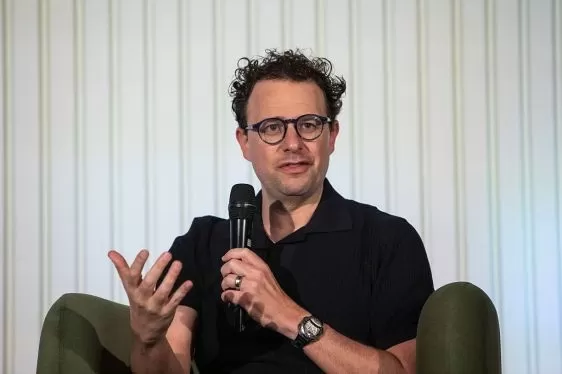 Anthropic Enters AI Legal Tech Market as Competition Intensifies
Anthropic unveiled a suite of new chatbot capabilities on Tuesday, aimed at delivering automated support to legal practices. These enhancements expand upon Claude for Legal, the firm-specific platform introduced earlier this year, by adding specializ
Anthropic Enters AI Legal Tech Market as Competition Intensifies
Anthropic unveiled a suite of new chatbot capabilities on Tuesday, aimed at delivering automated support to legal practices. These enhancements expand upon Claude for Legal, the firm-specific platform introduced earlier this year, by adding specializ
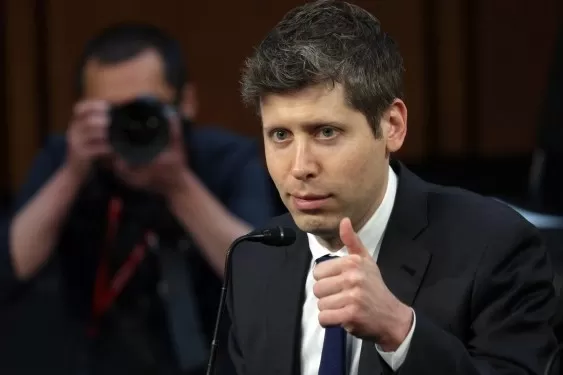 OpenAI Closes Gap With Anthropic Among Business Users, New Data Shows
With OpenAI and Anthropic still distant from their anticipated IPOs and the release of detailed financial reports, we must turn to alternative indicators to gauge their business performance. Ramp, a corporate credit card and expense management platfo
OpenAI Closes Gap With Anthropic Among Business Users, New Data Shows
With OpenAI and Anthropic still distant from their anticipated IPOs and the release of detailed financial reports, we must turn to alternative indicators to gauge their business performance. Ramp, a corporate credit card and expense management platfo
 Anthropic launches Opus 4.8 featuring new dynamic workflow tool
Anthropic unveiled Opus 4.8 on Thursday, marking the latest iteration of its premier public model. Priced identically to its predecessor, this update is now accessible across all platforms.Releasing just 41 days after Opus 4.7, Anthropic has accelera
Anthropic launches Opus 4.8 featuring new dynamic workflow tool
Anthropic unveiled Opus 4.8 on Thursday, marking the latest iteration of its premier public model. Priced identically to its predecessor, this update is now accessible across all platforms.Releasing just 41 days after Opus 4.7, Anthropic has accelera

2026 Latest Best Top-Rated AI Outline Generators for Long-Form SEO Articles, meticulously curated by XIX.AI. These powerful tools offer game-changing assistance in creating high-quality content quickly, boosting writing efficiency significantly. Get a free vs paid comparison along with real-world tests and detailed rankings to help you find the must-try option that suits your needs. Explore now to unlock your AI edge.
8 tools
xix.ai

2026 Latest Best AI Study Tools for Homework and Exam Prep! XIX.AI curates a top-rated list of powerful, game-changing tools that help students boost productivity, streamline homework completion, and ace exams through real-world tests. Get a free vs paid comparison, detailed rankings, and must-try options to unlock your AI edge. Explore now!
10 tools
xix.ai

2026 Latest Best AI Vocal Demo Tools for Songwriters, Hook Creators, and Multi-Language Content Teams! XIX.AI has curated a top-rated list of powerful game-changing tools that go through rigorous real-world tests. You’ll find detailed free vs paid comparison data, comprehensive rankings, and must-try options to help you boost writing efficiency and unlock your creative potential. Explore now to discover your perfect tool for all your content needs!
9 tools
xix.ai

2026 Latest Best Top-rated AI Competitive Research Tools for Small Businesses! XIX.AI has curated a highly powerful game-changing collection, updated weekly with rigorous real-world tests and detailed rankings. You can find a comprehensive free vs paid comparison to help you identify the must-try tools that boost your productivity and give you a competitive edge. Explore now to discover your perfect tool!
9 tools
xix.ai

2026 Latest Best Photoshop AI retouch tools for ecommerce apparel, skin cleanup, and color consistency! This top-rated curated list features powerful game-changing solutions that help you boost writing efficiency, streamline content creation, and achieve perfect visual results effortlessly. Each tool has undergone real-world tests through weekly updated rankings, complete with free vs paid comparison details. Backed by XIX.AI, it’s the must-try guide for anyone aiming to unlock your AI edge. Explore now!
10 tools
xix.ai

2026 Latest Best Top-Rated AI Prompt Libraries for optimizing all types of ChatGPT workflows. XIX.AI has curated a powerful, game-changing collection that goes through rigorous real-world tests to ensure top performance. You can find detailed free vs paid comparisons and expert rankings to help you choose the must-try tools that boost your productivity and unlock your AI edge. Explore now!
11 tools
xix.ai












