


 Home
HomeA Comprehensive Guide to Converting Videos into 3D Spatial Formats
The video landscape is undergoing a constant transformation, with artificial intelligence taking on an ever more significant role. This guide explores how to convert AI-generated 2D videos into immersive 3D spatial experiences, specifically for compatibility with devices such as the Apple Vision Pro and next-generation holographic displays. Prepare to elevate your content creation and viewing experience.
Key Points
OpenAI's Sora is transforming video creation with its advanced AI text-to-video capabilities.
Converting 2D videos into the 3D spatial format significantly boosts viewer immersion.
HaloDepth provides a user-friendly, web-based service for converting 2D videos to spatial format.
Owl3D offers a free solution for 2D to 3D conversion, though it requires powerful hardware.
With the appropriate tools and workflow, spatial video is now a viable format for holographic displays.
The Rise of AI-Generated Video and Spatial Computing
OpenAI Sora: A Game Changer in Video Generation
OpenAI's Sora is a major topic of discussion, representing a substantial advancement in AI-powered video generation. Its capacity to produce realistic, spatially coherent videos from text descriptions opens up exciting new possibilities while presenting potential challenges for videographers and creators. The core technology is a text-to-video and video-to-video engine, similar in concept to Stable Diffusion but specifically designed for moving images. Its superior spatial consistency sets it far ahead of other available options. This translates to reduced production effort and expanded creative avenues, including the ability to generate 3D and Spatial Video from originally 2D content. While it may appear to be a simple text-to-video tool, its true potential is unlocked by using existing video to guide the AI, thereby significantly broadening the creative scope for video professionals.
Spatial Video and Apple Vision Pro: A New Viewing Paradigm
Spearheaded by Apple's Vision Pro, spatial video represents a shift towards more immersive media consumption. Apple promotes spatial video as a medium for capturing and reliving memories. This creates an intriguing scenario: as AI technology becomes more sophisticated, distinguishing between genuine and AI-fabricated memories may become increasingly difficult. This article outlines practical techniques for converting existing video, including AI-generated footage, into the 3D Spatial format for use with Apple Vision Pro and holographic displays. A central question of this trend is whether our future reality will be distinguishable from AI-generated content, a future that is already unfolding given the current state of AI advancement.
Exploring 2D to 3D Spatial Video Conversion Techniques
HaloDepth: A Convenient Online Conversion Service
For a straightforward conversion solution, HaloDepth (https://halodepth.com/) offers a readily accessible online service for transforming 2D videos into spatial format. This approach removes the requirement for high-performance hardware or specialized technical knowledge, making spatial video conversion available to a broader user base. Its pricing structure is an important factor to consider. For infrequent, casual use, converting the occasional video is simple. However, for business applications involving high volumes, the lifetime license for $139 may represent better long-term value.
Owl3D: Free Software with Hardware Requirements
Owl3D (https://owly3d.com/) is a free software application for 2D to 3D video conversion. This option, however, necessitates a powerful PC setup, specifically a high-end GPU like the NVIDIA RTX 4090, to manage the intensive processing workload. While Owl3D is free for shorter videos (under one minute) and supports side-by-side VR processing and holographic display output, processing longer videos requires a one-time license purchase of $139, making it a suitable investment for dedicated video editors.
Step-by-Step Guide: Converting Videos for Spatial Viewing
Utilizing HaloDepth for Spatial Video Conversion
Access the HaloDepth website: Go to https://halodepth.com/.
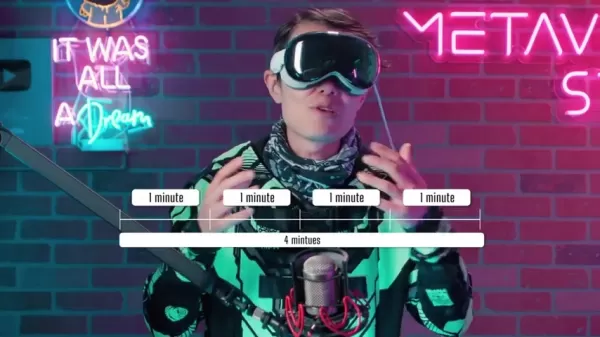
Initiate Conversion: Select the 'Convert Video' button.
Upload Your Video: Drag and drop your 2D video file into the specified area.
Select Quality: Choose your preferred output quality, taking note of the associated costs (e.g., 1080p at 30FPS).
Provide Email: Input your email address to receive the processed video.
Complete Payment: Follow the on-screen instructions to submit payment.
Download: Once processing is finished, download your new spatial video file.
Leveraging Owl3D for 3D Conversion
- Hardware: An NVIDIA RTX 4090 or a comparable high-performance GPU is required.
- Software: Download and install the Owl3D Pro application.
- Conversion to 3D: Launch the Owl3D software.
- Select and drop video: Choose your video file and select from the available 3D output formats, including Side-by-Side (SBS) and RBGD depth for Looking Glass displays.
- Setting: In the Settings menu, ensure GPU encoding is enabled.
- H265/H264 and HEVC: Select either the Quality Optimization or Balanced setting.
- Detail Levels: Use the Enhanced Detail option to improve quality. Optional models like Topaz can be downloaded separately. Higher settings generally yield better results but demand more processing power.
- Run: Click Start to begin the conversion process.
- Transcode: Transfer the 3D side-by-side file to a Mac for conversion into spatial video using FFmpeg. *Optional - Some 3D formats may not be compatible with Mac systems.
- fmpg command: Execute the FFmpeg command to convert the video to spatial format.
- Sync HoloPlay: Import your spatial video into HoloPlay Studio alongside your display.
- Done: Connect your Looking Glass device and enjoy the result.
Pricing and Licensing
HaloDepth Pricing Structure
HaloDepth operates on a per-minute pricing model, charging $1.50 per minute for 1080p 30FPS conversion and $120 per minute for 4K resolution. This can be economical for occasional use, but expenses can accumulate quickly with longer videos.
Owl3D Licensing
Owl3D uses a freemium model. Conversion is free for videos up to one minute in length, but a one-time license fee of $139 is required for longer videos. For commercial use, this permanent license offers substantial value.
Weighing the Options: Pros and Cons of Each Conversion Method
Pros
Simple web application that requires no hardware installation.
Fast processing times.
Cons
Costs can become significant over time.
Limited control over advanced 3D settings.
Key Features and Capabilities
OpenAI Sora’s Main Features
OpenAI's Sora stands out in several key areas:
- Text-to-Video and Video-to-Video AI Engine: Transforms text prompts into impressive visual sequences and can also modify existing video clips.
- Spatial Consistency: Produces videos with a strong sense of spatial depth, resulting in more immersive and believable scenes.
HaloDepth Key Features
HaloDepth is characterized by its:
- Online Accessibility: Can be used on any device with a web browser, including PCs, Macs, and mobile phones.
- Simplicity: Eliminates the need for expensive video editing hardware or complex software.
Owl3D Key Features
Owl3D is defined by its:
- Free Model: Offers free one-minute conversions, allowing users to evaluate the output before purchasing a license for longer projects.
- Multiple Output Models: Also supports output for holographic displays, which can be a more affordable alternative to the Apple Vision Pro.
Unlocking the Potential: Use Cases for 3D Spatial Video
Capturing AI-Generated Moments for Future Viewing
Convert your AI-created videos into spatial memories that are compatible with the Apple Vision Pro for a deeply immersive experience. Preserve these generated moments for future enjoyment and sharing.
Creating Holographic Art Installations
Display your AI-generated artwork using holographic display technology. By utilizing Owl3D's RGB depth output, you can transform your digital art into captivating holographic presentations.
Frequently Asked Questions
What are the main benefits of converting AI-generated videos to 3D spatial?
Converting to a 3D spatial format dramatically increases the level of immersion, creating a more engaging and realistic viewing experience. This is especially impactful for AI-generated content, as it can make synthetic visuals feel more tangible and lifelike.
Is it possible to discern between AI generated memory and captured memories?
The capabilities of AI are so advanced that, over time, it may become very challenging to tell the difference between AI-simulated memories and those captured from real life.
Is HaloDepth or Owl3D suitable for commercial projects?
Both HaloDepth and Owl3D can be utilized for commercial work, but their respective licensing terms and pricing should be evaluated carefully. Owl3D's one-time $139 license often proves to be the most cost-effective option for ongoing business use.
Related Questions
How does the rise of AI change the landscape for videographers?
AI tools are reshaping the industry, posing challenges to traditional videographer roles. Professionals must adapt by learning to integrate and master these new technologies to stay competitive.
Related article
 How to fix Core Web Vitals for better SEO rankings
How to Build a Free Website: Free Domain, Hosting & AI Website BuilderTable of ContentsIntroductionAI Website Builder 1: Hookous AIStep 1: Sign UpStep 2: Choose Business Type/NicheStep 3: Select ServicesStep 4: Define Website GoalsStep 5: Enter Busin
Apple, Google Partner With Anthropic to Address 27-Year-Old Vulnerability via Glass Wing Protection
As artificial intelligence advances rapidly in code generation and logical reasoning, the cybersecurity landscape faces unprecedented challenges. Recently, the prominent AI startup Anthropic officially launched a cross-industry collaboration called *
OpenAI Chief Scientist Addresses AI Reasoning Transparency Debate: Complexity Steady, No Sudden Jump
On September 2, Jakub Pachocki, OpenAI’s Chief Scientist, addressed public concerns on X regarding the AI model Astra, clarifying claims that it operates without oversight and lacks transparent reasoning.Why the Controversy Erupted: Deep Recurrence O
Related Special Topic Recommendations
Text-to-speech
How to fix Core Web Vitals for better SEO rankings
How to Build a Free Website: Free Domain, Hosting & AI Website BuilderTable of ContentsIntroductionAI Website Builder 1: Hookous AIStep 1: Sign UpStep 2: Choose Business Type/NicheStep 3: Select ServicesStep 4: Define Website GoalsStep 5: Enter Busin
Apple, Google Partner With Anthropic to Address 27-Year-Old Vulnerability via Glass Wing Protection
As artificial intelligence advances rapidly in code generation and logical reasoning, the cybersecurity landscape faces unprecedented challenges. Recently, the prominent AI startup Anthropic officially launched a cross-industry collaboration called *
OpenAI Chief Scientist Addresses AI Reasoning Transparency Debate: Complexity Steady, No Sudden Jump
On September 2, Jakub Pachocki, OpenAI’s Chief Scientist, addressed public concerns on X regarding the AI model Astra, clarifying claims that it operates without oversight and lacks transparent reasoning.Why the Controversy Erupted: Deep Recurrence O
Related Special Topic Recommendations
Text-to-speech
 Best AI Text to Speech Tools for Online Courses
2026 Latest Best Top-rated AI Text to Speech Tools for Online Courses are curated by XIX.AI based on rigorous real-world tests and weekly updated rankings. These powerful tools help creators deliver crystal-clear audio content effortlessly, boosting writing efficiency and streamlining course production. Check out the free vs paid comparison to find your perfect fit. Explore now to unlock your AI edge in online education.
 10 tools
 xix.ai
writing
AI Blog Title Tools for Higher Click Through Rates
xix.ai
writing
AI Blog Title Tools for Higher Click Through Rates
2026 Latest Best Top-Rated AI Blog Title Tools for Higher Click Through Rates! XIX.AI has carefully curated a powerful, game-changing collection of top tools that go through rigorous real-world tests. You’ll find a free vs paid comparison, weekly updated rankings, and detailed insights to help you boost your blog’s traffic efficiently. Must-try options are highlighted to help you unlock your AI edge. Explore now!
10 tools
xix.ai
automation
Best AI Task Routing Tools for Support Workflows
2026 Latest Best Top-rated AI Task Routing Tools for Support Workflows! XIX.AI has curated a highly powerful game-changing collection of must-try solutions, all undergoing rigorous real-world tests and updated weekly. These tools streamline workflows, boost productivity, and help teams deliver faster, more efficient support. Explore now to discover your perfect tool and unlock your AI edge!
17 tools
xix.ai
Academic Research
AI Citation and Paper Summary Tools
2026 Latest Best Top-Rated AI Citation and Paper Summary Tools Curated by XIX.AI. Get powerful game-changing solutions for quick content creation, improved writing efficiency, and boosting productivity. We offer a free vs paid comparison along with real-world tests and weekly updated rankings to help you find the must-try tool that fits your needs perfectly. Explore now to Unlock your AI edge.
10 tools
xix.ai
Productivity
Best AI Productivity Tools for Daily Work
2026 Latest Best Top-Rated AI Productivity Tools for Daily Work! XIX.AI has curated a powerful, game-changing selection based on rigorous weekly updated rankings and real-world tests. You’ll find must-try options that boost writing efficiency, streamline content creation, and help you overcome daily work challenges. Get a free vs paid comparison to find the perfect fit for your needs. Explore now to unlock your AI edge!
9 tools
xix.ai
Academic Research
AI Systematic Review Tools for Research Screening
2026 Latest Best Top-Rated AI Systematic Review Tools for Research Screening are here on XIX.AI! This curated collection includes powerful, game-changing solutions that go through rigorous real-world tests to deliver accurate results. We also offer a free vs paid comparison along with weekly updated rankings to help you find the must-try option that boosts your research efficiency significantly. Explore now to unlock your AI edge in academic work!
11 tools
xix.ai

 Comments (0)
0/500
Comments (0)
0/500
The video landscape is undergoing a constant transformation, with artificial intelligence taking on an ever more significant role. This guide explores how to convert AI-generated 2D videos into immersive 3D spatial experiences, specifically for compatibility with devices such as the Apple Vision Pro and next-generation holographic displays. Prepare to elevate your content creation and viewing experience.
Key Points
OpenAI's Sora is transforming video creation with its advanced AI text-to-video capabilities.
Converting 2D videos into the 3D spatial format significantly boosts viewer immersion.
HaloDepth provides a user-friendly, web-based service for converting 2D videos to spatial format.
Owl3D offers a free solution for 2D to 3D conversion, though it requires powerful hardware.
With the appropriate tools and workflow, spatial video is now a viable format for holographic displays.
The Rise of AI-Generated Video and Spatial Computing
OpenAI Sora: A Game Changer in Video Generation
OpenAI's Sora is a major topic of discussion, representing a substantial advancement in AI-powered video generation. Its capacity to produce realistic, spatially coherent videos from text descriptions opens up exciting new possibilities while presenting potential challenges for videographers and creators. The core technology is a text-to-video and video-to-video engine, similar in concept to Stable Diffusion but specifically designed for moving images. Its superior spatial consistency sets it far ahead of other available options. This translates to reduced production effort and expanded creative avenues, including the ability to generate 3D and Spatial Video from originally 2D content. While it may appear to be a simple text-to-video tool, its true potential is unlocked by using existing video to guide the AI, thereby significantly broadening the creative scope for video professionals.
Spatial Video and Apple Vision Pro: A New Viewing Paradigm
Spearheaded by Apple's Vision Pro, spatial video represents a shift towards more immersive media consumption. Apple promotes spatial video as a medium for capturing and reliving memories. This creates an intriguing scenario: as AI technology becomes more sophisticated, distinguishing between genuine and AI-fabricated memories may become increasingly difficult. This article outlines practical techniques for converting existing video, including AI-generated footage, into the 3D Spatial format for use with Apple Vision Pro and holographic displays. A central question of this trend is whether our future reality will be distinguishable from AI-generated content, a future that is already unfolding given the current state of AI advancement.
Exploring 2D to 3D Spatial Video Conversion Techniques
HaloDepth: A Convenient Online Conversion Service
For a straightforward conversion solution, HaloDepth (https://halodepth.com/) offers a readily accessible online service for transforming 2D videos into spatial format. This approach removes the requirement for high-performance hardware or specialized technical knowledge, making spatial video conversion available to a broader user base. Its pricing structure is an important factor to consider. For infrequent, casual use, converting the occasional video is simple. However, for business applications involving high volumes, the lifetime license for $139 may represent better long-term value.
Owl3D: Free Software with Hardware Requirements
Owl3D (https://owly3d.com/) is a free software application for 2D to 3D video conversion. This option, however, necessitates a powerful PC setup, specifically a high-end GPU like the NVIDIA RTX 4090, to manage the intensive processing workload. While Owl3D is free for shorter videos (under one minute) and supports side-by-side VR processing and holographic display output, processing longer videos requires a one-time license purchase of $139, making it a suitable investment for dedicated video editors.
Step-by-Step Guide: Converting Videos for Spatial Viewing
Utilizing HaloDepth for Spatial Video Conversion
Access the HaloDepth website: Go to https://halodepth.com/.
Initiate Conversion: Select the 'Convert Video' button.
Upload Your Video: Drag and drop your 2D video file into the specified area.
Select Quality: Choose your preferred output quality, taking note of the associated costs (e.g., 1080p at 30FPS).
Provide Email: Input your email address to receive the processed video.
Complete Payment: Follow the on-screen instructions to submit payment.
Download: Once processing is finished, download your new spatial video file.
Leveraging Owl3D for 3D Conversion
- Hardware: An NVIDIA RTX 4090 or a comparable high-performance GPU is required.
- Software: Download and install the Owl3D Pro application.
- Conversion to 3D: Launch the Owl3D software.
- Select and drop video: Choose your video file and select from the available 3D output formats, including Side-by-Side (SBS) and RBGD depth for Looking Glass displays.
- Setting: In the Settings menu, ensure GPU encoding is enabled.
- H265/H264 and HEVC: Select either the Quality Optimization or Balanced setting.
- Detail Levels: Use the Enhanced Detail option to improve quality. Optional models like Topaz can be downloaded separately. Higher settings generally yield better results but demand more processing power.
- Run: Click Start to begin the conversion process.
- Transcode: Transfer the 3D side-by-side file to a Mac for conversion into spatial video using FFmpeg. *Optional - Some 3D formats may not be compatible with Mac systems.
- fmpg command: Execute the FFmpeg command to convert the video to spatial format.
- Sync HoloPlay: Import your spatial video into HoloPlay Studio alongside your display.
- Done: Connect your Looking Glass device and enjoy the result.
Pricing and Licensing
HaloDepth Pricing Structure
HaloDepth operates on a per-minute pricing model, charging $1.50 per minute for 1080p 30FPS conversion and $120 per minute for 4K resolution. This can be economical for occasional use, but expenses can accumulate quickly with longer videos.
Owl3D Licensing
Owl3D uses a freemium model. Conversion is free for videos up to one minute in length, but a one-time license fee of $139 is required for longer videos. For commercial use, this permanent license offers substantial value.
Weighing the Options: Pros and Cons of Each Conversion Method
Pros
Simple web application that requires no hardware installation.
Fast processing times.
Cons
Costs can become significant over time.
Limited control over advanced 3D settings.
Key Features and Capabilities
OpenAI Sora’s Main Features
OpenAI's Sora stands out in several key areas:
- Text-to-Video and Video-to-Video AI Engine: Transforms text prompts into impressive visual sequences and can also modify existing video clips.
- Spatial Consistency: Produces videos with a strong sense of spatial depth, resulting in more immersive and believable scenes.
HaloDepth Key Features
HaloDepth is characterized by its:
- Online Accessibility: Can be used on any device with a web browser, including PCs, Macs, and mobile phones.
- Simplicity: Eliminates the need for expensive video editing hardware or complex software.
Owl3D Key Features
Owl3D is defined by its:
- Free Model: Offers free one-minute conversions, allowing users to evaluate the output before purchasing a license for longer projects.
- Multiple Output Models: Also supports output for holographic displays, which can be a more affordable alternative to the Apple Vision Pro.
Unlocking the Potential: Use Cases for 3D Spatial Video
Capturing AI-Generated Moments for Future Viewing
Convert your AI-created videos into spatial memories that are compatible with the Apple Vision Pro for a deeply immersive experience. Preserve these generated moments for future enjoyment and sharing.
Creating Holographic Art Installations
Display your AI-generated artwork using holographic display technology. By utilizing Owl3D's RGB depth output, you can transform your digital art into captivating holographic presentations.
Frequently Asked Questions
What are the main benefits of converting AI-generated videos to 3D spatial?
Converting to a 3D spatial format dramatically increases the level of immersion, creating a more engaging and realistic viewing experience. This is especially impactful for AI-generated content, as it can make synthetic visuals feel more tangible and lifelike.
Is it possible to discern between AI generated memory and captured memories?
The capabilities of AI are so advanced that, over time, it may become very challenging to tell the difference between AI-simulated memories and those captured from real life.
Is HaloDepth or Owl3D suitable for commercial projects?
Both HaloDepth and Owl3D can be utilized for commercial work, but their respective licensing terms and pricing should be evaluated carefully. Owl3D's one-time $139 license often proves to be the most cost-effective option for ongoing business use.
Related Questions
How does the rise of AI change the landscape for videographers?
AI tools are reshaping the industry, posing challenges to traditional videographer roles. Professionals must adapt by learning to integrate and master these new technologies to stay competitive.








 How to fix Core Web Vitals for better SEO rankings
How to Build a Free Website: Free Domain, Hosting & AI Website BuilderTable of ContentsIntroductionAI Website Builder 1: Hookous AIStep 1: Sign UpStep 2: Choose Business Type/NicheStep 3: Select ServicesStep 4: Define Website GoalsStep 5: Enter Busin
How to fix Core Web Vitals for better SEO rankings
How to Build a Free Website: Free Domain, Hosting & AI Website BuilderTable of ContentsIntroductionAI Website Builder 1: Hookous AIStep 1: Sign UpStep 2: Choose Business Type/NicheStep 3: Select ServicesStep 4: Define Website GoalsStep 5: Enter Busin
 Apple, Google Partner With Anthropic to Address 27-Year-Old Vulnerability via Glass Wing Protection
As artificial intelligence advances rapidly in code generation and logical reasoning, the cybersecurity landscape faces unprecedented challenges. Recently, the prominent AI startup Anthropic officially launched a cross-industry collaboration called *
Apple, Google Partner With Anthropic to Address 27-Year-Old Vulnerability via Glass Wing Protection
As artificial intelligence advances rapidly in code generation and logical reasoning, the cybersecurity landscape faces unprecedented challenges. Recently, the prominent AI startup Anthropic officially launched a cross-industry collaboration called *
 OpenAI Chief Scientist Addresses AI Reasoning Transparency Debate: Complexity Steady, No Sudden Jump
On September 2, Jakub Pachocki, OpenAI’s Chief Scientist, addressed public concerns on X regarding the AI model Astra, clarifying claims that it operates without oversight and lacks transparent reasoning.Why the Controversy Erupted: Deep Recurrence O
OpenAI Chief Scientist Addresses AI Reasoning Transparency Debate: Complexity Steady, No Sudden Jump
On September 2, Jakub Pachocki, OpenAI’s Chief Scientist, addressed public concerns on X regarding the AI model Astra, clarifying claims that it operates without oversight and lacks transparent reasoning.Why the Controversy Erupted: Deep Recurrence O

2026 Latest Best Top-rated AI Text to Speech Tools for Online Courses are curated by XIX.AI based on rigorous real-world tests and weekly updated rankings. These powerful tools help creators deliver crystal-clear audio content effortlessly, boosting writing efficiency and streamlining course production. Check out the free vs paid comparison to find your perfect fit. Explore now to unlock your AI edge in online education.
10 tools
xix.ai

2026 Latest Best Top-Rated AI Blog Title Tools for Higher Click Through Rates! XIX.AI has carefully curated a powerful, game-changing collection of top tools that go through rigorous real-world tests. You’ll find a free vs paid comparison, weekly updated rankings, and detailed insights to help you boost your blog’s traffic efficiently. Must-try options are highlighted to help you unlock your AI edge. Explore now!
10 tools
xix.ai

2026 Latest Best Top-rated AI Task Routing Tools for Support Workflows! XIX.AI has curated a highly powerful game-changing collection of must-try solutions, all undergoing rigorous real-world tests and updated weekly. These tools streamline workflows, boost productivity, and help teams deliver faster, more efficient support. Explore now to discover your perfect tool and unlock your AI edge!
17 tools
xix.ai
2026 Latest Best Top-Rated AI Citation and Paper Summary Tools Curated by XIX.AI. Get powerful game-changing solutions for quick content creation, improved writing efficiency, and boosting productivity. We offer a free vs paid comparison along with real-world tests and weekly updated rankings to help you find the must-try tool that fits your needs perfectly. Explore now to Unlock your AI edge.
10 tools
xix.ai

2026 Latest Best Top-Rated AI Productivity Tools for Daily Work! XIX.AI has curated a powerful, game-changing selection based on rigorous weekly updated rankings and real-world tests. You’ll find must-try options that boost writing efficiency, streamline content creation, and help you overcome daily work challenges. Get a free vs paid comparison to find the perfect fit for your needs. Explore now to unlock your AI edge!
9 tools
xix.ai

2026 Latest Best Top-Rated AI Systematic Review Tools for Research Screening are here on XIX.AI! This curated collection includes powerful, game-changing solutions that go through rigorous real-world tests to deliver accurate results. We also offer a free vs paid comparison along with weekly updated rankings to help you find the must-try option that boosts your research efficiency significantly. Explore now to unlock your AI edge in academic work!
11 tools
xix.ai












