


 Home
HomeTerraPower’s nuclear reactor emerges as key solution for powering AI data centers
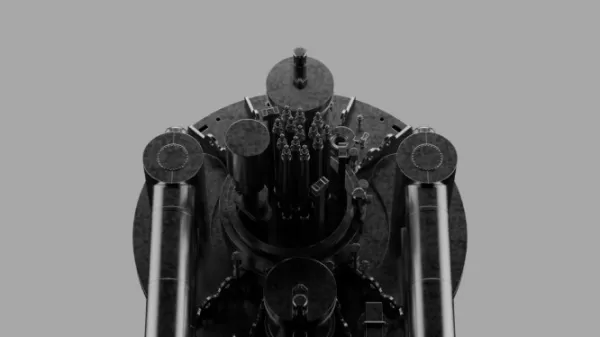
Nuclear power startups are positioning themselves as the solution to AI data centers’ most pressing challenge: reliable, always-on energy. TerraPower, founded by Bill Gates, is the latest entrant, with Bloomberg reporting that the company plans to unveil its first data center project this year.
While TerraPower has not disclosed the specific customer, it previously announced in January that Meta agreed to purchase eight of its Natrium power plants. The upcoming data center project, slated for groundbreaking in 2027, will be the company’s second facility, following its first plant currently under construction in Wyoming.
Not all nuclear reactors are suitable for data center operations, but TerraPower holds a distinct advantage through integrated energy storage, giving it a competitive edge. This capability is derived from its integration with renewable sources like wind and solar.
Nuclear reactors, including TerraPower’s, operate most efficiently at full capacity. Nuclear plants boast the highest capacity factor of all power types, generating at maximum output 92.5% of the time in the U.S. However, this efficiency comes with a trade-off: existing reactors are slow to adjust, capable of changing output by only about 5% per minute, according to the National Laboratory of the Rockies.
New small modular reactors (SMRs), a focus for many startups, can adjust output faster—approximately 10% of rated capacity per minute, per NRL. Yet, operating below full capacity is financially inefficient, as revenue depends on generating electricity.
This issue applies to all power plants but is particularly acute for nuclear energy, which carries the highest capital expenditures of any generation technology. Startups hope that mass manufacturing of SMRs will reduce these costs, though this remains unproven. Even if successful, realizing these benefits could take a decade or more. Since early plants are expensive, startups aim to operate them at peak capacity as often as possible.
For data centers, especially those using behind-the-meter power, this presents a significant challenge. Their energy loads fluctuate rapidly as GPUs handle AI training or user prompts. These swings are so severe that natural gas turbines have failed under the stress. To stabilize operations, centers must invest in large battery banks, further increasing costs.
TerraPower designed its 345-megawatt molten salt-cooled reactor to address these issues. A key design goal was ensuring the reactor could complement intermittent renewable sources like wind and solar, requiring the ability to ramp up and down quickly. Although TerraPower originally envisioned renewables rather than data centers, both share similar intermittency challenges, just from opposite perspectives.
To achieve rapid response, TerraPower does not adjust its reactor’s core power output. Instead, it maintains continuous fission, storing excess heat in a large vat of molten sodium. When demand spikes, the plant draws from this reservoir to produce more steam and drive turbines. This allows expensive equipment to operate continuously, spreading investment costs over more operational hours.
This approach combines nuclear power’s high capacity factor with energy storage technology, enabling TerraPower to integrate seamlessly into renewable-heavy grids or connect directly to data centers. This flexibility may give the startup a competitive advantage in powering AI infrastructure.
Related article
 US data centers may outpace Germany and Japan in natural gas use by 2035
The AI arms race has intensified to such a degree that U.S. data centers are projected to consume more natural gas than Germany and Japan combined by 2035.Over the next decade, data centers are expected to become the second-largest driver of natural
Relativity Networks Secures $22M to Deploy High-Speed Fiber for Data Centers
Industry forecasts project data center developers will invest up to $4 trillion by decade’s end, yet site selection remains heavily restricted by political factors and power-grid limitations. While fiber speed is typically taken for granted, one firm
Senate Demands Data Centers Reveal Power Bills
Two U.S. senators have escalated their campaign against data centers and their energy consumption, sending a letter to the U.S. Energy Information Administration (EIA) on Thursday. Senators Josh Hawley and Elizabeth Warren requested that the agency g
Related Special Topic Recommendations
Design & Art
US data centers may outpace Germany and Japan in natural gas use by 2035
The AI arms race has intensified to such a degree that U.S. data centers are projected to consume more natural gas than Germany and Japan combined by 2035.Over the next decade, data centers are expected to become the second-largest driver of natural
Relativity Networks Secures $22M to Deploy High-Speed Fiber for Data Centers
Industry forecasts project data center developers will invest up to $4 trillion by decade’s end, yet site selection remains heavily restricted by political factors and power-grid limitations. While fiber speed is typically taken for granted, one firm
Senate Demands Data Centers Reveal Power Bills
Two U.S. senators have escalated their campaign against data centers and their energy consumption, sending a letter to the U.S. Energy Information Administration (EIA) on Thursday. Senators Josh Hawley and Elizabeth Warren requested that the agency g
Related Special Topic Recommendations
Design & Art
 Top AI Illustration Tools: Create Editorial Scenes and Cover Art Faster
2026 Latest Top-rated AI Illustration Tools: Our curated list features the best powerfully designed tools for creating stunning editorial scenes and eye-catching cover art quickly. Each option has gone through rigorous real-world tests, offering a free vs paid comparison to help you find the perfect match for your workflow. Try these must-try solutions today to unlock your AI edge and boost your creative productivity. Explore now at XIX.AI.
 10 tools
 xix.ai
Education and Learning
Top AI Tutors for Exam Prep: Practice Math, Science, and English
xix.ai
Education and Learning
Top AI Tutors for Exam Prep: Practice Math, Science, and English
2026 Latest Top-Rated Best AI Tutors for Exam Prep are here on XIX.AI! Our curated list features powerful game-changing tools that offer free vs paid comparison, real-world tests, and weekly updated rankings. They help boost your writing efficiency, simplify complex topic learning, and unlock your academic potential. Explore now to Discover your perfect exam prep tool and Start creating today to Unlock your AI edge!
10 tools
xix.ai
Finance
AI Budget Planning Tools for Personal Money Management
2026 Latest Best Top-Rated AI Budget Planning Tools for Personal Money Management are here on XIX.AI! This curated collection features powerful, game-changing solutions that help you conduct real-world tests, understand spending habits, and create personalized plans to boost productivity. Enjoy a free vs paid comparison along with detailed rankings. Must-try tools designed to simplify money management and unlock your AI edge. Explore now!
11 tools
xix.ai
Health & Wellness
AI Sleep Tracking Assistants: Improve Recovery with Better Bedtime Habits
2026 Latest Best Top-Rated AI Sleep Tracking Assistants curated for ultimate recovery. This fully updated weekly guide features powerful tools that deliver real-world tests, free vs paid comparison, and detailed rankings to help you find the must-try solution that boosts sleep quality and supports better bedtime habits. Explore now at XIX.AI to Unlock your AI edge.
10 tools
xix.ai
Data Analysis
AI SQL Copilots for Product and Revenue Analytics
2026 Latest Best Top-Rated AI SQL Copilots for Product and Revenue Analytics! XIX.AI has curated a powerful, game-changing collection of must-try tools that undergo real-world tests through weekly updated rankings. These tools help users boost productivity significantly by accelerating data analysis, streamlining complex queries, and generating accurate insights to drive smarter business decisions. Explore now to Discover your perfect tool for unlocking your AI edge!
14 tools
xix.ai
Education and Learning
Best AI Homework Helpers That Teach: Learn Concepts, Not Just Answers
2026 Latest Best Top-Rated AI Homework Helpers That Teach Core Concepts Not Just Answers Powerful Tools for Students Must-Try Curated List Weekly Updated Free vs Paid Comparison Real-World Tests Accurate Rankings to Help You Unlock Your Full Learning Potential Explore now to Discover your perfect tool for smarter studying.
10 tools
xix.ai

 Comments (0)
0/500
Comments (0)
0/500
Nuclear power startups are positioning themselves as the solution to AI data centers’ most pressing challenge: reliable, always-on energy. TerraPower, founded by Bill Gates, is the latest entrant, with Bloomberg reporting that the company plans to unveil its first data center project this year.
While TerraPower has not disclosed the specific customer, it previously announced in January that Meta agreed to purchase eight of its Natrium power plants. The upcoming data center project, slated for groundbreaking in 2027, will be the company’s second facility, following its first plant currently under construction in Wyoming.
Not all nuclear reactors are suitable for data center operations, but TerraPower holds a distinct advantage through integrated energy storage, giving it a competitive edge. This capability is derived from its integration with renewable sources like wind and solar.
Nuclear reactors, including TerraPower’s, operate most efficiently at full capacity. Nuclear plants boast the highest capacity factor of all power types, generating at maximum output 92.5% of the time in the U.S. However, this efficiency comes with a trade-off: existing reactors are slow to adjust, capable of changing output by only about 5% per minute, according to the National Laboratory of the Rockies.
New small modular reactors (SMRs), a focus for many startups, can adjust output faster—approximately 10% of rated capacity per minute, per NRL. Yet, operating below full capacity is financially inefficient, as revenue depends on generating electricity.
This issue applies to all power plants but is particularly acute for nuclear energy, which carries the highest capital expenditures of any generation technology. Startups hope that mass manufacturing of SMRs will reduce these costs, though this remains unproven. Even if successful, realizing these benefits could take a decade or more. Since early plants are expensive, startups aim to operate them at peak capacity as often as possible.
For data centers, especially those using behind-the-meter power, this presents a significant challenge. Their energy loads fluctuate rapidly as GPUs handle AI training or user prompts. These swings are so severe that natural gas turbines have failed under the stress. To stabilize operations, centers must invest in large battery banks, further increasing costs.
TerraPower designed its 345-megawatt molten salt-cooled reactor to address these issues. A key design goal was ensuring the reactor could complement intermittent renewable sources like wind and solar, requiring the ability to ramp up and down quickly. Although TerraPower originally envisioned renewables rather than data centers, both share similar intermittency challenges, just from opposite perspectives.
To achieve rapid response, TerraPower does not adjust its reactor’s core power output. Instead, it maintains continuous fission, storing excess heat in a large vat of molten sodium. When demand spikes, the plant draws from this reservoir to produce more steam and drive turbines. This allows expensive equipment to operate continuously, spreading investment costs over more operational hours.
This approach combines nuclear power’s high capacity factor with energy storage technology, enabling TerraPower to integrate seamlessly into renewable-heavy grids or connect directly to data centers. This flexibility may give the startup a competitive advantage in powering AI infrastructure.








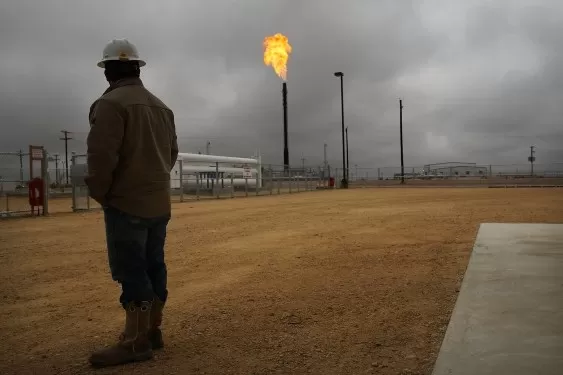 US data centers may outpace Germany and Japan in natural gas use by 2035
The AI arms race has intensified to such a degree that U.S. data centers are projected to consume more natural gas than Germany and Japan combined by 2035.Over the next decade, data centers are expected to become the second-largest driver of natural
US data centers may outpace Germany and Japan in natural gas use by 2035
The AI arms race has intensified to such a degree that U.S. data centers are projected to consume more natural gas than Germany and Japan combined by 2035.Over the next decade, data centers are expected to become the second-largest driver of natural
 Relativity Networks Secures $22M to Deploy High-Speed Fiber for Data Centers
Industry forecasts project data center developers will invest up to $4 trillion by decade’s end, yet site selection remains heavily restricted by political factors and power-grid limitations. While fiber speed is typically taken for granted, one firm
Relativity Networks Secures $22M to Deploy High-Speed Fiber for Data Centers
Industry forecasts project data center developers will invest up to $4 trillion by decade’s end, yet site selection remains heavily restricted by political factors and power-grid limitations. While fiber speed is typically taken for granted, one firm
 Senate Demands Data Centers Reveal Power Bills
Two U.S. senators have escalated their campaign against data centers and their energy consumption, sending a letter to the U.S. Energy Information Administration (EIA) on Thursday. Senators Josh Hawley and Elizabeth Warren requested that the agency g
Senate Demands Data Centers Reveal Power Bills
Two U.S. senators have escalated their campaign against data centers and their energy consumption, sending a letter to the U.S. Energy Information Administration (EIA) on Thursday. Senators Josh Hawley and Elizabeth Warren requested that the agency g

2026 Latest Top-rated AI Illustration Tools: Our curated list features the best powerfully designed tools for creating stunning editorial scenes and eye-catching cover art quickly. Each option has gone through rigorous real-world tests, offering a free vs paid comparison to help you find the perfect match for your workflow. Try these must-try solutions today to unlock your AI edge and boost your creative productivity. Explore now at XIX.AI.
10 tools
xix.ai

2026 Latest Top-Rated Best AI Tutors for Exam Prep are here on XIX.AI! Our curated list features powerful game-changing tools that offer free vs paid comparison, real-world tests, and weekly updated rankings. They help boost your writing efficiency, simplify complex topic learning, and unlock your academic potential. Explore now to Discover your perfect exam prep tool and Start creating today to Unlock your AI edge!
10 tools
xix.ai

2026 Latest Best Top-Rated AI Budget Planning Tools for Personal Money Management are here on XIX.AI! This curated collection features powerful, game-changing solutions that help you conduct real-world tests, understand spending habits, and create personalized plans to boost productivity. Enjoy a free vs paid comparison along with detailed rankings. Must-try tools designed to simplify money management and unlock your AI edge. Explore now!
11 tools
xix.ai

2026 Latest Best Top-Rated AI Sleep Tracking Assistants curated for ultimate recovery. This fully updated weekly guide features powerful tools that deliver real-world tests, free vs paid comparison, and detailed rankings to help you find the must-try solution that boosts sleep quality and supports better bedtime habits. Explore now at XIX.AI to Unlock your AI edge.
10 tools
xix.ai

2026 Latest Best Top-Rated AI SQL Copilots for Product and Revenue Analytics! XIX.AI has curated a powerful, game-changing collection of must-try tools that undergo real-world tests through weekly updated rankings. These tools help users boost productivity significantly by accelerating data analysis, streamlining complex queries, and generating accurate insights to drive smarter business decisions. Explore now to Discover your perfect tool for unlocking your AI edge!
14 tools
xix.ai

2026 Latest Best Top-Rated AI Homework Helpers That Teach Core Concepts Not Just Answers Powerful Tools for Students Must-Try Curated List Weekly Updated Free vs Paid Comparison Real-World Tests Accurate Rankings to Help You Unlock Your Full Learning Potential Explore now to Discover your perfect tool for smarter studying.
10 tools
xix.ai












