


 Home
TechCrunch Disrupt 2026 breakout session agenda unveiled
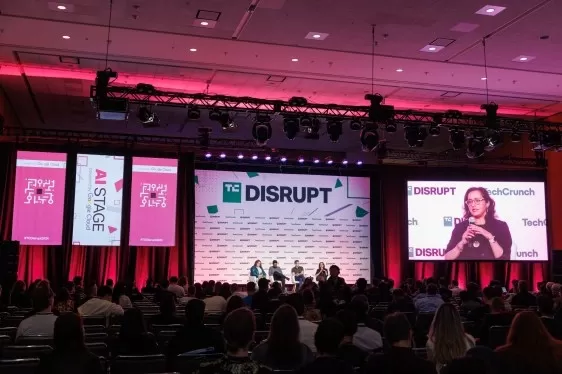
TechCrunch Disrupt 2026 arrives at Moscone West in San Francisco, October 13–15, uniting 10,000+ founders, investors, operators, and tech leaders for three days of insight, networking, and forward-looking dialogue. Register now to save up to $100 on your pass, and secure a second ticket at 50% off.
Some of the most actionable discussions won’t happen on the main stages. Disrupt’s breakout sessions are designed for depth, giving you direct access to industry leaders. Each 50-minute session blends expert perspectives with audience Q&A, allowing you to unpack complex challenges, question assumptions, and walk away with actionable strategies. Rooms are limited and fill on a first-come, first-served basis.
This year’s lineup tackles the pressing questions facing founders and operators today: How do you effectively build with AI agents? Where does value accrue as AI shifts from training to inference? What does physical AI truly entail? How can you run a more effective fundraiser? And how is AI transforming company and team growth?
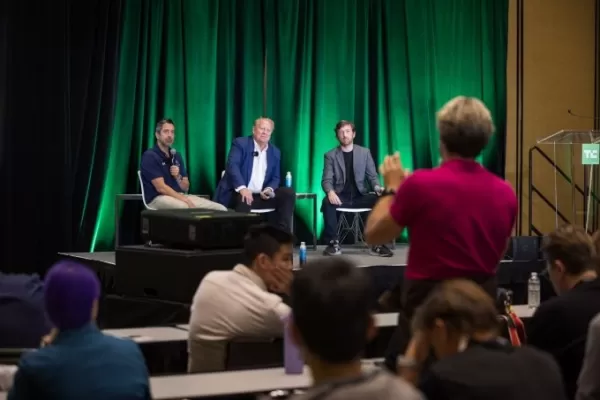
Image Credits:Slava Blazer Photography
Enter the room, get your questions answered, and forge connections that drive your next ecosystem move. Save up to $100 on your pass and 50% on a second. Bring a group of four-plus to maximize savings and insights. If you’ve recently been laid off, get a $75 Expo+ Pass before they sell out.
The complete Disrupt 2026 breakout session agenda
Explore the sessions and tech leaders shaping the Disrupt agenda.
What Is Physical AI, Anyway?
Susan Schofer, Partner and Chief Science Officer, SOSV HAX; and Duncan Turner, General Partner and Managing Director, SOSV HAX
Sponsored by SOSV
AI is moving beyond software into machines that must perceive, reason, and act in unpredictable environments. Schofer and Turner define what qualifies as physical AI, explain why building it requires a distinct strategy, and highlight what investors seek in companies defining this category.
Outnumbered Either Way: How an Engineer and an Architect Run Their Jobs on Agents
Steve Androulakis and Sachin Malhotra, Members of Technical Staff, Anthropic
What does an AI-agent workflow look like for those who build AI for a living? Anthropic’s Androulakis and Malhotra demonstrate how they run multiple Claude agents in parallel, delegate real engineering tasks, review outputs, recover from errors, and integrate agents into daily operations.
How to build AI we can trust
Robbie Goldfarb, Co-founder, Forum AI
As AI handles more consequential tasks, accuracy alone is insufficient. Drawing on experience with misinformation, online safety, and foundation-model labs, Goldfarb explores how expert human judgment can scale into evaluations — and what it takes to build AI systems people can truly rely on.
The Inference Economy: Why AI’s Next Trillion Dollars Won’t Look Like Its First
Hagay Lupesko, SVP, AI Cloud, Cerebras Systems; and Rudina Seseri, Founder and Managing Partner, Glasswing Ventures
As frontier models become commoditized, AI economics are shifting from training to inference. This session examines where defensibility lies when the model itself isn’t the moat, why latency is becoming a product feature, and what these changes mean for infrastructure, startup economics, and future investment criteria.
Building Then vs Now
Dr. Rumman Chowdhury, CEO and Co-founder, Humane Intelligence; Payal Kadakia, Founder, ClassPass; Cassie Kozyrkov, Founder, Kozyr; and Holly Ransom, CEO, Emergent
Sponsored by Signify Business Cash World Elite Mastercard by Wells Fargo
While company-building fundamentals remain constant, tools have evolved. Leaders from AI, data, entrepreneurship, and strategy discuss how founders can leverage AI for faster, better decisions — while recognizing where bias, judgment, and human dynamics still matter.
Best Practices for Running a Successful Fundraise: From Preparation to Investor Engagement
Speakers to be announced
Sponsored by Fidelity Private Shares
A successful fundraise begins long before the pitch. This interactive session guides founders through the process from both sides of the table, covering investor targeting, relationship building, outreach, momentum, cap tables, data rooms, and due diligence. Leave with practical strategies for a more organized and effective raise.
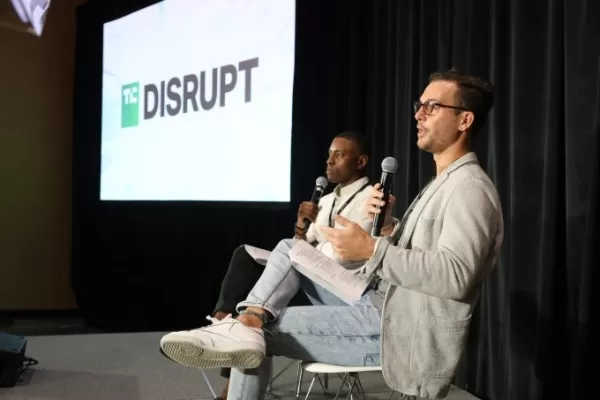
Image Credits:TechCrunch / Slava Blazer Photography
From Founder to Investor: The Next Act – What Happens After You Win?
Bruce K Lee, CEO and Founder, Keebeck Wealth Management; and Abhi Tiwari, Co-founder and General Partner, Blank Ventures
Building and funding a company requires one mindset; becoming an investor requires another. Lee and Tiwari explore the transition from raising capital to allocating it — and why founders should consider post-exit strategies long before an exit occurs.
Breaking Into Space: The AI Builder’s Opportunity
Dr. Brian Cameron, Interim Chief Technology Officer, The Aerospace Corporation; Bosco Lai, CEO, Little Place Labs; and Shawn Sloan, Corporate Fellow for Artificial Intelligence, The Aerospace Corporation
Sponsored by The Aerospace Corporation
Space may seem niche, but its challenges — huge data streams, autonomous decisions, real-time processing, and complex agent systems — resonate with AI builders. This session maps these capabilities to space applications, revealing new commercial and government opportunities for founders.
Fundraising Mistakes That Will Kill Your Round, and How to Avoid Them
Dr. Irena King, Founder and CEO, Surgicure Technologies; Dr. Richard Munassi, Accelerator Managing Director and Chief Strategy Officer, Tampa Bay Wave; Ashley Paston, Partner, General Catalyst; and Emily Zhen, Principal, HealthQuest Capital
Sponsored by Tampa Bay Wave
Great companies can still run flawed fundraising processes. This session dissects mistakes that derail rounds, from positioning and preparation to investor strategy and execution. Expect practical lessons, real examples, and a clearer framework for taking your next raise from the first pitch to close.
Building a Growth Engine in the AI Era: Lessons from a Bootstrapped Unicorn
Patrick Burke, Managing Director, Hostinger
Sponsored by Hostinger
AI compresses the gap between spotting an opportunity and acting on it. Using Hostinger’s examples, Burke explores how startups can identify underpriced distribution channels, shorten the loop between market signals and product launches, experiment faster, and deploy agentic marketing workflows to drive growth.
Physical AI Isn’t a Model Problem. It’s an Execution Problem.
Ethan Batraski, Partner, Venrock; Ivan Poupyrev, Founder and CEO, Archetype AI; and Ian Rountree, General Partner, Cantos
The real physical AI opportunity lies not in understanding the world, but in acting within it. Builders and investors explore the execution layer between perception, decision, action, and verification — and why companies that can reliably close this loop may become the most durable industrial AI businesses.
Talent as the Operating System: How High-Performance Teams Scale in the AI Era
Nomi Khedawala, Senior Technical Program Manager, Reddit
AI changes how work gets done, but companies still rely on people, trust, and execution. Khedawala explores how leaders can build stronger team alignment, spot breakdowns early, and create systems that support accountability and sustainable high performance as organizations scale.
Go deeper at Disrupt 2026
Industry stages show where technology and the startup market are heading. The breakout rooms offer closer access to the problems — and the people solving them.
With limited capacity and first-come, first-served access, these are sessions worth adding to your Disrupt schedule early.
TechCrunch Disrupt 2026 takes place October 13–15 at Moscone West in San Francisco. Register now to save up to $100 before doors open, plus get 50% off a second ticket for your co-founder, colleague, partner, or peer. Save even more with a group of four or more. Laid off? Grab your $75 Expo+ Pass before they sell out.

Image Credits:Kimberly White / Getty Images
Related article
 Flock CEO claims mics detect only gunshots despite website claims
Flock CEO Garrett Langley stated that the company’s gunshot-detection microphones capture “only gunshots,” yet Flock’s website presents a much wider scope of the ambient audio it records.Speaking at TechCrunch Disrupt, the surveillance firm’s co-foun
TechCrunch Disrupt 2026 kicks off tomorrow: Final chance to save up to $100 on tickets
Tomorrow at 8 a.m. PT, the countdown ends. Over 10,000 founders, investors, and tech leaders will converge at San Francisco’s Moscone West for TechCrunch Disrupt 2026, a three-day immersion in the ideas, connections, and startups defining our future.
Nvidia's Les Karpas: Robots Waiting for a ChatGPT Moment at TechCrunch Disrupt 2026
ChatGPT’s November 2022 launch abruptly shifted AI from theoretical hype to everyday utility, fundamentally changing how we interact with large language models.Robotics has long been a subject of discussion and development, yet it lacks that singular
Related Special Topic Recommendations
Design & Art
 Top AI Illustration Tools: Create Editorial Scenes and Cover Art Faster
2026 Latest Top-rated AI Illustration Tools: Our curated list features the best powerfully designed tools for creating stunning editorial scenes and eye-catching cover art quickly. Each option has gone through rigorous real-world tests, offering a free vs paid comparison to help you find the perfect match for your workflow. Try these must-try solutions today to unlock your AI edge and boost your creative productivity. Explore now at XIX.AI.
 10 tools
 xix.ai
Education and Learning
Top AI Tutors for Exam Prep: Practice Math, Science, and English
2026 Latest Top-Rated Best AI Tutors for Exam Prep are here on XIX.AI! Our curated list features powerful game-changing tools that offer free vs paid comparison, real-world tests, and weekly updated rankings. They help boost your writing efficiency, simplify complex topic learning, and unlock your academic potential. Explore now to Discover your perfect exam prep tool and Start creating today to Unlock your AI edge!
10 tools
xix.ai
Finance
AI Budget Planning Tools for Personal Money Management
2026 Latest Best Top-Rated AI Budget Planning Tools for Personal Money Management are here on XIX.AI! This curated collection features powerful, game-changing solutions that help you conduct real-world tests, understand spending habits, and create personalized plans to boost productivity. Enjoy a free vs paid comparison along with detailed rankings. Must-try tools designed to simplify money management and unlock your AI edge. Explore now!
11 tools
xix.ai
Health & Wellness
AI Sleep Tracking Assistants: Improve Recovery with Better Bedtime Habits
2026 Latest Best Top-Rated AI Sleep Tracking Assistants curated for ultimate recovery. This fully updated weekly guide features powerful tools that deliver real-world tests, free vs paid comparison, and detailed rankings to help you find the must-try solution that boosts sleep quality and supports better bedtime habits. Explore now at XIX.AI to Unlock your AI edge.
10 tools
xix.ai
Data Analysis
AI SQL Copilots for Product and Revenue Analytics
2026 Latest Best Top-Rated AI SQL Copilots for Product and Revenue Analytics! XIX.AI has curated a powerful, game-changing collection of must-try tools that undergo real-world tests through weekly updated rankings. These tools help users boost productivity significantly by accelerating data analysis, streamlining complex queries, and generating accurate insights to drive smarter business decisions. Explore now to Discover your perfect tool for unlocking your AI edge!
14 tools
xix.ai
Education and Learning
Best AI Homework Helpers That Teach: Learn Concepts, Not Just Answers
2026 Latest Best Top-Rated AI Homework Helpers That Teach Core Concepts Not Just Answers Powerful Tools for Students Must-Try Curated List Weekly Updated Free vs Paid Comparison Real-World Tests Accurate Rankings to Help You Unlock Your Full Learning Potential Explore now to Discover your perfect tool for smarter studying.
10 tools
xix.ai

 Comments (0)
0/500
TechCrunch Disrupt 2026 arrives at Moscone West in San Francisco, October 13–15, uniting 10,000+ founders, investors, operators, and tech leaders for three days of insight, networking, and forward-looking dialogue. Register now to save up to $100 on your pass, and secure a second ticket at 50% off.
Some of the most actionable discussions won’t happen on the main stages. Disrupt’s breakout sessions are designed for depth, giving you direct access to industry leaders. Each 50-minute session blends expert perspectives with audience Q&A, allowing you to unpack complex challenges, question assumptions, and walk away with actionable strategies. Rooms are limited and fill on a first-come, first-served basis.
This year’s lineup tackles the pressing questions facing founders and operators today: How do you effectively build with AI agents? Where does value accrue as AI shifts from training to inference? What does physical AI truly entail? How can you run a more effective fundraiser? And how is AI transforming company and team growth?
Image Credits:Slava Blazer Photography
Enter the room, get your questions answered, and forge connections that drive your next ecosystem move. Save up to $100 on your pass and 50% on a second. Bring a group of four-plus to maximize savings and insights. If you’ve recently been laid off, get a $75 Expo+ Pass before they sell out.
The complete Disrupt 2026 breakout session agenda
Explore the sessions and tech leaders shaping the Disrupt agenda.
What Is Physical AI, Anyway?
Susan Schofer, Partner and Chief Science Officer, SOSV HAX; and Duncan Turner, General Partner and Managing Director, SOSV HAX
Sponsored by SOSV
AI is moving beyond software into machines that must perceive, reason, and act in unpredictable environments. Schofer and Turner define what qualifies as physical AI, explain why building it requires a distinct strategy, and highlight what investors seek in companies defining this category.
Outnumbered Either Way: How an Engineer and an Architect Run Their Jobs on Agents
Steve Androulakis and Sachin Malhotra, Members of Technical Staff, Anthropic
What does an AI-agent workflow look like for those who build AI for a living? Anthropic’s Androulakis and Malhotra demonstrate how they run multiple Claude agents in parallel, delegate real engineering tasks, review outputs, recover from errors, and integrate agents into daily operations.
How to build AI we can trust
Robbie Goldfarb, Co-founder, Forum AI
As AI handles more consequential tasks, accuracy alone is insufficient. Drawing on experience with misinformation, online safety, and foundation-model labs, Goldfarb explores how expert human judgment can scale into evaluations — and what it takes to build AI systems people can truly rely on.
The Inference Economy: Why AI’s Next Trillion Dollars Won’t Look Like Its First
Hagay Lupesko, SVP, AI Cloud, Cerebras Systems; and Rudina Seseri, Founder and Managing Partner, Glasswing Ventures
As frontier models become commoditized, AI economics are shifting from training to inference. This session examines where defensibility lies when the model itself isn’t the moat, why latency is becoming a product feature, and what these changes mean for infrastructure, startup economics, and future investment criteria.
Building Then vs Now
Dr. Rumman Chowdhury, CEO and Co-founder, Humane Intelligence; Payal Kadakia, Founder, ClassPass; Cassie Kozyrkov, Founder, Kozyr; and Holly Ransom, CEO, Emergent
Sponsored by Signify Business Cash World Elite Mastercard by Wells Fargo
While company-building fundamentals remain constant, tools have evolved. Leaders from AI, data, entrepreneurship, and strategy discuss how founders can leverage AI for faster, better decisions — while recognizing where bias, judgment, and human dynamics still matter.
Best Practices for Running a Successful Fundraise: From Preparation to Investor Engagement
Speakers to be announced
Sponsored by Fidelity Private Shares
A successful fundraise begins long before the pitch. This interactive session guides founders through the process from both sides of the table, covering investor targeting, relationship building, outreach, momentum, cap tables, data rooms, and due diligence. Leave with practical strategies for a more organized and effective raise.
Image Credits:TechCrunch / Slava Blazer Photography
From Founder to Investor: The Next Act – What Happens After You Win?
Bruce K Lee, CEO and Founder, Keebeck Wealth Management; and Abhi Tiwari, Co-founder and General Partner, Blank Ventures
Building and funding a company requires one mindset; becoming an investor requires another. Lee and Tiwari explore the transition from raising capital to allocating it — and why founders should consider post-exit strategies long before an exit occurs.
Breaking Into Space: The AI Builder’s Opportunity
Dr. Brian Cameron, Interim Chief Technology Officer, The Aerospace Corporation; Bosco Lai, CEO, Little Place Labs; and Shawn Sloan, Corporate Fellow for Artificial Intelligence, The Aerospace Corporation
Sponsored by The Aerospace Corporation
Space may seem niche, but its challenges — huge data streams, autonomous decisions, real-time processing, and complex agent systems — resonate with AI builders. This session maps these capabilities to space applications, revealing new commercial and government opportunities for founders.
Fundraising Mistakes That Will Kill Your Round, and How to Avoid Them
Dr. Irena King, Founder and CEO, Surgicure Technologies; Dr. Richard Munassi, Accelerator Managing Director and Chief Strategy Officer, Tampa Bay Wave; Ashley Paston, Partner, General Catalyst; and Emily Zhen, Principal, HealthQuest Capital
Sponsored by Tampa Bay Wave
Great companies can still run flawed fundraising processes. This session dissects mistakes that derail rounds, from positioning and preparation to investor strategy and execution. Expect practical lessons, real examples, and a clearer framework for taking your next raise from the first pitch to close.
Building a Growth Engine in the AI Era: Lessons from a Bootstrapped Unicorn
Patrick Burke, Managing Director, Hostinger
Sponsored by Hostinger
AI compresses the gap between spotting an opportunity and acting on it. Using Hostinger’s examples, Burke explores how startups can identify underpriced distribution channels, shorten the loop between market signals and product launches, experiment faster, and deploy agentic marketing workflows to drive growth.
Physical AI Isn’t a Model Problem. It’s an Execution Problem.
Ethan Batraski, Partner, Venrock; Ivan Poupyrev, Founder and CEO, Archetype AI; and Ian Rountree, General Partner, Cantos
The real physical AI opportunity lies not in understanding the world, but in acting within it. Builders and investors explore the execution layer between perception, decision, action, and verification — and why companies that can reliably close this loop may become the most durable industrial AI businesses.
Talent as the Operating System: How High-Performance Teams Scale in the AI Era
Nomi Khedawala, Senior Technical Program Manager, Reddit
AI changes how work gets done, but companies still rely on people, trust, and execution. Khedawala explores how leaders can build stronger team alignment, spot breakdowns early, and create systems that support accountability and sustainable high performance as organizations scale.
Go deeper at Disrupt 2026
Industry stages show where technology and the startup market are heading. The breakout rooms offer closer access to the problems — and the people solving them.
With limited capacity and first-come, first-served access, these are sessions worth adding to your Disrupt schedule early.
TechCrunch Disrupt 2026 takes place October 13–15 at Moscone West in San Francisco. Register now to save up to $100 before doors open, plus get 50% off a second ticket for your co-founder, colleague, partner, or peer. Save even more with a group of four or more. Laid off? Grab your $75 Expo+ Pass before they sell out.
Image Credits:Kimberly White / Getty Images








 Flock CEO claims mics detect only gunshots despite website claims
Flock CEO Garrett Langley stated that the company’s gunshot-detection microphones capture “only gunshots,” yet Flock’s website presents a much wider scope of the ambient audio it records.Speaking at TechCrunch Disrupt, the surveillance firm’s co-foun
 TechCrunch Disrupt 2026 kicks off tomorrow: Final chance to save up to $100 on tickets
Tomorrow at 8 a.m. PT, the countdown ends. Over 10,000 founders, investors, and tech leaders will converge at San Francisco’s Moscone West for TechCrunch Disrupt 2026, a three-day immersion in the ideas, connections, and startups defining our future.
 Nvidia's Les Karpas: Robots Waiting for a ChatGPT Moment at TechCrunch Disrupt 2026
ChatGPT’s November 2022 launch abruptly shifted AI from theoretical hype to everyday utility, fundamentally changing how we interact with large language models.Robotics has long been a subject of discussion and development, yet it lacks that singular

2026 Latest Top-rated AI Illustration Tools: Our curated list features the best powerfully designed tools for creating stunning editorial scenes and eye-catching cover art quickly. Each option has gone through rigorous real-world tests, offering a free vs paid comparison to help you find the perfect match for your workflow. Try these must-try solutions today to unlock your AI edge and boost your creative productivity. Explore now at XIX.AI.
10 tools
xix.ai

2026 Latest Top-Rated Best AI Tutors for Exam Prep are here on XIX.AI! Our curated list features powerful game-changing tools that offer free vs paid comparison, real-world tests, and weekly updated rankings. They help boost your writing efficiency, simplify complex topic learning, and unlock your academic potential. Explore now to Discover your perfect exam prep tool and Start creating today to Unlock your AI edge!
10 tools
xix.ai

2026 Latest Best Top-Rated AI Budget Planning Tools for Personal Money Management are here on XIX.AI! This curated collection features powerful, game-changing solutions that help you conduct real-world tests, understand spending habits, and create personalized plans to boost productivity. Enjoy a free vs paid comparison along with detailed rankings. Must-try tools designed to simplify money management and unlock your AI edge. Explore now!
11 tools
xix.ai

2026 Latest Best Top-Rated AI Sleep Tracking Assistants curated for ultimate recovery. This fully updated weekly guide features powerful tools that deliver real-world tests, free vs paid comparison, and detailed rankings to help you find the must-try solution that boosts sleep quality and supports better bedtime habits. Explore now at XIX.AI to Unlock your AI edge.
10 tools
xix.ai

2026 Latest Best Top-Rated AI SQL Copilots for Product and Revenue Analytics! XIX.AI has curated a powerful, game-changing collection of must-try tools that undergo real-world tests through weekly updated rankings. These tools help users boost productivity significantly by accelerating data analysis, streamlining complex queries, and generating accurate insights to drive smarter business decisions. Explore now to Discover your perfect tool for unlocking your AI edge!
14 tools
xix.ai

2026 Latest Best Top-Rated AI Homework Helpers That Teach Core Concepts Not Just Answers Powerful Tools for Students Must-Try Curated List Weekly Updated Free vs Paid Comparison Real-World Tests Accurate Rankings to Help You Unlock Your Full Learning Potential Explore now to Discover your perfect tool for smarter studying.
10 tools
xix.ai












