


 Home
HomeStripe Launches Machine Payments Protocol as AI Agents Begin Making Autonomous Payments
March 18, 2026, leading payment infrastructure company Stripe officially announced the launch of Machine Payments Protocol (MPP) on the X platform. This is an open standard jointly written by Stripe and Tempo, designed to provide programmatic payment solutions for internet-native AI agents (Agents), supporting scenarios such as microtransactions, pay-as-you-go, and recurring payments.
MPP Core Features and Stripe Integration
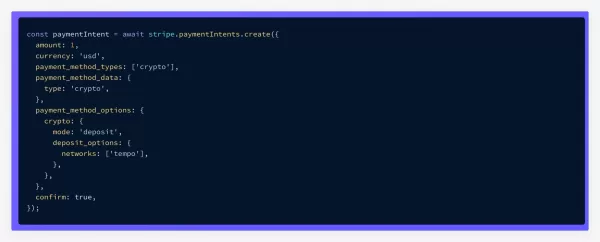
Stripe users can accept MPP payments with just a few lines of code through the PaymentIntents API. Businesses can directly receive payments from agents, supporting stablecoin payments, as well as fiat currency payments via Shared Payment Tokens (SPTs), including credit cards and "buy now, pay later" (BNPL) options. All transactions will appear seamlessly in the Stripe Dashboard and API, with funds settled into existing balances in the merchant's default currency, following standard payment cycles. Stripe's existing tax calculation, fraud protection, reporting, accounting integration, and refund infrastructure can directly serve agent payments without additional development.
Overview of How It Works
When an agent requests resources from a service, API, Model Context Protocol (MCP), or any HTTP-addressable endpoint, the server returns a payment request; upon authorization, the resource is delivered immediately. This process makes machine-to-machine transactions as simple and efficient as human payments.
Real-World Application Cases
MPP has quickly empowered multiple cutting-edge agent business models:
Browserbase (a browser infrastructure provider) allows agents to start headless browsers and pay per session;Postalform helps agents pay to print and mail physical letters;Prospect Butcher Co. enables agents to order sandwiches in New York City, supporting both pickup and delivery;Agents can also donate programmatically to the Stripe Climate initiative.Paraga, founder of Parallel, commented: "Parallel was built to make agents the main users of the web. We integrated Stripe's machine payments with just a few lines of code, allowing agents to pay for each API call themselves. This lets us reach any agent developer globally, using the same Stripe technology stack we already have running."
Stripe's Agent Economy Strategy
MPP is a key component of Stripe's "Agentic Commerce Suite". This suite also includes the Agentic Commerce Protocol (ACP), MCP integration, and support for payments with MPP and x402. Tempo (a Layer 1 blockchain focused on payments, incubated by Stripe and Paradigm) launched its mainnet simultaneously, providing the underlying stablecoin payment infrastructure for MPP.
How Developers Can Get Started
Stripe encourages developers to act immediately: read the official documentation (https://docs.stripe.com/payments/machine) and apply for early access to begin building agent payment applications.
This move marks that the payments industry is fully embracing the AI agent economy. Traditional payment systems mainly serve humans, while open standards like MPP allow machines to complete transactions independently, significantly reducing friction in usage-based models such as API services, data access, and computing resources. Analysts believe this will drive the agent economy into an explosive growth phase.
Related article
 NVIDIA Unveils Nemotron-Labs-Audex-30B-A3B Unified Audio Intelligence Model
As multimodal large models evolve rapidly, audio processing capabilities are frequently compromised—many models improve audio understanding at the expense of text logic. To address this, NVIDIA researchers have introduced Nemotron-Labs-Audex-30B-A3B
How to fix core web vitals for mobile seo
Boost Local SEO: Build Your Google Entity Cloud Drive StacksTable of Contents:IntroductionUnderstanding Google Entity Cloud StackingKey Benefits of Google Entity Cloud StackingGetting Started with Google Entity Cloud Stacks 4.1. Option 1: Acquire Age
Moonshot AI's Kimi Racks Up Over $3.5 Billion Series F, Hitting $35 Billion Valuation
Moonshot AI’s Kimi has successfully closed its Series F funding round, securing over $3.5 billion and achieving a post-money valuation of $35 billion, as reported by Sci-Tech Daily.Driven by subscription demand that surpassed targets by more than thr
Related Special Topic Recommendations
chatbot
NVIDIA Unveils Nemotron-Labs-Audex-30B-A3B Unified Audio Intelligence Model
As multimodal large models evolve rapidly, audio processing capabilities are frequently compromised—many models improve audio understanding at the expense of text logic. To address this, NVIDIA researchers have introduced Nemotron-Labs-Audex-30B-A3B
How to fix core web vitals for mobile seo
Boost Local SEO: Build Your Google Entity Cloud Drive StacksTable of Contents:IntroductionUnderstanding Google Entity Cloud StackingKey Benefits of Google Entity Cloud StackingGetting Started with Google Entity Cloud Stacks 4.1. Option 1: Acquire Age
Moonshot AI's Kimi Racks Up Over $3.5 Billion Series F, Hitting $35 Billion Valuation
Moonshot AI’s Kimi has successfully closed its Series F funding round, securing over $3.5 billion and achieving a post-money valuation of $35 billion, as reported by Sci-Tech Daily.Driven by subscription demand that surpassed targets by more than thr
Related Special Topic Recommendations
chatbot
 AI Live Chat Routing Tools for Ecommerce Queues, VIP Buyers, and Return Requests
2026 Latest Best Top-rated AI Live Chat Routing Tools for Ecommerce Queues, VIP Buyers, and Return Requests. This curated list features powerful game-changing solutions that boost productivity dramatically through real-world tests. It includes a free vs paid comparison along with detailed rankings to help you find the perfect fit. XIX.AI stands out as a trusted provider in this space. Explore now to Unlock your AI edge!
 9 tools
 xix.ai
writing
Best AI Editing Tools for ESL Writers: Improve Tone, Grammar, and Flow
xix.ai
writing
Best AI Editing Tools for ESL Writers: Improve Tone, Grammar, and Flow
2026 Latest Best Top-Rated AI Editing Tools for ESL Writers are here on XIX.AI! This curated list features powerful game-changing tools that go through real-world tests to ensure accuracy. You can find a free vs paid comparison alongside detailed rankings to help you pick the must-try solution that boosts your writing tone, grammar, and flow perfectly. Explore now to Unlock your AI edge!
9 tools
xix.ai
Software Development
Best AI Bug Triage Tools for Engineering Teams
2026 Latest Best Top-Rated AI Bug Triage Tools for Engineering Teams! XIX.AI has curated a powerful, game-changing collection of must-try tools that go through rigorous real-world tests to deliver accurate issue analysis and efficient resolution. Get a free vs paid comparison along with detailed rankings to help you find the perfect solution that boosts your team’s productivity significantly. Explore now to unlock your AI edge!
9 tools
xix.ai
Image editing
Best AI Portrait Enhancers: Improve Lighting, Skin Tone, and Sharpness
2026 Latest Best Top-rated AI Portrait Enhancers curated for ultimate image quality. These powerful tools deliver game-changing results by boosting lighting, skin tone, and sharpness effortlessly, perfect for creators needing to enhance photos quickly. XIX.AI provides a free vs paid comparison along with real-world tests and weekly updated rankings. Discover your perfect tool to unlock your AI edge today. Explore now!
7 tools
xix.ai
writing
AI Technical Documentation Tools for API Guides, Release Notes, and Onboarding Docs
2026 Latest Best Top-rated AI Technical Documentation Tools for API Guides Release Notes and Onboarding Docs. This curated list features powerful game-changing solutions that streamline content creation boost writing efficiency and save time across all project phases. XIX.AI provides weekly updated rankings along with free vs paid comparison results from real-world tests. Explore now to Discover your perfect tool and Unlock your AI edge.
10 tools
xix.ai
design
AI Dashboard Wireframing Tools for B2B Product Teams
2026 Latest Best AI Dashboard Wireframing Tools for B2B Product Teams! XIX.AI has curated a top-rated list of powerful, game-changing tools that go through rigorous real-world tests to deliver exceptional results. You’ll find detailed free vs paid comparison insights and updated weekly rankings showing which options offer the most value for streamlining product design workflows and boosting overall productivity. Must-try choices are clearly highlighted to help you unlock your AI edge. Explore now!
11 tools
xix.ai

 Comments (0)
0/500
Comments (0)
0/500
March 18, 2026, leading payment infrastructure company Stripe officially announced the launch of Machine Payments Protocol (MPP) on the X platform. This is an open standard jointly written by Stripe and Tempo, designed to provide programmatic payment solutions for internet-native AI agents (Agents), supporting scenarios such as microtransactions, pay-as-you-go, and recurring payments.
MPP Core Features and Stripe Integration
Stripe users can accept MPP payments with just a few lines of code through the PaymentIntents API. Businesses can directly receive payments from agents, supporting stablecoin payments, as well as fiat currency payments via Shared Payment Tokens (SPTs), including credit cards and "buy now, pay later" (BNPL) options. All transactions will appear seamlessly in the Stripe Dashboard and API, with funds settled into existing balances in the merchant's default currency, following standard payment cycles. Stripe's existing tax calculation, fraud protection, reporting, accounting integration, and refund infrastructure can directly serve agent payments without additional development.
Overview of How It Works
When an agent requests resources from a service, API, Model Context Protocol (MCP), or any HTTP-addressable endpoint, the server returns a payment request; upon authorization, the resource is delivered immediately. This process makes machine-to-machine transactions as simple and efficient as human payments.
Real-World Application Cases
MPP has quickly empowered multiple cutting-edge agent business models:
Browserbase (a browser infrastructure provider) allows agents to start headless browsers and pay per session;Postalform helps agents pay to print and mail physical letters;Prospect Butcher Co. enables agents to order sandwiches in New York City, supporting both pickup and delivery;Agents can also donate programmatically to the Stripe Climate initiative.Paraga, founder of Parallel, commented: "Parallel was built to make agents the main users of the web. We integrated Stripe's machine payments with just a few lines of code, allowing agents to pay for each API call themselves. This lets us reach any agent developer globally, using the same Stripe technology stack we already have running."
Stripe's Agent Economy Strategy
MPP is a key component of Stripe's "Agentic Commerce Suite". This suite also includes the Agentic Commerce Protocol (ACP), MCP integration, and support for payments with MPP and x402. Tempo (a Layer 1 blockchain focused on payments, incubated by Stripe and Paradigm) launched its mainnet simultaneously, providing the underlying stablecoin payment infrastructure for MPP.
How Developers Can Get Started
Stripe encourages developers to act immediately: read the official documentation (https://docs.stripe.com/payments/machine) and apply for early access to begin building agent payment applications.
This move marks that the payments industry is fully embracing the AI agent economy. Traditional payment systems mainly serve humans, while open standards like MPP allow machines to complete transactions independently, significantly reducing friction in usage-based models such as API services, data access, and computing resources. Analysts believe this will drive the agent economy into an explosive growth phase.








 NVIDIA Unveils Nemotron-Labs-Audex-30B-A3B Unified Audio Intelligence Model
As multimodal large models evolve rapidly, audio processing capabilities are frequently compromised—many models improve audio understanding at the expense of text logic. To address this, NVIDIA researchers have introduced Nemotron-Labs-Audex-30B-A3B
NVIDIA Unveils Nemotron-Labs-Audex-30B-A3B Unified Audio Intelligence Model
As multimodal large models evolve rapidly, audio processing capabilities are frequently compromised—many models improve audio understanding at the expense of text logic. To address this, NVIDIA researchers have introduced Nemotron-Labs-Audex-30B-A3B
 How to fix core web vitals for mobile seo
Boost Local SEO: Build Your Google Entity Cloud Drive StacksTable of Contents:IntroductionUnderstanding Google Entity Cloud StackingKey Benefits of Google Entity Cloud StackingGetting Started with Google Entity Cloud Stacks 4.1. Option 1: Acquire Age
How to fix core web vitals for mobile seo
Boost Local SEO: Build Your Google Entity Cloud Drive StacksTable of Contents:IntroductionUnderstanding Google Entity Cloud StackingKey Benefits of Google Entity Cloud StackingGetting Started with Google Entity Cloud Stacks 4.1. Option 1: Acquire Age
 Moonshot AI's Kimi Racks Up Over $3.5 Billion Series F, Hitting $35 Billion Valuation
Moonshot AI’s Kimi has successfully closed its Series F funding round, securing over $3.5 billion and achieving a post-money valuation of $35 billion, as reported by Sci-Tech Daily.Driven by subscription demand that surpassed targets by more than thr
Moonshot AI's Kimi Racks Up Over $3.5 Billion Series F, Hitting $35 Billion Valuation
Moonshot AI’s Kimi has successfully closed its Series F funding round, securing over $3.5 billion and achieving a post-money valuation of $35 billion, as reported by Sci-Tech Daily.Driven by subscription demand that surpassed targets by more than thr

2026 Latest Best Top-rated AI Live Chat Routing Tools for Ecommerce Queues, VIP Buyers, and Return Requests. This curated list features powerful game-changing solutions that boost productivity dramatically through real-world tests. It includes a free vs paid comparison along with detailed rankings to help you find the perfect fit. XIX.AI stands out as a trusted provider in this space. Explore now to Unlock your AI edge!
9 tools
xix.ai

2026 Latest Best Top-Rated AI Editing Tools for ESL Writers are here on XIX.AI! This curated list features powerful game-changing tools that go through real-world tests to ensure accuracy. You can find a free vs paid comparison alongside detailed rankings to help you pick the must-try solution that boosts your writing tone, grammar, and flow perfectly. Explore now to Unlock your AI edge!
9 tools
xix.ai

2026 Latest Best Top-Rated AI Bug Triage Tools for Engineering Teams! XIX.AI has curated a powerful, game-changing collection of must-try tools that go through rigorous real-world tests to deliver accurate issue analysis and efficient resolution. Get a free vs paid comparison along with detailed rankings to help you find the perfect solution that boosts your team’s productivity significantly. Explore now to unlock your AI edge!
9 tools
xix.ai

2026 Latest Best Top-rated AI Portrait Enhancers curated for ultimate image quality. These powerful tools deliver game-changing results by boosting lighting, skin tone, and sharpness effortlessly, perfect for creators needing to enhance photos quickly. XIX.AI provides a free vs paid comparison along with real-world tests and weekly updated rankings. Discover your perfect tool to unlock your AI edge today. Explore now!
7 tools
xix.ai

2026 Latest Best Top-rated AI Technical Documentation Tools for API Guides Release Notes and Onboarding Docs. This curated list features powerful game-changing solutions that streamline content creation boost writing efficiency and save time across all project phases. XIX.AI provides weekly updated rankings along with free vs paid comparison results from real-world tests. Explore now to Discover your perfect tool and Unlock your AI edge.
10 tools
xix.ai

2026 Latest Best AI Dashboard Wireframing Tools for B2B Product Teams! XIX.AI has curated a top-rated list of powerful, game-changing tools that go through rigorous real-world tests to deliver exceptional results. You’ll find detailed free vs paid comparison insights and updated weekly rankings showing which options offer the most value for streamlining product design workflows and boosting overall productivity. Must-try choices are clearly highlighted to help you unlock your AI edge. Explore now!
11 tools
xix.ai












