


 Home
HomeHow to fix core web vitals for mobile seo

Boost Local SEO: Build Your Google Entity Cloud Drive Stacks
Table of Contents:
- Introduction
- Understanding Google Entity Cloud Stacking
- Key Benefits of Google Entity Cloud Stacking
- Getting Started with Google Entity Cloud Stacks 4.1. Option 1: Acquire Aged Gmail Accounts 4.2. Option 2: Create New Accounts
- Configuring Google Drive for Entity Stacks 5.1. Understanding Folder Types 5.2. Creating Public Folders 5.3. Sharing Folders Across Accounts
- Maximizing the Impact of Entity Cloud Stacks 6.1. Developing SEO-Friendly Content 6.2. Generating Backlinks for Your Stacks
- Best Practices for Managing and Organizing Entity Cloud Stacks
- Common Pitfalls in Google Entity Cloud Stacking
- Frequently Asked Questions
- Conclusion
Setting Up Google Drive for Entity Stacks
Google Entity Cloud Stacking, often referred to as Google Drive Stacking, is an advanced local SEO technique designed to enhance your website's visibility in search results. By strategically organizing content within Google Drive, you can establish a strong online presence for your business. This guide walks you through the process of configuring your Google Drive for entity stacks, ensuring a solid foundation for your efforts.
Introduction
In today's competitive digital environment, a robust online presence is essential for business success. Local SEO is critical for improving visibility and attracting local customers. One effective strategy to amplify your local SEO efforts is Google Entity Cloud Stacking.
What is Google Entity Cloud Stacking?
Google Entity Cloud Stacking involves organizing and interlinking related content using Google Drive folders. By creating a network of interconnected content, you signal to search engines that your website is an authoritative source on specific topics. This strategy aims to improve your website's visibility and relevance in search results, driving more organic traffic and potential customers to your business.
Benefits of Using Google Entity Cloud Stacking
- Enhanced search engine visibility: Organizing content into stacks and interlinking them sends strong signals to search engines regarding your website's relevance and authority, leading to higher rankings and better visibility.
- Increased website authority: This strategy positions your website as a comprehensive resource for specific topics, building trust and credibility with your target audience and boosting your industry authority.
- Higher organic traffic: As your website ranks higher and gains visibility, you can expect a significant increase in organic traffic, bringing in potential customers without paid advertising.
- Improved user experience: A coherent content structure enhances the user experience, allowing visitors to easily navigate related topics, find relevant information, and engage more deeply with your content.
Getting Started with Google Entity Cloud Stacks
To begin with Google Entity Cloud Stacking, you have two options: purchasing aged Gmail accounts or creating new accounts yourself.
Option 1: Acquire Aged Gmail Accounts
Purchasing aged Gmail accounts is one way to obtain the necessary accounts for Google Entity Cloud Stacking. These accounts are typically older and come with public folder access, allowing you to start your strategies effectively. While finding reliable providers can be challenging, it remains a viable option for a quick and convenient solution.
Option 2: Create New Accounts
If you prefer to create your own accounts, you can do so by following a few simple steps. Although this method may be more time-consuming, it allows you to maintain complete control over the accounts and ensure their relevance to your business.
Configuring Google Drive for Entity Stacks
To effectively utilize Google Drive for entity stacks, it's crucial to understand the different folder types and how to set up public folders that can be shared across multiple accounts.
Understanding Folder Types
When setting up your Google Drive, you'll encounter different folder types. It's important to note that not all folder types support public access. To ensure you have the right type of folders for your entity stacks, look for folders that explicitly state "public" or "anyone on the internet can find and view."
Creating Public Folders
To add a public folder in Google Drive, simply right-click on the folder and select "Get Link." Ensure that the link states "public" or "anyone on the internet can find and view." Public folders are essential for creating entity stacks that can be easily shared and accessed by other accounts.
Sharing Folders Across Accounts
To share a folder with another account, go to the folder's settings and click on the share button. Choose the option to share the folder with specific people and enter the email address of the account you want to share it with. Grant the account editor access to allow them to add content to the folder.
Maximizing the Impact of Entity Cloud Stacks
While organizing and interlinking your content is a crucial aspect of Google Entity Cloud Stacking, there are additional steps you can take to maximize its effectiveness.
Developing SEO-Friendly Content
To ensure that your entity stacks have a significant impact on your local SEO efforts, it's essential to create SEO-optimized content.For instance, a local family-owned dental practice in Pennsylvania partnered with a Pittsburgh SEO Company to improve their visibility in the Google Map Pack. To achieve this, they conducted thorough keyword research tailored to local patient queries, optimized their Google Business Profile and on-page elements, and ensured that their supporting content provided genuine value and directly addressed the needs of their target audience.
Generating Backlinks for Your Stacks
To further boost the authority and visibility of your entity stacks, it's beneficial to build quality backlinks to them. Reach out to relevant websites and request backlinks to your stacks, or use outreach strategies such as guest posting to secure backlinks from authoritative sources. High-quality backlinks can significantly improve the rankings and visibility of your stacks.
Best Practices for Managing and Organizing Entity Cloud Stacks
Managing and organizing your entity cloud stacks is crucial to maintaining their effectiveness. Here are some tips to help you keep your stacks organized and easily accessible:
- Use descriptive and keyword-rich folder names to denote the topic and relevance of the stack.
- Create subfolders within your stacks to further categorize and organize your content.
- Regularly update and add new content to your stacks to keep them fresh and relevant.
- Monitor the performance of your stacks using analytics tools to identify areas for improvement and optimization.
Common Pitfalls in Google Entity Cloud Stacking
While Google Entity Cloud Stacking can be highly effective, it's important to avoid common mistakes that could hinder its success. Here are some mistakes to steer clear of:
- Over-optimizing your stacks: Avoid stuffing your stacks with too many keywords or irrelevant content. Keep your stacks focused and provide value to users.
- Neglecting regular updates: Update your stacks regularly with fresh and valuable content to maintain their relevance and search engine rankings.
- Ignoring SEO best practices: Ensure that your stacks adhere to SEO best practices, including proper keyword usage, meta tags, and optimized on-page elements.
- Not diversifying your backlink profile: Avoid relying on a single source for backlinks. Diversify your backlink profile by acquiring links from various reputable websites.
Conclusion
Google Entity Cloud Stacking is a powerful local SEO strategy that can significantly improve your website's visibility and authority. By organizing and interlinking your content using Google Drive, you can signal to search engines that your website is a credible and comprehensive resource in your industry. By following the steps outlined in this article and avoiding common mistakes, you can leverage the full potential of Google Entity Cloud Stacking and drive organic traffic to your business.
Key Takeaways:
- Google Entity Cloud Stacking is an advanced local SEO strategy that utilizes Google Drive folders to organize and interlink content.
- By following the right steps and understanding folder types, you can set up your Google Drive for effective entity stacks.
- Creating SEO-optimized content and building quality backlinks are key to maximizing the impact of entity cloud stacks.
- Managing and organizing your stacks is crucial for maintaining their effectiveness and visibility.
- Avoid common mistakes in Google Entity Cloud Stacking such as over-optimization and neglecting regular updates.
Frequently Asked Questions
Q: What is Google Entity Cloud Stacking? A: Google Entity Cloud Stacking is a local SEO strategy that involves organizing and interlinking content using Google Drive folders to boost search engine visibility.
Q: How do I start a Google Entity Cloud Stack? A: You can start a Google Entity Cloud Stack by either buying aged Gmail accounts or creating accounts yourself.
Q: What are the benefits of using Google Entity Cloud Stacking? A: Some benefits of using Google Entity Cloud Stacking include improved search engine visibility, enhanced website authority, increased organic traffic, and better user experience.
Q: How do I set up my Google Drive for entity stacks? A: Setting up your Google Drive for entity stacks involves understanding folder types, adding public folders, and sharing folders with other accounts.
Q: How can I maximize the power of entity cloud stacks? A: To maximize the power of entity cloud stacks, create SEO-optimized content and build quality backlinks to your stacks.
Q: What are some tips for managing and organizing entity cloud stacks? A: Use descriptive folder names, create relevant subfolders, regularly update your stacks, and monitor their performance using analytics tools.
Q: What are common mistakes to avoid in Google Entity Cloud Stacking? A: Common mistakes to avoid include over-optimization, neglecting regular updates, ignoring SEO best practices, and not diversifying your backlink profile.
In this highly informative article, we explored the concept of Google Entity Cloud Stacking and its benefits for local SEO. By following our step-by-step guide and expert tips, you can create powerful entity stacks that improve your online visibility and drive organic traffic to your website.
Related article
 Claude Opus 5.2 Night Gray Launches with Faster Response, Solving Laziness Issue
Opus 5.2 quietly launched this morning, prompting many developers to notice that the updated model, Claude Opus 5.2, has begun a limited rollout within Claude Code.Yesterday evening, X users observed that invoking Opus 5 in Claude Code yielded perfor
Fireworks AI Unveils FireRouter with Opus: Cuts Encoding Costs by 57% with Minimal Accuracy Drop
Fireworks AI has introduced FireRouter with Opus, the industry’s first cache-aware routing system tailored for the Claude Opus series. Now accessible via a serverless endpoint, this independent routing model underwent over a month of internal A/B tes
NVIDIA Unveils Nemotron-Labs-Audex-30B-A3B Unified Audio Intelligence Model
As multimodal large models evolve rapidly, audio processing capabilities are frequently compromised—many models improve audio understanding at the expense of text logic. To address this, NVIDIA researchers have introduced Nemotron-Labs-Audex-30B-A3B
Related Special Topic Recommendations
chatbot
Claude Opus 5.2 Night Gray Launches with Faster Response, Solving Laziness Issue
Opus 5.2 quietly launched this morning, prompting many developers to notice that the updated model, Claude Opus 5.2, has begun a limited rollout within Claude Code.Yesterday evening, X users observed that invoking Opus 5 in Claude Code yielded perfor
Fireworks AI Unveils FireRouter with Opus: Cuts Encoding Costs by 57% with Minimal Accuracy Drop
Fireworks AI has introduced FireRouter with Opus, the industry’s first cache-aware routing system tailored for the Claude Opus series. Now accessible via a serverless endpoint, this independent routing model underwent over a month of internal A/B tes
NVIDIA Unveils Nemotron-Labs-Audex-30B-A3B Unified Audio Intelligence Model
As multimodal large models evolve rapidly, audio processing capabilities are frequently compromised—many models improve audio understanding at the expense of text logic. To address this, NVIDIA researchers have introduced Nemotron-Labs-Audex-30B-A3B
Related Special Topic Recommendations
chatbot
 AI Live Chat Routing Tools for Ecommerce Queues, VIP Buyers, and Return Requests
2026 Latest Best Top-rated AI Live Chat Routing Tools for Ecommerce Queues, VIP Buyers, and Return Requests. This curated list features powerful game-changing solutions that boost productivity dramatically through real-world tests. It includes a free vs paid comparison along with detailed rankings to help you find the perfect fit. XIX.AI stands out as a trusted provider in this space. Explore now to Unlock your AI edge!
 9 tools
 xix.ai
writing
Best AI Editing Tools for ESL Writers: Improve Tone, Grammar, and Flow
xix.ai
writing
Best AI Editing Tools for ESL Writers: Improve Tone, Grammar, and Flow
2026 Latest Best Top-Rated AI Editing Tools for ESL Writers are here on XIX.AI! This curated list features powerful game-changing tools that go through real-world tests to ensure accuracy. You can find a free vs paid comparison alongside detailed rankings to help you pick the must-try solution that boosts your writing tone, grammar, and flow perfectly. Explore now to Unlock your AI edge!
9 tools
xix.ai
Software Development
Best AI Bug Triage Tools for Engineering Teams
2026 Latest Best Top-Rated AI Bug Triage Tools for Engineering Teams! XIX.AI has curated a powerful, game-changing collection of must-try tools that go through rigorous real-world tests to deliver accurate issue analysis and efficient resolution. Get a free vs paid comparison along with detailed rankings to help you find the perfect solution that boosts your team’s productivity significantly. Explore now to unlock your AI edge!
9 tools
xix.ai
Image editing
Best AI Portrait Enhancers: Improve Lighting, Skin Tone, and Sharpness
2026 Latest Best Top-rated AI Portrait Enhancers curated for ultimate image quality. These powerful tools deliver game-changing results by boosting lighting, skin tone, and sharpness effortlessly, perfect for creators needing to enhance photos quickly. XIX.AI provides a free vs paid comparison along with real-world tests and weekly updated rankings. Discover your perfect tool to unlock your AI edge today. Explore now!
7 tools
xix.ai
writing
AI Technical Documentation Tools for API Guides, Release Notes, and Onboarding Docs
2026 Latest Best Top-rated AI Technical Documentation Tools for API Guides Release Notes and Onboarding Docs. This curated list features powerful game-changing solutions that streamline content creation boost writing efficiency and save time across all project phases. XIX.AI provides weekly updated rankings along with free vs paid comparison results from real-world tests. Explore now to Discover your perfect tool and Unlock your AI edge.
10 tools
xix.ai
design
AI Dashboard Wireframing Tools for B2B Product Teams
2026 Latest Best AI Dashboard Wireframing Tools for B2B Product Teams! XIX.AI has curated a top-rated list of powerful, game-changing tools that go through rigorous real-world tests to deliver exceptional results. You’ll find detailed free vs paid comparison insights and updated weekly rankings showing which options offer the most value for streamlining product design workflows and boosting overall productivity. Must-try choices are clearly highlighted to help you unlock your AI edge. Explore now!
11 tools
xix.ai

 Comments (0)
0/500
Comments (0)
0/500
Boost Local SEO: Build Your Google Entity Cloud Drive Stacks
Table of Contents:
- Introduction
- Understanding Google Entity Cloud Stacking
- Key Benefits of Google Entity Cloud Stacking
- Getting Started with Google Entity Cloud Stacks 4.1. Option 1: Acquire Aged Gmail Accounts 4.2. Option 2: Create New Accounts
- Configuring Google Drive for Entity Stacks 5.1. Understanding Folder Types 5.2. Creating Public Folders 5.3. Sharing Folders Across Accounts
- Maximizing the Impact of Entity Cloud Stacks 6.1. Developing SEO-Friendly Content 6.2. Generating Backlinks for Your Stacks
- Best Practices for Managing and Organizing Entity Cloud Stacks
- Common Pitfalls in Google Entity Cloud Stacking
- Frequently Asked Questions
- Conclusion
Setting Up Google Drive for Entity Stacks
Google Entity Cloud Stacking, often referred to as Google Drive Stacking, is an advanced local SEO technique designed to enhance your website's visibility in search results. By strategically organizing content within Google Drive, you can establish a strong online presence for your business. This guide walks you through the process of configuring your Google Drive for entity stacks, ensuring a solid foundation for your efforts.
Introduction
In today's competitive digital environment, a robust online presence is essential for business success. Local SEO is critical for improving visibility and attracting local customers. One effective strategy to amplify your local SEO efforts is Google Entity Cloud Stacking.
What is Google Entity Cloud Stacking?
Google Entity Cloud Stacking involves organizing and interlinking related content using Google Drive folders. By creating a network of interconnected content, you signal to search engines that your website is an authoritative source on specific topics. This strategy aims to improve your website's visibility and relevance in search results, driving more organic traffic and potential customers to your business.
Benefits of Using Google Entity Cloud Stacking
- Enhanced search engine visibility: Organizing content into stacks and interlinking them sends strong signals to search engines regarding your website's relevance and authority, leading to higher rankings and better visibility.
- Increased website authority: This strategy positions your website as a comprehensive resource for specific topics, building trust and credibility with your target audience and boosting your industry authority.
- Higher organic traffic: As your website ranks higher and gains visibility, you can expect a significant increase in organic traffic, bringing in potential customers without paid advertising.
- Improved user experience: A coherent content structure enhances the user experience, allowing visitors to easily navigate related topics, find relevant information, and engage more deeply with your content.
Getting Started with Google Entity Cloud Stacks
To begin with Google Entity Cloud Stacking, you have two options: purchasing aged Gmail accounts or creating new accounts yourself.
Option 1: Acquire Aged Gmail Accounts
Purchasing aged Gmail accounts is one way to obtain the necessary accounts for Google Entity Cloud Stacking. These accounts are typically older and come with public folder access, allowing you to start your strategies effectively. While finding reliable providers can be challenging, it remains a viable option for a quick and convenient solution.
Option 2: Create New Accounts
If you prefer to create your own accounts, you can do so by following a few simple steps. Although this method may be more time-consuming, it allows you to maintain complete control over the accounts and ensure their relevance to your business.
Configuring Google Drive for Entity Stacks
To effectively utilize Google Drive for entity stacks, it's crucial to understand the different folder types and how to set up public folders that can be shared across multiple accounts.
Understanding Folder Types
When setting up your Google Drive, you'll encounter different folder types. It's important to note that not all folder types support public access. To ensure you have the right type of folders for your entity stacks, look for folders that explicitly state "public" or "anyone on the internet can find and view."
Creating Public Folders
To add a public folder in Google Drive, simply right-click on the folder and select "Get Link." Ensure that the link states "public" or "anyone on the internet can find and view." Public folders are essential for creating entity stacks that can be easily shared and accessed by other accounts.
Sharing Folders Across Accounts
To share a folder with another account, go to the folder's settings and click on the share button. Choose the option to share the folder with specific people and enter the email address of the account you want to share it with. Grant the account editor access to allow them to add content to the folder.
Maximizing the Impact of Entity Cloud Stacks
While organizing and interlinking your content is a crucial aspect of Google Entity Cloud Stacking, there are additional steps you can take to maximize its effectiveness.
Developing SEO-Friendly Content
To ensure that your entity stacks have a significant impact on your local SEO efforts, it's essential to create SEO-optimized content.
Generating Backlinks for Your Stacks
To further boost the authority and visibility of your entity stacks, it's beneficial to build quality backlinks to them. Reach out to relevant websites and request backlinks to your stacks, or use outreach strategies such as guest posting to secure backlinks from authoritative sources. High-quality backlinks can significantly improve the rankings and visibility of your stacks.
Best Practices for Managing and Organizing Entity Cloud Stacks
Managing and organizing your entity cloud stacks is crucial to maintaining their effectiveness. Here are some tips to help you keep your stacks organized and easily accessible:
- Use descriptive and keyword-rich folder names to denote the topic and relevance of the stack.
- Create subfolders within your stacks to further categorize and organize your content.
- Regularly update and add new content to your stacks to keep them fresh and relevant.
- Monitor the performance of your stacks using analytics tools to identify areas for improvement and optimization.
Common Pitfalls in Google Entity Cloud Stacking
While Google Entity Cloud Stacking can be highly effective, it's important to avoid common mistakes that could hinder its success. Here are some mistakes to steer clear of:
- Over-optimizing your stacks: Avoid stuffing your stacks with too many keywords or irrelevant content. Keep your stacks focused and provide value to users.
- Neglecting regular updates: Update your stacks regularly with fresh and valuable content to maintain their relevance and search engine rankings.
- Ignoring SEO best practices: Ensure that your stacks adhere to SEO best practices, including proper keyword usage, meta tags, and optimized on-page elements.
- Not diversifying your backlink profile: Avoid relying on a single source for backlinks. Diversify your backlink profile by acquiring links from various reputable websites.
Conclusion
Google Entity Cloud Stacking is a powerful local SEO strategy that can significantly improve your website's visibility and authority. By organizing and interlinking your content using Google Drive, you can signal to search engines that your website is a credible and comprehensive resource in your industry. By following the steps outlined in this article and avoiding common mistakes, you can leverage the full potential of Google Entity Cloud Stacking and drive organic traffic to your business.
Key Takeaways:
- Google Entity Cloud Stacking is an advanced local SEO strategy that utilizes Google Drive folders to organize and interlink content.
- By following the right steps and understanding folder types, you can set up your Google Drive for effective entity stacks.
- Creating SEO-optimized content and building quality backlinks are key to maximizing the impact of entity cloud stacks.
- Managing and organizing your stacks is crucial for maintaining their effectiveness and visibility.
- Avoid common mistakes in Google Entity Cloud Stacking such as over-optimization and neglecting regular updates.
Frequently Asked Questions
Q: What is Google Entity Cloud Stacking? A: Google Entity Cloud Stacking is a local SEO strategy that involves organizing and interlinking content using Google Drive folders to boost search engine visibility.
Q: How do I start a Google Entity Cloud Stack? A: You can start a Google Entity Cloud Stack by either buying aged Gmail accounts or creating accounts yourself.
Q: What are the benefits of using Google Entity Cloud Stacking? A: Some benefits of using Google Entity Cloud Stacking include improved search engine visibility, enhanced website authority, increased organic traffic, and better user experience.
Q: How do I set up my Google Drive for entity stacks? A: Setting up your Google Drive for entity stacks involves understanding folder types, adding public folders, and sharing folders with other accounts.
Q: How can I maximize the power of entity cloud stacks? A: To maximize the power of entity cloud stacks, create SEO-optimized content and build quality backlinks to your stacks.
Q: What are some tips for managing and organizing entity cloud stacks? A: Use descriptive folder names, create relevant subfolders, regularly update your stacks, and monitor their performance using analytics tools.
Q: What are common mistakes to avoid in Google Entity Cloud Stacking? A: Common mistakes to avoid include over-optimization, neglecting regular updates, ignoring SEO best practices, and not diversifying your backlink profile.
In this highly informative article, we explored the concept of Google Entity Cloud Stacking and its benefits for local SEO. By following our step-by-step guide and expert tips, you can create powerful entity stacks that improve your online visibility and drive organic traffic to your website.








 Claude Opus 5.2 Night Gray Launches with Faster Response, Solving Laziness Issue
Opus 5.2 quietly launched this morning, prompting many developers to notice that the updated model, Claude Opus 5.2, has begun a limited rollout within Claude Code.Yesterday evening, X users observed that invoking Opus 5 in Claude Code yielded perfor
Claude Opus 5.2 Night Gray Launches with Faster Response, Solving Laziness Issue
Opus 5.2 quietly launched this morning, prompting many developers to notice that the updated model, Claude Opus 5.2, has begun a limited rollout within Claude Code.Yesterday evening, X users observed that invoking Opus 5 in Claude Code yielded perfor
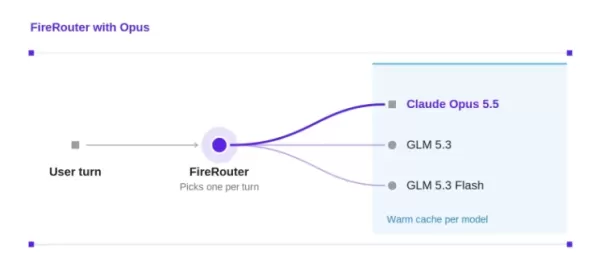 Fireworks AI Unveils FireRouter with Opus: Cuts Encoding Costs by 57% with Minimal Accuracy Drop
Fireworks AI has introduced FireRouter with Opus, the industry’s first cache-aware routing system tailored for the Claude Opus series. Now accessible via a serverless endpoint, this independent routing model underwent over a month of internal A/B tes
Fireworks AI Unveils FireRouter with Opus: Cuts Encoding Costs by 57% with Minimal Accuracy Drop
Fireworks AI has introduced FireRouter with Opus, the industry’s first cache-aware routing system tailored for the Claude Opus series. Now accessible via a serverless endpoint, this independent routing model underwent over a month of internal A/B tes
 NVIDIA Unveils Nemotron-Labs-Audex-30B-A3B Unified Audio Intelligence Model
As multimodal large models evolve rapidly, audio processing capabilities are frequently compromised—many models improve audio understanding at the expense of text logic. To address this, NVIDIA researchers have introduced Nemotron-Labs-Audex-30B-A3B
NVIDIA Unveils Nemotron-Labs-Audex-30B-A3B Unified Audio Intelligence Model
As multimodal large models evolve rapidly, audio processing capabilities are frequently compromised—many models improve audio understanding at the expense of text logic. To address this, NVIDIA researchers have introduced Nemotron-Labs-Audex-30B-A3B

2026 Latest Best Top-rated AI Live Chat Routing Tools for Ecommerce Queues, VIP Buyers, and Return Requests. This curated list features powerful game-changing solutions that boost productivity dramatically through real-world tests. It includes a free vs paid comparison along with detailed rankings to help you find the perfect fit. XIX.AI stands out as a trusted provider in this space. Explore now to Unlock your AI edge!
9 tools
xix.ai

2026 Latest Best Top-Rated AI Editing Tools for ESL Writers are here on XIX.AI! This curated list features powerful game-changing tools that go through real-world tests to ensure accuracy. You can find a free vs paid comparison alongside detailed rankings to help you pick the must-try solution that boosts your writing tone, grammar, and flow perfectly. Explore now to Unlock your AI edge!
9 tools
xix.ai

2026 Latest Best Top-Rated AI Bug Triage Tools for Engineering Teams! XIX.AI has curated a powerful, game-changing collection of must-try tools that go through rigorous real-world tests to deliver accurate issue analysis and efficient resolution. Get a free vs paid comparison along with detailed rankings to help you find the perfect solution that boosts your team’s productivity significantly. Explore now to unlock your AI edge!
9 tools
xix.ai

2026 Latest Best Top-rated AI Portrait Enhancers curated for ultimate image quality. These powerful tools deliver game-changing results by boosting lighting, skin tone, and sharpness effortlessly, perfect for creators needing to enhance photos quickly. XIX.AI provides a free vs paid comparison along with real-world tests and weekly updated rankings. Discover your perfect tool to unlock your AI edge today. Explore now!
7 tools
xix.ai
2026 Latest Best Top-rated AI Technical Documentation Tools for API Guides Release Notes and Onboarding Docs. This curated list features powerful game-changing solutions that streamline content creation boost writing efficiency and save time across all project phases. XIX.AI provides weekly updated rankings along with free vs paid comparison results from real-world tests. Explore now to Discover your perfect tool and Unlock your AI edge.
10 tools
xix.ai
2026 Latest Best AI Dashboard Wireframing Tools for B2B Product Teams! XIX.AI has curated a top-rated list of powerful, game-changing tools that go through rigorous real-world tests to deliver exceptional results. You’ll find detailed free vs paid comparison insights and updated weekly rankings showing which options offer the most value for streamlining product design workflows and boosting overall productivity. Must-try choices are clearly highlighted to help you unlock your AI edge. Explore now!
11 tools
xix.ai












