


 Home
HomeStartup Sifts Through Flood of AI-Generated Drug Candidates to Find the Most Viable
One of AI's most significant contributions to science is Google DeepMind's application of a deep learning model to predict the intricate structures of proteins—the molecules that govern nearly all processes in living cells.
However, as AI models generate an increasing number of candidates for potential therapies, a new bottleneck emerges: the practical characterization of these candidates for testing and large-scale production.
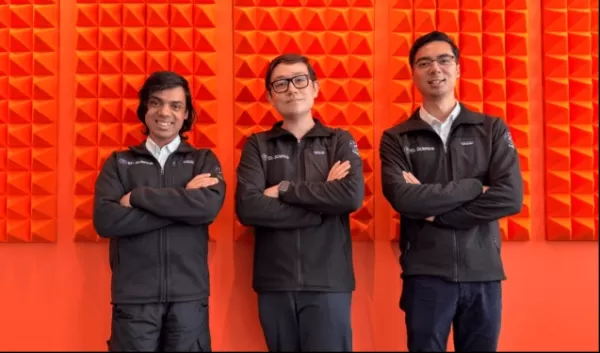
This is the mission of 10x Science, a startup launched in December 2025 that today announced a $4.8 million seed round led by Initialized Capital, with participation from Y Combinator, Civilization Ventures, and Founder Factor. Its three co-founders are David Roberts and Andrew Reiter, both seasoned biochemists, and Vishnu Tejas, a serial entrepreneur skilled in computer science and AI models.
“When biopharma sets out to create a drug candidate, they have all these excellent prediction tools,” Roberts told TechCrunch. “You can add as many candidates as you like to the top of the funnel, but they all must go through the characterization process. Everything has to be measured.”
For researchers developing biologic drugs—produced in living cells and engineered to precisely target diseases and conditions—understanding protein structure is essential. For instance, these drugs can be designed to home in on specific cells, much like Keytruda, a widely used Merck medication that helps the immune system recognize and attack cancers.
The three founders of 10x previously worked together in the Stanford laboratory of Nobel laureate Dr. Carolyn Bertozzi, studying interactions between cancer cells and the immune system. They grew frustrated by their inability to grasp precisely what was happening at the molecular level.
The most precise method for evaluating molecules is mass spectrometry, a complex technique that determines atomic structure by measuring molecules in an electric field. This relatively new approach produces intricate data that demands substantial expertise to interpret, and the analysis process is time-consuming.
10x's platform merges deterministic algorithms grounded in chemistry and biology with AI agents capable of interpreting the data. The team invested considerable effort in training the models on spectrometry data and ensuring their analyses are traceable—a critical feature for a tool intended to help companies meet regulatory compliance.
Matthew Crawford, a scientist at Rilas Technologies—a company that performs chemical analyses for other firms—helps clients like biotech startups avoid investing millions in their own spectrometry equipment and the experts to run it. Crawford has been using the 10x Science platform for several weeks and reports that it is accelerating his work.
Crawford noted that the model impressed him with its capacity to explain its reasoning, independently locate the correct data for analyses, and adapt to evaluating various types of molecules. While some AI tools he has previously tested either over-promised or had accuracy problems, he says this one makes sensible assumptions—a quality he credits to the deep domain expertise of its creators.
“I ran a specific protein through it, and it essentially figured out from the file name what the protein likely was,” Crawford said. “It then searched online databases for that protein's sequence, so I didn't have to input the sequence manually.”
10x executives report that they are also collaborating with several major pharmaceutical companies and academic researchers. The plan is to use the seed funding to hire additional engineers, further refine the model, and onboard new customers. If they succeed in gaining traction with protein characterization, Roberts hopes the company will eventually expand to provide a novel understanding of biology—one that integrates protein structure with other cellular data.
“What we're really building underneath is a new approach to defining molecular intelligence,” Roberts said.
For investors, 10x provides an entry point into biotech that doesn't hinge on the success and regulatory approval of a particular drug. If the company evolves as its founders envision, it will become a crucial tool in drug development, regardless of whether the eventual products succeed commercially.
“This is a SaaS platform that pharmaceutical companies must pay for monthly to process all these potential candidates,” said Zoe Perret, a partner at Initialized. She is betting on the founders' deep expertise to shield the company from competitors—there are very few people who truly understand these methods and the data they generate.
What the platform can do, according to Crawford, is make these techniques accessible to researchers who could benefit from them but lack the time or resources to implement them.
“Groups here are trying to develop a new drug,” he told TechCrunch. “They just want a quick, simple answer from mass spec, and then it opens up a whole can of worms. This software will help keep that can of worms closed and simply give them the answer they actually need to move on to the next step in their research.”
Related article
 Former Infosys Chief’s AI Startup Secures Another $53M
Hang Ten Systems, an AI startup established by former Infosys CEO Vishal Sikka just four months ago, has secured an additional $53 million in seed funding. This latest investment round was finalized merely five weeks after the initial $32 million see
Crypto exchange OKX aims to empower AI agents to hire and pay each other
As AI agents start serving individuals and collaborating with each other, they require mechanisms to locate tasks, compensate for services, and establish credibility. Crypto exchange OKX anticipates this future is arriving sooner than anticipated, in
Thiel-backed startup claims AI can judge journalism, despite risks to whistleblowers
Following his role in the lawsuit that led to Gawker’s bankruptcy, Aron D’Souza identified a critical flaw in the American media landscape: individuals harmed by coverage lacked effective means to respond.His answer is technology. D’Souza’s new ventu
Related Special Topic Recommendations
Design & Art
Former Infosys Chief’s AI Startup Secures Another $53M
Hang Ten Systems, an AI startup established by former Infosys CEO Vishal Sikka just four months ago, has secured an additional $53 million in seed funding. This latest investment round was finalized merely five weeks after the initial $32 million see
Crypto exchange OKX aims to empower AI agents to hire and pay each other
As AI agents start serving individuals and collaborating with each other, they require mechanisms to locate tasks, compensate for services, and establish credibility. Crypto exchange OKX anticipates this future is arriving sooner than anticipated, in
Thiel-backed startup claims AI can judge journalism, despite risks to whistleblowers
Following his role in the lawsuit that led to Gawker’s bankruptcy, Aron D’Souza identified a critical flaw in the American media landscape: individuals harmed by coverage lacked effective means to respond.His answer is technology. D’Souza’s new ventu
Related Special Topic Recommendations
Design & Art
 AI Visual Style Reference Tools for Character Sheets, Moodboards, and Pitch Decks
2026 Latest Best AI Visual Style Reference Tools for Character Sheets, Moodboards, and Pitch Decks are here on XIX.AI! This curated top-rated list features powerful game-changing tools that go through rigorous real-world tests. You’ll find a free vs paid comparison, detailed rankings, and must-try options to help you boost creativity and streamline your workflow. Explore now to discover your perfect tool for boosting productivity!
 11 tools
 xix.ai
SEO
Best AI SERP Analysis Tools for Search Strategy
xix.ai
SEO
Best AI SERP Analysis Tools for Search Strategy
2026 Latest Best Top-rated AI SERP Analysis Tools for Search Strategy are curated by XIX.AI through rigorous real-world tests and weekly updated rankings. These powerful tools help you unlock hidden optimization opportunities, boost content performance, and gain a competitive edge in search. Discover your perfect tool to elevate your search strategy today. Explore now!
13 tools
xix.ai
Data Analysis
Best AI Anomaly Detection Tools for KPI Monitoring across SaaS and Ecommerce Teams
2026 Latest Best Top-rated AI Anomaly Detection Tools for KPI Monitoring in SaaS and Ecommerce teams! XIX.AI has curated a powerful, game-changing collection based on rigorous real-world tests and weekly updated rankings. You’ll find detailed free vs paid comparison insights to help you identify the must-try solution that boosts productivity and unlocks your AI edge. Explore now!
10 tools
xix.ai
writing
Best AI Outline Generators for Long-Form SEO Articles
2026 Latest Best Top-Rated AI Outline Generators for Long-Form SEO Articles, meticulously curated by XIX.AI. These powerful tools offer game-changing assistance in creating high-quality content quickly, boosting writing efficiency significantly. Get a free vs paid comparison along with real-world tests and detailed rankings to help you find the must-try option that suits your needs. Explore now to unlock your AI edge.
8 tools
xix.ai
Education and Learning
AI Study Tools for Homework and Exam Prep
2026 Latest Best AI Study Tools for Homework and Exam Prep! XIX.AI curates a top-rated list of powerful, game-changing tools that help students boost productivity, streamline homework completion, and ace exams through real-world tests. Get a free vs paid comparison, detailed rankings, and must-try options to unlock your AI edge. Explore now!
10 tools
xix.ai
Music composition
AI Vocal Demo Tools for Songwriters, Hooks, Toplines, and Multilingual Draft Sessions
2026 Latest Best AI Vocal Demo Tools for Songwriters, Hook Creators, and Multi-Language Content Teams! XIX.AI has curated a top-rated list of powerful game-changing tools that go through rigorous real-world tests. You’ll find detailed free vs paid comparison data, comprehensive rankings, and must-try options to help you boost writing efficiency and unlock your creative potential. Explore now to discover your perfect tool for all your content needs!
9 tools
xix.ai

 Comments (0)
0/500
Comments (0)
0/500
One of AI's most significant contributions to science is Google DeepMind's application of a deep learning model to predict the intricate structures of proteins—the molecules that govern nearly all processes in living cells.
However, as AI models generate an increasing number of candidates for potential therapies, a new bottleneck emerges: the practical characterization of these candidates for testing and large-scale production.
This is the mission of 10x Science, a startup launched in December 2025 that today announced a $4.8 million seed round led by Initialized Capital, with participation from Y Combinator, Civilization Ventures, and Founder Factor. Its three co-founders are David Roberts and Andrew Reiter, both seasoned biochemists, and Vishnu Tejas, a serial entrepreneur skilled in computer science and AI models.
“When biopharma sets out to create a drug candidate, they have all these excellent prediction tools,” Roberts told TechCrunch. “You can add as many candidates as you like to the top of the funnel, but they all must go through the characterization process. Everything has to be measured.”
For researchers developing biologic drugs—produced in living cells and engineered to precisely target diseases and conditions—understanding protein structure is essential. For instance, these drugs can be designed to home in on specific cells, much like Keytruda, a widely used Merck medication that helps the immune system recognize and attack cancers.
The three founders of 10x previously worked together in the Stanford laboratory of Nobel laureate Dr. Carolyn Bertozzi, studying interactions between cancer cells and the immune system. They grew frustrated by their inability to grasp precisely what was happening at the molecular level.
The most precise method for evaluating molecules is mass spectrometry, a complex technique that determines atomic structure by measuring molecules in an electric field. This relatively new approach produces intricate data that demands substantial expertise to interpret, and the analysis process is time-consuming.
10x's platform merges deterministic algorithms grounded in chemistry and biology with AI agents capable of interpreting the data. The team invested considerable effort in training the models on spectrometry data and ensuring their analyses are traceable—a critical feature for a tool intended to help companies meet regulatory compliance.
Matthew Crawford, a scientist at Rilas Technologies—a company that performs chemical analyses for other firms—helps clients like biotech startups avoid investing millions in their own spectrometry equipment and the experts to run it. Crawford has been using the 10x Science platform for several weeks and reports that it is accelerating his work.
Crawford noted that the model impressed him with its capacity to explain its reasoning, independently locate the correct data for analyses, and adapt to evaluating various types of molecules. While some AI tools he has previously tested either over-promised or had accuracy problems, he says this one makes sensible assumptions—a quality he credits to the deep domain expertise of its creators.
“I ran a specific protein through it, and it essentially figured out from the file name what the protein likely was,” Crawford said. “It then searched online databases for that protein's sequence, so I didn't have to input the sequence manually.”
10x executives report that they are also collaborating with several major pharmaceutical companies and academic researchers. The plan is to use the seed funding to hire additional engineers, further refine the model, and onboard new customers. If they succeed in gaining traction with protein characterization, Roberts hopes the company will eventually expand to provide a novel understanding of biology—one that integrates protein structure with other cellular data.
“What we're really building underneath is a new approach to defining molecular intelligence,” Roberts said.
For investors, 10x provides an entry point into biotech that doesn't hinge on the success and regulatory approval of a particular drug. If the company evolves as its founders envision, it will become a crucial tool in drug development, regardless of whether the eventual products succeed commercially.
“This is a SaaS platform that pharmaceutical companies must pay for monthly to process all these potential candidates,” said Zoe Perret, a partner at Initialized. She is betting on the founders' deep expertise to shield the company from competitors—there are very few people who truly understand these methods and the data they generate.
What the platform can do, according to Crawford, is make these techniques accessible to researchers who could benefit from them but lack the time or resources to implement them.
“Groups here are trying to develop a new drug,” he told TechCrunch. “They just want a quick, simple answer from mass spec, and then it opens up a whole can of worms. This software will help keep that can of worms closed and simply give them the answer they actually need to move on to the next step in their research.”








 Former Infosys Chief’s AI Startup Secures Another $53M
Hang Ten Systems, an AI startup established by former Infosys CEO Vishal Sikka just four months ago, has secured an additional $53 million in seed funding. This latest investment round was finalized merely five weeks after the initial $32 million see
Former Infosys Chief’s AI Startup Secures Another $53M
Hang Ten Systems, an AI startup established by former Infosys CEO Vishal Sikka just four months ago, has secured an additional $53 million in seed funding. This latest investment round was finalized merely five weeks after the initial $32 million see
 Crypto exchange OKX aims to empower AI agents to hire and pay each other
As AI agents start serving individuals and collaborating with each other, they require mechanisms to locate tasks, compensate for services, and establish credibility. Crypto exchange OKX anticipates this future is arriving sooner than anticipated, in
Crypto exchange OKX aims to empower AI agents to hire and pay each other
As AI agents start serving individuals and collaborating with each other, they require mechanisms to locate tasks, compensate for services, and establish credibility. Crypto exchange OKX anticipates this future is arriving sooner than anticipated, in
 Thiel-backed startup claims AI can judge journalism, despite risks to whistleblowers
Following his role in the lawsuit that led to Gawker’s bankruptcy, Aron D’Souza identified a critical flaw in the American media landscape: individuals harmed by coverage lacked effective means to respond.His answer is technology. D’Souza’s new ventu
Thiel-backed startup claims AI can judge journalism, despite risks to whistleblowers
Following his role in the lawsuit that led to Gawker’s bankruptcy, Aron D’Souza identified a critical flaw in the American media landscape: individuals harmed by coverage lacked effective means to respond.His answer is technology. D’Souza’s new ventu

2026 Latest Best AI Visual Style Reference Tools for Character Sheets, Moodboards, and Pitch Decks are here on XIX.AI! This curated top-rated list features powerful game-changing tools that go through rigorous real-world tests. You’ll find a free vs paid comparison, detailed rankings, and must-try options to help you boost creativity and streamline your workflow. Explore now to discover your perfect tool for boosting productivity!
11 tools
xix.ai
2026 Latest Best Top-rated AI SERP Analysis Tools for Search Strategy are curated by XIX.AI through rigorous real-world tests and weekly updated rankings. These powerful tools help you unlock hidden optimization opportunities, boost content performance, and gain a competitive edge in search. Discover your perfect tool to elevate your search strategy today. Explore now!
13 tools
xix.ai
2026 Latest Best Top-rated AI Anomaly Detection Tools for KPI Monitoring in SaaS and Ecommerce teams! XIX.AI has curated a powerful, game-changing collection based on rigorous real-world tests and weekly updated rankings. You’ll find detailed free vs paid comparison insights to help you identify the must-try solution that boosts productivity and unlocks your AI edge. Explore now!
10 tools
xix.ai

2026 Latest Best Top-Rated AI Outline Generators for Long-Form SEO Articles, meticulously curated by XIX.AI. These powerful tools offer game-changing assistance in creating high-quality content quickly, boosting writing efficiency significantly. Get a free vs paid comparison along with real-world tests and detailed rankings to help you find the must-try option that suits your needs. Explore now to unlock your AI edge.
8 tools
xix.ai

2026 Latest Best AI Study Tools for Homework and Exam Prep! XIX.AI curates a top-rated list of powerful, game-changing tools that help students boost productivity, streamline homework completion, and ace exams through real-world tests. Get a free vs paid comparison, detailed rankings, and must-try options to unlock your AI edge. Explore now!
10 tools
xix.ai

2026 Latest Best AI Vocal Demo Tools for Songwriters, Hook Creators, and Multi-Language Content Teams! XIX.AI has curated a top-rated list of powerful game-changing tools that go through rigorous real-world tests. You’ll find detailed free vs paid comparison data, comprehensive rankings, and must-try options to help you boost writing efficiency and unlock your creative potential. Explore now to discover your perfect tool for all your content needs!
9 tools
xix.ai












