


 Home
Home5 Key Security Principles Powering Scalable Open Source Security Apps

VB Insight: Louis will moderate a cybersecurity innovation panel featuring industry leaders at VB Transform this month. Secure your spot today.
The cybersecurity landscape is undergoing revolutionary transformation through open-source AI, with adoption accelerating across startups and enterprises alike. Cisco's Foundation-Sec-8B model exemplifies this momentum, achieving 18,000+ downloads in 30 days and 40,000+ since release.
VentureBeat research reveals cybersecurity startups are increasingly leveraging open-source AI to shrink development cycles and rapidly convert prototypes into commercial products. Through extensive founder interviews, we've documented how these tools have become essential for accelerating time-to-market.
The Databricks-Noma Security partnership showcases how open-source adoption disrupts legacy vendors by enabling unprecedented agility. As Cisco's Jeetu Patel observed at RSAC 2025: "AI redefines cybersecurity challenges—today's threats operate at machine scale, demanding AI-powered defenses."
Our executive interviews demonstrate how open-source AI helps startups pinpoint unmet enterprise needs while navigating the growing tension between rapid innovation and security/compliance requirements. The most successful companies uncover unexpected product strengths while implementing robust governance frameworks.
Leading cybersecurity ventures share three strategic priorities: maximizing automation, building sustainable contributor communities, and maintaining product flexibility through open-source foundations.
Navigating the Open-Source Paradox
While open-source AI delivers undeniable innovation velocity, it creates complex challenges around security, compliance and business model sustainability. Gartner's 2024 Open-Source Hype Cycle reveals concerning trends: unpatched vulnerabilities now persist nearly three years on average, with high-risk exposures growing 26% annually.
Protect AI CTO Diana Kelly warned at RSAC 2025: "Enterprises routinely deploy open-source models without proper security vetting, creating systemic risks."
Regulatory pressures compound these challenges, particularly with the EU AI Act's accelerated enforcement timeline. As Prompt Security CEO Itamar Golan explained: "AI compliance will eclipse GDPR's market impact by 2028. Organizations need tools to navigate these frameworks while maintaining innovation pace."
Building Through Contribution
Consistent with our five years of founder interviews, today's cybersecurity leaders view open-source contribution as strategic imperative rather than obligation. Cisco's Foundation-Sec-8B model (18,278 monthly downloads) demonstrates how targeted tools enhance ecosystem resilience.
Noma Security CEO Niv Braun epitomizes this philosophy: "Sustainable community value outweighs short-term revenue metrics. Our long-term differentiation stems from the trust we build."
Five Strategic Imperatives
Analysis of 15+ executive interviews reveals these critical success factors:
- Strategic Governance Integration - Centralize oversight through Open Source Program Offices while embedding compliance visibility into products
- AI-Powered Security Automation - Leverage generative AI for vulnerability detection, remediation and threat response
- Purpose-Built Community Contributions - Develop specialized tools addressing specific cybersecurity gaps
- Transparent TCO Management - Proactively address cost considerations throughout customer lifecycles
- Proactive Risk Mitigation - Implement continuous scanning and automated compliance documentation
The Path Forward
For cybersecurity innovators, open-source AI presents both unprecedented opportunities and complex challenges. By implementing these strategic approaches, startups can position themselves as industry leaders while driving meaningful security transformation.
As Patel concluded at RSAC: "Our shared adversary—not competitors—demands collective open-source innovation to secure the digital future."
Join the Discussion at VB Transform
Dive deeper into these insights during our "Building Cybersecurity Apps with Open Source" roundtable at VentureBeat Transform 2025 (June 24-25, San Francisco). This annual executive summit delivers practical AI strategies through keynotes, workshops and networking with industry leaders. Register today to secure your participation.
Related article
 Apple, Google Partner With Anthropic to Address 27-Year-Old Vulnerability via Glass Wing Protection
As artificial intelligence advances rapidly in code generation and logical reasoning, the cybersecurity landscape faces unprecedented challenges. Recently, the prominent AI startup Anthropic officially launched a cross-industry collaboration called *
OpenAI Chief Scientist Addresses AI Reasoning Transparency Debate: Complexity Steady, No Sudden Jump
On September 2, Jakub Pachocki, OpenAI’s Chief Scientist, addressed public concerns on X regarding the AI model Astra, clarifying claims that it operates without oversight and lacks transparent reasoning.Why the Controversy Erupted: Deep Recurrence O
U.S. Navy Selects Blue Water Autonomy for Deep-Sea Survey Missions
Blue Water Autonomy’s Liberty Class is a 190-foot steel autonomous ship. | Source: Blue Water AutonomyBoston-based technology and shipbuilding firm Blue Water Autonomy has secured a multiple-award contract with the Naval Oceanographic Office (NAVOCEA
Related Special Topic Recommendations
Text-to-speech
Apple, Google Partner With Anthropic to Address 27-Year-Old Vulnerability via Glass Wing Protection
As artificial intelligence advances rapidly in code generation and logical reasoning, the cybersecurity landscape faces unprecedented challenges. Recently, the prominent AI startup Anthropic officially launched a cross-industry collaboration called *
OpenAI Chief Scientist Addresses AI Reasoning Transparency Debate: Complexity Steady, No Sudden Jump
On September 2, Jakub Pachocki, OpenAI’s Chief Scientist, addressed public concerns on X regarding the AI model Astra, clarifying claims that it operates without oversight and lacks transparent reasoning.Why the Controversy Erupted: Deep Recurrence O
U.S. Navy Selects Blue Water Autonomy for Deep-Sea Survey Missions
Blue Water Autonomy’s Liberty Class is a 190-foot steel autonomous ship. | Source: Blue Water AutonomyBoston-based technology and shipbuilding firm Blue Water Autonomy has secured a multiple-award contract with the Naval Oceanographic Office (NAVOCEA
Related Special Topic Recommendations
Text-to-speech
 Best AI Text to Speech Tools for Online Courses
2026 Latest Best Top-rated AI Text to Speech Tools for Online Courses are curated by XIX.AI based on rigorous real-world tests and weekly updated rankings. These powerful tools help creators deliver crystal-clear audio content effortlessly, boosting writing efficiency and streamlining course production. Check out the free vs paid comparison to find your perfect fit. Explore now to unlock your AI edge in online education.
 10 tools
 xix.ai
writing
AI Blog Title Tools for Higher Click Through Rates
xix.ai
writing
AI Blog Title Tools for Higher Click Through Rates
2026 Latest Best Top-Rated AI Blog Title Tools for Higher Click Through Rates! XIX.AI has carefully curated a powerful, game-changing collection of top tools that go through rigorous real-world tests. You’ll find a free vs paid comparison, weekly updated rankings, and detailed insights to help you boost your blog’s traffic efficiently. Must-try options are highlighted to help you unlock your AI edge. Explore now!
10 tools
xix.ai
automation
Best AI Task Routing Tools for Support Workflows
2026 Latest Best Top-rated AI Task Routing Tools for Support Workflows! XIX.AI has curated a highly powerful game-changing collection of must-try solutions, all undergoing rigorous real-world tests and updated weekly. These tools streamline workflows, boost productivity, and help teams deliver faster, more efficient support. Explore now to discover your perfect tool and unlock your AI edge!
17 tools
xix.ai
Academic Research
AI Citation and Paper Summary Tools
2026 Latest Best Top-Rated AI Citation and Paper Summary Tools Curated by XIX.AI. Get powerful game-changing solutions for quick content creation, improved writing efficiency, and boosting productivity. We offer a free vs paid comparison along with real-world tests and weekly updated rankings to help you find the must-try tool that fits your needs perfectly. Explore now to Unlock your AI edge.
10 tools
xix.ai
Productivity
Best AI Productivity Tools for Daily Work
2026 Latest Best Top-Rated AI Productivity Tools for Daily Work! XIX.AI has curated a powerful, game-changing selection based on rigorous weekly updated rankings and real-world tests. You’ll find must-try options that boost writing efficiency, streamline content creation, and help you overcome daily work challenges. Get a free vs paid comparison to find the perfect fit for your needs. Explore now to unlock your AI edge!
9 tools
xix.ai
Academic Research
AI Systematic Review Tools for Research Screening
2026 Latest Best Top-Rated AI Systematic Review Tools for Research Screening are here on XIX.AI! This curated collection includes powerful, game-changing solutions that go through rigorous real-world tests to deliver accurate results. We also offer a free vs paid comparison along with weekly updated rankings to help you find the must-try option that boosts your research efficiency significantly. Explore now to unlock your AI edge in academic work!
11 tools
xix.ai

 Comments (2)
0/500
Comments (2)
0/500
![WilliamLewis]()
I just read the article about open source security apps and found it super interesting! It made me realize how much potential these tools have to cut down on security costs for small businesses. I wonder if more companies will start leveraging them instead of relying solely on proprietary solutions.
![WilliamGonzalez]()
Interesting read! The focus on open-source AI for security is timely, but I'm curious about how smaller teams can realistically implement these principles without massive resources. The panel sounds promising though! 🤔
VB Insight: Louis will moderate a cybersecurity innovation panel featuring industry leaders at VB Transform this month. Secure your spot today.
The cybersecurity landscape is undergoing revolutionary transformation through open-source AI, with adoption accelerating across startups and enterprises alike. Cisco's Foundation-Sec-8B model exemplifies this momentum, achieving 18,000+ downloads in 30 days and 40,000+ since release.
VentureBeat research reveals cybersecurity startups are increasingly leveraging open-source AI to shrink development cycles and rapidly convert prototypes into commercial products. Through extensive founder interviews, we've documented how these tools have become essential for accelerating time-to-market.
The Databricks-Noma Security partnership showcases how open-source adoption disrupts legacy vendors by enabling unprecedented agility. As Cisco's Jeetu Patel observed at RSAC 2025: "AI redefines cybersecurity challenges—today's threats operate at machine scale, demanding AI-powered defenses."
Our executive interviews demonstrate how open-source AI helps startups pinpoint unmet enterprise needs while navigating the growing tension between rapid innovation and security/compliance requirements. The most successful companies uncover unexpected product strengths while implementing robust governance frameworks.
Leading cybersecurity ventures share three strategic priorities: maximizing automation, building sustainable contributor communities, and maintaining product flexibility through open-source foundations.
Navigating the Open-Source Paradox
While open-source AI delivers undeniable innovation velocity, it creates complex challenges around security, compliance and business model sustainability. Gartner's 2024 Open-Source Hype Cycle reveals concerning trends: unpatched vulnerabilities now persist nearly three years on average, with high-risk exposures growing 26% annually.
Protect AI CTO Diana Kelly warned at RSAC 2025: "Enterprises routinely deploy open-source models without proper security vetting, creating systemic risks."
Regulatory pressures compound these challenges, particularly with the EU AI Act's accelerated enforcement timeline. As Prompt Security CEO Itamar Golan explained: "AI compliance will eclipse GDPR's market impact by 2028. Organizations need tools to navigate these frameworks while maintaining innovation pace."
Building Through Contribution
Consistent with our five years of founder interviews, today's cybersecurity leaders view open-source contribution as strategic imperative rather than obligation. Cisco's Foundation-Sec-8B model (18,278 monthly downloads) demonstrates how targeted tools enhance ecosystem resilience.
Noma Security CEO Niv Braun epitomizes this philosophy: "Sustainable community value outweighs short-term revenue metrics. Our long-term differentiation stems from the trust we build."
Five Strategic Imperatives
Analysis of 15+ executive interviews reveals these critical success factors:
- Strategic Governance Integration - Centralize oversight through Open Source Program Offices while embedding compliance visibility into products
- AI-Powered Security Automation - Leverage generative AI for vulnerability detection, remediation and threat response
- Purpose-Built Community Contributions - Develop specialized tools addressing specific cybersecurity gaps
- Transparent TCO Management - Proactively address cost considerations throughout customer lifecycles
- Proactive Risk Mitigation - Implement continuous scanning and automated compliance documentation
The Path Forward
For cybersecurity innovators, open-source AI presents both unprecedented opportunities and complex challenges. By implementing these strategic approaches, startups can position themselves as industry leaders while driving meaningful security transformation.
As Patel concluded at RSAC: "Our shared adversary—not competitors—demands collective open-source innovation to secure the digital future."
Join the Discussion at VB Transform
Dive deeper into these insights during our "Building Cybersecurity Apps with Open Source" roundtable at VentureBeat Transform 2025 (June 24-25, San Francisco). This annual executive summit delivers practical AI strategies through keynotes, workshops and networking with industry leaders. Register today to secure your participation.








 Apple, Google Partner With Anthropic to Address 27-Year-Old Vulnerability via Glass Wing Protection
As artificial intelligence advances rapidly in code generation and logical reasoning, the cybersecurity landscape faces unprecedented challenges. Recently, the prominent AI startup Anthropic officially launched a cross-industry collaboration called *
Apple, Google Partner With Anthropic to Address 27-Year-Old Vulnerability via Glass Wing Protection
As artificial intelligence advances rapidly in code generation and logical reasoning, the cybersecurity landscape faces unprecedented challenges. Recently, the prominent AI startup Anthropic officially launched a cross-industry collaboration called *
 OpenAI Chief Scientist Addresses AI Reasoning Transparency Debate: Complexity Steady, No Sudden Jump
On September 2, Jakub Pachocki, OpenAI’s Chief Scientist, addressed public concerns on X regarding the AI model Astra, clarifying claims that it operates without oversight and lacks transparent reasoning.Why the Controversy Erupted: Deep Recurrence O
OpenAI Chief Scientist Addresses AI Reasoning Transparency Debate: Complexity Steady, No Sudden Jump
On September 2, Jakub Pachocki, OpenAI’s Chief Scientist, addressed public concerns on X regarding the AI model Astra, clarifying claims that it operates without oversight and lacks transparent reasoning.Why the Controversy Erupted: Deep Recurrence O
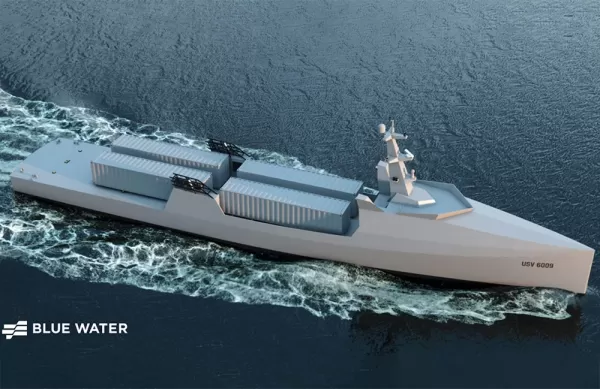 U.S. Navy Selects Blue Water Autonomy for Deep-Sea Survey Missions
Blue Water Autonomy’s Liberty Class is a 190-foot steel autonomous ship. | Source: Blue Water AutonomyBoston-based technology and shipbuilding firm Blue Water Autonomy has secured a multiple-award contract with the Naval Oceanographic Office (NAVOCEA
U.S. Navy Selects Blue Water Autonomy for Deep-Sea Survey Missions
Blue Water Autonomy’s Liberty Class is a 190-foot steel autonomous ship. | Source: Blue Water AutonomyBoston-based technology and shipbuilding firm Blue Water Autonomy has secured a multiple-award contract with the Naval Oceanographic Office (NAVOCEA

2026 Latest Best Top-rated AI Text to Speech Tools for Online Courses are curated by XIX.AI based on rigorous real-world tests and weekly updated rankings. These powerful tools help creators deliver crystal-clear audio content effortlessly, boosting writing efficiency and streamlining course production. Check out the free vs paid comparison to find your perfect fit. Explore now to unlock your AI edge in online education.
10 tools
xix.ai

2026 Latest Best Top-Rated AI Blog Title Tools for Higher Click Through Rates! XIX.AI has carefully curated a powerful, game-changing collection of top tools that go through rigorous real-world tests. You’ll find a free vs paid comparison, weekly updated rankings, and detailed insights to help you boost your blog’s traffic efficiently. Must-try options are highlighted to help you unlock your AI edge. Explore now!
10 tools
xix.ai
2026 Latest Best Top-rated AI Task Routing Tools for Support Workflows! XIX.AI has curated a highly powerful game-changing collection of must-try solutions, all undergoing rigorous real-world tests and updated weekly. These tools streamline workflows, boost productivity, and help teams deliver faster, more efficient support. Explore now to discover your perfect tool and unlock your AI edge!
17 tools
xix.ai
2026 Latest Best Top-Rated AI Citation and Paper Summary Tools Curated by XIX.AI. Get powerful game-changing solutions for quick content creation, improved writing efficiency, and boosting productivity. We offer a free vs paid comparison along with real-world tests and weekly updated rankings to help you find the must-try tool that fits your needs perfectly. Explore now to Unlock your AI edge.
10 tools
xix.ai

2026 Latest Best Top-Rated AI Productivity Tools for Daily Work! XIX.AI has curated a powerful, game-changing selection based on rigorous weekly updated rankings and real-world tests. You’ll find must-try options that boost writing efficiency, streamline content creation, and help you overcome daily work challenges. Get a free vs paid comparison to find the perfect fit for your needs. Explore now to unlock your AI edge!
9 tools
xix.ai

2026 Latest Best Top-Rated AI Systematic Review Tools for Research Screening are here on XIX.AI! This curated collection includes powerful, game-changing solutions that go through rigorous real-world tests to deliver accurate results. We also offer a free vs paid comparison along with weekly updated rankings to help you find the must-try option that boosts your research efficiency significantly. Explore now to unlock your AI edge in academic work!
11 tools
xix.ai

I just read the article about open source security apps and found it super interesting! It made me realize how much potential these tools have to cut down on security costs for small businesses. I wonder if more companies will start leveraging them instead of relying solely on proprietary solutions.
Interesting read! The focus on open-source AI for security is timely, but I'm curious about how smaller teams can realistically implement these principles without massive resources. The panel sounds promising though! 🤔












