


 Home
HomeScience Corp. to Implant First Brain Sensor in Human Patient
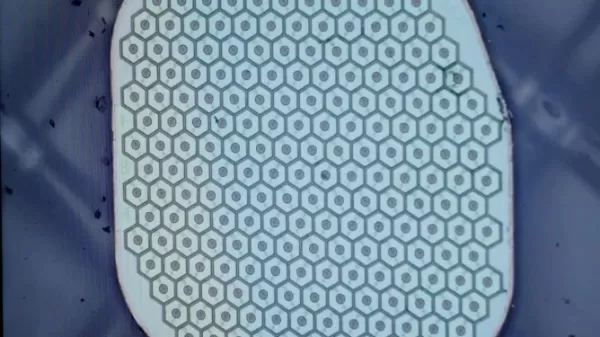
Science Corporation, the startup founded by former Neuralink president and co-founder Max Hodak, has recruited a leading neurobiologist to spearhead the first U.S. human trials for its biohybrid brain-computer interface.
After two years of discussions, Dr. Murat Günel, chair of the Department of Neurosurgery at Yale Medical School, has joined as a scientific advisor. His initial objective is to surgically implant the first sensor for a future interface—one designed to eventually integrate lab-grown neurons with electronics—into a patient's brain.
Founded in 2021, Science completed a $230 million Series C funding round last month, valuing the company at $1.5 billion. Its most advanced product is PRIMA, a device that restores vision in individuals blinded by macular degeneration and similar conditions. Science acquired the technology in 2024, has progressed it through clinical trials, and plans to broaden its availability in Europe pending regulatory approval, potentially as early as this year.
Hodak co-founded the company with a more ambitious vision: establishing reliable communication links between computers and the human brain. This aims not only to treat disease but also to explore human enhancement, such as adding entirely new senses. He has devoted his career to this pursuit, from securing a place in a graduate neuroscience lab as an undergraduate, to founding his first biotech computing startup, to co-creating Neuralink with Elon Musk.
Neuralink and other groups have successfully used electronic sensors to detect brain activity in patients with ALS, spinal injuries, and other conditions that disrupt communication between the brain and body. Users with implanted devices can control computers or generate text on a screen through thought alone. However, the path to a viable market for these devices remains unclear, hampered by regulatory hurdles and the relatively small patient population with qualifying diagnoses.
Hodak concluded that the conventional approach of using metal probes or electrodes to influence the brain with electricity is fundamentally flawed. While the technology can produce impressive results, Günel notes these probes cause brain damage that likely degrades device performance over time. This limitation led Science's founders to pursue a more organic strategy.
"The concept of leveraging natural neuronal connections to create a biological interface between electronics and the human brain is brilliant," Günel told TechCrunch.
Alan Mardinly, a co-founder and the company's chief science officer, has led a team of 30 researchers in developing Science's biohybrid sensor. The final device will be embedded with lab-grown neurons. These neurons, which can be stimulated with pulses of light, are designed to integrate naturally with a patient's own brain neurons, forming a bridge between biology and electronics. In 2024, the company published a working paper demonstrating the safe implantation of the device in mice and its use to stimulate brain activity.
Internally, the current focus is on developing device prototypes and determining how to grow neuron cells for various therapeutic applications that meet medical standards.
Günel will advise the team as they prepare for human clinical trials and is already in discussions with medical ethics boards overseeing human subject research. The first step will involve testing the company's advanced sensor—without the embedded neurons—inside a living human brain.
Unlike Neuralink's device, which is inserted directly into brain tissue, Science's sensor will be implanted inside the skull but rest on the brain's surface. The company cites this distinction as a reason it does not plan to seek FDA approval for these initial trials, arguing the tiny device—packing 520 recording electrodes into an area the size of a pea—poses minimal risk to patients.
The team plans to identify candidate patients already undergoing major brain surgery, such as stroke victims requiring removal of a skull section to relieve brain swelling. In such cases, Günel anticipates placing the sensor on the cortex to evaluate its safety and efficacy in measuring brain activity.
Günel believes a successful device could help address multiple neurological conditions. An early application might involve delivering gentle electrical stimulation to damaged brain or spinal cord cells to promote healing. A more complex use could involve monitoring neurological activity in brain tumor patients and providing caregivers with early warnings of impending seizures.
If the full potential of such devices is realized, Günel speculates they might offer more effective treatments for conditions like Parkinson's disease, a progressive disorder that gradually strips patients of bodily control. Current options include experimental brain cell transplants and deep brain electrical stimulation, but neither has proven reliably capable of halting disease progression.
"I envision this biohybrid system as a fusion of the two—you have the electronics and the biological system," he told TechCrunch. "In Parkinson's, for example, we cannot stop the disease from advancing; in neurosurgery, we merely implant an electrode to suppress tremors. But if you can truly reintroduce [transplanted] cells into the brain and protect those neural circuits, there is a chance—a good chance, I believe—that we could stop the disease's progression."
Considerable work remains before that point, however. Günel states it would be "optimistic" to expect trials to commence in 2027.
Related article
 Former Infosys Chief’s AI Startup Secures Another $53M
Hang Ten Systems, an AI startup established by former Infosys CEO Vishal Sikka just four months ago, has secured an additional $53 million in seed funding. This latest investment round was finalized merely five weeks after the initial $32 million see
Crypto exchange OKX aims to empower AI agents to hire and pay each other
As AI agents start serving individuals and collaborating with each other, they require mechanisms to locate tasks, compensate for services, and establish credibility. Crypto exchange OKX anticipates this future is arriving sooner than anticipated, in
Thiel-backed startup claims AI can judge journalism, despite risks to whistleblowers
Following his role in the lawsuit that led to Gawker’s bankruptcy, Aron D’Souza identified a critical flaw in the American media landscape: individuals harmed by coverage lacked effective means to respond.His answer is technology. D’Souza’s new ventu
Related Special Topic Recommendations
SEO
Former Infosys Chief’s AI Startup Secures Another $53M
Hang Ten Systems, an AI startup established by former Infosys CEO Vishal Sikka just four months ago, has secured an additional $53 million in seed funding. This latest investment round was finalized merely five weeks after the initial $32 million see
Crypto exchange OKX aims to empower AI agents to hire and pay each other
As AI agents start serving individuals and collaborating with each other, they require mechanisms to locate tasks, compensate for services, and establish credibility. Crypto exchange OKX anticipates this future is arriving sooner than anticipated, in
Thiel-backed startup claims AI can judge journalism, despite risks to whistleblowers
Following his role in the lawsuit that led to Gawker’s bankruptcy, Aron D’Souza identified a critical flaw in the American media landscape: individuals harmed by coverage lacked effective means to respond.His answer is technology. D’Souza’s new ventu
Related Special Topic Recommendations
SEO
 Best AI SERP Analysis Tools for Search Strategy
2026 Latest Best Top-rated AI SERP Analysis Tools for Search Strategy are curated by XIX.AI through rigorous real-world tests and weekly updated rankings. These powerful tools help you unlock hidden optimization opportunities, boost content performance, and gain a competitive edge in search. Discover your perfect tool to elevate your search strategy today. Explore now!
 13 tools
 xix.ai
Data Analysis
Best AI Anomaly Detection Tools for KPI Monitoring across SaaS and Ecommerce Teams
xix.ai
Data Analysis
Best AI Anomaly Detection Tools for KPI Monitoring across SaaS and Ecommerce Teams
2026 Latest Best Top-rated AI Anomaly Detection Tools for KPI Monitoring in SaaS and Ecommerce teams! XIX.AI has curated a powerful, game-changing collection based on rigorous real-world tests and weekly updated rankings. You’ll find detailed free vs paid comparison insights to help you identify the must-try solution that boosts productivity and unlocks your AI edge. Explore now!
10 tools
xix.ai
writing
Best AI Outline Generators for Long-Form SEO Articles
2026 Latest Best Top-Rated AI Outline Generators for Long-Form SEO Articles, meticulously curated by XIX.AI. These powerful tools offer game-changing assistance in creating high-quality content quickly, boosting writing efficiency significantly. Get a free vs paid comparison along with real-world tests and detailed rankings to help you find the must-try option that suits your needs. Explore now to unlock your AI edge.
8 tools
xix.ai
Education and Learning
AI Study Tools for Homework and Exam Prep
2026 Latest Best AI Study Tools for Homework and Exam Prep! XIX.AI curates a top-rated list of powerful, game-changing tools that help students boost productivity, streamline homework completion, and ace exams through real-world tests. Get a free vs paid comparison, detailed rankings, and must-try options to unlock your AI edge. Explore now!
10 tools
xix.ai
Music composition
AI Vocal Demo Tools for Songwriters, Hooks, Toplines, and Multilingual Draft Sessions
2026 Latest Best AI Vocal Demo Tools for Songwriters, Hook Creators, and Multi-Language Content Teams! XIX.AI has curated a top-rated list of powerful game-changing tools that go through rigorous real-world tests. You’ll find detailed free vs paid comparison data, comprehensive rankings, and must-try options to help you boost writing efficiency and unlock your creative potential. Explore now to discover your perfect tool for all your content needs!
9 tools
xix.ai
Business
Best AI Competitive Research Tools for Small Businesses
2026 Latest Best Top-rated AI Competitive Research Tools for Small Businesses! XIX.AI has curated a highly powerful game-changing collection, updated weekly with rigorous real-world tests and detailed rankings. You can find a comprehensive free vs paid comparison to help you identify the must-try tools that boost your productivity and give you a competitive edge. Explore now to discover your perfect tool!
9 tools
xix.ai

 Comments (3)
0/500
Comments (3)
0/500
![FredYoung]()
This is wild! A biohybrid brain-computer interface? I'm both excited and terrified. Imagine the possibilities for medical treatments, but also the ethical nightmares. Can't wait to see how it pans out. 🤖🧠
![NicholasHernández]()
So Max Hodak leaves Neuralink and starts his own BCI company? Love the competition, but biohybrid sounds like sci-fi. Hope they're more transparent about safety than Musk's stuff. 😅
![JamesWalker]()
This is wild! Just a few years ago, brain implants felt like sci-fi, and now it's a race between companies. Makes you wonder about the long-term effects on people's minds and who gets access first. Hope the ethics keep pace with the tech. 🤔
Science Corporation, the startup founded by former Neuralink president and co-founder Max Hodak, has recruited a leading neurobiologist to spearhead the first U.S. human trials for its biohybrid brain-computer interface.
After two years of discussions, Dr. Murat Günel, chair of the Department of Neurosurgery at Yale Medical School, has joined as a scientific advisor. His initial objective is to surgically implant the first sensor for a future interface—one designed to eventually integrate lab-grown neurons with electronics—into a patient's brain.
Founded in 2021, Science completed a $230 million Series C funding round last month, valuing the company at $1.5 billion. Its most advanced product is PRIMA, a device that restores vision in individuals blinded by macular degeneration and similar conditions. Science acquired the technology in 2024, has progressed it through clinical trials, and plans to broaden its availability in Europe pending regulatory approval, potentially as early as this year.
Hodak co-founded the company with a more ambitious vision: establishing reliable communication links between computers and the human brain. This aims not only to treat disease but also to explore human enhancement, such as adding entirely new senses. He has devoted his career to this pursuit, from securing a place in a graduate neuroscience lab as an undergraduate, to founding his first biotech computing startup, to co-creating Neuralink with Elon Musk.
Neuralink and other groups have successfully used electronic sensors to detect brain activity in patients with ALS, spinal injuries, and other conditions that disrupt communication between the brain and body. Users with implanted devices can control computers or generate text on a screen through thought alone. However, the path to a viable market for these devices remains unclear, hampered by regulatory hurdles and the relatively small patient population with qualifying diagnoses.
Hodak concluded that the conventional approach of using metal probes or electrodes to influence the brain with electricity is fundamentally flawed. While the technology can produce impressive results, Günel notes these probes cause brain damage that likely degrades device performance over time. This limitation led Science's founders to pursue a more organic strategy.
"The concept of leveraging natural neuronal connections to create a biological interface between electronics and the human brain is brilliant," Günel told TechCrunch.
Alan Mardinly, a co-founder and the company's chief science officer, has led a team of 30 researchers in developing Science's biohybrid sensor. The final device will be embedded with lab-grown neurons. These neurons, which can be stimulated with pulses of light, are designed to integrate naturally with a patient's own brain neurons, forming a bridge between biology and electronics. In 2024, the company published a working paper demonstrating the safe implantation of the device in mice and its use to stimulate brain activity.
Internally, the current focus is on developing device prototypes and determining how to grow neuron cells for various therapeutic applications that meet medical standards.
Günel will advise the team as they prepare for human clinical trials and is already in discussions with medical ethics boards overseeing human subject research. The first step will involve testing the company's advanced sensor—without the embedded neurons—inside a living human brain.
Unlike Neuralink's device, which is inserted directly into brain tissue, Science's sensor will be implanted inside the skull but rest on the brain's surface. The company cites this distinction as a reason it does not plan to seek FDA approval for these initial trials, arguing the tiny device—packing 520 recording electrodes into an area the size of a pea—poses minimal risk to patients.
The team plans to identify candidate patients already undergoing major brain surgery, such as stroke victims requiring removal of a skull section to relieve brain swelling. In such cases, Günel anticipates placing the sensor on the cortex to evaluate its safety and efficacy in measuring brain activity.
Günel believes a successful device could help address multiple neurological conditions. An early application might involve delivering gentle electrical stimulation to damaged brain or spinal cord cells to promote healing. A more complex use could involve monitoring neurological activity in brain tumor patients and providing caregivers with early warnings of impending seizures.
If the full potential of such devices is realized, Günel speculates they might offer more effective treatments for conditions like Parkinson's disease, a progressive disorder that gradually strips patients of bodily control. Current options include experimental brain cell transplants and deep brain electrical stimulation, but neither has proven reliably capable of halting disease progression.
"I envision this biohybrid system as a fusion of the two—you have the electronics and the biological system," he told TechCrunch. "In Parkinson's, for example, we cannot stop the disease from advancing; in neurosurgery, we merely implant an electrode to suppress tremors. But if you can truly reintroduce [transplanted] cells into the brain and protect those neural circuits, there is a chance—a good chance, I believe—that we could stop the disease's progression."
Considerable work remains before that point, however. Günel states it would be "optimistic" to expect trials to commence in 2027.








 Former Infosys Chief’s AI Startup Secures Another $53M
Hang Ten Systems, an AI startup established by former Infosys CEO Vishal Sikka just four months ago, has secured an additional $53 million in seed funding. This latest investment round was finalized merely five weeks after the initial $32 million see
Former Infosys Chief’s AI Startup Secures Another $53M
Hang Ten Systems, an AI startup established by former Infosys CEO Vishal Sikka just four months ago, has secured an additional $53 million in seed funding. This latest investment round was finalized merely five weeks after the initial $32 million see
 Crypto exchange OKX aims to empower AI agents to hire and pay each other
As AI agents start serving individuals and collaborating with each other, they require mechanisms to locate tasks, compensate for services, and establish credibility. Crypto exchange OKX anticipates this future is arriving sooner than anticipated, in
Crypto exchange OKX aims to empower AI agents to hire and pay each other
As AI agents start serving individuals and collaborating with each other, they require mechanisms to locate tasks, compensate for services, and establish credibility. Crypto exchange OKX anticipates this future is arriving sooner than anticipated, in
 Thiel-backed startup claims AI can judge journalism, despite risks to whistleblowers
Following his role in the lawsuit that led to Gawker’s bankruptcy, Aron D’Souza identified a critical flaw in the American media landscape: individuals harmed by coverage lacked effective means to respond.His answer is technology. D’Souza’s new ventu
Thiel-backed startup claims AI can judge journalism, despite risks to whistleblowers
Following his role in the lawsuit that led to Gawker’s bankruptcy, Aron D’Souza identified a critical flaw in the American media landscape: individuals harmed by coverage lacked effective means to respond.His answer is technology. D’Souza’s new ventu

2026 Latest Best Top-rated AI SERP Analysis Tools for Search Strategy are curated by XIX.AI through rigorous real-world tests and weekly updated rankings. These powerful tools help you unlock hidden optimization opportunities, boost content performance, and gain a competitive edge in search. Discover your perfect tool to elevate your search strategy today. Explore now!
13 tools
xix.ai

2026 Latest Best Top-rated AI Anomaly Detection Tools for KPI Monitoring in SaaS and Ecommerce teams! XIX.AI has curated a powerful, game-changing collection based on rigorous real-world tests and weekly updated rankings. You’ll find detailed free vs paid comparison insights to help you identify the must-try solution that boosts productivity and unlocks your AI edge. Explore now!
10 tools
xix.ai

2026 Latest Best Top-Rated AI Outline Generators for Long-Form SEO Articles, meticulously curated by XIX.AI. These powerful tools offer game-changing assistance in creating high-quality content quickly, boosting writing efficiency significantly. Get a free vs paid comparison along with real-world tests and detailed rankings to help you find the must-try option that suits your needs. Explore now to unlock your AI edge.
8 tools
xix.ai

2026 Latest Best AI Study Tools for Homework and Exam Prep! XIX.AI curates a top-rated list of powerful, game-changing tools that help students boost productivity, streamline homework completion, and ace exams through real-world tests. Get a free vs paid comparison, detailed rankings, and must-try options to unlock your AI edge. Explore now!
10 tools
xix.ai

2026 Latest Best AI Vocal Demo Tools for Songwriters, Hook Creators, and Multi-Language Content Teams! XIX.AI has curated a top-rated list of powerful game-changing tools that go through rigorous real-world tests. You’ll find detailed free vs paid comparison data, comprehensive rankings, and must-try options to help you boost writing efficiency and unlock your creative potential. Explore now to discover your perfect tool for all your content needs!
9 tools
xix.ai

2026 Latest Best Top-rated AI Competitive Research Tools for Small Businesses! XIX.AI has curated a highly powerful game-changing collection, updated weekly with rigorous real-world tests and detailed rankings. You can find a comprehensive free vs paid comparison to help you identify the must-try tools that boost your productivity and give you a competitive edge. Explore now to discover your perfect tool!
9 tools
xix.ai

This is wild! A biohybrid brain-computer interface? I'm both excited and terrified. Imagine the possibilities for medical treatments, but also the ethical nightmares. Can't wait to see how it pans out. 🤖🧠
So Max Hodak leaves Neuralink and starts his own BCI company? Love the competition, but biohybrid sounds like sci-fi. Hope they're more transparent about safety than Musk's stuff. 😅
This is wild! Just a few years ago, brain implants felt like sci-fi, and now it's a race between companies. Makes you wonder about the long-term effects on people's minds and who gets access first. Hope the ethics keep pace with the tech. 🤔












