


 Home
HomeSand AI Unveils MAGI-1 Open-Source Video Generator
The AI landscape is undergoing rapid transformation, with video generation technology leading this revolutionary charge. Although numerous models promise cutting-edge text-to-video and image-to-video capabilities, discovering genuinely outstanding open-source solutions remains difficult. This article examines MAGI-1, Sand AI's open-source video generation model licensed under Apache 2.0, exploring its innovative synthesis methodology and its capacity to redefine video content production.
Key Points
MAGI-1 operates under Apache 2.0 licensing as an open-source video synthesis model.
It adopts a segmented generation strategy, producing fixed-length video clips sequentially.
The model incorporates a transformer-based variational autoencoder framework.
MAGI-1 introduces an innovative distributed attention system for managing extended temporal relationships.
Its architecture is specifically designed for streaming and real-time video production.
Massed Compute provides the VM and GPU resources utilized in this analysis.
CAMEL AI sponsors the MAGI-1 demonstration video.
MAGI-1: A Comprehensive Examination of Sand AI's Video Model
Exploring Current Video Generation Technology
Artificial intelligence continues to break new ground, particularly in the burgeoning field of video generation. While many platforms claim superior performance, truly exceptional video generation systems remain scarce.
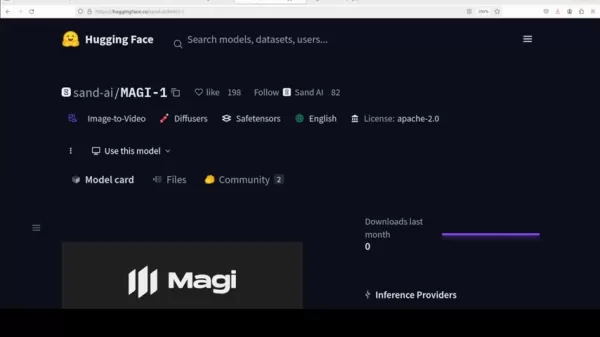
Google's Video V2 (VO2) represents one alternative, though its proprietary license prevents local installation.
MAGI-1 addresses this limitation by offering publicly accessible, high-quality video synthesis tools. Beyond delivering advanced capabilities, it empowers developers and creators to innovate within this dynamic field, promoting collaborative advancement.
Despite various attempts, superior accessible solutions remain elusive.
MAGI-1's Segmented Video Production Method
Unlike conventional approaches generating complete sequences simultaneously, MAGI-1 employs a distinctive methodology.
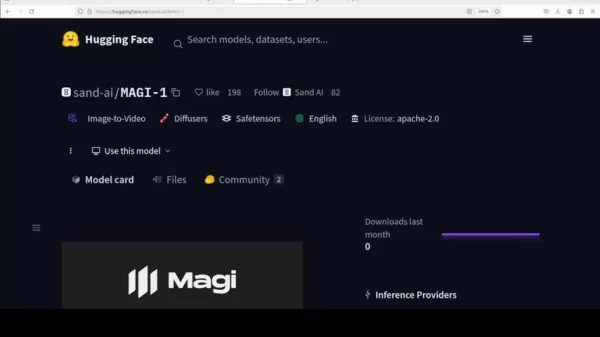
The system progressively creates 24-frame segments through autoregressive processing, ensuring fluid transitions and consistent memory usage regardless of total video length.
This segment-based approach enables simultaneous processing of multiple clips.
Each segment undergoes sequential latent space refinement before subsequent clip generation, maintaining temporal accuracy while supporting parallel processing for streaming applications.
As an open-source solution under Apache 2.0 licensing, MAGI-1 supports text, image, and video input transformations.
Technical Architecture Overview
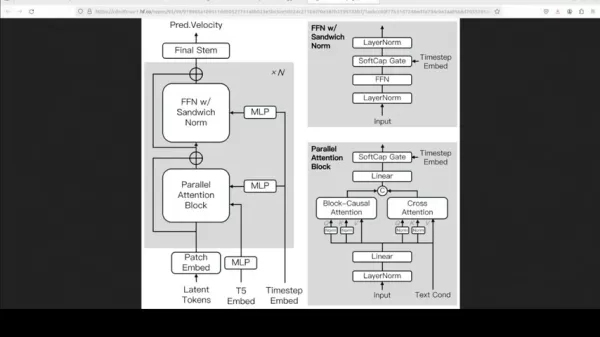
MAGI-1's foundation consists of an advanced transformer-based variational autoencoder configuration.
This framework efficiently compresses and reconstructs visual data.
Transformer block stacks facilitate video compression into latent space, enhanced by novel mechanisms addressing extended temporal relationships.
The model integrates diffusion techniques with flow matching distillation to optimize processing speed and output quality.
Project Support Details
Acknowledgments to Massed Compute
The author acknowledges Massed Compute for providing virtual machine and GPU resources essential for MAGI-1 evaluation. Their cloud infrastructure solutions enable accessible, economical AI development resources.
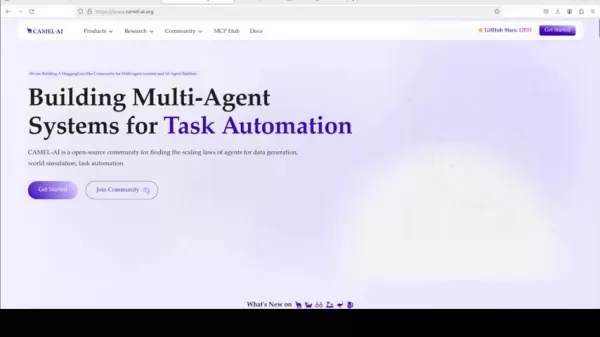
CAMEL AI's Contribution to Multi-Agent Development
CAMEL AI sponsors this video demonstration as part of their commitment to advancing AI Cloud Engineering. Their open-source initiative develops multi-agent systems for data generation scaling and automated task solutions.
Implementation Guide
System Requirements
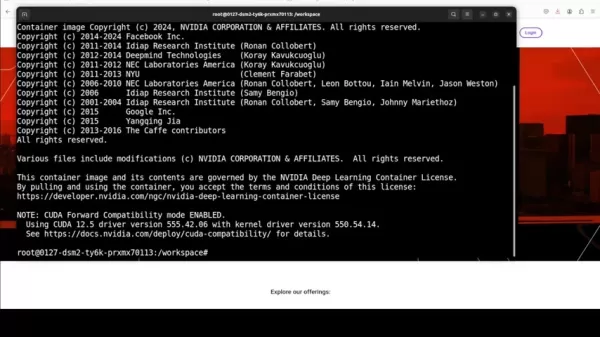
Docker represents the sole prerequisite for MAGI-1 implementation, with comprehensive documentation streamlining installation and dependency management.
This evaluation utilized Docker version 26.1.0.
Docker Installation Process
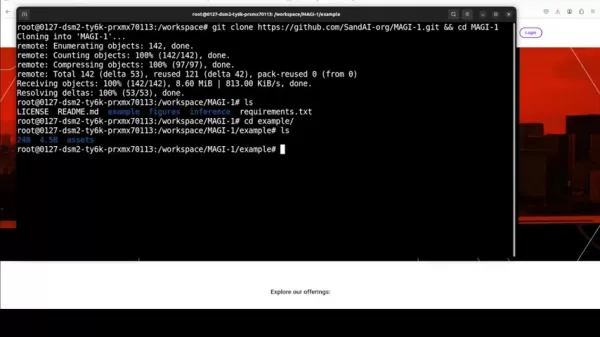
Execute docker pull sandai/magi:latest to retrieve the container image.
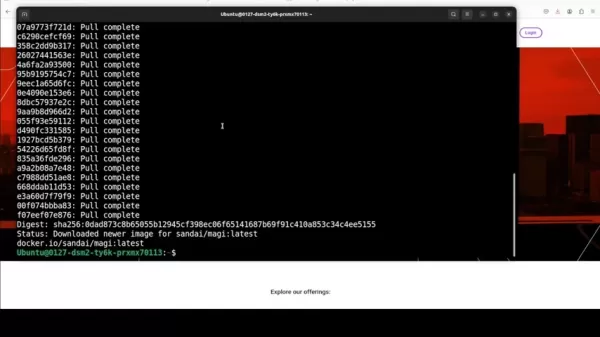
Note that this download may require substantial time.
For GPU acceleration, use:
docker run -it --gpus all --privileged --shm-size=32g --name magi --net=host --ipc=host --ulimit memlock=-1 --ulimit stack=67168636 sandai/magi:latest /bin/bash
Source Code Acquisition
Clone the repository using:
git clone https://github.com/SandAI-org/MAGI-1.git && cd MAGI-1
Execution Parameters
The 24B configuration was selected due to 4.5B model unavailability:
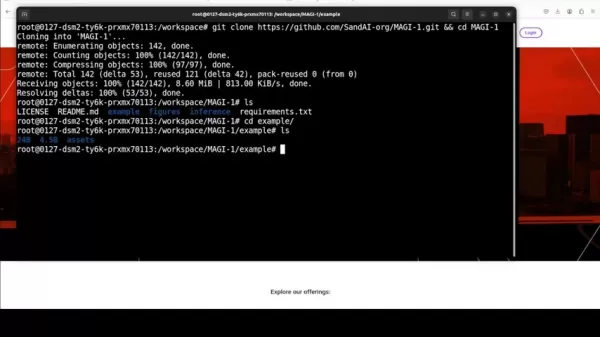
bash example/24B/run.sh
Alternative commands enable image-to-video conversion.
Licensing Information
Cost Considerations
As an open-source project, MAGI-1 incurs no licensing fees, though computational resource requirements necessitate appropriate hardware.
Performance Evaluation
Advantages
Open-source licensing facilitates community development
Segmented processing enables efficient parallel operation
Transformer architecture ensures high-quality output
Supports multiple input modalities
Limitations
Generation speed requires optimization
Substantial VRAM allocation necessary
Functional Capabilities
Core Features
- Video transformation processing
- Image-to-video conversion
- Text-to-video synthesis
- Segmented generation architecture
Application Scenarios
Ideal Use Cases
- Natural transition video production
- Video transformation applications
- Development environment video synthesis
Common Inquiries
Licensing Status
MAGI-1's Apache 2.0 license permits unrestricted use and modification.
Hardware Specifications
Testing utilized NVIDIA RTX A6000 hardware, with GPU acceleration recommended.
Format Compatibility
The system supports variable resolutions and durations for diverse applications.
Comparative Analysis
Competitive Differentiation
MAGI-1's segmented generation reduces memory overhead compared to full-sequence alternatives.
Practical Implementations
Potential applications include social media content creation, video enhancement, and interactive visual systems.
Related article
 How to fix Core Web Vitals for better SEO rankings
How to Build a Free Website: Free Domain, Hosting & AI Website BuilderTable of ContentsIntroductionAI Website Builder 1: Hookous AIStep 1: Sign UpStep 2: Choose Business Type/NicheStep 3: Select ServicesStep 4: Define Website GoalsStep 5: Enter Busin
Apple, Google Partner With Anthropic to Address 27-Year-Old Vulnerability via Glass Wing Protection
As artificial intelligence advances rapidly in code generation and logical reasoning, the cybersecurity landscape faces unprecedented challenges. Recently, the prominent AI startup Anthropic officially launched a cross-industry collaboration called *
OpenAI Chief Scientist Addresses AI Reasoning Transparency Debate: Complexity Steady, No Sudden Jump
On September 2, Jakub Pachocki, OpenAI’s Chief Scientist, addressed public concerns on X regarding the AI model Astra, clarifying claims that it operates without oversight and lacks transparent reasoning.Why the Controversy Erupted: Deep Recurrence O
Related Special Topic Recommendations
Image editing
How to fix Core Web Vitals for better SEO rankings
How to Build a Free Website: Free Domain, Hosting & AI Website BuilderTable of ContentsIntroductionAI Website Builder 1: Hookous AIStep 1: Sign UpStep 2: Choose Business Type/NicheStep 3: Select ServicesStep 4: Define Website GoalsStep 5: Enter Busin
Apple, Google Partner With Anthropic to Address 27-Year-Old Vulnerability via Glass Wing Protection
As artificial intelligence advances rapidly in code generation and logical reasoning, the cybersecurity landscape faces unprecedented challenges. Recently, the prominent AI startup Anthropic officially launched a cross-industry collaboration called *
OpenAI Chief Scientist Addresses AI Reasoning Transparency Debate: Complexity Steady, No Sudden Jump
On September 2, Jakub Pachocki, OpenAI’s Chief Scientist, addressed public concerns on X regarding the AI model Astra, clarifying claims that it operates without oversight and lacks transparent reasoning.Why the Controversy Erupted: Deep Recurrence O
Related Special Topic Recommendations
Image editing
 AI Object Removal Editors: Clean Up Portraits, Travel, and Product Shots
2026 Latest Best Top-rated AI Object Removal Editors for portraits travel product shots! XIX.AI curates a powerful game-changing collection regularly updated with weekly rankings. These tools offer real-world tests to help you quickly remove unwanted elements, boost content quality, and save tons of time without compromising results. Must-try for anyone aiming to unlock their AI creation edge. Explore now!
 10 tools
 xix.ai
Text-to-speech
Best AI Text to Speech Tools for Online Courses
xix.ai
Text-to-speech
Best AI Text to Speech Tools for Online Courses
2026 Latest Best Top-rated AI Text to Speech Tools for Online Courses are curated by XIX.AI based on rigorous real-world tests and weekly updated rankings. These powerful tools help creators deliver crystal-clear audio content effortlessly, boosting writing efficiency and streamlining course production. Check out the free vs paid comparison to find your perfect fit. Explore now to unlock your AI edge in online education.
10 tools
xix.ai
writing
AI Blog Title Tools for Higher Click Through Rates
2026 Latest Best Top-Rated AI Blog Title Tools for Higher Click Through Rates! XIX.AI has carefully curated a powerful, game-changing collection of top tools that go through rigorous real-world tests. You’ll find a free vs paid comparison, weekly updated rankings, and detailed insights to help you boost your blog’s traffic efficiently. Must-try options are highlighted to help you unlock your AI edge. Explore now!
10 tools
xix.ai
automation
Best AI Task Routing Tools for Support Workflows
2026 Latest Best Top-rated AI Task Routing Tools for Support Workflows! XIX.AI has curated a highly powerful game-changing collection of must-try solutions, all undergoing rigorous real-world tests and updated weekly. These tools streamline workflows, boost productivity, and help teams deliver faster, more efficient support. Explore now to discover your perfect tool and unlock your AI edge!
17 tools
xix.ai
Academic Research
AI Citation and Paper Summary Tools
2026 Latest Best Top-Rated AI Citation and Paper Summary Tools Curated by XIX.AI. Get powerful game-changing solutions for quick content creation, improved writing efficiency, and boosting productivity. We offer a free vs paid comparison along with real-world tests and weekly updated rankings to help you find the must-try tool that fits your needs perfectly. Explore now to Unlock your AI edge.
10 tools
xix.ai
Productivity
Best AI Productivity Tools for Daily Work
2026 Latest Best Top-Rated AI Productivity Tools for Daily Work! XIX.AI has curated a powerful, game-changing selection based on rigorous weekly updated rankings and real-world tests. You’ll find must-try options that boost writing efficiency, streamline content creation, and help you overcome daily work challenges. Get a free vs paid comparison to find the perfect fit for your needs. Explore now to unlock your AI edge!
9 tools
xix.ai

 Comments (0)
0/500
Comments (0)
0/500
The AI landscape is undergoing rapid transformation, with video generation technology leading this revolutionary charge. Although numerous models promise cutting-edge text-to-video and image-to-video capabilities, discovering genuinely outstanding open-source solutions remains difficult. This article examines MAGI-1, Sand AI's open-source video generation model licensed under Apache 2.0, exploring its innovative synthesis methodology and its capacity to redefine video content production.
Key Points
MAGI-1 operates under Apache 2.0 licensing as an open-source video synthesis model.
It adopts a segmented generation strategy, producing fixed-length video clips sequentially.
The model incorporates a transformer-based variational autoencoder framework.
MAGI-1 introduces an innovative distributed attention system for managing extended temporal relationships.
Its architecture is specifically designed for streaming and real-time video production.
Massed Compute provides the VM and GPU resources utilized in this analysis.
CAMEL AI sponsors the MAGI-1 demonstration video.
MAGI-1: A Comprehensive Examination of Sand AI's Video Model
Exploring Current Video Generation Technology
Artificial intelligence continues to break new ground, particularly in the burgeoning field of video generation. While many platforms claim superior performance, truly exceptional video generation systems remain scarce.
Google's Video V2 (VO2) represents one alternative, though its proprietary license prevents local installation.
MAGI-1 addresses this limitation by offering publicly accessible, high-quality video synthesis tools. Beyond delivering advanced capabilities, it empowers developers and creators to innovate within this dynamic field, promoting collaborative advancement.
Despite various attempts, superior accessible solutions remain elusive.
MAGI-1's Segmented Video Production Method
Unlike conventional approaches generating complete sequences simultaneously, MAGI-1 employs a distinctive methodology.
The system progressively creates 24-frame segments through autoregressive processing, ensuring fluid transitions and consistent memory usage regardless of total video length.
This segment-based approach enables simultaneous processing of multiple clips.
Each segment undergoes sequential latent space refinement before subsequent clip generation, maintaining temporal accuracy while supporting parallel processing for streaming applications.
As an open-source solution under Apache 2.0 licensing, MAGI-1 supports text, image, and video input transformations.
Technical Architecture Overview
MAGI-1's foundation consists of an advanced transformer-based variational autoencoder configuration.
This framework efficiently compresses and reconstructs visual data.
Transformer block stacks facilitate video compression into latent space, enhanced by novel mechanisms addressing extended temporal relationships.
The model integrates diffusion techniques with flow matching distillation to optimize processing speed and output quality.
Project Support Details
Acknowledgments to Massed Compute
The author acknowledges Massed Compute for providing virtual machine and GPU resources essential for MAGI-1 evaluation. Their cloud infrastructure solutions enable accessible, economical AI development resources.
CAMEL AI's Contribution to Multi-Agent Development
CAMEL AI sponsors this video demonstration as part of their commitment to advancing AI Cloud Engineering. Their open-source initiative develops multi-agent systems for data generation scaling and automated task solutions.
Implementation Guide
System Requirements
Docker represents the sole prerequisite for MAGI-1 implementation, with comprehensive documentation streamlining installation and dependency management.
This evaluation utilized Docker version 26.1.0.
Docker Installation Process
Execute docker pull sandai/magi:latest to retrieve the container image.
Note that this download may require substantial time.
For GPU acceleration, use:
docker run -it --gpus all --privileged --shm-size=32g --name magi --net=host --ipc=host --ulimit memlock=-1 --ulimit stack=67168636 sandai/magi:latest /bin/bash
Source Code Acquisition
Clone the repository using:
git clone https://github.com/SandAI-org/MAGI-1.git && cd MAGI-1
Execution Parameters
The 24B configuration was selected due to 4.5B model unavailability:
bash example/24B/run.sh
Alternative commands enable image-to-video conversion.
Licensing Information
Cost Considerations
As an open-source project, MAGI-1 incurs no licensing fees, though computational resource requirements necessitate appropriate hardware.
Performance Evaluation
Advantages
Open-source licensing facilitates community development
Segmented processing enables efficient parallel operation
Transformer architecture ensures high-quality output
Supports multiple input modalities
Limitations
Generation speed requires optimization
Substantial VRAM allocation necessary
Functional Capabilities
Core Features
- Video transformation processing
- Image-to-video conversion
- Text-to-video synthesis
- Segmented generation architecture
Application Scenarios
Ideal Use Cases
- Natural transition video production
- Video transformation applications
- Development environment video synthesis
Common Inquiries
Licensing Status
MAGI-1's Apache 2.0 license permits unrestricted use and modification.
Hardware Specifications
Testing utilized NVIDIA RTX A6000 hardware, with GPU acceleration recommended.
Format Compatibility
The system supports variable resolutions and durations for diverse applications.
Comparative Analysis
Competitive Differentiation
MAGI-1's segmented generation reduces memory overhead compared to full-sequence alternatives.
Practical Implementations
Potential applications include social media content creation, video enhancement, and interactive visual systems.








 How to fix Core Web Vitals for better SEO rankings
How to Build a Free Website: Free Domain, Hosting & AI Website BuilderTable of ContentsIntroductionAI Website Builder 1: Hookous AIStep 1: Sign UpStep 2: Choose Business Type/NicheStep 3: Select ServicesStep 4: Define Website GoalsStep 5: Enter Busin
How to fix Core Web Vitals for better SEO rankings
How to Build a Free Website: Free Domain, Hosting & AI Website BuilderTable of ContentsIntroductionAI Website Builder 1: Hookous AIStep 1: Sign UpStep 2: Choose Business Type/NicheStep 3: Select ServicesStep 4: Define Website GoalsStep 5: Enter Busin
 Apple, Google Partner With Anthropic to Address 27-Year-Old Vulnerability via Glass Wing Protection
As artificial intelligence advances rapidly in code generation and logical reasoning, the cybersecurity landscape faces unprecedented challenges. Recently, the prominent AI startup Anthropic officially launched a cross-industry collaboration called *
Apple, Google Partner With Anthropic to Address 27-Year-Old Vulnerability via Glass Wing Protection
As artificial intelligence advances rapidly in code generation and logical reasoning, the cybersecurity landscape faces unprecedented challenges. Recently, the prominent AI startup Anthropic officially launched a cross-industry collaboration called *
 OpenAI Chief Scientist Addresses AI Reasoning Transparency Debate: Complexity Steady, No Sudden Jump
On September 2, Jakub Pachocki, OpenAI’s Chief Scientist, addressed public concerns on X regarding the AI model Astra, clarifying claims that it operates without oversight and lacks transparent reasoning.Why the Controversy Erupted: Deep Recurrence O
OpenAI Chief Scientist Addresses AI Reasoning Transparency Debate: Complexity Steady, No Sudden Jump
On September 2, Jakub Pachocki, OpenAI’s Chief Scientist, addressed public concerns on X regarding the AI model Astra, clarifying claims that it operates without oversight and lacks transparent reasoning.Why the Controversy Erupted: Deep Recurrence O
2026 Latest Best Top-rated AI Object Removal Editors for portraits travel product shots! XIX.AI curates a powerful game-changing collection regularly updated with weekly rankings. These tools offer real-world tests to help you quickly remove unwanted elements, boost content quality, and save tons of time without compromising results. Must-try for anyone aiming to unlock their AI creation edge. Explore now!
10 tools
xix.ai

2026 Latest Best Top-rated AI Text to Speech Tools for Online Courses are curated by XIX.AI based on rigorous real-world tests and weekly updated rankings. These powerful tools help creators deliver crystal-clear audio content effortlessly, boosting writing efficiency and streamlining course production. Check out the free vs paid comparison to find your perfect fit. Explore now to unlock your AI edge in online education.
10 tools
xix.ai

2026 Latest Best Top-Rated AI Blog Title Tools for Higher Click Through Rates! XIX.AI has carefully curated a powerful, game-changing collection of top tools that go through rigorous real-world tests. You’ll find a free vs paid comparison, weekly updated rankings, and detailed insights to help you boost your blog’s traffic efficiently. Must-try options are highlighted to help you unlock your AI edge. Explore now!
10 tools
xix.ai
2026 Latest Best Top-rated AI Task Routing Tools for Support Workflows! XIX.AI has curated a highly powerful game-changing collection of must-try solutions, all undergoing rigorous real-world tests and updated weekly. These tools streamline workflows, boost productivity, and help teams deliver faster, more efficient support. Explore now to discover your perfect tool and unlock your AI edge!
17 tools
xix.ai
2026 Latest Best Top-Rated AI Citation and Paper Summary Tools Curated by XIX.AI. Get powerful game-changing solutions for quick content creation, improved writing efficiency, and boosting productivity. We offer a free vs paid comparison along with real-world tests and weekly updated rankings to help you find the must-try tool that fits your needs perfectly. Explore now to Unlock your AI edge.
10 tools
xix.ai
2026 Latest Best Top-Rated AI Productivity Tools for Daily Work! XIX.AI has curated a powerful, game-changing selection based on rigorous weekly updated rankings and real-world tests. You’ll find must-try options that boost writing efficiency, streamline content creation, and help you overcome daily work challenges. Get a free vs paid comparison to find the perfect fit for your needs. Explore now to unlock your AI edge!
9 tools
xix.ai












