


 Home
HomeSamsung eyes $1T valuation as AI boom drives growth
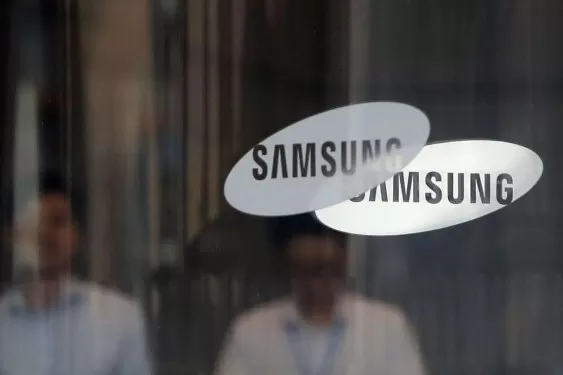
Samsung hit a $1 trillion market cap on Wednesday, with shares jumping over 10% amid the AI boom driving chip demand. This milestone makes Samsung only the second Asian firm to cross the trillion-dollar mark, following TSMC.
The update follows a strong earnings report last week, where Samsung reported profits eight times higher than the same period last year.
Every company developing AI currently requires chips, and Samsung produces the memory chips that power these systems. Surging demand, coupled with supply constraints, has pushed prices up and boosted Samsung’s profits.
Another factor behind Wednesday’s stock surge is news that Apple has been in discussions with both Samsung and Intel to manufacture chips for Apple devices in the U.S. Apple has traditionally relied almost exclusively on TSMC in Taiwan for its chip production. If Samsung secures the deal, it would signal a major shift in the global semiconductor supply chain.
Samsung’s profit surge is largely driven by high-bandwidth memory (HBM), a chip type critical for AI systems that has significantly improved the company’s margins. However, competition is fierce. Rival SK Hynix, another South Korean semiconductor leader, is aggressively targeting the same market, keeping pressure on Samsung to maintain its competitive edge.
The AI boom is causing a chip shortage across the semiconductor industry, as the world’s three largest memory chip makers—Samsung, SK Hynix, and Micron—struggle to meet the surging demand from AI data centers. All three companies have shifted investment away from their consumer chip businesses to ramp up HBM production, which offers substantially higher margins and has become essential for powering large-scale AI infrastructure.
Despite Wednesday’s historic surge, Samsung still faces challenges. Workers are threatening an 18-day strike later this month over a larger share of the AI windfall. Meanwhile, the company’s phone and TV divisions, which also need to purchase these memory chips to build their products, are paying a high price for the same chips driving Samsung’s record profits.
Related article
 South Korea’s $3.5bn Fund Bolsters AI Chip Dominance
South Korean President Lee Jae Myung is spearheading state initiatives to fortify domestic semiconductor supply chains for AI. Credit: Getty ImagesPresidential Chief of Staff Kang Hoon-sik states the initiative targets supply chain firms to accelerat
Samsung’s AI Push Drives Profit Surge Amid US$1tn Market Cap
Samsung Electronics hits a record market capitalisation as global demand for AI memory chips surges. Credit: Samsung NewsroomSouth Korea’s Samsung Electronics hits new milestones as analyst Marc Einstein predicts one of the best quarterly performance
Chip startup raises $135M betting memory, not compute, is AI's biggest bottleneck
Every time you ask ChatGPT a question, your request sets off a data relay race. Information moves out of memory, passes through the CPU for preprocessing, travels to the GPU for intensive computation, and then returns — and that entire loop repeats f
Related Special Topic Recommendations
Design & Art
South Korea’s $3.5bn Fund Bolsters AI Chip Dominance
South Korean President Lee Jae Myung is spearheading state initiatives to fortify domestic semiconductor supply chains for AI. Credit: Getty ImagesPresidential Chief of Staff Kang Hoon-sik states the initiative targets supply chain firms to accelerat
Samsung’s AI Push Drives Profit Surge Amid US$1tn Market Cap
Samsung Electronics hits a record market capitalisation as global demand for AI memory chips surges. Credit: Samsung NewsroomSouth Korea’s Samsung Electronics hits new milestones as analyst Marc Einstein predicts one of the best quarterly performance
Chip startup raises $135M betting memory, not compute, is AI's biggest bottleneck
Every time you ask ChatGPT a question, your request sets off a data relay race. Information moves out of memory, passes through the CPU for preprocessing, travels to the GPU for intensive computation, and then returns — and that entire loop repeats f
Related Special Topic Recommendations
Design & Art
 AI Visual Style Reference Tools for Character Sheets, Moodboards, and Pitch Decks
2026 Latest Best AI Visual Style Reference Tools for Character Sheets, Moodboards, and Pitch Decks are here on XIX.AI! This curated top-rated list features powerful game-changing tools that go through rigorous real-world tests. You’ll find a free vs paid comparison, detailed rankings, and must-try options to help you boost creativity and streamline your workflow. Explore now to discover your perfect tool for boosting productivity!
 11 tools
 xix.ai
SEO
Best AI SERP Analysis Tools for Search Strategy
xix.ai
SEO
Best AI SERP Analysis Tools for Search Strategy
2026 Latest Best Top-rated AI SERP Analysis Tools for Search Strategy are curated by XIX.AI through rigorous real-world tests and weekly updated rankings. These powerful tools help you unlock hidden optimization opportunities, boost content performance, and gain a competitive edge in search. Discover your perfect tool to elevate your search strategy today. Explore now!
13 tools
xix.ai
Data Analysis
Best AI Anomaly Detection Tools for KPI Monitoring across SaaS and Ecommerce Teams
2026 Latest Best Top-rated AI Anomaly Detection Tools for KPI Monitoring in SaaS and Ecommerce teams! XIX.AI has curated a powerful, game-changing collection based on rigorous real-world tests and weekly updated rankings. You’ll find detailed free vs paid comparison insights to help you identify the must-try solution that boosts productivity and unlocks your AI edge. Explore now!
10 tools
xix.ai
writing
Best AI Outline Generators for Long-Form SEO Articles
2026 Latest Best Top-Rated AI Outline Generators for Long-Form SEO Articles, meticulously curated by XIX.AI. These powerful tools offer game-changing assistance in creating high-quality content quickly, boosting writing efficiency significantly. Get a free vs paid comparison along with real-world tests and detailed rankings to help you find the must-try option that suits your needs. Explore now to unlock your AI edge.
8 tools
xix.ai
Education and Learning
AI Study Tools for Homework and Exam Prep
2026 Latest Best AI Study Tools for Homework and Exam Prep! XIX.AI curates a top-rated list of powerful, game-changing tools that help students boost productivity, streamline homework completion, and ace exams through real-world tests. Get a free vs paid comparison, detailed rankings, and must-try options to unlock your AI edge. Explore now!
10 tools
xix.ai
Music composition
AI Vocal Demo Tools for Songwriters, Hooks, Toplines, and Multilingual Draft Sessions
2026 Latest Best AI Vocal Demo Tools for Songwriters, Hook Creators, and Multi-Language Content Teams! XIX.AI has curated a top-rated list of powerful game-changing tools that go through rigorous real-world tests. You’ll find detailed free vs paid comparison data, comprehensive rankings, and must-try options to help you boost writing efficiency and unlock your creative potential. Explore now to discover your perfect tool for all your content needs!
9 tools
xix.ai

 Comments (0)
0/500
Comments (0)
0/500
Samsung hit a $1 trillion market cap on Wednesday, with shares jumping over 10% amid the AI boom driving chip demand. This milestone makes Samsung only the second Asian firm to cross the trillion-dollar mark, following TSMC.
The update follows a strong earnings report last week, where Samsung reported profits eight times higher than the same period last year.
Every company developing AI currently requires chips, and Samsung produces the memory chips that power these systems. Surging demand, coupled with supply constraints, has pushed prices up and boosted Samsung’s profits.
Another factor behind Wednesday’s stock surge is news that Apple has been in discussions with both Samsung and Intel to manufacture chips for Apple devices in the U.S. Apple has traditionally relied almost exclusively on TSMC in Taiwan for its chip production. If Samsung secures the deal, it would signal a major shift in the global semiconductor supply chain.
Samsung’s profit surge is largely driven by high-bandwidth memory (HBM), a chip type critical for AI systems that has significantly improved the company’s margins. However, competition is fierce. Rival SK Hynix, another South Korean semiconductor leader, is aggressively targeting the same market, keeping pressure on Samsung to maintain its competitive edge.
The AI boom is causing a chip shortage across the semiconductor industry, as the world’s three largest memory chip makers—Samsung, SK Hynix, and Micron—struggle to meet the surging demand from AI data centers. All three companies have shifted investment away from their consumer chip businesses to ramp up HBM production, which offers substantially higher margins and has become essential for powering large-scale AI infrastructure.
Despite Wednesday’s historic surge, Samsung still faces challenges. Workers are threatening an 18-day strike later this month over a larger share of the AI windfall. Meanwhile, the company’s phone and TV divisions, which also need to purchase these memory chips to build their products, are paying a high price for the same chips driving Samsung’s record profits.








 South Korea’s $3.5bn Fund Bolsters AI Chip Dominance
South Korean President Lee Jae Myung is spearheading state initiatives to fortify domestic semiconductor supply chains for AI. Credit: Getty ImagesPresidential Chief of Staff Kang Hoon-sik states the initiative targets supply chain firms to accelerat
South Korea’s $3.5bn Fund Bolsters AI Chip Dominance
South Korean President Lee Jae Myung is spearheading state initiatives to fortify domestic semiconductor supply chains for AI. Credit: Getty ImagesPresidential Chief of Staff Kang Hoon-sik states the initiative targets supply chain firms to accelerat
 Samsung’s AI Push Drives Profit Surge Amid US$1tn Market Cap
Samsung Electronics hits a record market capitalisation as global demand for AI memory chips surges. Credit: Samsung NewsroomSouth Korea’s Samsung Electronics hits new milestones as analyst Marc Einstein predicts one of the best quarterly performance
Samsung’s AI Push Drives Profit Surge Amid US$1tn Market Cap
Samsung Electronics hits a record market capitalisation as global demand for AI memory chips surges. Credit: Samsung NewsroomSouth Korea’s Samsung Electronics hits new milestones as analyst Marc Einstein predicts one of the best quarterly performance
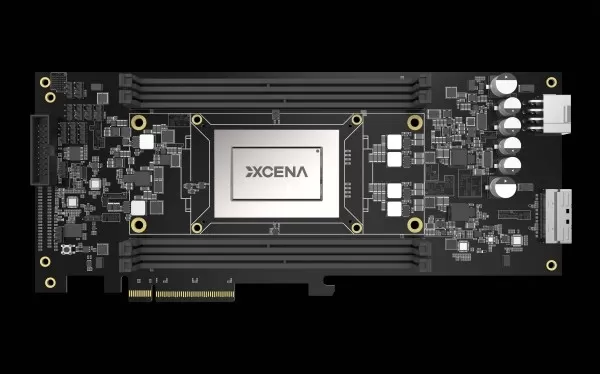 Chip startup raises $135M betting memory, not compute, is AI's biggest bottleneck
Every time you ask ChatGPT a question, your request sets off a data relay race. Information moves out of memory, passes through the CPU for preprocessing, travels to the GPU for intensive computation, and then returns — and that entire loop repeats f
Chip startup raises $135M betting memory, not compute, is AI's biggest bottleneck
Every time you ask ChatGPT a question, your request sets off a data relay race. Information moves out of memory, passes through the CPU for preprocessing, travels to the GPU for intensive computation, and then returns — and that entire loop repeats f

2026 Latest Best AI Visual Style Reference Tools for Character Sheets, Moodboards, and Pitch Decks are here on XIX.AI! This curated top-rated list features powerful game-changing tools that go through rigorous real-world tests. You’ll find a free vs paid comparison, detailed rankings, and must-try options to help you boost creativity and streamline your workflow. Explore now to discover your perfect tool for boosting productivity!
11 tools
xix.ai

2026 Latest Best Top-rated AI SERP Analysis Tools for Search Strategy are curated by XIX.AI through rigorous real-world tests and weekly updated rankings. These powerful tools help you unlock hidden optimization opportunities, boost content performance, and gain a competitive edge in search. Discover your perfect tool to elevate your search strategy today. Explore now!
13 tools
xix.ai

2026 Latest Best Top-rated AI Anomaly Detection Tools for KPI Monitoring in SaaS and Ecommerce teams! XIX.AI has curated a powerful, game-changing collection based on rigorous real-world tests and weekly updated rankings. You’ll find detailed free vs paid comparison insights to help you identify the must-try solution that boosts productivity and unlocks your AI edge. Explore now!
10 tools
xix.ai

2026 Latest Best Top-Rated AI Outline Generators for Long-Form SEO Articles, meticulously curated by XIX.AI. These powerful tools offer game-changing assistance in creating high-quality content quickly, boosting writing efficiency significantly. Get a free vs paid comparison along with real-world tests and detailed rankings to help you find the must-try option that suits your needs. Explore now to unlock your AI edge.
8 tools
xix.ai

2026 Latest Best AI Study Tools for Homework and Exam Prep! XIX.AI curates a top-rated list of powerful, game-changing tools that help students boost productivity, streamline homework completion, and ace exams through real-world tests. Get a free vs paid comparison, detailed rankings, and must-try options to unlock your AI edge. Explore now!
10 tools
xix.ai

2026 Latest Best AI Vocal Demo Tools for Songwriters, Hook Creators, and Multi-Language Content Teams! XIX.AI has curated a top-rated list of powerful game-changing tools that go through rigorous real-world tests. You’ll find detailed free vs paid comparison data, comprehensive rankings, and must-try options to help you boost writing efficiency and unlock your creative potential. Explore now to discover your perfect tool for all your content needs!
9 tools
xix.ai












