


 Home
HomePhilips SmartSpeed AI transforms MRI diagnostics with cutting-edge technology
Magnetic Resonance Imaging (MRI) has revolutionized modern medicine by delivering highly detailed internal body scans. While invaluable, conventional MRI scans often require lengthy procedures and are prone to motion artifacts. Philips SmartSpeed AI addresses these challenges head-on, accelerating scan times while enhancing image clarity and diagnostic accuracy. This breakthrough technology is transforming radiology practices, delivering tangible benefits for medical professionals and patients.
Key Points
Philips SmartSpeed AI leverages cutting-edge denoising technology to dramatically improve MRI image quality.
The system slashes scan durations substantially, boosting both patient comfort and imaging center efficiency.
Enhanced imaging resolution facilitates earlier and more precise detection of medical conditions.
Implementation optimizes clinical workflows and maximizes equipment utilization.
Advanced motion compensation ensures superior image quality despite patient movement during scans.
Understanding Philips SmartSpeed AI
What is Philips SmartSpeed AI?
The intersection of artificial intelligence and medical imaging continues to yield remarkable innovations. Philips SmartSpeed AI distinguishes itself by achieving unprecedented speed-to-quality ratios in MRI diagnostics. Through intelligent image reconstruction algorithms, the technology reveals anatomical details that conventional methods might overlook. These time savings directly translate to improved patient care outcomes.
SmartSpeed AI represents a paradigm shift in MRI diagnostics:
- Faster imaging: AI-driven reconstruction requires less raw data, cutting scan times dramatically
- Sharper visualization: Intelligent noise reduction delivers unprecedented clarity
- Better patient experience: Reduced scan durations minimize discomfort
- Movement compensation: Advanced algorithms counteract motion-related distortions
SmartSpeed AI eliminates the traditional tradeoff between image fidelity and procedure duration. Radiology departments can now scan more patients without compromising diagnostic quality standards.
The Science Behind the Speed and Clarity
Philips SmartSpeed AI operates on sophisticated neural networks trained using extensive MRI datasets. These algorithms expertly distinguish between authentic anatomical data and image noise, enabling high-fidelity reconstructions with significantly reduced scan times.
The technology incorporates several groundbreaking innovations:
- Deep Learning Reconstruction: Neural networks generate images from undersampled data, preserving quality while accelerating scans
- Adaptive Denoising: Customized noise reduction preserves critical anatomical details
- Motion Compensation: Advanced techniques minimize movement-related artifacts
Through these technological advancements, SmartSpeed AI achieves simultaneous improvements in scan speed and image fidelity, empowering clinicians with faster, clearer diagnostic information. Continuous algorithm refinement ensures ongoing enhancements in MRI diagnostic capabilities.
Table summary of Image parameters
Detailed Image Parameter Comparisons
This comparative analysis tracks MRI technology evolution, documenting measurable improvements in resolution and scanning speed.
Parameter Traditional Imaging Compressed SENSE SmartSpeed SmartSpeed AI Isotropic Resolution 1.2 mm 0.8 mm N/A 0.6 mm Dynamic Imaging Speed N/A N/A N/A 3.4 seconds per dynamic volume with 20 consecutive acquisitions Motion Artifacts High Moderate Low Significantly reduced through SmartSpeed MotionFree AI Integration None None None Integrated for enhanced denoising and reconstruction
Philips SmartSpeed AI Pricing Information
Contact Philips for a Custom Quote
Pricing structures for SmartSpeed AI solutions are customized based on each healthcare facility's specific requirements. Key pricing factors include existing MRI infrastructure compatibility, implementation complexity, and supplementary services like training and support. Potential customers should schedule consultations with Philips representatives for tailored pricing information.
- Equipment Compatibility: Verify seamless integration with current Philips MRI systems
- Implementation Costs: Account for workflow integration and operational adjustments
- Support Services: Evaluate available maintenance and technical support options
- Training Programs: Consider educational needs for optimal technology utilization
Weighing the Benefits and Drawbacks of SmartSpeed AI
Pros
Dramatically shorter MRI procedure times
Superior image quality with intelligent noise reduction
Effective compensation for patient movement
Seamless incorporation into Philips MRI ecosystems
Increased patient throughput capacity
Cons
Requires MRI system upgrades
Potential algorithm bias without diverse training data
Dependent on vendor updates
Significant initial investment
Key Features of Philips SmartSpeed AI
Speed and Efficiency
SmartSpeed AI's primary advantage lies in its ability to drastically reduce MRI scan durations. By implementing advanced reconstruction methods, the technology generates diagnostic-quality images from less raw data. These efficiencies translate to increased patient throughput while maintaining imaging excellence.
Enhanced Image Quality
The system's sophisticated noise reduction algorithms produce exceptionally clear anatomical visualizations, enabling earlier and more accurate diagnoses. This imaging superiority stems from neural networks trained on extensive datasets that meticulously differentiate signal from noise.
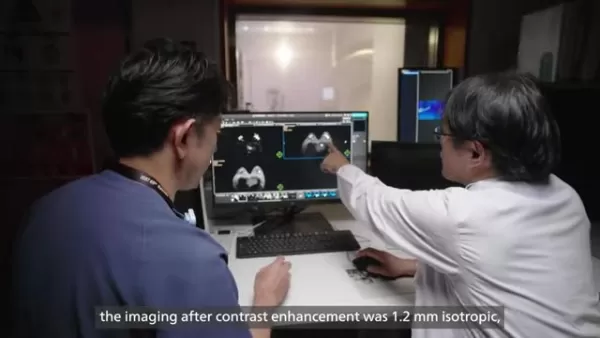
These deep learning models systematically analyze vast image collections to establish precise noise reduction parameters.
Motion Artifact Suppression
SmartSpeed AI incorporates groundbreaking motion compensation techniques to minimize movement-related image degradation. Even patients struggling with stillness requirements can receive high-quality diagnostic images, with specialized SmartSpeed MotionFree addressing rectal motion artifacts.
Seamless Integration
Designed for straightforward implementation, SmartSpeed AI integrates smoothly into existing Philips MRI installations without disrupting clinical operations. The technology adapts readily across diverse medical specialties and patient-specific scanning protocols.
Applications of Philips SmartSpeed AI in Medical Imaging
Neurology
Neurological applications benefit tremendously from SmartSpeed AI's ability to produce high-resolution brain and spinal cord images rapidly. This proves particularly valuable for time-sensitive conditions including strokes, neurodegenerative diseases, and cerebral tumors.
Cardiology
Cardiac imaging achieves new clarity levels through SmartSpeed AI, providing detailed visualizations of cardiac structures and vasculature essential for diagnosing coronary conditions and cardiomyopathies.
Oncology
Tumor detection and characterization reach new precision levels with SmartSpeed AI's enhanced imaging capabilities. The Ultra-First dynamic scanning mode delivers exceptional mammary gland visualization for improved breast cancer detection.
Musculoskeletal Imaging
Orthopedic applications including arthritis assessment and fracture diagnosis benefit from SmartSpeed AI's ability to rapidly produce detailed joint and bone images, proving particularly effective for acute cerebral infarction cases.
Prostate Cancer Imaging
SmartSpeed AI excels in prostate imaging scenarios, where rapid acquisition speeds combine with motion compensation (SmartSpeed MotionFree) to suppress rectal movement artifacts and deliver unmatched diagnostic clarity.
Frequently Asked Questions
How does SmartSpeed AI improve image quality?
SmartSpeed AI employs sophisticated noise reduction algorithms that systematically enhance image clarity across diagnostic applications, delivering sharper visualization without prolonged scan times.
Is SmartSpeed AI compatible with all Philips MRI systems?
While designed for broad compatibility across Philips MRI platforms, specific implementation details should be confirmed through direct consultation with Philips representatives.
What is the reduction in scan time with SmartSpeed AI?
Scan duration reductions vary by protocol but frequently exceed 50% compared to conventional MRI scanning techniques, significantly enhancing radiology department productivity.
Does SmartSpeed AI require special training for radiographers?
Philips provides comprehensive training programs to help imaging professionals maximize SmartSpeed AI's potential, covering optimal parameter settings and quality control methods.
Related Questions
What are the alternatives to Philips SmartSpeed AI?
Several notable competitors offer AI-enhanced MRI solutions: GE Healthcare's AIR Recon DL leverages deep learning for faster scans; Siemens Healthineers' Deep Resolve enhances resolution through AI; Canon Medical's AiCE integrates advanced noise reduction technologies. Each solution employs distinct AI approaches while pursuing similar goals of improved MRI diagnostics.
What is the future of AI in medical imaging?
AI promises transformative impacts across medical imaging through automated analysis algorithms for abnormality detection, diagnostic assistance systems for complex cases, personalized treatment planning tools, and AI-guided interventional procedures—all aimed at improving diagnostic accuracy, treatment efficacy, and patient outcomes.
Related article
 MiniMax Unveils 10x Team Program to Incentivize Global AI Experts
MiniMax (Xiyu Technology), the General Artificial Intelligence Lab, has officially launched "10x Team," a global talent collaboration initiative. This program aims to recruit top experts across industries to explore the deep application of large mode
South Korea Breaks Ground on National AI Computing Center, Investing 2.5 Trillion Won with 2028 Target
South Korean outlet EtNews reports that groundbreaking for the Korea AI Computing Center (KOACC) took place on August 3 at the Solar City data center park in Sunan, Jeollanam-do. Backed by a total investment of 2.5 trillion KRW (roughly 11.838 billio
Six Tech Giants Back Linux Foundation With $12.5M to Tackle AI Vulnerability Noise
To tackle the flood of low-quality security reports produced by AI automation tools, six major tech companies—Anthropic, Amazon (AWS), GitHub, Google, Microsoft, and OpenAI—have collectively contributed $12.5 million in funding to Linux Foundation in
Related Special Topic Recommendations
Education and Learning
MiniMax Unveils 10x Team Program to Incentivize Global AI Experts
MiniMax (Xiyu Technology), the General Artificial Intelligence Lab, has officially launched "10x Team," a global talent collaboration initiative. This program aims to recruit top experts across industries to explore the deep application of large mode
South Korea Breaks Ground on National AI Computing Center, Investing 2.5 Trillion Won with 2028 Target
South Korean outlet EtNews reports that groundbreaking for the Korea AI Computing Center (KOACC) took place on August 3 at the Solar City data center park in Sunan, Jeollanam-do. Backed by a total investment of 2.5 trillion KRW (roughly 11.838 billio
Six Tech Giants Back Linux Foundation With $12.5M to Tackle AI Vulnerability Noise
To tackle the flood of low-quality security reports produced by AI automation tools, six major tech companies—Anthropic, Amazon (AWS), GitHub, Google, Microsoft, and OpenAI—have collectively contributed $12.5 million in funding to Linux Foundation in
Related Special Topic Recommendations
Education and Learning
 AI Study Tools for Homework and Exam Prep
2026 Latest Best AI Study Tools for Homework and Exam Prep! XIX.AI curates a top-rated list of powerful, game-changing tools that help students boost productivity, streamline homework completion, and ace exams through real-world tests. Get a free vs paid comparison, detailed rankings, and must-try options to unlock your AI edge. Explore now!
 10 tools
 xix.ai
Music composition
AI Vocal Demo Tools for Songwriters, Hooks, Toplines, and Multilingual Draft Sessions
xix.ai
Music composition
AI Vocal Demo Tools for Songwriters, Hooks, Toplines, and Multilingual Draft Sessions
2026 Latest Best AI Vocal Demo Tools for Songwriters, Hook Creators, and Multi-Language Content Teams! XIX.AI has curated a top-rated list of powerful game-changing tools that go through rigorous real-world tests. You’ll find detailed free vs paid comparison data, comprehensive rankings, and must-try options to help you boost writing efficiency and unlock your creative potential. Explore now to discover your perfect tool for all your content needs!
9 tools
xix.ai
Business
Best AI Competitive Research Tools for Small Businesses
2026 Latest Best Top-rated AI Competitive Research Tools for Small Businesses! XIX.AI has curated a highly powerful game-changing collection, updated weekly with rigorous real-world tests and detailed rankings. You can find a comprehensive free vs paid comparison to help you identify the must-try tools that boost your productivity and give you a competitive edge. Explore now to discover your perfect tool!
9 tools
xix.ai
Image editing
Photoshop AI Retouch Tools for Ecommerce Apparel, Skin Cleanup, and Color Consistency
2026 Latest Best Photoshop AI retouch tools for ecommerce apparel, skin cleanup, and color consistency! This top-rated curated list features powerful game-changing solutions that help you boost writing efficiency, streamline content creation, and achieve perfect visual results effortlessly. Each tool has undergone real-world tests through weekly updated rankings, complete with free vs paid comparison details. Backed by XIX.AI, it’s the must-try guide for anyone aiming to unlock your AI edge. Explore now!
10 tools
xix.ai
Prompt
Best AI Prompt Libraries for ChatGPT Workflows
2026 Latest Best Top-Rated AI Prompt Libraries for optimizing all types of ChatGPT workflows. XIX.AI has curated a powerful, game-changing collection that goes through rigorous real-world tests to ensure top performance. You can find detailed free vs paid comparisons and expert rankings to help you choose the must-try tools that boost your productivity and unlock your AI edge. Explore now!
11 tools
xix.ai
Education and Learning
AI Quiz Builder Platforms for Teachers, Tutors, and Cohort-Based Learning Programs
2026 Latest Best AI Quiz Builder Platforms for Teachers, Tutors, and Cohort-Based Learning Programs! XIX.AI has curated a top-rated list of powerful game-changing tools that go through real-world tests to deliver accurate rankings. These must-try platforms help boost writing efficiency, streamline content creation, and simplify quiz design across all learning scenarios. Explore now to discover your perfect tool for unlocking your AI edge in teaching!
13 tools
xix.ai

 Comments (0)
0/500
Comments (0)
0/500
Magnetic Resonance Imaging (MRI) has revolutionized modern medicine by delivering highly detailed internal body scans. While invaluable, conventional MRI scans often require lengthy procedures and are prone to motion artifacts. Philips SmartSpeed AI addresses these challenges head-on, accelerating scan times while enhancing image clarity and diagnostic accuracy. This breakthrough technology is transforming radiology practices, delivering tangible benefits for medical professionals and patients.
Key Points
Philips SmartSpeed AI leverages cutting-edge denoising technology to dramatically improve MRI image quality.
The system slashes scan durations substantially, boosting both patient comfort and imaging center efficiency.
Enhanced imaging resolution facilitates earlier and more precise detection of medical conditions.
Implementation optimizes clinical workflows and maximizes equipment utilization.
Advanced motion compensation ensures superior image quality despite patient movement during scans.
Understanding Philips SmartSpeed AI
What is Philips SmartSpeed AI?
The intersection of artificial intelligence and medical imaging continues to yield remarkable innovations. Philips SmartSpeed AI distinguishes itself by achieving unprecedented speed-to-quality ratios in MRI diagnostics. Through intelligent image reconstruction algorithms, the technology reveals anatomical details that conventional methods might overlook. These time savings directly translate to improved patient care outcomes.
SmartSpeed AI represents a paradigm shift in MRI diagnostics:
- Faster imaging: AI-driven reconstruction requires less raw data, cutting scan times dramatically
- Sharper visualization: Intelligent noise reduction delivers unprecedented clarity
- Better patient experience: Reduced scan durations minimize discomfort
- Movement compensation: Advanced algorithms counteract motion-related distortions
SmartSpeed AI eliminates the traditional tradeoff between image fidelity and procedure duration. Radiology departments can now scan more patients without compromising diagnostic quality standards.
The Science Behind the Speed and Clarity
Philips SmartSpeed AI operates on sophisticated neural networks trained using extensive MRI datasets. These algorithms expertly distinguish between authentic anatomical data and image noise, enabling high-fidelity reconstructions with significantly reduced scan times.
The technology incorporates several groundbreaking innovations:
- Deep Learning Reconstruction: Neural networks generate images from undersampled data, preserving quality while accelerating scans
- Adaptive Denoising: Customized noise reduction preserves critical anatomical details
- Motion Compensation: Advanced techniques minimize movement-related artifacts
Through these technological advancements, SmartSpeed AI achieves simultaneous improvements in scan speed and image fidelity, empowering clinicians with faster, clearer diagnostic information. Continuous algorithm refinement ensures ongoing enhancements in MRI diagnostic capabilities.
Table summary of Image parameters
Detailed Image Parameter Comparisons
This comparative analysis tracks MRI technology evolution, documenting measurable improvements in resolution and scanning speed.
| Parameter | Traditional Imaging | Compressed SENSE | SmartSpeed | SmartSpeed AI |
|---|---|---|---|---|
| Isotropic Resolution | 1.2 mm | 0.8 mm | N/A | 0.6 mm |
| Dynamic Imaging Speed | N/A | N/A | N/A | 3.4 seconds per dynamic volume with 20 consecutive acquisitions |
| Motion Artifacts | High | Moderate | Low | Significantly reduced through SmartSpeed MotionFree |
| AI Integration | None | None | None | Integrated for enhanced denoising and reconstruction |
Philips SmartSpeed AI Pricing Information
Contact Philips for a Custom Quote
Pricing structures for SmartSpeed AI solutions are customized based on each healthcare facility's specific requirements. Key pricing factors include existing MRI infrastructure compatibility, implementation complexity, and supplementary services like training and support. Potential customers should schedule consultations with Philips representatives for tailored pricing information.
- Equipment Compatibility: Verify seamless integration with current Philips MRI systems
- Implementation Costs: Account for workflow integration and operational adjustments
- Support Services: Evaluate available maintenance and technical support options
- Training Programs: Consider educational needs for optimal technology utilization
Weighing the Benefits and Drawbacks of SmartSpeed AI
Pros
Dramatically shorter MRI procedure times
Superior image quality with intelligent noise reduction
Effective compensation for patient movement
Seamless incorporation into Philips MRI ecosystems
Increased patient throughput capacity
Cons
Requires MRI system upgrades
Potential algorithm bias without diverse training data
Dependent on vendor updates
Significant initial investment
Key Features of Philips SmartSpeed AI
Speed and Efficiency
SmartSpeed AI's primary advantage lies in its ability to drastically reduce MRI scan durations. By implementing advanced reconstruction methods, the technology generates diagnostic-quality images from less raw data. These efficiencies translate to increased patient throughput while maintaining imaging excellence.
Enhanced Image Quality
The system's sophisticated noise reduction algorithms produce exceptionally clear anatomical visualizations, enabling earlier and more accurate diagnoses. This imaging superiority stems from neural networks trained on extensive datasets that meticulously differentiate signal from noise.
These deep learning models systematically analyze vast image collections to establish precise noise reduction parameters.
Motion Artifact Suppression
SmartSpeed AI incorporates groundbreaking motion compensation techniques to minimize movement-related image degradation. Even patients struggling with stillness requirements can receive high-quality diagnostic images, with specialized SmartSpeed MotionFree addressing rectal motion artifacts.
Seamless Integration
Designed for straightforward implementation, SmartSpeed AI integrates smoothly into existing Philips MRI installations without disrupting clinical operations. The technology adapts readily across diverse medical specialties and patient-specific scanning protocols.
Applications of Philips SmartSpeed AI in Medical Imaging
Neurology
Neurological applications benefit tremendously from SmartSpeed AI's ability to produce high-resolution brain and spinal cord images rapidly. This proves particularly valuable for time-sensitive conditions including strokes, neurodegenerative diseases, and cerebral tumors.
Cardiology
Cardiac imaging achieves new clarity levels through SmartSpeed AI, providing detailed visualizations of cardiac structures and vasculature essential for diagnosing coronary conditions and cardiomyopathies.
Oncology
Tumor detection and characterization reach new precision levels with SmartSpeed AI's enhanced imaging capabilities. The Ultra-First dynamic scanning mode delivers exceptional mammary gland visualization for improved breast cancer detection.
Musculoskeletal Imaging
Orthopedic applications including arthritis assessment and fracture diagnosis benefit from SmartSpeed AI's ability to rapidly produce detailed joint and bone images, proving particularly effective for acute cerebral infarction cases.
Prostate Cancer Imaging
SmartSpeed AI excels in prostate imaging scenarios, where rapid acquisition speeds combine with motion compensation (SmartSpeed MotionFree) to suppress rectal movement artifacts and deliver unmatched diagnostic clarity.
Frequently Asked Questions
How does SmartSpeed AI improve image quality?
SmartSpeed AI employs sophisticated noise reduction algorithms that systematically enhance image clarity across diagnostic applications, delivering sharper visualization without prolonged scan times.
Is SmartSpeed AI compatible with all Philips MRI systems?
While designed for broad compatibility across Philips MRI platforms, specific implementation details should be confirmed through direct consultation with Philips representatives.
What is the reduction in scan time with SmartSpeed AI?
Scan duration reductions vary by protocol but frequently exceed 50% compared to conventional MRI scanning techniques, significantly enhancing radiology department productivity.
Does SmartSpeed AI require special training for radiographers?
Philips provides comprehensive training programs to help imaging professionals maximize SmartSpeed AI's potential, covering optimal parameter settings and quality control methods.
Related Questions
What are the alternatives to Philips SmartSpeed AI?
Several notable competitors offer AI-enhanced MRI solutions: GE Healthcare's AIR Recon DL leverages deep learning for faster scans; Siemens Healthineers' Deep Resolve enhances resolution through AI; Canon Medical's AiCE integrates advanced noise reduction technologies. Each solution employs distinct AI approaches while pursuing similar goals of improved MRI diagnostics.
What is the future of AI in medical imaging?
AI promises transformative impacts across medical imaging through automated analysis algorithms for abnormality detection, diagnostic assistance systems for complex cases, personalized treatment planning tools, and AI-guided interventional procedures—all aimed at improving diagnostic accuracy, treatment efficacy, and patient outcomes.








 MiniMax Unveils 10x Team Program to Incentivize Global AI Experts
MiniMax (Xiyu Technology), the General Artificial Intelligence Lab, has officially launched "10x Team," a global talent collaboration initiative. This program aims to recruit top experts across industries to explore the deep application of large mode
MiniMax Unveils 10x Team Program to Incentivize Global AI Experts
MiniMax (Xiyu Technology), the General Artificial Intelligence Lab, has officially launched "10x Team," a global talent collaboration initiative. This program aims to recruit top experts across industries to explore the deep application of large mode
 South Korea Breaks Ground on National AI Computing Center, Investing 2.5 Trillion Won with 2028 Target
South Korean outlet EtNews reports that groundbreaking for the Korea AI Computing Center (KOACC) took place on August 3 at the Solar City data center park in Sunan, Jeollanam-do. Backed by a total investment of 2.5 trillion KRW (roughly 11.838 billio
South Korea Breaks Ground on National AI Computing Center, Investing 2.5 Trillion Won with 2028 Target
South Korean outlet EtNews reports that groundbreaking for the Korea AI Computing Center (KOACC) took place on August 3 at the Solar City data center park in Sunan, Jeollanam-do. Backed by a total investment of 2.5 trillion KRW (roughly 11.838 billio
 Six Tech Giants Back Linux Foundation With $12.5M to Tackle AI Vulnerability Noise
To tackle the flood of low-quality security reports produced by AI automation tools, six major tech companies—Anthropic, Amazon (AWS), GitHub, Google, Microsoft, and OpenAI—have collectively contributed $12.5 million in funding to Linux Foundation in
Six Tech Giants Back Linux Foundation With $12.5M to Tackle AI Vulnerability Noise
To tackle the flood of low-quality security reports produced by AI automation tools, six major tech companies—Anthropic, Amazon (AWS), GitHub, Google, Microsoft, and OpenAI—have collectively contributed $12.5 million in funding to Linux Foundation in

2026 Latest Best AI Study Tools for Homework and Exam Prep! XIX.AI curates a top-rated list of powerful, game-changing tools that help students boost productivity, streamline homework completion, and ace exams through real-world tests. Get a free vs paid comparison, detailed rankings, and must-try options to unlock your AI edge. Explore now!
10 tools
xix.ai

2026 Latest Best AI Vocal Demo Tools for Songwriters, Hook Creators, and Multi-Language Content Teams! XIX.AI has curated a top-rated list of powerful game-changing tools that go through rigorous real-world tests. You’ll find detailed free vs paid comparison data, comprehensive rankings, and must-try options to help you boost writing efficiency and unlock your creative potential. Explore now to discover your perfect tool for all your content needs!
9 tools
xix.ai

2026 Latest Best Top-rated AI Competitive Research Tools for Small Businesses! XIX.AI has curated a highly powerful game-changing collection, updated weekly with rigorous real-world tests and detailed rankings. You can find a comprehensive free vs paid comparison to help you identify the must-try tools that boost your productivity and give you a competitive edge. Explore now to discover your perfect tool!
9 tools
xix.ai

2026 Latest Best Photoshop AI retouch tools for ecommerce apparel, skin cleanup, and color consistency! This top-rated curated list features powerful game-changing solutions that help you boost writing efficiency, streamline content creation, and achieve perfect visual results effortlessly. Each tool has undergone real-world tests through weekly updated rankings, complete with free vs paid comparison details. Backed by XIX.AI, it’s the must-try guide for anyone aiming to unlock your AI edge. Explore now!
10 tools
xix.ai

2026 Latest Best Top-Rated AI Prompt Libraries for optimizing all types of ChatGPT workflows. XIX.AI has curated a powerful, game-changing collection that goes through rigorous real-world tests to ensure top performance. You can find detailed free vs paid comparisons and expert rankings to help you choose the must-try tools that boost your productivity and unlock your AI edge. Explore now!
11 tools
xix.ai

2026 Latest Best AI Quiz Builder Platforms for Teachers, Tutors, and Cohort-Based Learning Programs! XIX.AI has curated a top-rated list of powerful game-changing tools that go through real-world tests to deliver accurate rankings. These must-try platforms help boost writing efficiency, streamline content creation, and simplify quiz design across all learning scenarios. Explore now to discover your perfect tool for unlocking your AI edge in teaching!
13 tools
xix.ai












