


 Home
HomeOracle rebuffs laid-off workers' severance negotiation attempt
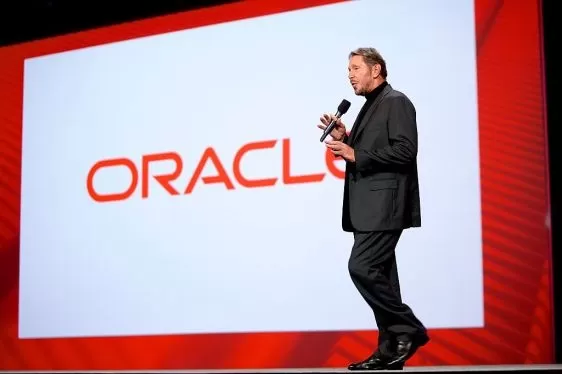
It was widely reported that Oracle laid off an estimated 20,000 to 30,000 employees via email on March 31.
One of the employees laid off that day shared their experience with TechCrunch: “I had this strange feeling in my stomach. I tried to log into the VPN, and it said, ‘this user doesn’t exist anymore.’ Then I called a friend and asked, ‘Can you see me on Slack?’ She replied, ‘No, your account has been deactivated.’”
Shortly after, the employee received an email stating their position was terminated immediately. The severance offer arrived a few days later. However, Oracle’s terms quickly became a source of dispute, and some laid-off employees pushed back.
Oracle offered fairly standard corporate America severance terms to laid-off employees. In exchange for signing a release waiving their right to sue, employees received four weeks of pay for the first year, plus one additional week per year of service, up to a maximum of 26 weeks. The company also covered one month of COBRA insurance.
The catch: Although stock compensation often constitutes a significant portion of a tech worker’s pay, especially at Oracle, the company did not accelerate RSUs that were about to vest. Any shares that had not vested by the termination date were forfeited.
This applied even to stock granted as retention incentives or in lieu of salary increases tied to promotions. According to Time, one long-tenured employee lost $1 million in stock that was just four months away from vesting; RSUs constituted about 70% of his compensation.
Some employees also discovered that if they were classified as remote workers by the company and did not work in a state with stronger worker protections, such as California or New York, the company claimed they were not eligible for WARN Act protections.
The WARN Act requires companies conducting mass layoffs to provide employees with two months' notice before termination. It is triggered when 50 or more employees are affected at a single location. By classifying employees as remote workers, the company can bypass the minimum location requirements.
Some employees were unaware they were classified as remote workers because they lived near an office and worked a hybrid schedule.
Even if they were covered by the WARN Act, this did not necessarily mean extended severance, according to the former Oracle employee. That's because Oracle included the two months of WARN notice pay in its existing calculation of four weeks plus one week per year.
For a brief period, a group of employees attempted to collectively negotiate with Oracle, according to a letter seen by TechCrunch. At least 90 people signed a public petition urging the database and cloud computing giant to match the severance terms of other major tech companies that were conducting mass layoffs in the name of AI.
For example, according to an email published by Business Insider, Meta's severance package started at 16 weeks of base pay, plus two weeks for every year of employment, and included COBRA coverage for 18 months.
Microsoft, which offered voluntary retirement packages to long-serving employees, provided accelerated stock vesting, a minimum of eight weeks' pay, and an additional one to two weeks for every six months of service, depending on rank, according to the Seattle Times.
Cloudflare, which recently laid off 20% of its workforce, offered a lump sum severance equivalent to base pay through the end of 2026, plus health insurance coverage through the end of the year, and accelerated stock vesting through August 15. So if an employee was close to receiving another tranche, they would get it.
Oracle declined to negotiate, according to an email seen by TechCrunch. It was a take-it-or-leave-it situation, the employee said.
When asked about its severance terms, the classification of employees as remote, and the employees' failed attempt to negotiate, Oracle declined to comment.
Such a reaction from the company is not surprising, even to those who hoped to negotiate. But it highlights that despite the theoretical high pay (often through stocks) and perks that tech workers enjoy in an employee's market, they have very few protections when the market shifts.
Related article
 Former Infosys Chief’s AI Startup Secures Another $53M
Hang Ten Systems, an AI startup established by former Infosys CEO Vishal Sikka just four months ago, has secured an additional $53 million in seed funding. This latest investment round was finalized merely five weeks after the initial $32 million see
Crypto exchange OKX aims to empower AI agents to hire and pay each other
As AI agents start serving individuals and collaborating with each other, they require mechanisms to locate tasks, compensate for services, and establish credibility. Crypto exchange OKX anticipates this future is arriving sooner than anticipated, in
Thiel-backed startup claims AI can judge journalism, despite risks to whistleblowers
Following his role in the lawsuit that led to Gawker’s bankruptcy, Aron D’Souza identified a critical flaw in the American media landscape: individuals harmed by coverage lacked effective means to respond.His answer is technology. D’Souza’s new ventu
Related Special Topic Recommendations
writing
Former Infosys Chief’s AI Startup Secures Another $53M
Hang Ten Systems, an AI startup established by former Infosys CEO Vishal Sikka just four months ago, has secured an additional $53 million in seed funding. This latest investment round was finalized merely five weeks after the initial $32 million see
Crypto exchange OKX aims to empower AI agents to hire and pay each other
As AI agents start serving individuals and collaborating with each other, they require mechanisms to locate tasks, compensate for services, and establish credibility. Crypto exchange OKX anticipates this future is arriving sooner than anticipated, in
Thiel-backed startup claims AI can judge journalism, despite risks to whistleblowers
Following his role in the lawsuit that led to Gawker’s bankruptcy, Aron D’Souza identified a critical flaw in the American media landscape: individuals harmed by coverage lacked effective means to respond.His answer is technology. D’Souza’s new ventu
Related Special Topic Recommendations
writing
 Best AI Outline Generators for Long-Form SEO Articles
2026 Latest Best Top-Rated AI Outline Generators for Long-Form SEO Articles, meticulously curated by XIX.AI. These powerful tools offer game-changing assistance in creating high-quality content quickly, boosting writing efficiency significantly. Get a free vs paid comparison along with real-world tests and detailed rankings to help you find the must-try option that suits your needs. Explore now to unlock your AI edge.
 8 tools
 xix.ai
Education and Learning
AI Study Tools for Homework and Exam Prep
xix.ai
Education and Learning
AI Study Tools for Homework and Exam Prep
2026 Latest Best AI Study Tools for Homework and Exam Prep! XIX.AI curates a top-rated list of powerful, game-changing tools that help students boost productivity, streamline homework completion, and ace exams through real-world tests. Get a free vs paid comparison, detailed rankings, and must-try options to unlock your AI edge. Explore now!
10 tools
xix.ai
Music composition
AI Vocal Demo Tools for Songwriters, Hooks, Toplines, and Multilingual Draft Sessions
2026 Latest Best AI Vocal Demo Tools for Songwriters, Hook Creators, and Multi-Language Content Teams! XIX.AI has curated a top-rated list of powerful game-changing tools that go through rigorous real-world tests. You’ll find detailed free vs paid comparison data, comprehensive rankings, and must-try options to help you boost writing efficiency and unlock your creative potential. Explore now to discover your perfect tool for all your content needs!
9 tools
xix.ai
Business
Best AI Competitive Research Tools for Small Businesses
2026 Latest Best Top-rated AI Competitive Research Tools for Small Businesses! XIX.AI has curated a highly powerful game-changing collection, updated weekly with rigorous real-world tests and detailed rankings. You can find a comprehensive free vs paid comparison to help you identify the must-try tools that boost your productivity and give you a competitive edge. Explore now to discover your perfect tool!
9 tools
xix.ai
Image editing
Photoshop AI Retouch Tools for Ecommerce Apparel, Skin Cleanup, and Color Consistency
2026 Latest Best Photoshop AI retouch tools for ecommerce apparel, skin cleanup, and color consistency! This top-rated curated list features powerful game-changing solutions that help you boost writing efficiency, streamline content creation, and achieve perfect visual results effortlessly. Each tool has undergone real-world tests through weekly updated rankings, complete with free vs paid comparison details. Backed by XIX.AI, it’s the must-try guide for anyone aiming to unlock your AI edge. Explore now!
10 tools
xix.ai
Prompt
Best AI Prompt Libraries for ChatGPT Workflows
2026 Latest Best Top-Rated AI Prompt Libraries for optimizing all types of ChatGPT workflows. XIX.AI has curated a powerful, game-changing collection that goes through rigorous real-world tests to ensure top performance. You can find detailed free vs paid comparisons and expert rankings to help you choose the must-try tools that boost your productivity and unlock your AI edge. Explore now!
11 tools
xix.ai

 Comments (0)
0/500
Comments (0)
0/500
It was widely reported that Oracle laid off an estimated 20,000 to 30,000 employees via email on March 31.
One of the employees laid off that day shared their experience with TechCrunch: “I had this strange feeling in my stomach. I tried to log into the VPN, and it said, ‘this user doesn’t exist anymore.’ Then I called a friend and asked, ‘Can you see me on Slack?’ She replied, ‘No, your account has been deactivated.’”
Shortly after, the employee received an email stating their position was terminated immediately. The severance offer arrived a few days later. However, Oracle’s terms quickly became a source of dispute, and some laid-off employees pushed back.
Oracle offered fairly standard corporate America severance terms to laid-off employees. In exchange for signing a release waiving their right to sue, employees received four weeks of pay for the first year, plus one additional week per year of service, up to a maximum of 26 weeks. The company also covered one month of COBRA insurance.
The catch: Although stock compensation often constitutes a significant portion of a tech worker’s pay, especially at Oracle, the company did not accelerate RSUs that were about to vest. Any shares that had not vested by the termination date were forfeited.
This applied even to stock granted as retention incentives or in lieu of salary increases tied to promotions. According to Time, one long-tenured employee lost $1 million in stock that was just four months away from vesting; RSUs constituted about 70% of his compensation.
Some employees also discovered that if they were classified as remote workers by the company and did not work in a state with stronger worker protections, such as California or New York, the company claimed they were not eligible for WARN Act protections.
The WARN Act requires companies conducting mass layoffs to provide employees with two months' notice before termination. It is triggered when 50 or more employees are affected at a single location. By classifying employees as remote workers, the company can bypass the minimum location requirements.
Some employees were unaware they were classified as remote workers because they lived near an office and worked a hybrid schedule.
Even if they were covered by the WARN Act, this did not necessarily mean extended severance, according to the former Oracle employee. That's because Oracle included the two months of WARN notice pay in its existing calculation of four weeks plus one week per year.
For a brief period, a group of employees attempted to collectively negotiate with Oracle, according to a letter seen by TechCrunch. At least 90 people signed a public petition urging the database and cloud computing giant to match the severance terms of other major tech companies that were conducting mass layoffs in the name of AI.
For example, according to an email published by Business Insider, Meta's severance package started at 16 weeks of base pay, plus two weeks for every year of employment, and included COBRA coverage for 18 months.
Microsoft, which offered voluntary retirement packages to long-serving employees, provided accelerated stock vesting, a minimum of eight weeks' pay, and an additional one to two weeks for every six months of service, depending on rank, according to the Seattle Times.
Cloudflare, which recently laid off 20% of its workforce, offered a lump sum severance equivalent to base pay through the end of 2026, plus health insurance coverage through the end of the year, and accelerated stock vesting through August 15. So if an employee was close to receiving another tranche, they would get it.
Oracle declined to negotiate, according to an email seen by TechCrunch. It was a take-it-or-leave-it situation, the employee said.
When asked about its severance terms, the classification of employees as remote, and the employees' failed attempt to negotiate, Oracle declined to comment.
Such a reaction from the company is not surprising, even to those who hoped to negotiate. But it highlights that despite the theoretical high pay (often through stocks) and perks that tech workers enjoy in an employee's market, they have very few protections when the market shifts.








 Former Infosys Chief’s AI Startup Secures Another $53M
Hang Ten Systems, an AI startup established by former Infosys CEO Vishal Sikka just four months ago, has secured an additional $53 million in seed funding. This latest investment round was finalized merely five weeks after the initial $32 million see
Former Infosys Chief’s AI Startup Secures Another $53M
Hang Ten Systems, an AI startup established by former Infosys CEO Vishal Sikka just four months ago, has secured an additional $53 million in seed funding. This latest investment round was finalized merely five weeks after the initial $32 million see
 Crypto exchange OKX aims to empower AI agents to hire and pay each other
As AI agents start serving individuals and collaborating with each other, they require mechanisms to locate tasks, compensate for services, and establish credibility. Crypto exchange OKX anticipates this future is arriving sooner than anticipated, in
Crypto exchange OKX aims to empower AI agents to hire and pay each other
As AI agents start serving individuals and collaborating with each other, they require mechanisms to locate tasks, compensate for services, and establish credibility. Crypto exchange OKX anticipates this future is arriving sooner than anticipated, in
 Thiel-backed startup claims AI can judge journalism, despite risks to whistleblowers
Following his role in the lawsuit that led to Gawker’s bankruptcy, Aron D’Souza identified a critical flaw in the American media landscape: individuals harmed by coverage lacked effective means to respond.His answer is technology. D’Souza’s new ventu
Thiel-backed startup claims AI can judge journalism, despite risks to whistleblowers
Following his role in the lawsuit that led to Gawker’s bankruptcy, Aron D’Souza identified a critical flaw in the American media landscape: individuals harmed by coverage lacked effective means to respond.His answer is technology. D’Souza’s new ventu

2026 Latest Best Top-Rated AI Outline Generators for Long-Form SEO Articles, meticulously curated by XIX.AI. These powerful tools offer game-changing assistance in creating high-quality content quickly, boosting writing efficiency significantly. Get a free vs paid comparison along with real-world tests and detailed rankings to help you find the must-try option that suits your needs. Explore now to unlock your AI edge.
8 tools
xix.ai

2026 Latest Best AI Study Tools for Homework and Exam Prep! XIX.AI curates a top-rated list of powerful, game-changing tools that help students boost productivity, streamline homework completion, and ace exams through real-world tests. Get a free vs paid comparison, detailed rankings, and must-try options to unlock your AI edge. Explore now!
10 tools
xix.ai

2026 Latest Best AI Vocal Demo Tools for Songwriters, Hook Creators, and Multi-Language Content Teams! XIX.AI has curated a top-rated list of powerful game-changing tools that go through rigorous real-world tests. You’ll find detailed free vs paid comparison data, comprehensive rankings, and must-try options to help you boost writing efficiency and unlock your creative potential. Explore now to discover your perfect tool for all your content needs!
9 tools
xix.ai

2026 Latest Best Top-rated AI Competitive Research Tools for Small Businesses! XIX.AI has curated a highly powerful game-changing collection, updated weekly with rigorous real-world tests and detailed rankings. You can find a comprehensive free vs paid comparison to help you identify the must-try tools that boost your productivity and give you a competitive edge. Explore now to discover your perfect tool!
9 tools
xix.ai

2026 Latest Best Photoshop AI retouch tools for ecommerce apparel, skin cleanup, and color consistency! This top-rated curated list features powerful game-changing solutions that help you boost writing efficiency, streamline content creation, and achieve perfect visual results effortlessly. Each tool has undergone real-world tests through weekly updated rankings, complete with free vs paid comparison details. Backed by XIX.AI, it’s the must-try guide for anyone aiming to unlock your AI edge. Explore now!
10 tools
xix.ai
2026 Latest Best Top-Rated AI Prompt Libraries for optimizing all types of ChatGPT workflows. XIX.AI has curated a powerful, game-changing collection that goes through rigorous real-world tests to ensure top performance. You can find detailed free vs paid comparisons and expert rankings to help you choose the must-try tools that boost your productivity and unlock your AI edge. Explore now!
11 tools
xix.ai












