


 Home
Home
OpenAI tightens restrictions on Chinese open-source models as Huang Renxun and Musk unite to champion openness
A fierce debate in Silicon Valley over the future of open-source AI has escalated this week. According to The New York Times, OpenAI and Anthropic are lobbying Washington regulators, citing national security and AI safety concerns, to push for restrictions on China's open-source AI models. Meanwhile, NVIDIA CEO Jensen Huang, Microsoft CEO Satya Nadella, Elon Musk, Mark Zuckerberg, and Google CEO Sundar Pichai have publicly backed open source, marking a formal split between two opposing camps.
The core of the dispute stems from the rapid ascent of China's open-source AI models. Recently, Zhipu and Yuezhidan launched open-source models capable of rivaling top American offerings, sparking concern among OpenAI and Anthropic executives who fear their competitive edge is eroding. The two companies argue that Chinese firms are improperly accessing their system data to train models and should be barred from doing so. However, industry giants like Microsoft and NVIDIA rely on open source to drive cloud services and chip demand, arguing that openness and collaboration are essential for technological progress and security, and that restricting open source would only consolidate the dominance of a few top players.
Nearly 200 startups have united, dividing Silicon Valley into two distinct factions.
The pro-open-source movement is gaining momentum. On Wednesday, nearly 200 Silicon Valley startups signed an open letter under the banner of the "Small Tech Association," urging the U.S. government not to restrict access to Chinese open-source AI models. On Friday, Jensen Huang posted on X, "The world needs both cutting-edge closed-source models and cutting-edge open-source models." Nine minutes later, Elon Musk replied in support: "Jensen Huang is right, I fully support it." Mark Zuckerberg also stated, "Open source is a positive and important force," followed by Sundar Pichai, who announced that Google had also signed the open letter.
Venture capitalist Bill Gurley summarized the situation accurately: "One side wants OpenAI and Anthropic to control everything, while the other is everyone else, including customers." Four informed sources revealed that U.S. officials currently prefer treating Chinese open-source models as a distinct national security issue rather than imposing a comprehensive ban. Meanwhile, OpenAI CEO Sam Altman publicly expressed support for open source, but his allies were quietly lobbying behind the scenes to push for restrictions. Google and Amazon chose to remain neutral on the issue.
Related article
 Apple, Google Partner With Anthropic to Address 27-Year-Old Vulnerability via Glass Wing Protection
As artificial intelligence advances rapidly in code generation and logical reasoning, the cybersecurity landscape faces unprecedented challenges. Recently, the prominent AI startup Anthropic officially launched a cross-industry collaboration called *
OpenAI Chief Scientist Addresses AI Reasoning Transparency Debate: Complexity Steady, No Sudden Jump
On September 2, Jakub Pachocki, OpenAI’s Chief Scientist, addressed public concerns on X regarding the AI model Astra, clarifying claims that it operates without oversight and lacks transparent reasoning.Why the Controversy Erupted: Deep Recurrence O
U.S. Navy Selects Blue Water Autonomy for Deep-Sea Survey Missions
Blue Water Autonomy’s Liberty Class is a 190-foot steel autonomous ship. | Source: Blue Water AutonomyBoston-based technology and shipbuilding firm Blue Water Autonomy has secured a multiple-award contract with the Naval Oceanographic Office (NAVOCEA
Related Special Topic Recommendations
Text-to-speech
Apple, Google Partner With Anthropic to Address 27-Year-Old Vulnerability via Glass Wing Protection
As artificial intelligence advances rapidly in code generation and logical reasoning, the cybersecurity landscape faces unprecedented challenges. Recently, the prominent AI startup Anthropic officially launched a cross-industry collaboration called *
OpenAI Chief Scientist Addresses AI Reasoning Transparency Debate: Complexity Steady, No Sudden Jump
On September 2, Jakub Pachocki, OpenAI’s Chief Scientist, addressed public concerns on X regarding the AI model Astra, clarifying claims that it operates without oversight and lacks transparent reasoning.Why the Controversy Erupted: Deep Recurrence O
U.S. Navy Selects Blue Water Autonomy for Deep-Sea Survey Missions
Blue Water Autonomy’s Liberty Class is a 190-foot steel autonomous ship. | Source: Blue Water AutonomyBoston-based technology and shipbuilding firm Blue Water Autonomy has secured a multiple-award contract with the Naval Oceanographic Office (NAVOCEA
Related Special Topic Recommendations
Text-to-speech
 Best AI Text to Speech Tools for Online Courses
2026 Latest Best Top-rated AI Text to Speech Tools for Online Courses are curated by XIX.AI based on rigorous real-world tests and weekly updated rankings. These powerful tools help creators deliver crystal-clear audio content effortlessly, boosting writing efficiency and streamlining course production. Check out the free vs paid comparison to find your perfect fit. Explore now to unlock your AI edge in online education.
 10 tools
 xix.ai
writing
AI Blog Title Tools for Higher Click Through Rates
xix.ai
writing
AI Blog Title Tools for Higher Click Through Rates
2026 Latest Best Top-Rated AI Blog Title Tools for Higher Click Through Rates! XIX.AI has carefully curated a powerful, game-changing collection of top tools that go through rigorous real-world tests. You’ll find a free vs paid comparison, weekly updated rankings, and detailed insights to help you boost your blog’s traffic efficiently. Must-try options are highlighted to help you unlock your AI edge. Explore now!
10 tools
xix.ai
automation
Best AI Task Routing Tools for Support Workflows
2026 Latest Best Top-rated AI Task Routing Tools for Support Workflows! XIX.AI has curated a highly powerful game-changing collection of must-try solutions, all undergoing rigorous real-world tests and updated weekly. These tools streamline workflows, boost productivity, and help teams deliver faster, more efficient support. Explore now to discover your perfect tool and unlock your AI edge!
17 tools
xix.ai
Academic Research
AI Citation and Paper Summary Tools
2026 Latest Best Top-Rated AI Citation and Paper Summary Tools Curated by XIX.AI. Get powerful game-changing solutions for quick content creation, improved writing efficiency, and boosting productivity. We offer a free vs paid comparison along with real-world tests and weekly updated rankings to help you find the must-try tool that fits your needs perfectly. Explore now to Unlock your AI edge.
10 tools
xix.ai
Productivity
Best AI Productivity Tools for Daily Work
2026 Latest Best Top-Rated AI Productivity Tools for Daily Work! XIX.AI has curated a powerful, game-changing selection based on rigorous weekly updated rankings and real-world tests. You’ll find must-try options that boost writing efficiency, streamline content creation, and help you overcome daily work challenges. Get a free vs paid comparison to find the perfect fit for your needs. Explore now to unlock your AI edge!
9 tools
xix.ai
Academic Research
AI Systematic Review Tools for Research Screening
2026 Latest Best Top-Rated AI Systematic Review Tools for Research Screening are here on XIX.AI! This curated collection includes powerful, game-changing solutions that go through rigorous real-world tests to deliver accurate results. We also offer a free vs paid comparison along with weekly updated rankings to help you find the must-try option that boosts your research efficiency significantly. Explore now to unlock your AI edge in academic work!
11 tools
xix.ai

 Comments (0)
0/500
Comments (0)
0/500
A fierce debate in Silicon Valley over the future of open-source AI has escalated this week. According to The New York Times, OpenAI and Anthropic are lobbying Washington regulators, citing national security and AI safety concerns, to push for restrictions on China's open-source AI models. Meanwhile, NVIDIA CEO Jensen Huang, Microsoft CEO Satya Nadella, Elon Musk, Mark Zuckerberg, and Google CEO Sundar Pichai have publicly backed open source, marking a formal split between two opposing camps.
The core of the dispute stems from the rapid ascent of China's open-source AI models. Recently, Zhipu and Yuezhidan launched open-source models capable of rivaling top American offerings, sparking concern among OpenAI and Anthropic executives who fear their competitive edge is eroding. The two companies argue that Chinese firms are improperly accessing their system data to train models and should be barred from doing so. However, industry giants like Microsoft and NVIDIA rely on open source to drive cloud services and chip demand, arguing that openness and collaboration are essential for technological progress and security, and that restricting open source would only consolidate the dominance of a few top players.
Nearly 200 startups have united, dividing Silicon Valley into two distinct factions.
The pro-open-source movement is gaining momentum. On Wednesday, nearly 200 Silicon Valley startups signed an open letter under the banner of the "Small Tech Association," urging the U.S. government not to restrict access to Chinese open-source AI models. On Friday, Jensen Huang posted on X, "The world needs both cutting-edge closed-source models and cutting-edge open-source models." Nine minutes later, Elon Musk replied in support: "Jensen Huang is right, I fully support it." Mark Zuckerberg also stated, "Open source is a positive and important force," followed by Sundar Pichai, who announced that Google had also signed the open letter.
Venture capitalist Bill Gurley summarized the situation accurately: "One side wants OpenAI and Anthropic to control everything, while the other is everyone else, including customers." Four informed sources revealed that U.S. officials currently prefer treating Chinese open-source models as a distinct national security issue rather than imposing a comprehensive ban. Meanwhile, OpenAI CEO Sam Altman publicly expressed support for open source, but his allies were quietly lobbying behind the scenes to push for restrictions. Google and Amazon chose to remain neutral on the issue.








 Apple, Google Partner With Anthropic to Address 27-Year-Old Vulnerability via Glass Wing Protection
As artificial intelligence advances rapidly in code generation and logical reasoning, the cybersecurity landscape faces unprecedented challenges. Recently, the prominent AI startup Anthropic officially launched a cross-industry collaboration called *
Apple, Google Partner With Anthropic to Address 27-Year-Old Vulnerability via Glass Wing Protection
As artificial intelligence advances rapidly in code generation and logical reasoning, the cybersecurity landscape faces unprecedented challenges. Recently, the prominent AI startup Anthropic officially launched a cross-industry collaboration called *
 OpenAI Chief Scientist Addresses AI Reasoning Transparency Debate: Complexity Steady, No Sudden Jump
On September 2, Jakub Pachocki, OpenAI’s Chief Scientist, addressed public concerns on X regarding the AI model Astra, clarifying claims that it operates without oversight and lacks transparent reasoning.Why the Controversy Erupted: Deep Recurrence O
OpenAI Chief Scientist Addresses AI Reasoning Transparency Debate: Complexity Steady, No Sudden Jump
On September 2, Jakub Pachocki, OpenAI’s Chief Scientist, addressed public concerns on X regarding the AI model Astra, clarifying claims that it operates without oversight and lacks transparent reasoning.Why the Controversy Erupted: Deep Recurrence O
 U.S. Navy Selects Blue Water Autonomy for Deep-Sea Survey Missions
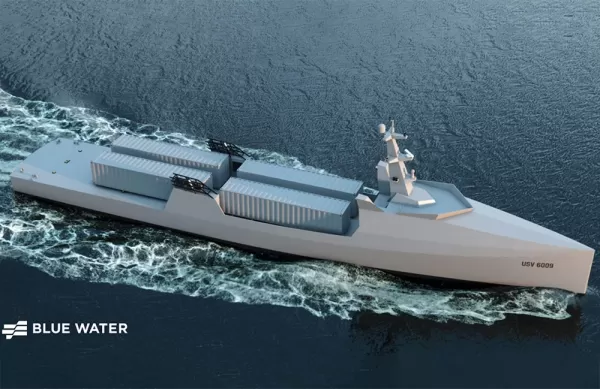
Blue Water Autonomy’s Liberty Class is a 190-foot steel autonomous ship. | Source: Blue Water AutonomyBoston-based technology and shipbuilding firm Blue Water Autonomy has secured a multiple-award contract with the Naval Oceanographic Office (NAVOCEA
U.S. Navy Selects Blue Water Autonomy for Deep-Sea Survey Missions
Blue Water Autonomy’s Liberty Class is a 190-foot steel autonomous ship. | Source: Blue Water AutonomyBoston-based technology and shipbuilding firm Blue Water Autonomy has secured a multiple-award contract with the Naval Oceanographic Office (NAVOCEA

2026 Latest Best Top-rated AI Text to Speech Tools for Online Courses are curated by XIX.AI based on rigorous real-world tests and weekly updated rankings. These powerful tools help creators deliver crystal-clear audio content effortlessly, boosting writing efficiency and streamlining course production. Check out the free vs paid comparison to find your perfect fit. Explore now to unlock your AI edge in online education.
10 tools
xix.ai

2026 Latest Best Top-Rated AI Blog Title Tools for Higher Click Through Rates! XIX.AI has carefully curated a powerful, game-changing collection of top tools that go through rigorous real-world tests. You’ll find a free vs paid comparison, weekly updated rankings, and detailed insights to help you boost your blog’s traffic efficiently. Must-try options are highlighted to help you unlock your AI edge. Explore now!
10 tools
xix.ai

2026 Latest Best Top-rated AI Task Routing Tools for Support Workflows! XIX.AI has curated a highly powerful game-changing collection of must-try solutions, all undergoing rigorous real-world tests and updated weekly. These tools streamline workflows, boost productivity, and help teams deliver faster, more efficient support. Explore now to discover your perfect tool and unlock your AI edge!
17 tools
xix.ai
2026 Latest Best Top-Rated AI Citation and Paper Summary Tools Curated by XIX.AI. Get powerful game-changing solutions for quick content creation, improved writing efficiency, and boosting productivity. We offer a free vs paid comparison along with real-world tests and weekly updated rankings to help you find the must-try tool that fits your needs perfectly. Explore now to Unlock your AI edge.
10 tools
xix.ai

2026 Latest Best Top-Rated AI Productivity Tools for Daily Work! XIX.AI has curated a powerful, game-changing selection based on rigorous weekly updated rankings and real-world tests. You’ll find must-try options that boost writing efficiency, streamline content creation, and help you overcome daily work challenges. Get a free vs paid comparison to find the perfect fit for your needs. Explore now to unlock your AI edge!
9 tools
xix.ai

2026 Latest Best Top-Rated AI Systematic Review Tools for Research Screening are here on XIX.AI! This curated collection includes powerful, game-changing solutions that go through rigorous real-world tests to deliver accurate results. We also offer a free vs paid comparison along with weekly updated rankings to help you find the must-try option that boosts your research efficiency significantly. Explore now to unlock your AI edge in academic work!
11 tools
xix.ai












