


 Home
HomeOpenAI Secures $200 Million Pentagon Contract
OpenAI now has a formal contract with the Pentagon. The US Department of Defense has awarded OpenAI a contract worth up to $200 million. This partnership will provide the government with advanced artificial intelligence tools, including those designed for proactive cybersecurity measures.
In its latest contract announcements, the DoD stated that OpenAI will "develop prototype frontier AI capabilities to tackle critical national security challenges in both military and enterprise areas." Most of the work will be performed in the Washington, D.C., area and is scheduled for completion by July 2026.
In a new blog post, OpenAI explained that this DoD agreement is the first under a new initiative to make its AI technology accessible to federal, state, and local government employees. The company will offer custom AI models for national security purposes on a "limited basis." OpenAI emphasized that all applications must adhere to its strict usage policies and guidelines, which currently prohibit using its services to "develop or use weapons" or to "injure others or destroy property."
"This contract, with a ceiling value of $200 million, will leverage OpenAI's industry-leading expertise to help the Defense Department explore and prototype how cutting-edge AI can modernize its administrative functions," OpenAI stated. This includes improving healthcare services for military personnel and their families, streamlining the analysis of program and acquisition data, and bolstering proactive cyber defense efforts.
This is not OpenAI's first foray into defense collaboration. In December 2024, the company partnered with Anduril Industries to integrate its AI software into the latter's counter-drone systems. The new one-year DoD contract marks a shift from OpenAI's earlier terms of service, which explicitly banned "military and warfare" applications—a restriction the company removed last year.
OpenAI's DoD contract is part of a broader trend of integrating AI into defense. Recently, the US renamed its AI Safety Institute to focus more specifically on mitigating national security threats. On June 5th, rival firm Anthropic announced an AI model with relaxed safeguards for US defense and intelligence agencies. In February, Google revised its AI principles, removing a commitment to avoid AI uses "that cause or are likely to cause overall harm." Additionally, Meta began permitting the US government to use its Llama AI model for "national security applications" last year.
Related article
 Sam Altman Sparks Debate Over AI's Deceleration
Listen onApple PodcastsListen onSpotifyOpenAI CEO Sam Altman recently suggested that it may be time to “pace the rate of AI development” to allow society to “harden around some of these new capability levels.”On the latest episode of TechCrunch’s Equ
OpenAI fights Apple trade secret lawsuit
OpenAI rebutted Apple’s trade secret allegations on Tuesday, arguing the lawsuit is unfounded.“We take these claims seriously but see no evidence supporting them,” OpenAI stated, as reported by Bloomberg’s Ed Ludlow on X. “We support fair competition
Ollie bets privacy focus to win AI assistant race
To be genuinely helpful, an AI assistant must understand its user deeply. Ollie, a personal assistant designed for daily life, operates on the premise that this doesn’t require surrendering your data or compromising your privacy.While certain enterpr
Related Special Topic Recommendations
Education and Learning
Sam Altman Sparks Debate Over AI's Deceleration
Listen onApple PodcastsListen onSpotifyOpenAI CEO Sam Altman recently suggested that it may be time to “pace the rate of AI development” to allow society to “harden around some of these new capability levels.”On the latest episode of TechCrunch’s Equ
OpenAI fights Apple trade secret lawsuit
OpenAI rebutted Apple’s trade secret allegations on Tuesday, arguing the lawsuit is unfounded.“We take these claims seriously but see no evidence supporting them,” OpenAI stated, as reported by Bloomberg’s Ed Ludlow on X. “We support fair competition
Ollie bets privacy focus to win AI assistant race
To be genuinely helpful, an AI assistant must understand its user deeply. Ollie, a personal assistant designed for daily life, operates on the premise that this doesn’t require surrendering your data or compromising your privacy.While certain enterpr
Related Special Topic Recommendations
Education and Learning
 AI Study Tools for Homework and Exam Prep
2026 Latest Best AI Study Tools for Homework and Exam Prep! XIX.AI curates a top-rated list of powerful, game-changing tools that help students boost productivity, streamline homework completion, and ace exams through real-world tests. Get a free vs paid comparison, detailed rankings, and must-try options to unlock your AI edge. Explore now!
 10 tools
 xix.ai
Music composition
AI Vocal Demo Tools for Songwriters, Hooks, Toplines, and Multilingual Draft Sessions
xix.ai
Music composition
AI Vocal Demo Tools for Songwriters, Hooks, Toplines, and Multilingual Draft Sessions
2026 Latest Best AI Vocal Demo Tools for Songwriters, Hook Creators, and Multi-Language Content Teams! XIX.AI has curated a top-rated list of powerful game-changing tools that go through rigorous real-world tests. You’ll find detailed free vs paid comparison data, comprehensive rankings, and must-try options to help you boost writing efficiency and unlock your creative potential. Explore now to discover your perfect tool for all your content needs!
9 tools
xix.ai
Business
Best AI Competitive Research Tools for Small Businesses
2026 Latest Best Top-rated AI Competitive Research Tools for Small Businesses! XIX.AI has curated a highly powerful game-changing collection, updated weekly with rigorous real-world tests and detailed rankings. You can find a comprehensive free vs paid comparison to help you identify the must-try tools that boost your productivity and give you a competitive edge. Explore now to discover your perfect tool!
9 tools
xix.ai
Image editing
Photoshop AI Retouch Tools for Ecommerce Apparel, Skin Cleanup, and Color Consistency
2026 Latest Best Photoshop AI retouch tools for ecommerce apparel, skin cleanup, and color consistency! This top-rated curated list features powerful game-changing solutions that help you boost writing efficiency, streamline content creation, and achieve perfect visual results effortlessly. Each tool has undergone real-world tests through weekly updated rankings, complete with free vs paid comparison details. Backed by XIX.AI, it’s the must-try guide for anyone aiming to unlock your AI edge. Explore now!
10 tools
xix.ai
Prompt
Best AI Prompt Libraries for ChatGPT Workflows
2026 Latest Best Top-Rated AI Prompt Libraries for optimizing all types of ChatGPT workflows. XIX.AI has curated a powerful, game-changing collection that goes through rigorous real-world tests to ensure top performance. You can find detailed free vs paid comparisons and expert rankings to help you choose the must-try tools that boost your productivity and unlock your AI edge. Explore now!
11 tools
xix.ai
Education and Learning
AI Quiz Builder Platforms for Teachers, Tutors, and Cohort-Based Learning Programs
2026 Latest Best AI Quiz Builder Platforms for Teachers, Tutors, and Cohort-Based Learning Programs! XIX.AI has curated a top-rated list of powerful game-changing tools that go through real-world tests to deliver accurate rankings. These must-try platforms help boost writing efficiency, streamline content creation, and simplify quiz design across all learning scenarios. Explore now to discover your perfect tool for unlocking your AI edge in teaching!
13 tools
xix.ai

 Comments (0)
0/500
Comments (0)
0/500
OpenAI now has a formal contract with the Pentagon. The US Department of Defense has awarded OpenAI a contract worth up to $200 million. This partnership will provide the government with advanced artificial intelligence tools, including those designed for proactive cybersecurity measures.
In its latest contract announcements, the DoD stated that OpenAI will "develop prototype frontier AI capabilities to tackle critical national security challenges in both military and enterprise areas." Most of the work will be performed in the Washington, D.C., area and is scheduled for completion by July 2026.
In a new blog post, OpenAI explained that this DoD agreement is the first under a new initiative to make its AI technology accessible to federal, state, and local government employees. The company will offer custom AI models for national security purposes on a "limited basis." OpenAI emphasized that all applications must adhere to its strict usage policies and guidelines, which currently prohibit using its services to "develop or use weapons" or to "injure others or destroy property."
"This contract, with a ceiling value of $200 million, will leverage OpenAI's industry-leading expertise to help the Defense Department explore and prototype how cutting-edge AI can modernize its administrative functions," OpenAI stated. This includes improving healthcare services for military personnel and their families, streamlining the analysis of program and acquisition data, and bolstering proactive cyber defense efforts.
This is not OpenAI's first foray into defense collaboration. In December 2024, the company partnered with Anduril Industries to integrate its AI software into the latter's counter-drone systems. The new one-year DoD contract marks a shift from OpenAI's earlier terms of service, which explicitly banned "military and warfare" applications—a restriction the company removed last year.
OpenAI's DoD contract is part of a broader trend of integrating AI into defense. Recently, the US renamed its AI Safety Institute to focus more specifically on mitigating national security threats. On June 5th, rival firm Anthropic announced an AI model with relaxed safeguards for US defense and intelligence agencies. In February, Google revised its AI principles, removing a commitment to avoid AI uses "that cause or are likely to cause overall harm." Additionally, Meta began permitting the US government to use its Llama AI model for "national security applications" last year.








 Sam Altman Sparks Debate Over AI's Deceleration
Listen onApple PodcastsListen onSpotifyOpenAI CEO Sam Altman recently suggested that it may be time to “pace the rate of AI development” to allow society to “harden around some of these new capability levels.”On the latest episode of TechCrunch’s Equ
Sam Altman Sparks Debate Over AI's Deceleration
Listen onApple PodcastsListen onSpotifyOpenAI CEO Sam Altman recently suggested that it may be time to “pace the rate of AI development” to allow society to “harden around some of these new capability levels.”On the latest episode of TechCrunch’s Equ
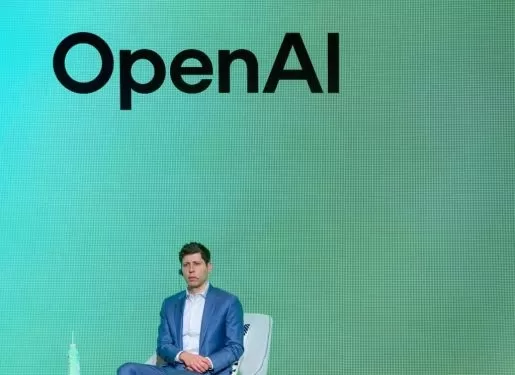 OpenAI fights Apple trade secret lawsuit
OpenAI rebutted Apple’s trade secret allegations on Tuesday, arguing the lawsuit is unfounded.“We take these claims seriously but see no evidence supporting them,” OpenAI stated, as reported by Bloomberg’s Ed Ludlow on X. “We support fair competition
OpenAI fights Apple trade secret lawsuit
OpenAI rebutted Apple’s trade secret allegations on Tuesday, arguing the lawsuit is unfounded.“We take these claims seriously but see no evidence supporting them,” OpenAI stated, as reported by Bloomberg’s Ed Ludlow on X. “We support fair competition
 Ollie bets privacy focus to win AI assistant race
To be genuinely helpful, an AI assistant must understand its user deeply. Ollie, a personal assistant designed for daily life, operates on the premise that this doesn’t require surrendering your data or compromising your privacy.While certain enterpr
Ollie bets privacy focus to win AI assistant race
To be genuinely helpful, an AI assistant must understand its user deeply. Ollie, a personal assistant designed for daily life, operates on the premise that this doesn’t require surrendering your data or compromising your privacy.While certain enterpr

2026 Latest Best AI Study Tools for Homework and Exam Prep! XIX.AI curates a top-rated list of powerful, game-changing tools that help students boost productivity, streamline homework completion, and ace exams through real-world tests. Get a free vs paid comparison, detailed rankings, and must-try options to unlock your AI edge. Explore now!
10 tools
xix.ai

2026 Latest Best AI Vocal Demo Tools for Songwriters, Hook Creators, and Multi-Language Content Teams! XIX.AI has curated a top-rated list of powerful game-changing tools that go through rigorous real-world tests. You’ll find detailed free vs paid comparison data, comprehensive rankings, and must-try options to help you boost writing efficiency and unlock your creative potential. Explore now to discover your perfect tool for all your content needs!
9 tools
xix.ai

2026 Latest Best Top-rated AI Competitive Research Tools for Small Businesses! XIX.AI has curated a highly powerful game-changing collection, updated weekly with rigorous real-world tests and detailed rankings. You can find a comprehensive free vs paid comparison to help you identify the must-try tools that boost your productivity and give you a competitive edge. Explore now to discover your perfect tool!
9 tools
xix.ai

2026 Latest Best Photoshop AI retouch tools for ecommerce apparel, skin cleanup, and color consistency! This top-rated curated list features powerful game-changing solutions that help you boost writing efficiency, streamline content creation, and achieve perfect visual results effortlessly. Each tool has undergone real-world tests through weekly updated rankings, complete with free vs paid comparison details. Backed by XIX.AI, it’s the must-try guide for anyone aiming to unlock your AI edge. Explore now!
10 tools
xix.ai
2026 Latest Best Top-Rated AI Prompt Libraries for optimizing all types of ChatGPT workflows. XIX.AI has curated a powerful, game-changing collection that goes through rigorous real-world tests to ensure top performance. You can find detailed free vs paid comparisons and expert rankings to help you choose the must-try tools that boost your productivity and unlock your AI edge. Explore now!
11 tools
xix.ai

2026 Latest Best AI Quiz Builder Platforms for Teachers, Tutors, and Cohort-Based Learning Programs! XIX.AI has curated a top-rated list of powerful game-changing tools that go through real-world tests to deliver accurate rankings. These must-try platforms help boost writing efficiency, streamline content creation, and simplify quiz design across all learning scenarios. Explore now to discover your perfect tool for unlocking your AI edge in teaching!
13 tools
xix.ai












