


 Home
HomeOffshore Floating Data Centers Emerge as Earthbound Alternative
The energy demands of AI data centers have become so intense that discussions are emerging about deploying servers into space to harness continuous solar power – and it's not just Elon Musk proposing this.
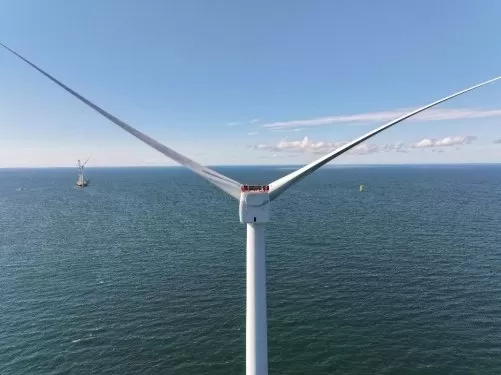
One startup believes the ocean offers a more viable alternative. Offshore wind developer Aikido intends to submerge a 100-kilowatt demonstration data center off Norway's coast this year. The compact unit will be housed within the submerged sections of a floating offshore wind turbine.
If the trial succeeds, the company aims to construct a larger version for deployment off the UK coast by 2028. That upgraded model will feature a 15 to 18 megawatt turbine supplying power to a 10 to 12 megawatt data center.
Moving offshore addresses several key challenges. Direct access to power is an obvious advantage, with the energy source positioned directly above. Offshore winds are more consistent than on land, and a small battery system could manage any temporary calm periods.
Submerged data centers could also alleviate opposition from NIMBY groups – "not in my backyard" – who often resist nearby data centers due to noise and environmental concerns.
Additionally, floating in cold seawater simplifies server cooling. (This contrasts with orbital data centers, where cooling presents particular difficulties in the vacuum of space.)
However, while offshore data centers solve certain problems, they introduce new complications. The marine environment is notoriously harsh. Although submerged servers would avoid direct wave impact, they wouldn't remain perfectly stationary, requiring secure fastening. Seawater's corrosive nature also demands specially designed equipment – including the container, power, and data connections – with enhanced corrosion resistance.
Aikido isn't pioneering the concept of underwater data centers. Microsoft first explored the idea over ten years ago and conducted a moderately successful experiment off Scotland in 2018. During the 25-month trial, only six out of more than 850 servers failed. (The data hall was filled with inert nitrogen gas, which likely contributed to the low failure rate.)
Microsoft secured numerous patents over the years, making them openly available in 2021. However, by 2024, the company had discontinued the project.
Related article
 Does Mark Zuckerberg Really Believe AI Is for Everyone?
Loading the player…Meta introduced Glimmer this week, an open-weight AI model that anyone can download and run on personal hardware—a sharp contrast to Muse Spark, the company’s more powerful model, which remains locked behind its own APIs. The relea
Meta borrows Tesla’s tent strategy to construct data centers
Just when you thought the AI data center boom couldn’t get any crazier, Meta has gone and built data centers in tents. The strategy appears to borrow in equal parts from Tesla and xAI.In a bid to cut construction time in half, Meta has built six tent
Groq raises $350M to fuel its pivot from AI chips to neocloud
AI infrastructure firm Groq has secured $350 million in fresh funding, marking its ongoing transition from a specialized chip developer to a neocloud provider offering robust GPU and AI infrastructure services.Backed by Disruptive Technologies, with
Related Special Topic Recommendations
writing
Does Mark Zuckerberg Really Believe AI Is for Everyone?
Loading the player…Meta introduced Glimmer this week, an open-weight AI model that anyone can download and run on personal hardware—a sharp contrast to Muse Spark, the company’s more powerful model, which remains locked behind its own APIs. The relea
Meta borrows Tesla’s tent strategy to construct data centers
Just when you thought the AI data center boom couldn’t get any crazier, Meta has gone and built data centers in tents. The strategy appears to borrow in equal parts from Tesla and xAI.In a bid to cut construction time in half, Meta has built six tent
Groq raises $350M to fuel its pivot from AI chips to neocloud
AI infrastructure firm Groq has secured $350 million in fresh funding, marking its ongoing transition from a specialized chip developer to a neocloud provider offering robust GPU and AI infrastructure services.Backed by Disruptive Technologies, with
Related Special Topic Recommendations
writing
 Best AI Outline Generators for Long-Form SEO Articles
2026 Latest Best Top-Rated AI Outline Generators for Long-Form SEO Articles, meticulously curated by XIX.AI. These powerful tools offer game-changing assistance in creating high-quality content quickly, boosting writing efficiency significantly. Get a free vs paid comparison along with real-world tests and detailed rankings to help you find the must-try option that suits your needs. Explore now to unlock your AI edge.
 8 tools
 xix.ai
Education and Learning
AI Study Tools for Homework and Exam Prep
xix.ai
Education and Learning
AI Study Tools for Homework and Exam Prep
2026 Latest Best AI Study Tools for Homework and Exam Prep! XIX.AI curates a top-rated list of powerful, game-changing tools that help students boost productivity, streamline homework completion, and ace exams through real-world tests. Get a free vs paid comparison, detailed rankings, and must-try options to unlock your AI edge. Explore now!
10 tools
xix.ai
Music composition
AI Vocal Demo Tools for Songwriters, Hooks, Toplines, and Multilingual Draft Sessions
2026 Latest Best AI Vocal Demo Tools for Songwriters, Hook Creators, and Multi-Language Content Teams! XIX.AI has curated a top-rated list of powerful game-changing tools that go through rigorous real-world tests. You’ll find detailed free vs paid comparison data, comprehensive rankings, and must-try options to help you boost writing efficiency and unlock your creative potential. Explore now to discover your perfect tool for all your content needs!
9 tools
xix.ai
Business
Best AI Competitive Research Tools for Small Businesses
2026 Latest Best Top-rated AI Competitive Research Tools for Small Businesses! XIX.AI has curated a highly powerful game-changing collection, updated weekly with rigorous real-world tests and detailed rankings. You can find a comprehensive free vs paid comparison to help you identify the must-try tools that boost your productivity and give you a competitive edge. Explore now to discover your perfect tool!
9 tools
xix.ai
Image editing
Photoshop AI Retouch Tools for Ecommerce Apparel, Skin Cleanup, and Color Consistency
2026 Latest Best Photoshop AI retouch tools for ecommerce apparel, skin cleanup, and color consistency! This top-rated curated list features powerful game-changing solutions that help you boost writing efficiency, streamline content creation, and achieve perfect visual results effortlessly. Each tool has undergone real-world tests through weekly updated rankings, complete with free vs paid comparison details. Backed by XIX.AI, it’s the must-try guide for anyone aiming to unlock your AI edge. Explore now!
10 tools
xix.ai
Prompt
Best AI Prompt Libraries for ChatGPT Workflows
2026 Latest Best Top-Rated AI Prompt Libraries for optimizing all types of ChatGPT workflows. XIX.AI has curated a powerful, game-changing collection that goes through rigorous real-world tests to ensure top performance. You can find detailed free vs paid comparisons and expert rankings to help you choose the must-try tools that boost your productivity and unlock your AI edge. Explore now!
11 tools
xix.ai

 Comments (3)
0/500
Comments (3)
0/500
![ThomasRoberts]()
Wait, so instead of launching servers into space, we're just gonna float them on the ocean? That's... actually kinda genius? 🌊 Less rocket fuel, more saltwater corrosion though. Wonder how they'd handle hurricanes. Still, beats the heck out of those land-based power hogs. 😅
![JonathanNelson]()
Whoa, floating data centers? That's way more practical than blasting servers into space. But won't the salty sea air corrode everything? Guess we'll need some serious waterproofing and maybe a few dolphins to do tech support 🐬😂
![AlbertRoberts]()
Interesting idea, but floating data centers? The ocean is already struggling with pollution and temperature changes. Wouldn't this just add more heat and risk to marine ecosystems? Seems like we're solving one problem by creating another. 🌊🤔
The energy demands of AI data centers have become so intense that discussions are emerging about deploying servers into space to harness continuous solar power – and it's not just Elon Musk proposing this.
One startup believes the ocean offers a more viable alternative. Offshore wind developer Aikido intends to submerge a 100-kilowatt demonstration data center off Norway's coast this year. The compact unit will be housed within the submerged sections of a floating offshore wind turbine.
If the trial succeeds, the company aims to construct a larger version for deployment off the UK coast by 2028. That upgraded model will feature a 15 to 18 megawatt turbine supplying power to a 10 to 12 megawatt data center.
Moving offshore addresses several key challenges. Direct access to power is an obvious advantage, with the energy source positioned directly above. Offshore winds are more consistent than on land, and a small battery system could manage any temporary calm periods.
Submerged data centers could also alleviate opposition from NIMBY groups – "not in my backyard" – who often resist nearby data centers due to noise and environmental concerns.
Additionally, floating in cold seawater simplifies server cooling. (This contrasts with orbital data centers, where cooling presents particular difficulties in the vacuum of space.)
However, while offshore data centers solve certain problems, they introduce new complications. The marine environment is notoriously harsh. Although submerged servers would avoid direct wave impact, they wouldn't remain perfectly stationary, requiring secure fastening. Seawater's corrosive nature also demands specially designed equipment – including the container, power, and data connections – with enhanced corrosion resistance.
Aikido isn't pioneering the concept of underwater data centers. Microsoft first explored the idea over ten years ago and conducted a moderately successful experiment off Scotland in 2018. During the 25-month trial, only six out of more than 850 servers failed. (The data hall was filled with inert nitrogen gas, which likely contributed to the low failure rate.)
Microsoft secured numerous patents over the years, making them openly available in 2021. However, by 2024, the company had discontinued the project.








 Does Mark Zuckerberg Really Believe AI Is for Everyone?
Loading the player…Meta introduced Glimmer this week, an open-weight AI model that anyone can download and run on personal hardware—a sharp contrast to Muse Spark, the company’s more powerful model, which remains locked behind its own APIs. The relea
Does Mark Zuckerberg Really Believe AI Is for Everyone?
Loading the player…Meta introduced Glimmer this week, an open-weight AI model that anyone can download and run on personal hardware—a sharp contrast to Muse Spark, the company’s more powerful model, which remains locked behind its own APIs. The relea
 Meta borrows Tesla’s tent strategy to construct data centers
Just when you thought the AI data center boom couldn’t get any crazier, Meta has gone and built data centers in tents. The strategy appears to borrow in equal parts from Tesla and xAI.In a bid to cut construction time in half, Meta has built six tent
Meta borrows Tesla’s tent strategy to construct data centers
Just when you thought the AI data center boom couldn’t get any crazier, Meta has gone and built data centers in tents. The strategy appears to borrow in equal parts from Tesla and xAI.In a bid to cut construction time in half, Meta has built six tent
 Groq raises $350M to fuel its pivot from AI chips to neocloud
AI infrastructure firm Groq has secured $350 million in fresh funding, marking its ongoing transition from a specialized chip developer to a neocloud provider offering robust GPU and AI infrastructure services.Backed by Disruptive Technologies, with
Groq raises $350M to fuel its pivot from AI chips to neocloud
AI infrastructure firm Groq has secured $350 million in fresh funding, marking its ongoing transition from a specialized chip developer to a neocloud provider offering robust GPU and AI infrastructure services.Backed by Disruptive Technologies, with

2026 Latest Best Top-Rated AI Outline Generators for Long-Form SEO Articles, meticulously curated by XIX.AI. These powerful tools offer game-changing assistance in creating high-quality content quickly, boosting writing efficiency significantly. Get a free vs paid comparison along with real-world tests and detailed rankings to help you find the must-try option that suits your needs. Explore now to unlock your AI edge.
8 tools
xix.ai

2026 Latest Best AI Study Tools for Homework and Exam Prep! XIX.AI curates a top-rated list of powerful, game-changing tools that help students boost productivity, streamline homework completion, and ace exams through real-world tests. Get a free vs paid comparison, detailed rankings, and must-try options to unlock your AI edge. Explore now!
10 tools
xix.ai

2026 Latest Best AI Vocal Demo Tools for Songwriters, Hook Creators, and Multi-Language Content Teams! XIX.AI has curated a top-rated list of powerful game-changing tools that go through rigorous real-world tests. You’ll find detailed free vs paid comparison data, comprehensive rankings, and must-try options to help you boost writing efficiency and unlock your creative potential. Explore now to discover your perfect tool for all your content needs!
9 tools
xix.ai

2026 Latest Best Top-rated AI Competitive Research Tools for Small Businesses! XIX.AI has curated a highly powerful game-changing collection, updated weekly with rigorous real-world tests and detailed rankings. You can find a comprehensive free vs paid comparison to help you identify the must-try tools that boost your productivity and give you a competitive edge. Explore now to discover your perfect tool!
9 tools
xix.ai

2026 Latest Best Photoshop AI retouch tools for ecommerce apparel, skin cleanup, and color consistency! This top-rated curated list features powerful game-changing solutions that help you boost writing efficiency, streamline content creation, and achieve perfect visual results effortlessly. Each tool has undergone real-world tests through weekly updated rankings, complete with free vs paid comparison details. Backed by XIX.AI, it’s the must-try guide for anyone aiming to unlock your AI edge. Explore now!
10 tools
xix.ai

2026 Latest Best Top-Rated AI Prompt Libraries for optimizing all types of ChatGPT workflows. XIX.AI has curated a powerful, game-changing collection that goes through rigorous real-world tests to ensure top performance. You can find detailed free vs paid comparisons and expert rankings to help you choose the must-try tools that boost your productivity and unlock your AI edge. Explore now!
11 tools
xix.ai

Wait, so instead of launching servers into space, we're just gonna float them on the ocean? That's... actually kinda genius? 🌊 Less rocket fuel, more saltwater corrosion though. Wonder how they'd handle hurricanes. Still, beats the heck out of those land-based power hogs. 😅
Whoa, floating data centers? That's way more practical than blasting servers into space. But won't the salty sea air corrode everything? Guess we'll need some serious waterproofing and maybe a few dolphins to do tech support 🐬😂
Interesting idea, but floating data centers? The ocean is already struggling with pollution and temperature changes. Wouldn't this just add more heat and risk to marine ecosystems? Seems like we're solving one problem by creating another. 🌊🤔












