


 Home
HomeNvidia Project Digits: A Linux-powered desktop for AI developers
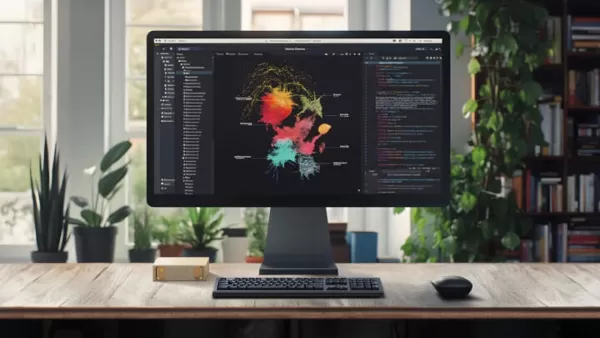
The buzz at CES 2025 has been all about AI-powered TVs, innovative smart home gadgets, and the latest laptop releases. But for me, the real game-changer is Nvidia's Project Digits. This desktop AI supercomputer is set to revolutionize the world of artificial intelligence by delivering unmatched computing power directly to developers, researchers, and students. And guess what? It's powered by Nvidia's DGX OS, a tailored version of Ubuntu Linux 22.04.
DGX OS isn't just any Linux distro; it's fine-tuned with specific optimizations, configurations, drivers, and tools for monitoring and diagnostics. It's designed to run AI, machine learning, and analytics applications seamlessly on Nvidia DGX Supercomputers.
More Than Just Hardware
Nvidia isn't stopping at hardware. They're also rolling out AI software development kits, orchestration tools, and the Nvidia NGC catalog with frameworks and models. Plus, there's the Nvidia NeMo framework for fine-tuning models and Nvidia Rapids libraries to speed up data science tasks. And since it's built on Ubuntu Linux, you can run all your favorite Ubuntu and Linux software. I mean, who wouldn't want to play Doom on this beast?
Compact Powerhouse
Imagine a box the size of a Mac mini packing a petaflop of AI performance. That's what Nvidia's Project Digits promises. A petaflop, for those not in the know, is a quadrillion (1,000,000,000,000,000) floating-point operations per second. Before IBM's Roadrunner supercomputer in 2008, no one had ever reached that speed. Now, you could have it right on your desk. Even the latest Top 500 SuperComputer List features machines that barely surpass two petaflops, and they need over a thousand cores to do it. And yes, they all run Linux.
Project Digits, powered by Nvidia's new GB10 Grace Blackwell Superchip, is nearly as fast as those top-tier supercomputers. With 128GB of memory and Nvidia's AI software stack preinstalled, developers can work on large AI models up to 200 billion parameters locally, then easily deploy them to data centers or the cloud.
The Grace Blackwell Superchip
Named after Grace Hopper, the legendary computer scientist and "Mother of Cobol," and David Harold Blackwell, a pioneering mathematician, the Grace Blackwell Superchip is a marvel. It features an ARM-based Grace CPU with 10 Cortex-X925 and 10 Cortex-A725 cores, totaling 20 cores. This is complemented by a Blackwell GPU with the latest CUDA and RT cores. With 128GB of RAM and up to 4TB of flash storage, this chip is ready to tackle any task.
Nvidia promises that AI developers can handle models up to 200 billion parameters on a single unit. For even more demanding tasks, you can connect two Project Digits machines to manage models with up to 405 billion parameters.
A New Era for AI Development
Nvidia's CEO, Jensen Huang, highlighted the transformative potential of Project Digits, saying, "Placing an AI supercomputer on the desks of every data scientist, AI researcher, and student empowers them to engage with and shape the age of AI."
Priced at a starting point of $3,000, Project Digits aims to democratize high-performance AI development, making it accessible to small businesses and educational institutions. At this price, I wouldn't be surprised to see these desktops popping up in homes.
Set to launch in May 2025, this Linux-powered system is poised to redefine AI development by bringing data center-level performance to a compact, desk-friendly package. I'm already planning how to get my hands on one.
Related article
 Musk Considered Leaving OpenAI to His Kids as Altman Testifies
This morning, OpenAI CEO Sam Altman took the stand to address former co-founder Elon Musk’s lawsuit challenging the company’s corporate structure.When asked about Musk’s claim that other founders “stole a charity” by launching a for-profit subsidiary
Sam Altman Sparks Debate Over AI's Deceleration
Listen onApple PodcastsListen onSpotifyOpenAI CEO Sam Altman recently suggested that it may be time to “pace the rate of AI development” to allow society to “harden around some of these new capability levels.”On the latest episode of TechCrunch’s Equ
Anthropic Opens Doors to EU Cybersecurity Agency as Mythos5 Model Faces Compliance Exam
Artificial intelligence compliance regulations are advancing significantly. Leading AI firm Anthropic has officially granted the European Union's cybersecurity authority access to its Mythos AI model, a pivotal move for this advanced large language m
Related Special Topic Recommendations
Prompt
Musk Considered Leaving OpenAI to His Kids as Altman Testifies
This morning, OpenAI CEO Sam Altman took the stand to address former co-founder Elon Musk’s lawsuit challenging the company’s corporate structure.When asked about Musk’s claim that other founders “stole a charity” by launching a for-profit subsidiary
Sam Altman Sparks Debate Over AI's Deceleration
Listen onApple PodcastsListen onSpotifyOpenAI CEO Sam Altman recently suggested that it may be time to “pace the rate of AI development” to allow society to “harden around some of these new capability levels.”On the latest episode of TechCrunch’s Equ
Anthropic Opens Doors to EU Cybersecurity Agency as Mythos5 Model Faces Compliance Exam
Artificial intelligence compliance regulations are advancing significantly. Leading AI firm Anthropic has officially granted the European Union's cybersecurity authority access to its Mythos AI model, a pivotal move for this advanced large language m
Related Special Topic Recommendations
Prompt
 Best AI Prompt Libraries for ChatGPT Workflows
2026 Latest Best Top-Rated AI Prompt Libraries for optimizing all types of ChatGPT workflows. XIX.AI has curated a powerful, game-changing collection that goes through rigorous real-world tests to ensure top performance. You can find detailed free vs paid comparisons and expert rankings to help you choose the must-try tools that boost your productivity and unlock your AI edge. Explore now!
 11 tools
 xix.ai
Education and Learning
AI Quiz Builder Platforms for Teachers, Tutors, and Cohort-Based Learning Programs
xix.ai
Education and Learning
AI Quiz Builder Platforms for Teachers, Tutors, and Cohort-Based Learning Programs
2026 Latest Best AI Quiz Builder Platforms for Teachers, Tutors, and Cohort-Based Learning Programs! XIX.AI has curated a top-rated list of powerful game-changing tools that go through real-world tests to deliver accurate rankings. These must-try platforms help boost writing efficiency, streamline content creation, and simplify quiz design across all learning scenarios. Explore now to discover your perfect tool for unlocking your AI edge in teaching!
13 tools
xix.ai
code
AI Pull Request Review Tools for GitHub Teams Handling Refactors, Bugs, and Security Gaps
2026 Latest Best AI Pull Request Review Tools for GitHub Teams are here on XIX.AI! This top-rated curated list showcases powerful game-changing solutions that streamline refactoring, bug fixing, and security gap detection across all team workflows. Enjoy a free vs paid comparison along with real-world tests and detailed rankings to help you find the perfect tool that boosts productivity significantly. Explore now to unlock your AI edge!
12 tools
xix.ai
Text-to-speech
Best AI Text to Speech Tools for Natural Voiceovers
2026 Latest Best Top-rated AI Text to Speech Tools for Natural Voiceovers are here on XIX.AI! This curated list features powerful, game-changing options that deliver crystal-clear voices for every use case, backed by real-world tests and weekly updated rankings. Get a free vs paid comparison to find the must-try solution that boosts your productivity instantly. Explore now to Unlock your AI edge!
11 tools
xix.ai
Comic Creation
Manga AI Background Generators for Serialized Chapters, Covers, and Promo Art
2026 Latest Best Manga AI Background Generators Ranked Top-Rated! This curated collection showcases powerful game-changing tools perfect for creating high-quality chapter backgrounds, book covers, and promotional art. Every option has undergone rigorous real-world tests to ensure reliability. Get a free vs paid comparison along with detailed insights. Explore now to discover your perfect tool and unlock your AI edge in manga creation.
6 tools
xix.ai
Image editing
AI Object Removal Editors: Clean Up Portraits, Travel, and Product Shots
2026 Latest Best Top-rated AI Object Removal Editors for portraits travel product shots! XIX.AI curates a powerful game-changing collection regularly updated with weekly rankings. These tools offer real-world tests to help you quickly remove unwanted elements, boost content quality, and save tons of time without compromising results. Must-try for anyone aiming to unlock their AI creation edge. Explore now!
10 tools
xix.ai

 Comments (17)
0/500
Comments (17)
0/500
![DonaldYoung]()
Wait, Nvidia finally made a desktop AI supercomputer that doesn’t need a datacenter? If Project Digits actually delivers the promised compute power for local model training, it could kill the whole “rent GPU time in cloud” hustle for indie developers. But real talk—will it cost less than half a year of cloud billing? 😅
![HarryLewis]()
회사에서 AI 개발을 좀 해본 적이 있어요. 엔비디아가 리눅스 데스크톱을 출시한다니 완전 신선했어요! 🤔 사실 다른 AI 회사들처럼 자체 운영체제 개발은 예상했지만, 리눅스를 기반으로 했다는 점이 의외였죠. 어쩌면 오픈소스 생태계와의 호환성을 중요하게 생각해서일 수도? 이게 성공하면 개발자들이 더 편해질 거 같아서 기대되네요.
![WillGarcía]()
NvidiaのProject Digitsは素晴らしいですね!AI開発者としては、Linuxベースのデスクトップがスーパーコンピューターのように使えるのは夢のようです。価格は高いですが、パフォーマンスは信じられないほどです。これで何が作れるか楽しみです!🚀
![PaulTaylor]()
¡El Project Digits de Nvidia es una bestia! Como desarrollador de IA, tener un escritorio alimentado por Linux que es básicamente un supercomputador es un sueño hecho realidad. Es caro, pero el rendimiento es irreal. ¡No puedo esperar para ver qué puedo crear con esto! 🚀
![CarlGarcia]()
O Project Digits da Nvidia é insano! Estava esperando por um desktop Linux especificamente para desenvolvedores de IA. O poder de computação é fora de série e com certeza vai mudar o jogo. Mal posso esperar para ter um! 💻
![KeithNelson]()
Nvidia's Project Digits is a beast! As an AI developer, having a Linux-powered desktop that's basically a supercomputer is a dream come true. It's pricey, but the performance is unreal. Can't wait to see what I can create with this! 🚀
The buzz at CES 2025 has been all about AI-powered TVs, innovative smart home gadgets, and the latest laptop releases. But for me, the real game-changer is Nvidia's Project Digits. This desktop AI supercomputer is set to revolutionize the world of artificial intelligence by delivering unmatched computing power directly to developers, researchers, and students. And guess what? It's powered by Nvidia's DGX OS, a tailored version of Ubuntu Linux 22.04.
DGX OS isn't just any Linux distro; it's fine-tuned with specific optimizations, configurations, drivers, and tools for monitoring and diagnostics. It's designed to run AI, machine learning, and analytics applications seamlessly on Nvidia DGX Supercomputers.
More Than Just Hardware
Nvidia isn't stopping at hardware. They're also rolling out AI software development kits, orchestration tools, and the Nvidia NGC catalog with frameworks and models. Plus, there's the Nvidia NeMo framework for fine-tuning models and Nvidia Rapids libraries to speed up data science tasks. And since it's built on Ubuntu Linux, you can run all your favorite Ubuntu and Linux software. I mean, who wouldn't want to play Doom on this beast?
Compact Powerhouse
Imagine a box the size of a Mac mini packing a petaflop of AI performance. That's what Nvidia's Project Digits promises. A petaflop, for those not in the know, is a quadrillion (1,000,000,000,000,000) floating-point operations per second. Before IBM's Roadrunner supercomputer in 2008, no one had ever reached that speed. Now, you could have it right on your desk. Even the latest Top 500 SuperComputer List features machines that barely surpass two petaflops, and they need over a thousand cores to do it. And yes, they all run Linux.
Project Digits, powered by Nvidia's new GB10 Grace Blackwell Superchip, is nearly as fast as those top-tier supercomputers. With 128GB of memory and Nvidia's AI software stack preinstalled, developers can work on large AI models up to 200 billion parameters locally, then easily deploy them to data centers or the cloud.
The Grace Blackwell Superchip
Named after Grace Hopper, the legendary computer scientist and "Mother of Cobol," and David Harold Blackwell, a pioneering mathematician, the Grace Blackwell Superchip is a marvel. It features an ARM-based Grace CPU with 10 Cortex-X925 and 10 Cortex-A725 cores, totaling 20 cores. This is complemented by a Blackwell GPU with the latest CUDA and RT cores. With 128GB of RAM and up to 4TB of flash storage, this chip is ready to tackle any task.
Nvidia promises that AI developers can handle models up to 200 billion parameters on a single unit. For even more demanding tasks, you can connect two Project Digits machines to manage models with up to 405 billion parameters.
A New Era for AI Development
Nvidia's CEO, Jensen Huang, highlighted the transformative potential of Project Digits, saying, "Placing an AI supercomputer on the desks of every data scientist, AI researcher, and student empowers them to engage with and shape the age of AI."
Priced at a starting point of $3,000, Project Digits aims to democratize high-performance AI development, making it accessible to small businesses and educational institutions. At this price, I wouldn't be surprised to see these desktops popping up in homes.
Set to launch in May 2025, this Linux-powered system is poised to redefine AI development by bringing data center-level performance to a compact, desk-friendly package. I'm already planning how to get my hands on one.








 Musk Considered Leaving OpenAI to His Kids as Altman Testifies
This morning, OpenAI CEO Sam Altman took the stand to address former co-founder Elon Musk’s lawsuit challenging the company’s corporate structure.When asked about Musk’s claim that other founders “stole a charity” by launching a for-profit subsidiary
Musk Considered Leaving OpenAI to His Kids as Altman Testifies
This morning, OpenAI CEO Sam Altman took the stand to address former co-founder Elon Musk’s lawsuit challenging the company’s corporate structure.When asked about Musk’s claim that other founders “stole a charity” by launching a for-profit subsidiary
 Sam Altman Sparks Debate Over AI's Deceleration
Listen onApple PodcastsListen onSpotifyOpenAI CEO Sam Altman recently suggested that it may be time to “pace the rate of AI development” to allow society to “harden around some of these new capability levels.”On the latest episode of TechCrunch’s Equ
Sam Altman Sparks Debate Over AI's Deceleration
Listen onApple PodcastsListen onSpotifyOpenAI CEO Sam Altman recently suggested that it may be time to “pace the rate of AI development” to allow society to “harden around some of these new capability levels.”On the latest episode of TechCrunch’s Equ
 Anthropic Opens Doors to EU Cybersecurity Agency as Mythos5 Model Faces Compliance Exam
Artificial intelligence compliance regulations are advancing significantly. Leading AI firm Anthropic has officially granted the European Union's cybersecurity authority access to its Mythos AI model, a pivotal move for this advanced large language m
Anthropic Opens Doors to EU Cybersecurity Agency as Mythos5 Model Faces Compliance Exam
Artificial intelligence compliance regulations are advancing significantly. Leading AI firm Anthropic has officially granted the European Union's cybersecurity authority access to its Mythos AI model, a pivotal move for this advanced large language m

2026 Latest Best Top-Rated AI Prompt Libraries for optimizing all types of ChatGPT workflows. XIX.AI has curated a powerful, game-changing collection that goes through rigorous real-world tests to ensure top performance. You can find detailed free vs paid comparisons and expert rankings to help you choose the must-try tools that boost your productivity and unlock your AI edge. Explore now!
11 tools
xix.ai

2026 Latest Best AI Quiz Builder Platforms for Teachers, Tutors, and Cohort-Based Learning Programs! XIX.AI has curated a top-rated list of powerful game-changing tools that go through real-world tests to deliver accurate rankings. These must-try platforms help boost writing efficiency, streamline content creation, and simplify quiz design across all learning scenarios. Explore now to discover your perfect tool for unlocking your AI edge in teaching!
13 tools
xix.ai

2026 Latest Best AI Pull Request Review Tools for GitHub Teams are here on XIX.AI! This top-rated curated list showcases powerful game-changing solutions that streamline refactoring, bug fixing, and security gap detection across all team workflows. Enjoy a free vs paid comparison along with real-world tests and detailed rankings to help you find the perfect tool that boosts productivity significantly. Explore now to unlock your AI edge!
12 tools
xix.ai

2026 Latest Best Top-rated AI Text to Speech Tools for Natural Voiceovers are here on XIX.AI! This curated list features powerful, game-changing options that deliver crystal-clear voices for every use case, backed by real-world tests and weekly updated rankings. Get a free vs paid comparison to find the must-try solution that boosts your productivity instantly. Explore now to Unlock your AI edge!
11 tools
xix.ai

2026 Latest Best Manga AI Background Generators Ranked Top-Rated! This curated collection showcases powerful game-changing tools perfect for creating high-quality chapter backgrounds, book covers, and promotional art. Every option has undergone rigorous real-world tests to ensure reliability. Get a free vs paid comparison along with detailed insights. Explore now to discover your perfect tool and unlock your AI edge in manga creation.
6 tools
xix.ai

2026 Latest Best Top-rated AI Object Removal Editors for portraits travel product shots! XIX.AI curates a powerful game-changing collection regularly updated with weekly rankings. These tools offer real-world tests to help you quickly remove unwanted elements, boost content quality, and save tons of time without compromising results. Must-try for anyone aiming to unlock their AI creation edge. Explore now!
10 tools
xix.ai

Wait, Nvidia finally made a desktop AI supercomputer that doesn’t need a datacenter? If Project Digits actually delivers the promised compute power for local model training, it could kill the whole “rent GPU time in cloud” hustle for indie developers. But real talk—will it cost less than half a year of cloud billing? 😅
회사에서 AI 개발을 좀 해본 적이 있어요. 엔비디아가 리눅스 데스크톱을 출시한다니 완전 신선했어요! 🤔 사실 다른 AI 회사들처럼 자체 운영체제 개발은 예상했지만, 리눅스를 기반으로 했다는 점이 의외였죠. 어쩌면 오픈소스 생태계와의 호환성을 중요하게 생각해서일 수도? 이게 성공하면 개발자들이 더 편해질 거 같아서 기대되네요.
NvidiaのProject Digitsは素晴らしいですね!AI開発者としては、Linuxベースのデスクトップがスーパーコンピューターのように使えるのは夢のようです。価格は高いですが、パフォーマンスは信じられないほどです。これで何が作れるか楽しみです!🚀
¡El Project Digits de Nvidia es una bestia! Como desarrollador de IA, tener un escritorio alimentado por Linux que es básicamente un supercomputador es un sueño hecho realidad. Es caro, pero el rendimiento es irreal. ¡No puedo esperar para ver qué puedo crear con esto! 🚀
O Project Digits da Nvidia é insano! Estava esperando por um desktop Linux especificamente para desenvolvedores de IA. O poder de computação é fora de série e com certeza vai mudar o jogo. Mal posso esperar para ter um! 💻
Nvidia's Project Digits is a beast! As an AI developer, having a Linux-powered desktop that's basically a supercomputer is a dream come true. It's pricey, but the performance is unreal. Can't wait to see what I can create with this! 🚀












