


 Home
HomeCurrent Trends and Challenges in UX Design: AI's Role Unveiled
The UX industry is rapidly transforming, offering both opportunities and obstacles. This guide delves into the current UX landscape, providing expert insights on navigating the job market, tackling industry challenges, and assessing AI's influence. Whether you're an experienced UX designer or a newcomer, this resource delivers essential perspectives to succeed in today's dynamic environment.
Key Points
The UX job market is highly competitive, with growing demands for diverse skills.
Many UX designers worry about AI automating their roles.
Staying updated with emerging trends and technologies is vital for competitiveness.
UX psychology plays a critical role in understanding users and crafting effective designs.
Core UX principles remain essential despite technological advancements.
The Evolving UX Industry: A Historical Perspective
The Transformation of the Digital Landscape
The digital world has transformed dramatically over the past two decades.

Once a niche domain for tech enthusiasts, UX now influences nearly every facet of modern life. Understanding this evolution is crucial for recognizing the challenges and opportunities UX designers face today.
In the internet's early days, user experience was often overlooked. Websites were clunky, hard to navigate, and visually unappealing. As the internet gained popularity, businesses recognized the importance of positive user experiences to attract and retain users, giving rise to UX as a distinct field.
Initially viewed as part of web design or usability, UX has grown to encompass user research, information architecture, interaction design, and visual design. Today, it’s a vital function for organizations developing digital products or services.
Advancements in technology have further shaped UX. The rise of mobile devices, social media, and cloud computing has introduced new opportunities and challenges. Mobile UX has become a key focus as users increasingly access the internet via smartphones and tablets.
The growth of UX has spurred the development of specialized tools and methodologies, enabling designers to create user-centered experiences more effectively. These tools have simplified the design and testing process.
However, rapid technological change poses challenges. Staying current with trends and tools demands continuous learning. The shift from desktop to mobile, and now to AI-driven experiences, requires ongoing skill development.
The UX job market is increasingly saturated, making it harder for professionals to stand out. Building specialized skills, creating a robust portfolio, and networking are critical for securing opportunities in this competitive field.
The Information Age and its Impact on UX
The internet digitized real-world interactions, fueling the 'Information Age'—a time of optimism about technology's potential. However, as technology became mainstream, it also became heavily commercialized.
This commercialization has significantly influenced UX. Today, business goals often drive UX decisions, sometimes at the expense of user needs. This creates tension between designers advocating for user-centered design and stakeholders focused on profitability.
UX designers face the challenge of balancing user needs with business objectives. They must articulate the value of user-centered design to stakeholders and find solutions that align with both goals.
Social media has further reshaped UX, creating new ways for users to connect while introducing challenges like designing engaging, informative, and privacy-respecting experiences.
Modern UX designers must prioritize ethical and responsible design, requiring a deep understanding of user psychology and a commitment to ethical principles. They must challenge business practices that may harm users.
Data-driven design has transformed UX work. Access to vast user data informs design decisions but requires responsible use to avoid biases or manipulation.
Increased competition in the UX field, driven by commercialization, makes it harder to differentiate. Continuous education and training are essential for staying competitive.
The Influence of Commercialization on UX
Commercial interests often conflict with user-centered design principles. Marketing strategies prioritizing engagement and conversions can compromise user experience, placing designers in a difficult position.
Key challenges UX designers face:
- Balancing user needs with business goals: Aligning user-centered design with profitability objectives.
- Designing ethical experiences: Applying user psychology to challenge harmful practices.
- Managing competition: Investing in education to stand out in a crowded market.
- Keeping pace with technology: Staying current with new tools and methodologies.
Despite these challenges, UX core principles remain vital. By prioritizing user needs, designers can create effective, ethical, and responsible experiences through continuous learning and advocacy.
The Contemporary UX Job Market and Challenges
Navigating Difficulties in the Current Job Market
The UX job market is highly competitive due to an oversupply of talent. Junior designers, in particular, struggle to secure roles, as companies demand advanced skills even for entry-level positions.
Advice for aspiring UX designers:
- Build a strong portfolio: Highlight diverse projects to showcase your skills.
- Develop niche skills: Specialize in specific areas to stand out.
- Network actively: Connect with professionals at industry events.
- Gain experience: Pursue internships or volunteer opportunities.
- Stay resilient: Persist despite the competitive market.
Skill requirements are shifting. Companies seek candidates with expertise in UX research, UI design, and front-end development, reflecting the growing complexity of digital products.
The evolving skills landscape:
Skill Description UX Research Investigating user needs and behaviors using various methods. UI Design Designing visually appealing, intuitive interfaces. Front-end Development Translating designs into functional code. Data Analysis Identifying patterns and insights from user data. Communication Conveying design ideas and research findings effectively.
Demand for specialized skills like UX writing and accessibility is rising. Clear, accessible content is increasingly valued, and designers skilled in these areas are highly sought after.
How to Stay Relevant in UX with AI
Adopt and Adapt
Embracing AI tools is key to staying relevant.
- Continuous Learning: Stay updated with AI trends through workshops and conferences.
- Core Skills: Strengthen user research, interaction design, and visual design skills, which remain irreplaceable.
- Strategic Thinking: Use AI to automate routine tasks, focusing on creative problem-solving.
- Advocate Value: Highlight UX’s role in business success and uphold ethical design.
- Stay Informed: Keep pace with evolving AI tools and workflows.
Balancing User Experience with AI: Pros and Cons
Pros
Enhanced efficiency in data analysis and usability testing.
Highly personalized user experiences.
Automation of repetitive tasks, freeing time for creativity.
Cons
Risk of over-relying on data, sidelining human intuition.
Potential for biased or manipulative AI algorithms.
Concerns about job displacement from automation.
Frequently Asked Questions about the UX Field
Is UX a Good Career Choice Despite Challenges?
UX offers a rewarding career for those with the right skills and mindset. Focus on in-demand skills, a strong portfolio, and networking. Passion for user-centered design and persistence are key.
Related Questions About AI Tools and Their Impact on UX
How Will AI Automation Affect UX Job Opportunities?
AI is transforming UX by automating tasks like data analysis and usability testing, enabling personalization and predictive analytics. While some tasks may be automated, human creativity and empathy remain essential. UX designers should focus on strategic thinking, creative problem-solving, and soft skills to stay relevant.
The Impact of AI Tools on UX Design:
- User Research: Automated data collection and sentiment analysis.
- UI Design: AI-suggested layouts and color palettes.
- Usability Testing: Automated testing and feedback collection.
- Personalization: Tailored experiences based on user preferences.
- Content Creation: AI-generated content for digital platforms.
Research will increasingly resemble quantitative analysis. Designers must evolve by focusing on strategic decisions, innovative solutions, and strong communication. Core UX skills—user psychology, research, and intuitive design—remain critical. By embracing AI and staying updated, UX professionals can thrive in the evolving digital landscape.
Related article
 Apple, Google Partner With Anthropic to Address 27-Year-Old Vulnerability via Glass Wing Protection
As artificial intelligence advances rapidly in code generation and logical reasoning, the cybersecurity landscape faces unprecedented challenges. Recently, the prominent AI startup Anthropic officially launched a cross-industry collaboration called *
OpenAI Chief Scientist Addresses AI Reasoning Transparency Debate: Complexity Steady, No Sudden Jump
On September 2, Jakub Pachocki, OpenAI’s Chief Scientist, addressed public concerns on X regarding the AI model Astra, clarifying claims that it operates without oversight and lacks transparent reasoning.Why the Controversy Erupted: Deep Recurrence O
U.S. Navy Selects Blue Water Autonomy for Deep-Sea Survey Missions
Blue Water Autonomy’s Liberty Class is a 190-foot steel autonomous ship. | Source: Blue Water AutonomyBoston-based technology and shipbuilding firm Blue Water Autonomy has secured a multiple-award contract with the Naval Oceanographic Office (NAVOCEA
Related Special Topic Recommendations
Text-to-speech
Apple, Google Partner With Anthropic to Address 27-Year-Old Vulnerability via Glass Wing Protection
As artificial intelligence advances rapidly in code generation and logical reasoning, the cybersecurity landscape faces unprecedented challenges. Recently, the prominent AI startup Anthropic officially launched a cross-industry collaboration called *
OpenAI Chief Scientist Addresses AI Reasoning Transparency Debate: Complexity Steady, No Sudden Jump
On September 2, Jakub Pachocki, OpenAI’s Chief Scientist, addressed public concerns on X regarding the AI model Astra, clarifying claims that it operates without oversight and lacks transparent reasoning.Why the Controversy Erupted: Deep Recurrence O
U.S. Navy Selects Blue Water Autonomy for Deep-Sea Survey Missions
Blue Water Autonomy’s Liberty Class is a 190-foot steel autonomous ship. | Source: Blue Water AutonomyBoston-based technology and shipbuilding firm Blue Water Autonomy has secured a multiple-award contract with the Naval Oceanographic Office (NAVOCEA
Related Special Topic Recommendations
Text-to-speech
 Best AI Text to Speech Tools for Online Courses
2026 Latest Best Top-rated AI Text to Speech Tools for Online Courses are curated by XIX.AI based on rigorous real-world tests and weekly updated rankings. These powerful tools help creators deliver crystal-clear audio content effortlessly, boosting writing efficiency and streamlining course production. Check out the free vs paid comparison to find your perfect fit. Explore now to unlock your AI edge in online education.
 10 tools
 xix.ai
writing
AI Blog Title Tools for Higher Click Through Rates
xix.ai
writing
AI Blog Title Tools for Higher Click Through Rates
2026 Latest Best Top-Rated AI Blog Title Tools for Higher Click Through Rates! XIX.AI has carefully curated a powerful, game-changing collection of top tools that go through rigorous real-world tests. You’ll find a free vs paid comparison, weekly updated rankings, and detailed insights to help you boost your blog’s traffic efficiently. Must-try options are highlighted to help you unlock your AI edge. Explore now!
10 tools
xix.ai
automation
Best AI Task Routing Tools for Support Workflows
2026 Latest Best Top-rated AI Task Routing Tools for Support Workflows! XIX.AI has curated a highly powerful game-changing collection of must-try solutions, all undergoing rigorous real-world tests and updated weekly. These tools streamline workflows, boost productivity, and help teams deliver faster, more efficient support. Explore now to discover your perfect tool and unlock your AI edge!
17 tools
xix.ai
Academic Research
AI Citation and Paper Summary Tools
2026 Latest Best Top-Rated AI Citation and Paper Summary Tools Curated by XIX.AI. Get powerful game-changing solutions for quick content creation, improved writing efficiency, and boosting productivity. We offer a free vs paid comparison along with real-world tests and weekly updated rankings to help you find the must-try tool that fits your needs perfectly. Explore now to Unlock your AI edge.
10 tools
xix.ai
Productivity
Best AI Productivity Tools for Daily Work
2026 Latest Best Top-Rated AI Productivity Tools for Daily Work! XIX.AI has curated a powerful, game-changing selection based on rigorous weekly updated rankings and real-world tests. You’ll find must-try options that boost writing efficiency, streamline content creation, and help you overcome daily work challenges. Get a free vs paid comparison to find the perfect fit for your needs. Explore now to unlock your AI edge!
9 tools
xix.ai
Academic Research
AI Systematic Review Tools for Research Screening
2026 Latest Best Top-Rated AI Systematic Review Tools for Research Screening are here on XIX.AI! This curated collection includes powerful, game-changing solutions that go through rigorous real-world tests to deliver accurate results. We also offer a free vs paid comparison along with weekly updated rankings to help you find the must-try option that boosts your research efficiency significantly. Explore now to unlock your AI edge in academic work!
11 tools
xix.ai

 Comments (2)
0/500
Comments (2)
0/500
![MarkScott]()
Как UX-специалист, я постоянно вижу влияние ИИ на нашу работу - уже сегодня он автоматизирует тестирование и генерирует прототипы. Но не станет ли со временем дизайнер ненужным? 🤔 Хочется думать, что мы просто перейдём к более стратегическим задачам, но тенденции рынка труда в статье заставляют задуматься... В любом случае, без освоения новых инструментов теперь точно не выжить.
![RoySmith]()
AI in UX design is mind-blowing! It's like having a super-smart assistant, but I wonder if it’ll make designers lazy. 🤔 Still, the job market tips in the article are gold!
The UX industry is rapidly transforming, offering both opportunities and obstacles. This guide delves into the current UX landscape, providing expert insights on navigating the job market, tackling industry challenges, and assessing AI's influence. Whether you're an experienced UX designer or a newcomer, this resource delivers essential perspectives to succeed in today's dynamic environment.
Key Points
The UX job market is highly competitive, with growing demands for diverse skills.
Many UX designers worry about AI automating their roles.
Staying updated with emerging trends and technologies is vital for competitiveness.
UX psychology plays a critical role in understanding users and crafting effective designs.
Core UX principles remain essential despite technological advancements.
The Evolving UX Industry: A Historical Perspective
The Transformation of the Digital Landscape
The digital world has transformed dramatically over the past two decades.
Once a niche domain for tech enthusiasts, UX now influences nearly every facet of modern life. Understanding this evolution is crucial for recognizing the challenges and opportunities UX designers face today.
In the internet's early days, user experience was often overlooked. Websites were clunky, hard to navigate, and visually unappealing. As the internet gained popularity, businesses recognized the importance of positive user experiences to attract and retain users, giving rise to UX as a distinct field.
Initially viewed as part of web design or usability, UX has grown to encompass user research, information architecture, interaction design, and visual design. Today, it’s a vital function for organizations developing digital products or services.
Advancements in technology have further shaped UX. The rise of mobile devices, social media, and cloud computing has introduced new opportunities and challenges. Mobile UX has become a key focus as users increasingly access the internet via smartphones and tablets.
The growth of UX has spurred the development of specialized tools and methodologies, enabling designers to create user-centered experiences more effectively. These tools have simplified the design and testing process.
However, rapid technological change poses challenges. Staying current with trends and tools demands continuous learning. The shift from desktop to mobile, and now to AI-driven experiences, requires ongoing skill development.
The UX job market is increasingly saturated, making it harder for professionals to stand out. Building specialized skills, creating a robust portfolio, and networking are critical for securing opportunities in this competitive field.
The Information Age and its Impact on UX
The internet digitized real-world interactions, fueling the 'Information Age'—a time of optimism about technology's potential. However, as technology became mainstream, it also became heavily commercialized.
This commercialization has significantly influenced UX. Today, business goals often drive UX decisions, sometimes at the expense of user needs. This creates tension between designers advocating for user-centered design and stakeholders focused on profitability.
UX designers face the challenge of balancing user needs with business objectives. They must articulate the value of user-centered design to stakeholders and find solutions that align with both goals.
Social media has further reshaped UX, creating new ways for users to connect while introducing challenges like designing engaging, informative, and privacy-respecting experiences.
Modern UX designers must prioritize ethical and responsible design, requiring a deep understanding of user psychology and a commitment to ethical principles. They must challenge business practices that may harm users.
Data-driven design has transformed UX work. Access to vast user data informs design decisions but requires responsible use to avoid biases or manipulation.
Increased competition in the UX field, driven by commercialization, makes it harder to differentiate. Continuous education and training are essential for staying competitive.
The Influence of Commercialization on UX
Commercial interests often conflict with user-centered design principles. Marketing strategies prioritizing engagement and conversions can compromise user experience, placing designers in a difficult position.
Key challenges UX designers face:
- Balancing user needs with business goals: Aligning user-centered design with profitability objectives.
- Designing ethical experiences: Applying user psychology to challenge harmful practices.
- Managing competition: Investing in education to stand out in a crowded market.
- Keeping pace with technology: Staying current with new tools and methodologies.
Despite these challenges, UX core principles remain vital. By prioritizing user needs, designers can create effective, ethical, and responsible experiences through continuous learning and advocacy.
The Contemporary UX Job Market and Challenges
Navigating Difficulties in the Current Job Market
The UX job market is highly competitive due to an oversupply of talent. Junior designers, in particular, struggle to secure roles, as companies demand advanced skills even for entry-level positions.
Advice for aspiring UX designers:
- Build a strong portfolio: Highlight diverse projects to showcase your skills.
- Develop niche skills: Specialize in specific areas to stand out.
- Network actively: Connect with professionals at industry events.
- Gain experience: Pursue internships or volunteer opportunities.
- Stay resilient: Persist despite the competitive market.
Skill requirements are shifting. Companies seek candidates with expertise in UX research, UI design, and front-end development, reflecting the growing complexity of digital products.
The evolving skills landscape:
| Skill | Description |
|---|---|
| UX Research | Investigating user needs and behaviors using various methods. |
| UI Design | Designing visually appealing, intuitive interfaces. |
| Front-end Development | Translating designs into functional code. |
| Data Analysis | Identifying patterns and insights from user data. |
| Communication | Conveying design ideas and research findings effectively. |
Demand for specialized skills like UX writing and accessibility is rising. Clear, accessible content is increasingly valued, and designers skilled in these areas are highly sought after.
How to Stay Relevant in UX with AI
Adopt and Adapt
Embracing AI tools is key to staying relevant.
- Continuous Learning: Stay updated with AI trends through workshops and conferences.
- Core Skills: Strengthen user research, interaction design, and visual design skills, which remain irreplaceable.
- Strategic Thinking: Use AI to automate routine tasks, focusing on creative problem-solving.
- Advocate Value: Highlight UX’s role in business success and uphold ethical design.
- Stay Informed: Keep pace with evolving AI tools and workflows.
Balancing User Experience with AI: Pros and Cons
Pros
Enhanced efficiency in data analysis and usability testing.
Highly personalized user experiences.
Automation of repetitive tasks, freeing time for creativity.
Cons
Risk of over-relying on data, sidelining human intuition.
Potential for biased or manipulative AI algorithms.
Concerns about job displacement from automation.
Frequently Asked Questions about the UX Field
Is UX a Good Career Choice Despite Challenges?
UX offers a rewarding career for those with the right skills and mindset. Focus on in-demand skills, a strong portfolio, and networking. Passion for user-centered design and persistence are key.
Related Questions About AI Tools and Their Impact on UX
How Will AI Automation Affect UX Job Opportunities?
AI is transforming UX by automating tasks like data analysis and usability testing, enabling personalization and predictive analytics. While some tasks may be automated, human creativity and empathy remain essential. UX designers should focus on strategic thinking, creative problem-solving, and soft skills to stay relevant.
The Impact of AI Tools on UX Design:
- User Research: Automated data collection and sentiment analysis.
- UI Design: AI-suggested layouts and color palettes.
- Usability Testing: Automated testing and feedback collection.
- Personalization: Tailored experiences based on user preferences.
- Content Creation: AI-generated content for digital platforms.
Research will increasingly resemble quantitative analysis. Designers must evolve by focusing on strategic decisions, innovative solutions, and strong communication. Core UX skills—user psychology, research, and intuitive design—remain critical. By embracing AI and staying updated, UX professionals can thrive in the evolving digital landscape.








 Apple, Google Partner With Anthropic to Address 27-Year-Old Vulnerability via Glass Wing Protection
As artificial intelligence advances rapidly in code generation and logical reasoning, the cybersecurity landscape faces unprecedented challenges. Recently, the prominent AI startup Anthropic officially launched a cross-industry collaboration called *
Apple, Google Partner With Anthropic to Address 27-Year-Old Vulnerability via Glass Wing Protection
As artificial intelligence advances rapidly in code generation and logical reasoning, the cybersecurity landscape faces unprecedented challenges. Recently, the prominent AI startup Anthropic officially launched a cross-industry collaboration called *
 OpenAI Chief Scientist Addresses AI Reasoning Transparency Debate: Complexity Steady, No Sudden Jump
On September 2, Jakub Pachocki, OpenAI’s Chief Scientist, addressed public concerns on X regarding the AI model Astra, clarifying claims that it operates without oversight and lacks transparent reasoning.Why the Controversy Erupted: Deep Recurrence O
OpenAI Chief Scientist Addresses AI Reasoning Transparency Debate: Complexity Steady, No Sudden Jump
On September 2, Jakub Pachocki, OpenAI’s Chief Scientist, addressed public concerns on X regarding the AI model Astra, clarifying claims that it operates without oversight and lacks transparent reasoning.Why the Controversy Erupted: Deep Recurrence O
 U.S. Navy Selects Blue Water Autonomy for Deep-Sea Survey Missions
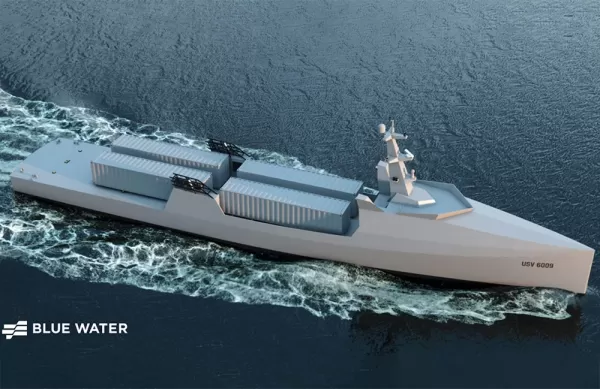
Blue Water Autonomy’s Liberty Class is a 190-foot steel autonomous ship. | Source: Blue Water AutonomyBoston-based technology and shipbuilding firm Blue Water Autonomy has secured a multiple-award contract with the Naval Oceanographic Office (NAVOCEA
U.S. Navy Selects Blue Water Autonomy for Deep-Sea Survey Missions
Blue Water Autonomy’s Liberty Class is a 190-foot steel autonomous ship. | Source: Blue Water AutonomyBoston-based technology and shipbuilding firm Blue Water Autonomy has secured a multiple-award contract with the Naval Oceanographic Office (NAVOCEA
2026 Latest Best Top-rated AI Text to Speech Tools for Online Courses are curated by XIX.AI based on rigorous real-world tests and weekly updated rankings. These powerful tools help creators deliver crystal-clear audio content effortlessly, boosting writing efficiency and streamlining course production. Check out the free vs paid comparison to find your perfect fit. Explore now to unlock your AI edge in online education.
10 tools
xix.ai

2026 Latest Best Top-Rated AI Blog Title Tools for Higher Click Through Rates! XIX.AI has carefully curated a powerful, game-changing collection of top tools that go through rigorous real-world tests. You’ll find a free vs paid comparison, weekly updated rankings, and detailed insights to help you boost your blog’s traffic efficiently. Must-try options are highlighted to help you unlock your AI edge. Explore now!
10 tools
xix.ai

2026 Latest Best Top-rated AI Task Routing Tools for Support Workflows! XIX.AI has curated a highly powerful game-changing collection of must-try solutions, all undergoing rigorous real-world tests and updated weekly. These tools streamline workflows, boost productivity, and help teams deliver faster, more efficient support. Explore now to discover your perfect tool and unlock your AI edge!
17 tools
xix.ai

2026 Latest Best Top-Rated AI Citation and Paper Summary Tools Curated by XIX.AI. Get powerful game-changing solutions for quick content creation, improved writing efficiency, and boosting productivity. We offer a free vs paid comparison along with real-world tests and weekly updated rankings to help you find the must-try tool that fits your needs perfectly. Explore now to Unlock your AI edge.
10 tools
xix.ai

2026 Latest Best Top-Rated AI Productivity Tools for Daily Work! XIX.AI has curated a powerful, game-changing selection based on rigorous weekly updated rankings and real-world tests. You’ll find must-try options that boost writing efficiency, streamline content creation, and help you overcome daily work challenges. Get a free vs paid comparison to find the perfect fit for your needs. Explore now to unlock your AI edge!
9 tools
xix.ai

2026 Latest Best Top-Rated AI Systematic Review Tools for Research Screening are here on XIX.AI! This curated collection includes powerful, game-changing solutions that go through rigorous real-world tests to deliver accurate results. We also offer a free vs paid comparison along with weekly updated rankings to help you find the must-try option that boosts your research efficiency significantly. Explore now to unlock your AI edge in academic work!
11 tools
xix.ai

Как UX-специалист, я постоянно вижу влияние ИИ на нашу работу - уже сегодня он автоматизирует тестирование и генерирует прототипы. Но не станет ли со временем дизайнер ненужным? 🤔 Хочется думать, что мы просто перейдём к более стратегическим задачам, но тенденции рынка труда в статье заставляют задуматься... В любом случае, без освоения новых инструментов теперь точно не выжить.
AI in UX design is mind-blowing! It's like having a super-smart assistant, but I wonder if it’ll make designers lazy. 🤔 Still, the job market tips in the article are gold!












