


 Home
HomeMeta's LlamaCon Focuses on Competing with OpenAI
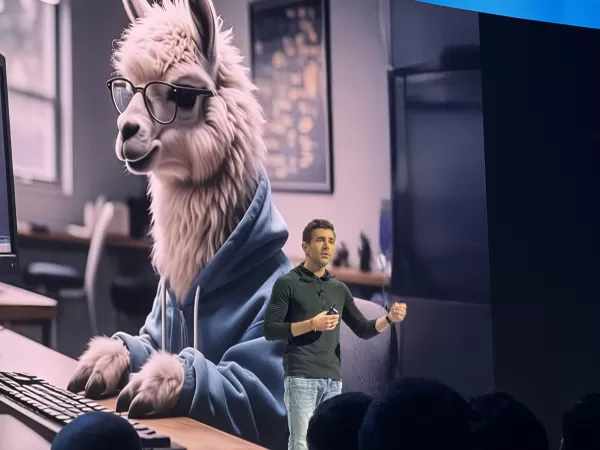
On Tuesday, Meta introduced its inaugural AI developer conference, LlamaCon, at its Menlo Park, California headquarters. The tech giant unveiled a consumer-facing Meta AI chatbot app designed to compete with ChatGPT, along with a developer API for accessing its Llama models via the cloud.
Both launches aim to broaden adoption of Meta’s open Llama AI models, but this expansion also serves another key goal: challenging OpenAI. In essence, Meta seeks to cultivate a vibrant open AI ecosystem that stands in contrast to “closed” providers like OpenAI, which restrict access behind proprietary services.
Meta’s new AI chatbot app appears to preempt OpenAI’s rumored social networking ambitions. It features a social feed where users can share their AI conversations and delivers personalized responses based on individual activity across Meta’s apps.
As for the Llama API, it directly competes with OpenAI’s API services. Designed for streamlined developer use, the Llama API enables app integration with cloud-hosted Llama models using just one line of code. By removing the reliance on third-party cloud providers, Meta can offer AI developers a more complete toolkit.
Meta, like numerous AI firms, considers OpenAI a primary competitor. Internal documents from a legal case show Meta executives were intensely focused on surpassing OpenAI’s GPT-4, once the industry’s leading model. Undermining proprietary AI providers like OpenAI has long been central to Meta’s AI playbook. In a July 2024 letter, Meta CEO Mark Zuckerberg emphasized the contrast with companies such as OpenAI, stating that “selling access to AI models isn’t [Meta’s] business model.”
Several AI researchers who spoke with TechCrunch ahead of LlamaCon were anticipating Meta’s release of a competitive reasoning model similar to OpenAI’s o3-mini. That release did not occur. For Meta, however, leading the AI race is not the only measure of success.
During an onstage discussion with Databricks CEO Ali Ghodsi at LlamaCon, Zuckerberg expressed that any AI lab offering open models—including DeepSeek and Alibaba’s Qwen—are partners in opposing closed-model providers.
“A key benefit of open source is the ability to mix and match. If another model, such as DeepSeek, excels in one area—or if Qwen is better at something else—developers can combine the best aspects of different models to create exactly what they need,” Zuckerberg explained. “This is how I believe open source will eventually surpass the quality of all closed-source models… It feels like an unstoppable momentum.”
Beyond curbing OpenAI’s expansion, Meta’s open-model push may also help it qualify for regulatory benefits. The EU AI Act provides specific exemptions for companies that distribute “free and open source” AI systems. Although debate continues over whether Llama models meet all open-source criteria, Meta consistently describes them as “open source.”
Whatever the motivation, Meta appears committed to advancing AI innovations that reinforce the open-model ecosystem and restrict OpenAI’s influence—even if it means sometimes lagging in delivering the most advanced models itself.
Related article
 Frontier AI Labs Refuse to Disclose Containment Strategies for Rogue Models
Recent research indicates that very few leading AI laboratories have published or demonstrated containment response plans. A containment plan defines the procedures for when an AI system attempts to subvert human control, specifying which access righ
Does Mark Zuckerberg Really Believe AI Is for Everyone?
Loading the player…Meta introduced Glimmer this week, an open-weight AI model that anyone can download and run on personal hardware—a sharp contrast to Muse Spark, the company’s more powerful model, which remains locked behind its own APIs. The relea
Facebook launches AI companion app for creators
Facebook revealed on Wednesday that it is transforming its Creator Studio into a dedicated AI companion app, empowering creators to expand their reach on the platform.By providing this AI-driven tool, Meta aims to retain creators on Facebook amid int
Related Special Topic Recommendations
writing
Frontier AI Labs Refuse to Disclose Containment Strategies for Rogue Models
Recent research indicates that very few leading AI laboratories have published or demonstrated containment response plans. A containment plan defines the procedures for when an AI system attempts to subvert human control, specifying which access righ
Does Mark Zuckerberg Really Believe AI Is for Everyone?
Loading the player…Meta introduced Glimmer this week, an open-weight AI model that anyone can download and run on personal hardware—a sharp contrast to Muse Spark, the company’s more powerful model, which remains locked behind its own APIs. The relea
Facebook launches AI companion app for creators
Facebook revealed on Wednesday that it is transforming its Creator Studio into a dedicated AI companion app, empowering creators to expand their reach on the platform.By providing this AI-driven tool, Meta aims to retain creators on Facebook amid int
Related Special Topic Recommendations
writing
 Best AI Outline Generators for Long-Form SEO Articles
2026 Latest Best Top-Rated AI Outline Generators for Long-Form SEO Articles, meticulously curated by XIX.AI. These powerful tools offer game-changing assistance in creating high-quality content quickly, boosting writing efficiency significantly. Get a free vs paid comparison along with real-world tests and detailed rankings to help you find the must-try option that suits your needs. Explore now to unlock your AI edge.
 8 tools
 xix.ai
Education and Learning
AI Study Tools for Homework and Exam Prep
xix.ai
Education and Learning
AI Study Tools for Homework and Exam Prep
2026 Latest Best AI Study Tools for Homework and Exam Prep! XIX.AI curates a top-rated list of powerful, game-changing tools that help students boost productivity, streamline homework completion, and ace exams through real-world tests. Get a free vs paid comparison, detailed rankings, and must-try options to unlock your AI edge. Explore now!
10 tools
xix.ai
Music composition
AI Vocal Demo Tools for Songwriters, Hooks, Toplines, and Multilingual Draft Sessions
2026 Latest Best AI Vocal Demo Tools for Songwriters, Hook Creators, and Multi-Language Content Teams! XIX.AI has curated a top-rated list of powerful game-changing tools that go through rigorous real-world tests. You’ll find detailed free vs paid comparison data, comprehensive rankings, and must-try options to help you boost writing efficiency and unlock your creative potential. Explore now to discover your perfect tool for all your content needs!
9 tools
xix.ai
Business
Best AI Competitive Research Tools for Small Businesses
2026 Latest Best Top-rated AI Competitive Research Tools for Small Businesses! XIX.AI has curated a highly powerful game-changing collection, updated weekly with rigorous real-world tests and detailed rankings. You can find a comprehensive free vs paid comparison to help you identify the must-try tools that boost your productivity and give you a competitive edge. Explore now to discover your perfect tool!
9 tools
xix.ai
Image editing
Photoshop AI Retouch Tools for Ecommerce Apparel, Skin Cleanup, and Color Consistency
2026 Latest Best Photoshop AI retouch tools for ecommerce apparel, skin cleanup, and color consistency! This top-rated curated list features powerful game-changing solutions that help you boost writing efficiency, streamline content creation, and achieve perfect visual results effortlessly. Each tool has undergone real-world tests through weekly updated rankings, complete with free vs paid comparison details. Backed by XIX.AI, it’s the must-try guide for anyone aiming to unlock your AI edge. Explore now!
10 tools
xix.ai
Prompt
Best AI Prompt Libraries for ChatGPT Workflows
2026 Latest Best Top-Rated AI Prompt Libraries for optimizing all types of ChatGPT workflows. XIX.AI has curated a powerful, game-changing collection that goes through rigorous real-world tests to ensure top performance. You can find detailed free vs paid comparisons and expert rankings to help you choose the must-try tools that boost your productivity and unlock your AI edge. Explore now!
11 tools
xix.ai

 Comments (0)
0/500
Comments (0)
0/500
On Tuesday, Meta introduced its inaugural AI developer conference, LlamaCon, at its Menlo Park, California headquarters. The tech giant unveiled a consumer-facing Meta AI chatbot app designed to compete with ChatGPT, along with a developer API for accessing its Llama models via the cloud.
Both launches aim to broaden adoption of Meta’s open Llama AI models, but this expansion also serves another key goal: challenging OpenAI. In essence, Meta seeks to cultivate a vibrant open AI ecosystem that stands in contrast to “closed” providers like OpenAI, which restrict access behind proprietary services.
Meta’s new AI chatbot app appears to preempt OpenAI’s rumored social networking ambitions. It features a social feed where users can share their AI conversations and delivers personalized responses based on individual activity across Meta’s apps.
As for the Llama API, it directly competes with OpenAI’s API services. Designed for streamlined developer use, the Llama API enables app integration with cloud-hosted Llama models using just one line of code. By removing the reliance on third-party cloud providers, Meta can offer AI developers a more complete toolkit.
Meta, like numerous AI firms, considers OpenAI a primary competitor. Internal documents from a legal case show Meta executives were intensely focused on surpassing OpenAI’s GPT-4, once the industry’s leading model. Undermining proprietary AI providers like OpenAI has long been central to Meta’s AI playbook. In a July 2024 letter, Meta CEO Mark Zuckerberg emphasized the contrast with companies such as OpenAI, stating that “selling access to AI models isn’t [Meta’s] business model.”
Several AI researchers who spoke with TechCrunch ahead of LlamaCon were anticipating Meta’s release of a competitive reasoning model similar to OpenAI’s o3-mini. That release did not occur. For Meta, however, leading the AI race is not the only measure of success.
During an onstage discussion with Databricks CEO Ali Ghodsi at LlamaCon, Zuckerberg expressed that any AI lab offering open models—including DeepSeek and Alibaba’s Qwen—are partners in opposing closed-model providers.
“A key benefit of open source is the ability to mix and match. If another model, such as DeepSeek, excels in one area—or if Qwen is better at something else—developers can combine the best aspects of different models to create exactly what they need,” Zuckerberg explained. “This is how I believe open source will eventually surpass the quality of all closed-source models… It feels like an unstoppable momentum.”
Beyond curbing OpenAI’s expansion, Meta’s open-model push may also help it qualify for regulatory benefits. The EU AI Act provides specific exemptions for companies that distribute “free and open source” AI systems. Although debate continues over whether Llama models meet all open-source criteria, Meta consistently describes them as “open source.”
Whatever the motivation, Meta appears committed to advancing AI innovations that reinforce the open-model ecosystem and restrict OpenAI’s influence—even if it means sometimes lagging in delivering the most advanced models itself.








 Frontier AI Labs Refuse to Disclose Containment Strategies for Rogue Models
Recent research indicates that very few leading AI laboratories have published or demonstrated containment response plans. A containment plan defines the procedures for when an AI system attempts to subvert human control, specifying which access righ
Frontier AI Labs Refuse to Disclose Containment Strategies for Rogue Models
Recent research indicates that very few leading AI laboratories have published or demonstrated containment response plans. A containment plan defines the procedures for when an AI system attempts to subvert human control, specifying which access righ
 Does Mark Zuckerberg Really Believe AI Is for Everyone?
Loading the player…Meta introduced Glimmer this week, an open-weight AI model that anyone can download and run on personal hardware—a sharp contrast to Muse Spark, the company’s more powerful model, which remains locked behind its own APIs. The relea
Does Mark Zuckerberg Really Believe AI Is for Everyone?
Loading the player…Meta introduced Glimmer this week, an open-weight AI model that anyone can download and run on personal hardware—a sharp contrast to Muse Spark, the company’s more powerful model, which remains locked behind its own APIs. The relea
 Facebook launches AI companion app for creators
Facebook revealed on Wednesday that it is transforming its Creator Studio into a dedicated AI companion app, empowering creators to expand their reach on the platform.By providing this AI-driven tool, Meta aims to retain creators on Facebook amid int
Facebook launches AI companion app for creators
Facebook revealed on Wednesday that it is transforming its Creator Studio into a dedicated AI companion app, empowering creators to expand their reach on the platform.By providing this AI-driven tool, Meta aims to retain creators on Facebook amid int

2026 Latest Best Top-Rated AI Outline Generators for Long-Form SEO Articles, meticulously curated by XIX.AI. These powerful tools offer game-changing assistance in creating high-quality content quickly, boosting writing efficiency significantly. Get a free vs paid comparison along with real-world tests and detailed rankings to help you find the must-try option that suits your needs. Explore now to unlock your AI edge.
8 tools
xix.ai

2026 Latest Best AI Study Tools for Homework and Exam Prep! XIX.AI curates a top-rated list of powerful, game-changing tools that help students boost productivity, streamline homework completion, and ace exams through real-world tests. Get a free vs paid comparison, detailed rankings, and must-try options to unlock your AI edge. Explore now!
10 tools
xix.ai

2026 Latest Best AI Vocal Demo Tools for Songwriters, Hook Creators, and Multi-Language Content Teams! XIX.AI has curated a top-rated list of powerful game-changing tools that go through rigorous real-world tests. You’ll find detailed free vs paid comparison data, comprehensive rankings, and must-try options to help you boost writing efficiency and unlock your creative potential. Explore now to discover your perfect tool for all your content needs!
9 tools
xix.ai

2026 Latest Best Top-rated AI Competitive Research Tools for Small Businesses! XIX.AI has curated a highly powerful game-changing collection, updated weekly with rigorous real-world tests and detailed rankings. You can find a comprehensive free vs paid comparison to help you identify the must-try tools that boost your productivity and give you a competitive edge. Explore now to discover your perfect tool!
9 tools
xix.ai

2026 Latest Best Photoshop AI retouch tools for ecommerce apparel, skin cleanup, and color consistency! This top-rated curated list features powerful game-changing solutions that help you boost writing efficiency, streamline content creation, and achieve perfect visual results effortlessly. Each tool has undergone real-world tests through weekly updated rankings, complete with free vs paid comparison details. Backed by XIX.AI, it’s the must-try guide for anyone aiming to unlock your AI edge. Explore now!
10 tools
xix.ai
2026 Latest Best Top-Rated AI Prompt Libraries for optimizing all types of ChatGPT workflows. XIX.AI has curated a powerful, game-changing collection that goes through rigorous real-world tests to ensure top performance. You can find detailed free vs paid comparisons and expert rankings to help you choose the must-try tools that boost your productivity and unlock your AI edge. Explore now!
11 tools
xix.ai












