


 Home
HomeMeta restricts teen access to AI characters ahead of update
Meta has announced a global pause on teen access to its AI characters across all its apps. The company clarified to TechCrunch that this is not an abandonment of the feature, but a step toward developing an updated version specifically designed for younger users.
This decision comes just days before a trial is set to begin in New Mexico, where Meta faces accusations of failing to protect children from sexual exploitation on its platforms. A recent Wired report also noted Meta's efforts to limit legal discovery concerning social media's impact on teen mental health.
Last October, Meta previewed parental controls for its AI characters, allowing guardians to monitor topics and block access to specific characters, with the option to disable chats entirely. While these features were slated for release this year, Meta is now temporarily disabling all AI character access for teens while it works on the new version.
The company stated that feedback from parents, who sought greater insight and control over their teens' interactions with AI, directly influenced this policy change.
Meta has been progressively tightening restrictions on teen exposure to AI content. Also in October, it introduced parental controls on Instagram, inspired by PG-13 movie ratings, to tailor the teen AI experience by restricting access to topics like extreme violence, nudity, and graphic drug use.
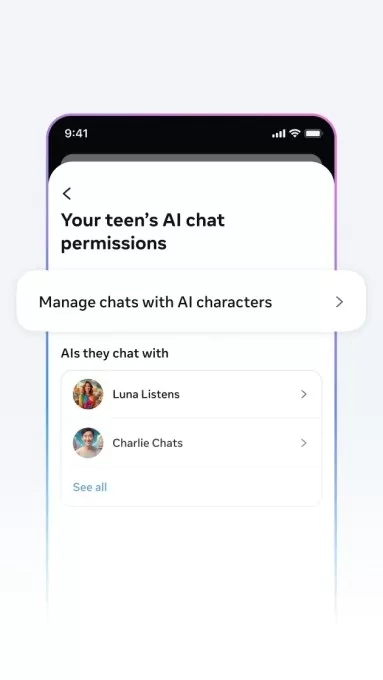
Meta’s previously previewed controls for AI characters. Image Credits: Meta “Starting in the coming weeks, teens will no longer be able to access AI characters across our apps until the updated experience is ready. This will apply to anyone who has given us a teen birthday, as well as people who claim to be adults but who we suspect are teens based on our age prediction technology,” the company said in an updated blog post.
Meta added that the forthcoming AI characters will include built-in parental controls. These new characters are designed to provide age-appropriate responses, focusing on suitable topics such as education, sports, and hobbies.
Social media platforms are facing intense regulatory scrutiny. Beyond the New Mexico case, Meta is preparing for another trial next week, where it is accused of contributing to social media addiction. CEO Mark Zuckerberg is expected to testify once that trial commences.
The pressure extends beyond social media to AI companies, which have also adjusted their services for younger users following lawsuits. In October, Character.AI, which lets users chat with various AI avatars, banned open-ended chatbot conversations for users under 18, later announcing plans for interactive stories for children. Recently, OpenAI implemented new teen safety rules for ChatGPT and began using age prediction to apply content restrictions.
Correction: This post was updated to clarify that the new version of AI characters will be accessible to everyone, not just teens, when it launches. It will include parental controls.
Related article
 U.S. Stocks Hit Historic Milestone as AI and Aerospace Giants Prepare for Trillion-Dollar Debut
Elon Musk, Sam Altman, and Dario Amodei, three titans of the technology sector, are advancing toward initial public offerings for their respective ventures. With SpaceX, OpenAI, and Anthropic—three industry behemoths nearing trillion-dollar valuation
Swedish AI Startup Lovable Eyes $13.2 Billion Valuation After Major Funding Round
As AI-driven coding tools gain traction, Swedish startup Lovable has secured a major funding round. The company aims to raise $3 billion, potentially boosting its valuation to $13.2 billion—double the $6.6 billion recorded last December. Menlo Ventur
Google Tests Remy AI Agent for Gemini as Focus Shifts to User Control
According to Business Insider, Google is testing Remy, a new AI personal agent for Gemini. This tool aims to execute tasks on behalf of users, streamlining both professional workflows and daily routines.Currently, Remy is undergoing testing in an int
Related Special Topic Recommendations
writing
U.S. Stocks Hit Historic Milestone as AI and Aerospace Giants Prepare for Trillion-Dollar Debut
Elon Musk, Sam Altman, and Dario Amodei, three titans of the technology sector, are advancing toward initial public offerings for their respective ventures. With SpaceX, OpenAI, and Anthropic—three industry behemoths nearing trillion-dollar valuation
Swedish AI Startup Lovable Eyes $13.2 Billion Valuation After Major Funding Round
As AI-driven coding tools gain traction, Swedish startup Lovable has secured a major funding round. The company aims to raise $3 billion, potentially boosting its valuation to $13.2 billion—double the $6.6 billion recorded last December. Menlo Ventur
Google Tests Remy AI Agent for Gemini as Focus Shifts to User Control
According to Business Insider, Google is testing Remy, a new AI personal agent for Gemini. This tool aims to execute tasks on behalf of users, streamlining both professional workflows and daily routines.Currently, Remy is undergoing testing in an int
Related Special Topic Recommendations
writing
 Best AI Outline Generators for Long-Form SEO Articles
2026 Latest Best Top-Rated AI Outline Generators for Long-Form SEO Articles, meticulously curated by XIX.AI. These powerful tools offer game-changing assistance in creating high-quality content quickly, boosting writing efficiency significantly. Get a free vs paid comparison along with real-world tests and detailed rankings to help you find the must-try option that suits your needs. Explore now to unlock your AI edge.
 8 tools
 xix.ai
Education and Learning
AI Study Tools for Homework and Exam Prep
xix.ai
Education and Learning
AI Study Tools for Homework and Exam Prep
2026 Latest Best AI Study Tools for Homework and Exam Prep! XIX.AI curates a top-rated list of powerful, game-changing tools that help students boost productivity, streamline homework completion, and ace exams through real-world tests. Get a free vs paid comparison, detailed rankings, and must-try options to unlock your AI edge. Explore now!
10 tools
xix.ai
Music composition
AI Vocal Demo Tools for Songwriters, Hooks, Toplines, and Multilingual Draft Sessions
2026 Latest Best AI Vocal Demo Tools for Songwriters, Hook Creators, and Multi-Language Content Teams! XIX.AI has curated a top-rated list of powerful game-changing tools that go through rigorous real-world tests. You’ll find detailed free vs paid comparison data, comprehensive rankings, and must-try options to help you boost writing efficiency and unlock your creative potential. Explore now to discover your perfect tool for all your content needs!
9 tools
xix.ai
Business
Best AI Competitive Research Tools for Small Businesses
2026 Latest Best Top-rated AI Competitive Research Tools for Small Businesses! XIX.AI has curated a highly powerful game-changing collection, updated weekly with rigorous real-world tests and detailed rankings. You can find a comprehensive free vs paid comparison to help you identify the must-try tools that boost your productivity and give you a competitive edge. Explore now to discover your perfect tool!
9 tools
xix.ai
Image editing
Photoshop AI Retouch Tools for Ecommerce Apparel, Skin Cleanup, and Color Consistency
2026 Latest Best Photoshop AI retouch tools for ecommerce apparel, skin cleanup, and color consistency! This top-rated curated list features powerful game-changing solutions that help you boost writing efficiency, streamline content creation, and achieve perfect visual results effortlessly. Each tool has undergone real-world tests through weekly updated rankings, complete with free vs paid comparison details. Backed by XIX.AI, it’s the must-try guide for anyone aiming to unlock your AI edge. Explore now!
10 tools
xix.ai
Prompt
Best AI Prompt Libraries for ChatGPT Workflows
2026 Latest Best Top-Rated AI Prompt Libraries for optimizing all types of ChatGPT workflows. XIX.AI has curated a powerful, game-changing collection that goes through rigorous real-world tests to ensure top performance. You can find detailed free vs paid comparisons and expert rankings to help you choose the must-try tools that boost your productivity and unlock your AI edge. Explore now!
11 tools
xix.ai

 Comments (0)
0/500
Comments (0)
0/500
Meta has announced a global pause on teen access to its AI characters across all its apps. The company clarified to TechCrunch that this is not an abandonment of the feature, but a step toward developing an updated version specifically designed for younger users.
This decision comes just days before a trial is set to begin in New Mexico, where Meta faces accusations of failing to protect children from sexual exploitation on its platforms. A recent Wired report also noted Meta's efforts to limit legal discovery concerning social media's impact on teen mental health.
Last October, Meta previewed parental controls for its AI characters, allowing guardians to monitor topics and block access to specific characters, with the option to disable chats entirely. While these features were slated for release this year, Meta is now temporarily disabling all AI character access for teens while it works on the new version.
The company stated that feedback from parents, who sought greater insight and control over their teens' interactions with AI, directly influenced this policy change.
Meta has been progressively tightening restrictions on teen exposure to AI content. Also in October, it introduced parental controls on Instagram, inspired by PG-13 movie ratings, to tailor the teen AI experience by restricting access to topics like extreme violence, nudity, and graphic drug use.
“Starting in the coming weeks, teens will no longer be able to access AI characters across our apps until the updated experience is ready. This will apply to anyone who has given us a teen birthday, as well as people who claim to be adults but who we suspect are teens based on our age prediction technology,” the company said in an updated blog post.
Meta added that the forthcoming AI characters will include built-in parental controls. These new characters are designed to provide age-appropriate responses, focusing on suitable topics such as education, sports, and hobbies.
Social media platforms are facing intense regulatory scrutiny. Beyond the New Mexico case, Meta is preparing for another trial next week, where it is accused of contributing to social media addiction. CEO Mark Zuckerberg is expected to testify once that trial commences.
The pressure extends beyond social media to AI companies, which have also adjusted their services for younger users following lawsuits. In October, Character.AI, which lets users chat with various AI avatars, banned open-ended chatbot conversations for users under 18, later announcing plans for interactive stories for children. Recently, OpenAI implemented new teen safety rules for ChatGPT and began using age prediction to apply content restrictions.
Correction: This post was updated to clarify that the new version of AI characters will be accessible to everyone, not just teens, when it launches. It will include parental controls.








 U.S. Stocks Hit Historic Milestone as AI and Aerospace Giants Prepare for Trillion-Dollar Debut
Elon Musk, Sam Altman, and Dario Amodei, three titans of the technology sector, are advancing toward initial public offerings for their respective ventures. With SpaceX, OpenAI, and Anthropic—three industry behemoths nearing trillion-dollar valuation
U.S. Stocks Hit Historic Milestone as AI and Aerospace Giants Prepare for Trillion-Dollar Debut
Elon Musk, Sam Altman, and Dario Amodei, three titans of the technology sector, are advancing toward initial public offerings for their respective ventures. With SpaceX, OpenAI, and Anthropic—three industry behemoths nearing trillion-dollar valuation
 Swedish AI Startup Lovable Eyes $13.2 Billion Valuation After Major Funding Round
As AI-driven coding tools gain traction, Swedish startup Lovable has secured a major funding round. The company aims to raise $3 billion, potentially boosting its valuation to $13.2 billion—double the $6.6 billion recorded last December. Menlo Ventur
Google Tests Remy AI Agent for Gemini as Focus Shifts to User Control
According to Business Insider, Google is testing Remy, a new AI personal agent for Gemini. This tool aims to execute tasks on behalf of users, streamlining both professional workflows and daily routines.Currently, Remy is undergoing testing in an int
Swedish AI Startup Lovable Eyes $13.2 Billion Valuation After Major Funding Round
As AI-driven coding tools gain traction, Swedish startup Lovable has secured a major funding round. The company aims to raise $3 billion, potentially boosting its valuation to $13.2 billion—double the $6.6 billion recorded last December. Menlo Ventur
Google Tests Remy AI Agent for Gemini as Focus Shifts to User Control
According to Business Insider, Google is testing Remy, a new AI personal agent for Gemini. This tool aims to execute tasks on behalf of users, streamlining both professional workflows and daily routines.Currently, Remy is undergoing testing in an int

2026 Latest Best Top-Rated AI Outline Generators for Long-Form SEO Articles, meticulously curated by XIX.AI. These powerful tools offer game-changing assistance in creating high-quality content quickly, boosting writing efficiency significantly. Get a free vs paid comparison along with real-world tests and detailed rankings to help you find the must-try option that suits your needs. Explore now to unlock your AI edge.
8 tools
xix.ai

2026 Latest Best AI Study Tools for Homework and Exam Prep! XIX.AI curates a top-rated list of powerful, game-changing tools that help students boost productivity, streamline homework completion, and ace exams through real-world tests. Get a free vs paid comparison, detailed rankings, and must-try options to unlock your AI edge. Explore now!
10 tools
xix.ai

2026 Latest Best AI Vocal Demo Tools for Songwriters, Hook Creators, and Multi-Language Content Teams! XIX.AI has curated a top-rated list of powerful game-changing tools that go through rigorous real-world tests. You’ll find detailed free vs paid comparison data, comprehensive rankings, and must-try options to help you boost writing efficiency and unlock your creative potential. Explore now to discover your perfect tool for all your content needs!
9 tools
xix.ai

2026 Latest Best Top-rated AI Competitive Research Tools for Small Businesses! XIX.AI has curated a highly powerful game-changing collection, updated weekly with rigorous real-world tests and detailed rankings. You can find a comprehensive free vs paid comparison to help you identify the must-try tools that boost your productivity and give you a competitive edge. Explore now to discover your perfect tool!
9 tools
xix.ai

2026 Latest Best Photoshop AI retouch tools for ecommerce apparel, skin cleanup, and color consistency! This top-rated curated list features powerful game-changing solutions that help you boost writing efficiency, streamline content creation, and achieve perfect visual results effortlessly. Each tool has undergone real-world tests through weekly updated rankings, complete with free vs paid comparison details. Backed by XIX.AI, it’s the must-try guide for anyone aiming to unlock your AI edge. Explore now!
10 tools
xix.ai

2026 Latest Best Top-Rated AI Prompt Libraries for optimizing all types of ChatGPT workflows. XIX.AI has curated a powerful, game-changing collection that goes through rigorous real-world tests to ensure top performance. You can find detailed free vs paid comparisons and expert rankings to help you choose the must-try tools that boost your productivity and unlock your AI edge. Explore now!
11 tools
xix.ai












