


 Home
HomeWhat is Lip Reading Technology in 2025 for communication access?
Communication is a cornerstone of human interaction. While verbal speech is most common, many people experience difficulties due to speech impairments. Lip-reading technology presents an innovative solution by translating visible lip movements into audible sound or readable text. It bridges communication gaps, empowering those who struggle to speak and fostering greater inclusivity.
Key Points
This technology aids individuals with speech impairments in effective communication.
It employs AI and machine learning to convert lip movements into text or speech.
Applications span healthcare, accessibility, and security.
System training is essential for achieving accurate results.
Both smartphone applications and web-based platforms offer this technology.
Understanding Lip Reading Technology
What is Lip Reading Technology?
Lip-reading technology, also known as speechreading, is a method of understanding speech visually. It interprets the movements of the lips, face, and tongue to decipher spoken words. Traditionally, this was a skill developed by people with hearing loss to better follow conversations. Today, artificial intelligence (AI) and machine learning have transformed it into a powerful technology. Modern systems use sophisticated algorithms to analyze video of a person speaking, identify patterns in lip movements, and translate them into text or audible speech. This provides a communication aid for those with speaking difficulties or in situations where audio is unavailable.
Rapid advancements in computer vision and natural language processing are driving this field forward. Early systems faced accuracy and adaptability challenges, but recent improvements have made the technology viable for real-world use. As AI models become more refined and training datasets grow, accuracy and reliability continue to increase, expanding its potential impact. From assisting individuals to enhancing security, lip-reading technology is changing how we communicate.

It is crucial to understand that lip-reading technology relies heavily on context and visual cues beyond just the lips. Facial expressions, body language, and the surrounding environment all contribute to accurate interpretation. Variations in speech patterns, accents, and individual style present additional challenges that developers address through continuous algorithm refinement. By adopting a holistic approach that integrates multiple visual and contextual factors, the technology is advancing toward more robust and precise performance.
The Significance of Verbal Communication
Verbal communication is the primary way we share ideas, express emotions, and build relationships. In a world reliant on spoken language, individuals facing verbal communication challenges often encounter significant barriers in daily life. These challenges can arise from various conditions, including:
- Speech impairments: Conditions like aphasia, dysarthria, or stuttering can affect a person's ability to articulate words clearly.
- Laryngectomy: Surgical removal of the larynx eliminates the physical ability to speak.
- Vocal cord damage: Injury or disease affecting the vocal cords can impair or eliminate vocal function.
For those who lose the ability to speak, everyday interactions can become frustrating and isolating. Simple tasks like ordering food or asking for help turn into significant hurdles. Technology now offers a bridge to restore communicative ability in these circumstances.

Lip-reading technology offers a vital lifeline, providing an alternative means of expression and understanding. By converting lip movements into text or synthetic speech, it enables fuller participation in conversations, allowing individuals to share thoughts, feelings, and maintain connections. Effective communication can dramatically improve quality of life, promoting independence, confidence, and a sense of inclusion.
The Technology Behind Lip Reading Applications
Core Functionality and Technical Aspects
Lip-reading applications combine computer vision and artificial intelligence. Their core functionality involves several key stages:
Video Acquisition: The application captures video of the user speaking via a smartphone, computer camera, or uploaded recording.
Lip Detection and Tracking: Algorithms identify and isolate the lip region within the video frame, then track its movements as the user speaks.
Feature Extraction: Relevant features are extracted from the lip movements, such as lip shape, corner positions, speed, and direction. Advanced AI techniques detect underlying patterns.
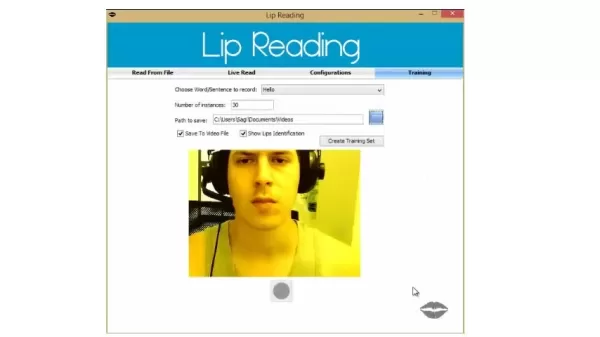
AI-Powered Translation: The extracted features are processed by AI models trained to translate the movements into linguistic output.
Output Generation: The application generates the final output as displayed text or synthesized audio.
The accuracy of these applications depends on several factors, including video quality, clarity of enunciation, and algorithm sophistication. Lighting, camera angles, and individual speaking styles also affect performance. The quality and diversity of the training data used to build the AI models are crucial for improvement.
Developers are continuously enhancing robustness by incorporating additional contextual data. This includes analyzing facial expressions and head movements, and considering the acoustic environment to clarify ambiguous lip movements. These advanced techniques are steering lip-reading technology toward more reliable and user-friendly solutions.
Using Lip Reading Application
Step-by-Step Guide
Using a lip-reading application typically involves a few straightforward steps:
- Download and Install: Download the app from an official app store or access it via a website.
- Account Setup (if required): Create an account or log in to the service.
Training (recommended): To optimize accuracy for a specific user, utilize the app's training function as demonstrated.
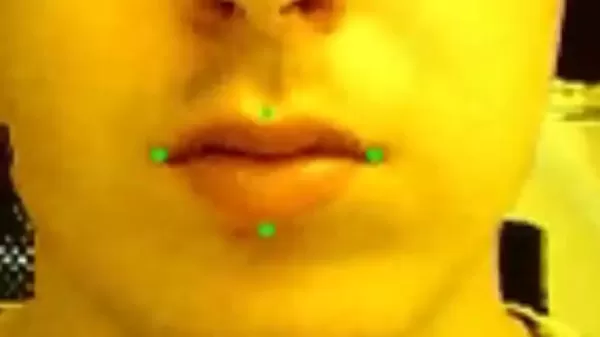
- Select the training feature within the app.
- Choose specific words or phrases to record.
- Record multiple samples for each selected item.
- Live Reading: Activate the live reading mode to allow the system to analyze lip movements in real-time.
- Review and Interpret: Review the generated text or listen to the synthesized audio output.
Weighing the Benefits and Drawbacks of Lip Reading Technology
Pros
Enables communication for individuals with speech impairments.
Augments comprehension for people with hearing loss.
Enhances security monitoring in noisy environments.
Promotes inclusivity for diverse communication needs.
Serves as a foundation for innovative applications in gaming and voice assistants.
Cons
Accuracy can be affected by visual obstructions and speaker differences.
Distinguishing between homophones (words with similar lip movements) is challenging.
Requires substantial computational resources.
Performance may vary with lighting conditions and camera angles.
Heavily dependent on context and additional visual cues for precise interpretation.
Diverse Use Cases for Lip Reading Technology
Empowering Communication in Healthcare and Accessibility
The impact of lip-reading technology extends into practical benefits across sectors, particularly healthcare and accessibility. In healthcare, it assists patients with speech impairments in communicating needs and symptoms to medical staff. This is especially valuable post-laryngectomy or for conditions affecting speech. The technology can also monitor speech patterns for subtle changes that might indicate health issues.
For the hearing impaired, lip-reading technology augments comprehension. In noisy settings or where sign language isn't feasible, it helps individuals follow and participate in discussions. Integration with hearing aids or cochlear implants can further enhance speech perception.
Regarding accessibility, this technology fosters more inclusive environments in education, workplaces, and public spaces. It can be integrated into assistive devices or communication apps, enabling effective interaction regardless of ability. It also facilitates live captioning for videos and events, making content accessible. Furthermore, it can power interactive tools for teaching lip-reading skills.
Enhancing Security and Beyond
Beyond communication aid, lip-reading technology has significant applications in security and other fields. In security, it can monitor conversations in loud environments like airports where audio surveillance fails, helping to identify potential threats or suspicious behavior. Law enforcement can use it for intelligence gathering and suspect monitoring to improve public safety.

Additional potential applications include:
- Voice assistant technology: Improving assistant accuracy in noisy settings by adding visual lip-reading input.
- Gaming: Creating immersive experiences where players control characters or interact using lip movements.
- Market research: Analyzing customer reactions in focus groups by interpreting nonverbal cues from lip movements.
As the technology evolves, it will likely find more innovative uses across industries. Its capacity to translate visual cues into meaningful information opens new possibilities for communication, security, and human-computer interaction.
Frequently Asked Questions about Lip Reading Technology
How accurate is lip reading technology?
Accuracy varies based on video quality, speaker clarity, and algorithm sophistication. Current systems perform reasonably well under ideal conditions, but real-world factors like lighting, angles, and individual speaking styles can impact results. Ongoing research focuses on improving robustness for everyday scenarios. Training the software with a specific user's speech patterns can significantly enhance accuracy.
What are the limitations of lip reading technology?
Key limitations include:Visual Dependence: Requires a clear, unobstructed view of the speaker's face, which can be problematic with masks, poor lighting, or distance.Speaker Variability: Accents, speech patterns, and facial anatomy differ, affecting system performance.Homophones: Words with identical or similar lip movements (e.g., "pat" vs. "bat") are difficult to distinguish without context.Computational Demands: High-accuracy processing requires significant computing power, potentially limiting use on simpler devices.Despite these challenges, continuous advances in AI and computer vision are steadily creating more reliable solutions.
How can lip reading technology be used to assist individuals with speech impairments?
It provides an alternative communication channel by translating lip movements into text or synthetic speech. This allows individuals to express thoughts and needs effectively. It can also generate real-time captions for conversations, helping users follow along. Integrated into assistive devices or dedicated apps, it empowers more independent and confident communication.
Related Questions
What are the latest advancements in speech recognition technology?
Speech recognition has progressed significantly due to AI and machine learning. Recent developments include:End-to-End Models: These systems transcribe audio to text directly, streamlining the process.Self-Supervised Learning: Models learn from vast amounts of unlabeled audio data, reducing dependency on manually annotated datasets.Adversarial Training: Improves model robustness against background noise and challenging audio conditions.Multilingual Recognition: Systems capable of accurately transcribing multiple languages are becoming more prevalent.These advances are creating more accurate, resilient, and versatile systems, transforming industries from healthcare and education to customer service.The following table compares traditional and advanced approaches:FeatureTraditional Speech RecognitionAdvanced Speech RecognitionModel StructureSeparate acoustic & language modelsEnd-to-end modelsTraining DataRequires large annotated datasetsSelf-supervised learningNoise RobustnessLimitedAdversarial trainingLanguage SupportSingle languageMultilingual support
Related article
 U.S. Stocks Hit Historic Milestone as AI and Aerospace Giants Prepare for Trillion-Dollar Debut
Elon Musk, Sam Altman, and Dario Amodei, three titans of the technology sector, are advancing toward initial public offerings for their respective ventures. With SpaceX, OpenAI, and Anthropic—three industry behemoths nearing trillion-dollar valuation
Swedish AI Startup Lovable Eyes $13.2 Billion Valuation After Major Funding Round
As AI-driven coding tools gain traction, Swedish startup Lovable has secured a major funding round. The company aims to raise $3 billion, potentially boosting its valuation to $13.2 billion—double the $6.6 billion recorded last December. Menlo Ventur
Google Tests Remy AI Agent for Gemini as Focus Shifts to User Control
According to Business Insider, Google is testing Remy, a new AI personal agent for Gemini. This tool aims to execute tasks on behalf of users, streamlining both professional workflows and daily routines.Currently, Remy is undergoing testing in an int
Related Special Topic Recommendations
Data Analysis
U.S. Stocks Hit Historic Milestone as AI and Aerospace Giants Prepare for Trillion-Dollar Debut
Elon Musk, Sam Altman, and Dario Amodei, three titans of the technology sector, are advancing toward initial public offerings for their respective ventures. With SpaceX, OpenAI, and Anthropic—three industry behemoths nearing trillion-dollar valuation
Swedish AI Startup Lovable Eyes $13.2 Billion Valuation After Major Funding Round
As AI-driven coding tools gain traction, Swedish startup Lovable has secured a major funding round. The company aims to raise $3 billion, potentially boosting its valuation to $13.2 billion—double the $6.6 billion recorded last December. Menlo Ventur
Google Tests Remy AI Agent for Gemini as Focus Shifts to User Control
According to Business Insider, Google is testing Remy, a new AI personal agent for Gemini. This tool aims to execute tasks on behalf of users, streamlining both professional workflows and daily routines.Currently, Remy is undergoing testing in an int
Related Special Topic Recommendations
Data Analysis
 Best AI Anomaly Detection Tools for KPI Monitoring across SaaS and Ecommerce Teams
2026 Latest Best Top-rated AI Anomaly Detection Tools for KPI Monitoring in SaaS and Ecommerce teams! XIX.AI has curated a powerful, game-changing collection based on rigorous real-world tests and weekly updated rankings. You’ll find detailed free vs paid comparison insights to help you identify the must-try solution that boosts productivity and unlocks your AI edge. Explore now!
 10 tools
 xix.ai
writing
Best AI Outline Generators for Long-Form SEO Articles
xix.ai
writing
Best AI Outline Generators for Long-Form SEO Articles
2026 Latest Best Top-Rated AI Outline Generators for Long-Form SEO Articles, meticulously curated by XIX.AI. These powerful tools offer game-changing assistance in creating high-quality content quickly, boosting writing efficiency significantly. Get a free vs paid comparison along with real-world tests and detailed rankings to help you find the must-try option that suits your needs. Explore now to unlock your AI edge.
8 tools
xix.ai
Education and Learning
AI Study Tools for Homework and Exam Prep
2026 Latest Best AI Study Tools for Homework and Exam Prep! XIX.AI curates a top-rated list of powerful, game-changing tools that help students boost productivity, streamline homework completion, and ace exams through real-world tests. Get a free vs paid comparison, detailed rankings, and must-try options to unlock your AI edge. Explore now!
10 tools
xix.ai
Music composition
AI Vocal Demo Tools for Songwriters, Hooks, Toplines, and Multilingual Draft Sessions
2026 Latest Best AI Vocal Demo Tools for Songwriters, Hook Creators, and Multi-Language Content Teams! XIX.AI has curated a top-rated list of powerful game-changing tools that go through rigorous real-world tests. You’ll find detailed free vs paid comparison data, comprehensive rankings, and must-try options to help you boost writing efficiency and unlock your creative potential. Explore now to discover your perfect tool for all your content needs!
9 tools
xix.ai
Business
Best AI Competitive Research Tools for Small Businesses
2026 Latest Best Top-rated AI Competitive Research Tools for Small Businesses! XIX.AI has curated a highly powerful game-changing collection, updated weekly with rigorous real-world tests and detailed rankings. You can find a comprehensive free vs paid comparison to help you identify the must-try tools that boost your productivity and give you a competitive edge. Explore now to discover your perfect tool!
9 tools
xix.ai
Image editing
Photoshop AI Retouch Tools for Ecommerce Apparel, Skin Cleanup, and Color Consistency
2026 Latest Best Photoshop AI retouch tools for ecommerce apparel, skin cleanup, and color consistency! This top-rated curated list features powerful game-changing solutions that help you boost writing efficiency, streamline content creation, and achieve perfect visual results effortlessly. Each tool has undergone real-world tests through weekly updated rankings, complete with free vs paid comparison details. Backed by XIX.AI, it’s the must-try guide for anyone aiming to unlock your AI edge. Explore now!
10 tools
xix.ai

 Comments (1)
0/500
Comments (1)
0/500
![RogerJackson]()
이 글을 읽으니 생각이 많아지네요. 2025년까지 기술이 여기까지 발전할 거라 예상했나? 다만 개인정보 보호 문제는 여전히 맘에 걸려. 실시간 입술 인식 데이터는 어디에 저장되는 걸까요? 🤔
Communication is a cornerstone of human interaction. While verbal speech is most common, many people experience difficulties due to speech impairments. Lip-reading technology presents an innovative solution by translating visible lip movements into audible sound or readable text. It bridges communication gaps, empowering those who struggle to speak and fostering greater inclusivity.
Key Points
This technology aids individuals with speech impairments in effective communication.
It employs AI and machine learning to convert lip movements into text or speech.
Applications span healthcare, accessibility, and security.
System training is essential for achieving accurate results.
Both smartphone applications and web-based platforms offer this technology.
Understanding Lip Reading Technology
What is Lip Reading Technology?
Lip-reading technology, also known as speechreading, is a method of understanding speech visually. It interprets the movements of the lips, face, and tongue to decipher spoken words. Traditionally, this was a skill developed by people with hearing loss to better follow conversations. Today, artificial intelligence (AI) and machine learning have transformed it into a powerful technology. Modern systems use sophisticated algorithms to analyze video of a person speaking, identify patterns in lip movements, and translate them into text or audible speech. This provides a communication aid for those with speaking difficulties or in situations where audio is unavailable.
Rapid advancements in computer vision and natural language processing are driving this field forward. Early systems faced accuracy and adaptability challenges, but recent improvements have made the technology viable for real-world use. As AI models become more refined and training datasets grow, accuracy and reliability continue to increase, expanding its potential impact. From assisting individuals to enhancing security, lip-reading technology is changing how we communicate.
It is crucial to understand that lip-reading technology relies heavily on context and visual cues beyond just the lips. Facial expressions, body language, and the surrounding environment all contribute to accurate interpretation. Variations in speech patterns, accents, and individual style present additional challenges that developers address through continuous algorithm refinement. By adopting a holistic approach that integrates multiple visual and contextual factors, the technology is advancing toward more robust and precise performance.
The Significance of Verbal Communication
Verbal communication is the primary way we share ideas, express emotions, and build relationships. In a world reliant on spoken language, individuals facing verbal communication challenges often encounter significant barriers in daily life. These challenges can arise from various conditions, including:
- Speech impairments: Conditions like aphasia, dysarthria, or stuttering can affect a person's ability to articulate words clearly.
- Laryngectomy: Surgical removal of the larynx eliminates the physical ability to speak.
- Vocal cord damage: Injury or disease affecting the vocal cords can impair or eliminate vocal function.
For those who lose the ability to speak, everyday interactions can become frustrating and isolating. Simple tasks like ordering food or asking for help turn into significant hurdles. Technology now offers a bridge to restore communicative ability in these circumstances.
Lip-reading technology offers a vital lifeline, providing an alternative means of expression and understanding. By converting lip movements into text or synthetic speech, it enables fuller participation in conversations, allowing individuals to share thoughts, feelings, and maintain connections. Effective communication can dramatically improve quality of life, promoting independence, confidence, and a sense of inclusion.
The Technology Behind Lip Reading Applications
Core Functionality and Technical Aspects
Lip-reading applications combine computer vision and artificial intelligence. Their core functionality involves several key stages:
Video Acquisition: The application captures video of the user speaking via a smartphone, computer camera, or uploaded recording.
Lip Detection and Tracking: Algorithms identify and isolate the lip region within the video frame, then track its movements as the user speaks.
Feature Extraction: Relevant features are extracted from the lip movements, such as lip shape, corner positions, speed, and direction. Advanced AI techniques detect underlying patterns.
AI-Powered Translation: The extracted features are processed by AI models trained to translate the movements into linguistic output.
Output Generation: The application generates the final output as displayed text or synthesized audio.
The accuracy of these applications depends on several factors, including video quality, clarity of enunciation, and algorithm sophistication. Lighting, camera angles, and individual speaking styles also affect performance. The quality and diversity of the training data used to build the AI models are crucial for improvement.
Developers are continuously enhancing robustness by incorporating additional contextual data. This includes analyzing facial expressions and head movements, and considering the acoustic environment to clarify ambiguous lip movements. These advanced techniques are steering lip-reading technology toward more reliable and user-friendly solutions.
Using Lip Reading Application
Step-by-Step Guide
Using a lip-reading application typically involves a few straightforward steps:
- Download and Install: Download the app from an official app store or access it via a website.
- Account Setup (if required): Create an account or log in to the service.
Training (recommended): To optimize accuracy for a specific user, utilize the app's training function as demonstrated.
- Select the training feature within the app.
- Choose specific words or phrases to record.
- Record multiple samples for each selected item.
- Live Reading: Activate the live reading mode to allow the system to analyze lip movements in real-time.
- Review and Interpret: Review the generated text or listen to the synthesized audio output.
Weighing the Benefits and Drawbacks of Lip Reading Technology
Pros
Enables communication for individuals with speech impairments.
Augments comprehension for people with hearing loss.
Enhances security monitoring in noisy environments.
Promotes inclusivity for diverse communication needs.
Serves as a foundation for innovative applications in gaming and voice assistants.
Cons
Accuracy can be affected by visual obstructions and speaker differences.
Distinguishing between homophones (words with similar lip movements) is challenging.
Requires substantial computational resources.
Performance may vary with lighting conditions and camera angles.
Heavily dependent on context and additional visual cues for precise interpretation.
Diverse Use Cases for Lip Reading Technology
Empowering Communication in Healthcare and Accessibility
The impact of lip-reading technology extends into practical benefits across sectors, particularly healthcare and accessibility. In healthcare, it assists patients with speech impairments in communicating needs and symptoms to medical staff. This is especially valuable post-laryngectomy or for conditions affecting speech. The technology can also monitor speech patterns for subtle changes that might indicate health issues.
For the hearing impaired, lip-reading technology augments comprehension. In noisy settings or where sign language isn't feasible, it helps individuals follow and participate in discussions. Integration with hearing aids or cochlear implants can further enhance speech perception.
Regarding accessibility, this technology fosters more inclusive environments in education, workplaces, and public spaces. It can be integrated into assistive devices or communication apps, enabling effective interaction regardless of ability. It also facilitates live captioning for videos and events, making content accessible. Furthermore, it can power interactive tools for teaching lip-reading skills.
Enhancing Security and Beyond
Beyond communication aid, lip-reading technology has significant applications in security and other fields. In security, it can monitor conversations in loud environments like airports where audio surveillance fails, helping to identify potential threats or suspicious behavior. Law enforcement can use it for intelligence gathering and suspect monitoring to improve public safety.
Additional potential applications include:
- Voice assistant technology: Improving assistant accuracy in noisy settings by adding visual lip-reading input.
- Gaming: Creating immersive experiences where players control characters or interact using lip movements.
- Market research: Analyzing customer reactions in focus groups by interpreting nonverbal cues from lip movements.
As the technology evolves, it will likely find more innovative uses across industries. Its capacity to translate visual cues into meaningful information opens new possibilities for communication, security, and human-computer interaction.
Frequently Asked Questions about Lip Reading Technology
How accurate is lip reading technology?
Accuracy varies based on video quality, speaker clarity, and algorithm sophistication. Current systems perform reasonably well under ideal conditions, but real-world factors like lighting, angles, and individual speaking styles can impact results. Ongoing research focuses on improving robustness for everyday scenarios. Training the software with a specific user's speech patterns can significantly enhance accuracy.
What are the limitations of lip reading technology?
Key limitations include:Visual Dependence: Requires a clear, unobstructed view of the speaker's face, which can be problematic with masks, poor lighting, or distance.Speaker Variability: Accents, speech patterns, and facial anatomy differ, affecting system performance.Homophones: Words with identical or similar lip movements (e.g., "pat" vs. "bat") are difficult to distinguish without context.Computational Demands: High-accuracy processing requires significant computing power, potentially limiting use on simpler devices.Despite these challenges, continuous advances in AI and computer vision are steadily creating more reliable solutions.
How can lip reading technology be used to assist individuals with speech impairments?
It provides an alternative communication channel by translating lip movements into text or synthetic speech. This allows individuals to express thoughts and needs effectively. It can also generate real-time captions for conversations, helping users follow along. Integrated into assistive devices or dedicated apps, it empowers more independent and confident communication.
Related Questions
What are the latest advancements in speech recognition technology?
Speech recognition has progressed significantly due to AI and machine learning. Recent developments include:End-to-End Models: These systems transcribe audio to text directly, streamlining the process.Self-Supervised Learning: Models learn from vast amounts of unlabeled audio data, reducing dependency on manually annotated datasets.Adversarial Training: Improves model robustness against background noise and challenging audio conditions.Multilingual Recognition: Systems capable of accurately transcribing multiple languages are becoming more prevalent.These advances are creating more accurate, resilient, and versatile systems, transforming industries from healthcare and education to customer service.The following table compares traditional and advanced approaches:FeatureTraditional Speech RecognitionAdvanced Speech RecognitionModel StructureSeparate acoustic & language modelsEnd-to-end modelsTraining DataRequires large annotated datasetsSelf-supervised learningNoise RobustnessLimitedAdversarial trainingLanguage SupportSingle languageMultilingual support








 U.S. Stocks Hit Historic Milestone as AI and Aerospace Giants Prepare for Trillion-Dollar Debut
Elon Musk, Sam Altman, and Dario Amodei, three titans of the technology sector, are advancing toward initial public offerings for their respective ventures. With SpaceX, OpenAI, and Anthropic—three industry behemoths nearing trillion-dollar valuation
U.S. Stocks Hit Historic Milestone as AI and Aerospace Giants Prepare for Trillion-Dollar Debut
Elon Musk, Sam Altman, and Dario Amodei, three titans of the technology sector, are advancing toward initial public offerings for their respective ventures. With SpaceX, OpenAI, and Anthropic—three industry behemoths nearing trillion-dollar valuation
 Swedish AI Startup Lovable Eyes $13.2 Billion Valuation After Major Funding Round
As AI-driven coding tools gain traction, Swedish startup Lovable has secured a major funding round. The company aims to raise $3 billion, potentially boosting its valuation to $13.2 billion—double the $6.6 billion recorded last December. Menlo Ventur
Google Tests Remy AI Agent for Gemini as Focus Shifts to User Control
According to Business Insider, Google is testing Remy, a new AI personal agent for Gemini. This tool aims to execute tasks on behalf of users, streamlining both professional workflows and daily routines.Currently, Remy is undergoing testing in an int
Swedish AI Startup Lovable Eyes $13.2 Billion Valuation After Major Funding Round
As AI-driven coding tools gain traction, Swedish startup Lovable has secured a major funding round. The company aims to raise $3 billion, potentially boosting its valuation to $13.2 billion—double the $6.6 billion recorded last December. Menlo Ventur
Google Tests Remy AI Agent for Gemini as Focus Shifts to User Control
According to Business Insider, Google is testing Remy, a new AI personal agent for Gemini. This tool aims to execute tasks on behalf of users, streamlining both professional workflows and daily routines.Currently, Remy is undergoing testing in an int

2026 Latest Best Top-rated AI Anomaly Detection Tools for KPI Monitoring in SaaS and Ecommerce teams! XIX.AI has curated a powerful, game-changing collection based on rigorous real-world tests and weekly updated rankings. You’ll find detailed free vs paid comparison insights to help you identify the must-try solution that boosts productivity and unlocks your AI edge. Explore now!
10 tools
xix.ai

2026 Latest Best Top-Rated AI Outline Generators for Long-Form SEO Articles, meticulously curated by XIX.AI. These powerful tools offer game-changing assistance in creating high-quality content quickly, boosting writing efficiency significantly. Get a free vs paid comparison along with real-world tests and detailed rankings to help you find the must-try option that suits your needs. Explore now to unlock your AI edge.
8 tools
xix.ai

2026 Latest Best AI Study Tools for Homework and Exam Prep! XIX.AI curates a top-rated list of powerful, game-changing tools that help students boost productivity, streamline homework completion, and ace exams through real-world tests. Get a free vs paid comparison, detailed rankings, and must-try options to unlock your AI edge. Explore now!
10 tools
xix.ai

2026 Latest Best AI Vocal Demo Tools for Songwriters, Hook Creators, and Multi-Language Content Teams! XIX.AI has curated a top-rated list of powerful game-changing tools that go through rigorous real-world tests. You’ll find detailed free vs paid comparison data, comprehensive rankings, and must-try options to help you boost writing efficiency and unlock your creative potential. Explore now to discover your perfect tool for all your content needs!
9 tools
xix.ai

2026 Latest Best Top-rated AI Competitive Research Tools for Small Businesses! XIX.AI has curated a highly powerful game-changing collection, updated weekly with rigorous real-world tests and detailed rankings. You can find a comprehensive free vs paid comparison to help you identify the must-try tools that boost your productivity and give you a competitive edge. Explore now to discover your perfect tool!
9 tools
xix.ai

2026 Latest Best Photoshop AI retouch tools for ecommerce apparel, skin cleanup, and color consistency! This top-rated curated list features powerful game-changing solutions that help you boost writing efficiency, streamline content creation, and achieve perfect visual results effortlessly. Each tool has undergone real-world tests through weekly updated rankings, complete with free vs paid comparison details. Backed by XIX.AI, it’s the must-try guide for anyone aiming to unlock your AI edge. Explore now!
10 tools
xix.ai

이 글을 읽으니 생각이 많아지네요. 2025년까지 기술이 여기까지 발전할 거라 예상했나? 다만 개인정보 보호 문제는 여전히 맘에 걸려. 실시간 입술 인식 데이터는 어디에 저장되는 걸까요? 🤔












