


 Home
HomeHow to fix Core Web Vitals for better SEO?

Security teams face thousands of alerts daily, yet many remain uninvestigated. Most NG-SIEM deployments do not fail loudly; they fade into background noise.
Alerts continue to arrive and dashboards update. On paper, everything appears functional. However, when an incident occurs, gaps become obvious: data is missing, correlations fall short, and response slows down at the worst possible moment.
This pattern rarely points to the platform itself. More often, it traces back to how the system was implemented and, specifically, who was responsible for shaping it.
CrowdStrike NG-SIEM has shifted expectations around what a SIEM should deliver. It brings together endpoint visibility, identity context and threat intelligence in a way that older systems never quite managed. But that advantage only holds if the implementation reflects real-world conditions rather than a generic template.
This is where careful questioning matters. Not surface-level queries about features, but deliberate questions to ask a CrowdStrike NG-SIEM implementation partner that reveal how they think.
Start With Their View of Your Environment
Any partner can walk through architecture diagrams. Fewer take the time to understand what actually needs protecting. Ask how they approach discovery.
- Do they begin with asset inventories or business workflows?
- Do they distinguish between critical and non-critical systems early on?
- Do they question assumptions, or simply accept what is presented?
A thoughtful partner will show some hesitation here. Not uncertainty, but restraint. There is usually a pause before deciding what deserves visibility and what does not. That pause is often missing in rushed implementations.
Data Handling
NG-SIEM changes the mechanics of data ingestion, but it does not remove the need for judgement. Before going into specifics, let us picture how the data is expected to move: A simple flow can frame the conversation:
- Data sources
- Collection layer
- Normalisation
- Correlation
- Detection logic
- Response triggers
This sequence should not feel abstract. A capable partner can relate each stage to practical decisions. From there, the questions become sharper.
- How is unnecessary data filtered before ingestion?
- What happens when log volume spikes unexpectedly?
- How are high-noise sources handled without losing useful signals?
This area often carries hidden costs. It is one of the more practical questions to ask a CrowdStrike NG-SIEM implementation partner, even if it does not sound particularly complex at first.
Detection Logic
There is a tendency to rely on default detection rules during rollout. It saves time early on but creates problems later.
Ask how detection logic is approached beyond initial deployment:
- Do they adapt rules based on environment behaviour?
- Is there a process for reviewing false positives regularly?
- How do they ensure detections remain relevant as threats evolve?
Strong answers here tend to include examples rather than general statements. Detection is not something that settles. It needs attention, and that expectation should be visible in how the partner describes their work.
Integration Reality
Integrations rarely behave as expected once deployed. Ask for real examples rather than general capabilities:
- How were identity providers integrated in previous projects?
- What issues surfaced with cloud platform APIs?
- How were failures detected and resolved?
The goal is to understand how the partner deals with friction. Broken integrations do not always trigger alerts. Sometimes they fail quietly, leaving gaps that only surface during investigations. This makes integration-related questions more important than they initially appear.
Response Design
Detection alone does not reduce risk. Response does. Ask how response workflows are designed.
- Are actions automated, semi-automated or entirely manual?
- What safeguards exist to prevent disruption?
- How are response playbooks tested before being relied upon?
There is often a trade-off between speed and control. A partner who recognises that balance tends to design more reliable workflows.
Operational Ownership
Clarity tends to fade after deployment unless it is defined early. Ask who owns the system once it goes live.
- Who handles tuning?
- Who manages alerts that fall outside predefined rules?
- What does ongoing support actually involve?
Vague answers here usually lead to operational gaps later. Among all questions to ask a CrowdStrike NG-SIEM implementation partner, this one shapes how sustainable the system becomes over time.
Cost Control
Costs do not rise suddenly. They accumulate. Ask how ingestion and storage are managed.
- Is there a strategy to prioritise high-value data?
- How are retention policies defined?
- What controls are in place to avoid unexpected increases?
A practical partner will speak about limitations as much as capabilities. That balance is often missing in early discussions.
Visibility Gaps
No system can claim to cover everything. Ask what remains outside visibility.
- How are those gaps identified?
- What risks do they introduce?
- How often is visibility reassessed?
Confidence without acknowledgement of limitations is usually misplaced. A realistic view here tends to reflect deeper experience.
Incident Handling
The real test of any SIEM setup comes during investigation. You must always ask how analysts interact with the system during an incident.
- Can activity be traced across multiple domains easily?
- How are timelines constructed?
- Is context preserved as investigations expand?
Answers should focus on usability, not just technical features. This is one of the more grounded questions to ask a CrowdStrike NG-SIEM implementation partner, because it reflects day-to-day operations rather than design assumptions.
Change Management
Change is constant. Systems that do not adapt become less effective over time. The question you must ask here is how updates are handled.
- How are new data sources onboarded?
- What testing processes exist?
- How is configuration drift managed?
Without clear answers, even well-built systems begin to degrade.
Conclusion
Ultimately, it comes down to decisions made during implementation and the thinking behind those decisions. The questions to ask a CrowdStrike NG-SIEM implementation partner are not meant to create friction. They are meant to surface assumptions early, before they turn into operational issues later.
A partner worth working with, will not rush through these conversations. There will be pauses, clarifications and sometimes disagreement. And that is usually a good sign.
For organisations navigating this space, CyberNX can help you with CrowdStrike consulting. They can help you stream and analyse Falcon data with AI-driven SIEM, accelerating efficiency, reducing noise and enabling smarter threat response. This will help you approach NG-SIEM implementation with a clearer, more grounded perspective.
Related article
 How to fix Core Web Vitals for better SEO rankings
Streamline Report Card Comments with AI ToolsIntroductionAI Tools for Generating Report Card CommentsMagic SchoolAlmanac AIChat GPTUsing Magic School to Generate Report Card CommentsLogging into Magic SchoolSelecting the Report Card Comments ToolCust
Slackbot Becomes an AI Agent
Slackbot, the automated assistant embedded in Salesforce’s corporate messaging platform Slack, is evolving into an AI agent. Salesforce CTO Parker Harris envisions it achieving viral status comparable to OpenAI’s ChatGPT.The cloud software giant laun
ByteDance Boosts Core AI Incentives as Doubao Surges 14.6%
ByteDance recently convened a DouBao equity briefing to unveil fresh incentive policies for staff involved in the DouBao division. The strike price for DouBao shares has been lifted from $14.85 in June 2026 to $17.02, marking an approximate 14.6% inc
Related Special Topic Recommendations
Education and Learning
How to fix Core Web Vitals for better SEO rankings
Streamline Report Card Comments with AI ToolsIntroductionAI Tools for Generating Report Card CommentsMagic SchoolAlmanac AIChat GPTUsing Magic School to Generate Report Card CommentsLogging into Magic SchoolSelecting the Report Card Comments ToolCust
Slackbot Becomes an AI Agent
Slackbot, the automated assistant embedded in Salesforce’s corporate messaging platform Slack, is evolving into an AI agent. Salesforce CTO Parker Harris envisions it achieving viral status comparable to OpenAI’s ChatGPT.The cloud software giant laun
ByteDance Boosts Core AI Incentives as Doubao Surges 14.6%
ByteDance recently convened a DouBao equity briefing to unveil fresh incentive policies for staff involved in the DouBao division. The strike price for DouBao shares has been lifted from $14.85 in June 2026 to $17.02, marking an approximate 14.6% inc
Related Special Topic Recommendations
Education and Learning
 AI Study Tools for Homework and Exam Prep
2026 Latest Best AI Study Tools for Homework and Exam Prep! XIX.AI curates a top-rated list of powerful, game-changing tools that help students boost productivity, streamline homework completion, and ace exams through real-world tests. Get a free vs paid comparison, detailed rankings, and must-try options to unlock your AI edge. Explore now!
 10 tools
 xix.ai
Music composition
AI Vocal Demo Tools for Songwriters, Hooks, Toplines, and Multilingual Draft Sessions
xix.ai
Music composition
AI Vocal Demo Tools for Songwriters, Hooks, Toplines, and Multilingual Draft Sessions
2026 Latest Best AI Vocal Demo Tools for Songwriters, Hook Creators, and Multi-Language Content Teams! XIX.AI has curated a top-rated list of powerful game-changing tools that go through rigorous real-world tests. You’ll find detailed free vs paid comparison data, comprehensive rankings, and must-try options to help you boost writing efficiency and unlock your creative potential. Explore now to discover your perfect tool for all your content needs!
9 tools
xix.ai
Business
Best AI Competitive Research Tools for Small Businesses
2026 Latest Best Top-rated AI Competitive Research Tools for Small Businesses! XIX.AI has curated a highly powerful game-changing collection, updated weekly with rigorous real-world tests and detailed rankings. You can find a comprehensive free vs paid comparison to help you identify the must-try tools that boost your productivity and give you a competitive edge. Explore now to discover your perfect tool!
9 tools
xix.ai
Image editing
Photoshop AI Retouch Tools for Ecommerce Apparel, Skin Cleanup, and Color Consistency
2026 Latest Best Photoshop AI retouch tools for ecommerce apparel, skin cleanup, and color consistency! This top-rated curated list features powerful game-changing solutions that help you boost writing efficiency, streamline content creation, and achieve perfect visual results effortlessly. Each tool has undergone real-world tests through weekly updated rankings, complete with free vs paid comparison details. Backed by XIX.AI, it’s the must-try guide for anyone aiming to unlock your AI edge. Explore now!
10 tools
xix.ai
Prompt
Best AI Prompt Libraries for ChatGPT Workflows
2026 Latest Best Top-Rated AI Prompt Libraries for optimizing all types of ChatGPT workflows. XIX.AI has curated a powerful, game-changing collection that goes through rigorous real-world tests to ensure top performance. You can find detailed free vs paid comparisons and expert rankings to help you choose the must-try tools that boost your productivity and unlock your AI edge. Explore now!
11 tools
xix.ai
Education and Learning
AI Quiz Builder Platforms for Teachers, Tutors, and Cohort-Based Learning Programs
2026 Latest Best AI Quiz Builder Platforms for Teachers, Tutors, and Cohort-Based Learning Programs! XIX.AI has curated a top-rated list of powerful game-changing tools that go through real-world tests to deliver accurate rankings. These must-try platforms help boost writing efficiency, streamline content creation, and simplify quiz design across all learning scenarios. Explore now to discover your perfect tool for unlocking your AI edge in teaching!
13 tools
xix.ai

 Comments (0)
0/500
Comments (0)
0/500
Security teams face thousands of alerts daily, yet many remain uninvestigated. Most NG-SIEM deployments do not fail loudly; they fade into background noise.
Alerts continue to arrive and dashboards update. On paper, everything appears functional. However, when an incident occurs, gaps become obvious: data is missing, correlations fall short, and response slows down at the worst possible moment.
This pattern rarely points to the platform itself. More often, it traces back to how the system was implemented and, specifically, who was responsible for shaping it.
CrowdStrike NG-SIEM has shifted expectations around what a SIEM should deliver. It brings together endpoint visibility, identity context and threat intelligence in a way that older systems never quite managed. But that advantage only holds if the implementation reflects real-world conditions rather than a generic template.
This is where careful questioning matters. Not surface-level queries about features, but deliberate questions to ask a CrowdStrike NG-SIEM implementation partner that reveal how they think.
Start With Their View of Your Environment
Any partner can walk through architecture diagrams. Fewer take the time to understand what actually needs protecting. Ask how they approach discovery.
- Do they begin with asset inventories or business workflows?
- Do they distinguish between critical and non-critical systems early on?
- Do they question assumptions, or simply accept what is presented?
A thoughtful partner will show some hesitation here. Not uncertainty, but restraint. There is usually a pause before deciding what deserves visibility and what does not. That pause is often missing in rushed implementations.
Data Handling
NG-SIEM changes the mechanics of data ingestion, but it does not remove the need for judgement. Before going into specifics, let us picture how the data is expected to move: A simple flow can frame the conversation:
- Data sources
- Collection layer
- Normalisation
- Correlation
- Detection logic
- Response triggers
This sequence should not feel abstract. A capable partner can relate each stage to practical decisions. From there, the questions become sharper.
- How is unnecessary data filtered before ingestion?
- What happens when log volume spikes unexpectedly?
- How are high-noise sources handled without losing useful signals?
This area often carries hidden costs. It is one of the more practical questions to ask a CrowdStrike NG-SIEM implementation partner, even if it does not sound particularly complex at first.
Detection Logic
There is a tendency to rely on default detection rules during rollout. It saves time early on but creates problems later.
Ask how detection logic is approached beyond initial deployment:
- Do they adapt rules based on environment behaviour?
- Is there a process for reviewing false positives regularly?
- How do they ensure detections remain relevant as threats evolve?
Strong answers here tend to include examples rather than general statements. Detection is not something that settles. It needs attention, and that expectation should be visible in how the partner describes their work.
Integration Reality
Integrations rarely behave as expected once deployed. Ask for real examples rather than general capabilities:
- How were identity providers integrated in previous projects?
- What issues surfaced with cloud platform APIs?
- How were failures detected and resolved?
The goal is to understand how the partner deals with friction. Broken integrations do not always trigger alerts. Sometimes they fail quietly, leaving gaps that only surface during investigations. This makes integration-related questions more important than they initially appear.
Response Design
Detection alone does not reduce risk. Response does. Ask how response workflows are designed.
- Are actions automated, semi-automated or entirely manual?
- What safeguards exist to prevent disruption?
- How are response playbooks tested before being relied upon?
There is often a trade-off between speed and control. A partner who recognises that balance tends to design more reliable workflows.
Operational Ownership
Clarity tends to fade after deployment unless it is defined early. Ask who owns the system once it goes live.
- Who handles tuning?
- Who manages alerts that fall outside predefined rules?
- What does ongoing support actually involve?
Vague answers here usually lead to operational gaps later. Among all questions to ask a CrowdStrike NG-SIEM implementation partner, this one shapes how sustainable the system becomes over time.
Cost Control
Costs do not rise suddenly. They accumulate. Ask how ingestion and storage are managed.
- Is there a strategy to prioritise high-value data?
- How are retention policies defined?
- What controls are in place to avoid unexpected increases?
A practical partner will speak about limitations as much as capabilities. That balance is often missing in early discussions.
Visibility Gaps
No system can claim to cover everything. Ask what remains outside visibility.
- How are those gaps identified?
- What risks do they introduce?
- How often is visibility reassessed?
Confidence without acknowledgement of limitations is usually misplaced. A realistic view here tends to reflect deeper experience.
Incident Handling
The real test of any SIEM setup comes during investigation. You must always ask how analysts interact with the system during an incident.
- Can activity be traced across multiple domains easily?
- How are timelines constructed?
- Is context preserved as investigations expand?
Answers should focus on usability, not just technical features. This is one of the more grounded questions to ask a CrowdStrike NG-SIEM implementation partner, because it reflects day-to-day operations rather than design assumptions.
Change Management
Change is constant. Systems that do not adapt become less effective over time. The question you must ask here is how updates are handled.
- How are new data sources onboarded?
- What testing processes exist?
- How is configuration drift managed?
Without clear answers, even well-built systems begin to degrade.
Conclusion
Ultimately, it comes down to decisions made during implementation and the thinking behind those decisions. The questions to ask a CrowdStrike NG-SIEM implementation partner are not meant to create friction. They are meant to surface assumptions early, before they turn into operational issues later.
A partner worth working with, will not rush through these conversations. There will be pauses, clarifications and sometimes disagreement. And that is usually a good sign.
For organisations navigating this space, CyberNX can help you with CrowdStrike consulting. They can help you stream and analyse Falcon data with AI-driven SIEM, accelerating efficiency, reducing noise and enabling smarter threat response. This will help you approach NG-SIEM implementation with a clearer, more grounded perspective.








 How to fix Core Web Vitals for better SEO rankings
Streamline Report Card Comments with AI ToolsIntroductionAI Tools for Generating Report Card CommentsMagic SchoolAlmanac AIChat GPTUsing Magic School to Generate Report Card CommentsLogging into Magic SchoolSelecting the Report Card Comments ToolCust
How to fix Core Web Vitals for better SEO rankings
Streamline Report Card Comments with AI ToolsIntroductionAI Tools for Generating Report Card CommentsMagic SchoolAlmanac AIChat GPTUsing Magic School to Generate Report Card CommentsLogging into Magic SchoolSelecting the Report Card Comments ToolCust
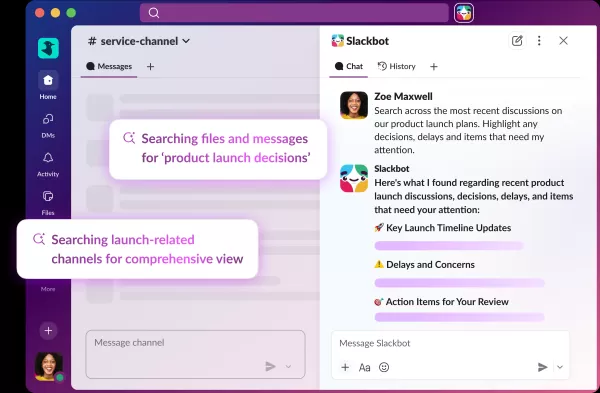 Slackbot Becomes an AI Agent
Slackbot, the automated assistant embedded in Salesforce’s corporate messaging platform Slack, is evolving into an AI agent. Salesforce CTO Parker Harris envisions it achieving viral status comparable to OpenAI’s ChatGPT.The cloud software giant laun
Slackbot Becomes an AI Agent
Slackbot, the automated assistant embedded in Salesforce’s corporate messaging platform Slack, is evolving into an AI agent. Salesforce CTO Parker Harris envisions it achieving viral status comparable to OpenAI’s ChatGPT.The cloud software giant laun
 ByteDance Boosts Core AI Incentives as Doubao Surges 14.6%
ByteDance recently convened a DouBao equity briefing to unveil fresh incentive policies for staff involved in the DouBao division. The strike price for DouBao shares has been lifted from $14.85 in June 2026 to $17.02, marking an approximate 14.6% inc
ByteDance Boosts Core AI Incentives as Doubao Surges 14.6%
ByteDance recently convened a DouBao equity briefing to unveil fresh incentive policies for staff involved in the DouBao division. The strike price for DouBao shares has been lifted from $14.85 in June 2026 to $17.02, marking an approximate 14.6% inc

2026 Latest Best AI Study Tools for Homework and Exam Prep! XIX.AI curates a top-rated list of powerful, game-changing tools that help students boost productivity, streamline homework completion, and ace exams through real-world tests. Get a free vs paid comparison, detailed rankings, and must-try options to unlock your AI edge. Explore now!
10 tools
xix.ai

2026 Latest Best AI Vocal Demo Tools for Songwriters, Hook Creators, and Multi-Language Content Teams! XIX.AI has curated a top-rated list of powerful game-changing tools that go through rigorous real-world tests. You’ll find detailed free vs paid comparison data, comprehensive rankings, and must-try options to help you boost writing efficiency and unlock your creative potential. Explore now to discover your perfect tool for all your content needs!
9 tools
xix.ai

2026 Latest Best Top-rated AI Competitive Research Tools for Small Businesses! XIX.AI has curated a highly powerful game-changing collection, updated weekly with rigorous real-world tests and detailed rankings. You can find a comprehensive free vs paid comparison to help you identify the must-try tools that boost your productivity and give you a competitive edge. Explore now to discover your perfect tool!
9 tools
xix.ai

2026 Latest Best Photoshop AI retouch tools for ecommerce apparel, skin cleanup, and color consistency! This top-rated curated list features powerful game-changing solutions that help you boost writing efficiency, streamline content creation, and achieve perfect visual results effortlessly. Each tool has undergone real-world tests through weekly updated rankings, complete with free vs paid comparison details. Backed by XIX.AI, it’s the must-try guide for anyone aiming to unlock your AI edge. Explore now!
10 tools
xix.ai
2026 Latest Best Top-Rated AI Prompt Libraries for optimizing all types of ChatGPT workflows. XIX.AI has curated a powerful, game-changing collection that goes through rigorous real-world tests to ensure top performance. You can find detailed free vs paid comparisons and expert rankings to help you choose the must-try tools that boost your productivity and unlock your AI edge. Explore now!
11 tools
xix.ai

2026 Latest Best AI Quiz Builder Platforms for Teachers, Tutors, and Cohort-Based Learning Programs! XIX.AI has curated a top-rated list of powerful game-changing tools that go through real-world tests to deliver accurate rankings. These must-try platforms help boost writing efficiency, streamline content creation, and simplify quiz design across all learning scenarios. Explore now to discover your perfect tool for unlocking your AI edge in teaching!
13 tools
xix.ai












