


 Home
HomeHow to find the perfect hair color for your face?
Find the Ideal Hair Color for Your Face
- Introduction
- Determining Your Skin Tone
- 2.1 Cool Skin Undertones
- 2.2 Warm Skin Undertones
- 2.3 Neutral Skin Tone
- Categorizing Hair Colors
- 3.1 Dark Hair Shades
- 3.2 Light Hair Shades
- Choosing the Right Hair Color for Your Skin Tone
- 4.1 Cool Skin Undertones
- 4.2 Warm Skin Undertones
- 4.3 Neutral Skin Tone
- Understanding Visual Weight and Hair Color
- 5.1 Visual Weight and Facial Features
- 5.2 Choosing Hair Color Based on Facial Features
- Hair Color and Personal Style
- 6.1 Matching Hair Color to Personality or Style
- 6.2 Accentuating Facial Features with Hair Color
Consi
dering Hair Condition and Upkeep- Budgeting for Hair Color
- Alternative Options for Experimenting with Hair Color
- Conclusion
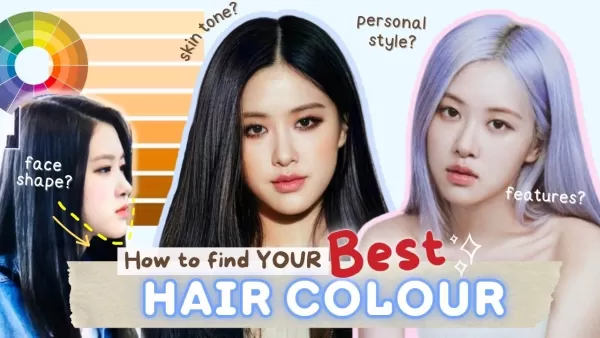
Finding the perfect hair color can be challenging, especially given the wide variety of shades within each color family. Beyond the color itself, factors like skin tone, undertones, facial features, and hair health all influence which shade will look best on you. This article walks you through how to choose a hair color that complements your skin tone and offers tips to enhance your overall appearance.
How to Determine Your Skin Tone
Before exploring hair colors, it's important to identify your skin tone. Skin tones generally fall into cool, warm, or neutral categories. Knowing your skin tone helps you choose hair colors that complement your complexion and highlight your features.
Cool Skin Undertones
If your skin has cool undertones, you'll want to choose hair colors with cool undertones as well.
Consi
der shades like platinum blonde, ashy blonde, ash brown, or ash purple. These shades create balance and harmony with cool skin, enhancing your overall look. People with cool undertones can also try brunette shades like cool dark brown, mocha brown, or browns with green or gray undertones. Though red is typically a warm color, cool-toned individuals can choose shades like merlot burgundy or subtle mocha tones.Warm Skin Undertones
For warm skin tones, hair colors with warm undertones are the best match. Choose shades like chestnut or caramel browns, reddish browns, or light auburn. If you want to go lighter, try blushy or golden beige, or buttery blonde tones. Avoid overly bright or vibrant colors, as they can clash with your warm skin.
Neutral Skin Tone
If you have a neutral skin tone, you're in luck! Neutral undertones offer the most flexibility, allowing you to experiment with a wide range of hair colors. Whether you prefer super cool platinum, pale beige blondes, golden blondes, browns, or reds from auburn to true black, the choice is yours. You have the freedom to explore different shades and find your perfect match.
Hair Color Categories
Hair colors generally fall into two main categories: dark and light. Understanding the differences between them helps you identify which type suits your preferences and style.
Dark Hair Shades
Dark hair colors typically don't require bleaching and include shades like dark brown, ash brown, or reddish brown. They are flattering for those with warm or peachy undertones. These colors create beautiful contrast and add a natural glow to your complexion. According to Fabulive, darker shades can also help conceal hair damage or breakage, making them both stylish and practical.
Light Hair Shades
Light hair colors, on the other hand, require bleaching and include shades like platinum blonde, icy blonde, or champagne hues. These lighter shades tend to suit people with cool undertones or fair skin. They create a softer, lighter overall look, adding a fresh and gentle touch to your appearance.
Stay tuned for the next parts of this article, where we explore choosing hair color based on visual weight, matching it to your style and personality, and considering hair condition and maintenance. We'll provide all the information you need to confidently choose the best hair color for you. Remember, experimenting with hair color is a fun and exciting journey, so embrace the process and enjoy finding your perfect shade.
Related article
 ByteDance’s Seed launches global campus drive, offering virtual shares to win top large model talent
In the competitive landscape of large language models, securing top-tier talent remains the most critical strategic asset.On April 1st, ByteDance announced the launch of its Seed global campus recruitment initiative, part of its large model talent de
Suno to Watermark Songs Amid Legal Battles
Suno, the platform enabling users to generate AI-created music, has unveiled new features to label platform-produced tracks, restrict downloads, and update community standards to curb unauthorized replicas. These updates arrive as Suno confronts mult
Musk Admits Grok Build Leaked User Code, Promises to Erase All Historical Data
Elon Musk directly addressed the privacy controversy surrounding Grok Build, beginning with a simple "True" to confirm the incident's validity. He pledged that all user data previously uploaded to SpaceXAI would be permanently erased, stating, "not a
Related Special Topic Recommendations
Design & Art
ByteDance’s Seed launches global campus drive, offering virtual shares to win top large model talent
In the competitive landscape of large language models, securing top-tier talent remains the most critical strategic asset.On April 1st, ByteDance announced the launch of its Seed global campus recruitment initiative, part of its large model talent de
Suno to Watermark Songs Amid Legal Battles
Suno, the platform enabling users to generate AI-created music, has unveiled new features to label platform-produced tracks, restrict downloads, and update community standards to curb unauthorized replicas. These updates arrive as Suno confronts mult
Musk Admits Grok Build Leaked User Code, Promises to Erase All Historical Data
Elon Musk directly addressed the privacy controversy surrounding Grok Build, beginning with a simple "True" to confirm the incident's validity. He pledged that all user data previously uploaded to SpaceXAI would be permanently erased, stating, "not a
Related Special Topic Recommendations
Design & Art
 AI Visual Style Reference Tools for Character Sheets, Moodboards, and Pitch Decks
2026 Latest Best AI Visual Style Reference Tools for Character Sheets, Moodboards, and Pitch Decks are here on XIX.AI! This curated top-rated list features powerful game-changing tools that go through rigorous real-world tests. You’ll find a free vs paid comparison, detailed rankings, and must-try options to help you boost creativity and streamline your workflow. Explore now to discover your perfect tool for boosting productivity!
 11 tools
 xix.ai
SEO
Best AI SERP Analysis Tools for Search Strategy
xix.ai
SEO
Best AI SERP Analysis Tools for Search Strategy
2026 Latest Best Top-rated AI SERP Analysis Tools for Search Strategy are curated by XIX.AI through rigorous real-world tests and weekly updated rankings. These powerful tools help you unlock hidden optimization opportunities, boost content performance, and gain a competitive edge in search. Discover your perfect tool to elevate your search strategy today. Explore now!
13 tools
xix.ai
Data Analysis
Best AI Anomaly Detection Tools for KPI Monitoring across SaaS and Ecommerce Teams
2026 Latest Best Top-rated AI Anomaly Detection Tools for KPI Monitoring in SaaS and Ecommerce teams! XIX.AI has curated a powerful, game-changing collection based on rigorous real-world tests and weekly updated rankings. You’ll find detailed free vs paid comparison insights to help you identify the must-try solution that boosts productivity and unlocks your AI edge. Explore now!
10 tools
xix.ai
writing
Best AI Outline Generators for Long-Form SEO Articles
2026 Latest Best Top-Rated AI Outline Generators for Long-Form SEO Articles, meticulously curated by XIX.AI. These powerful tools offer game-changing assistance in creating high-quality content quickly, boosting writing efficiency significantly. Get a free vs paid comparison along with real-world tests and detailed rankings to help you find the must-try option that suits your needs. Explore now to unlock your AI edge.
8 tools
xix.ai
Education and Learning
AI Study Tools for Homework and Exam Prep
2026 Latest Best AI Study Tools for Homework and Exam Prep! XIX.AI curates a top-rated list of powerful, game-changing tools that help students boost productivity, streamline homework completion, and ace exams through real-world tests. Get a free vs paid comparison, detailed rankings, and must-try options to unlock your AI edge. Explore now!
10 tools
xix.ai
Music composition
AI Vocal Demo Tools for Songwriters, Hooks, Toplines, and Multilingual Draft Sessions
2026 Latest Best AI Vocal Demo Tools for Songwriters, Hook Creators, and Multi-Language Content Teams! XIX.AI has curated a top-rated list of powerful game-changing tools that go through rigorous real-world tests. You’ll find detailed free vs paid comparison data, comprehensive rankings, and must-try options to help you boost writing efficiency and unlock your creative potential. Explore now to discover your perfect tool for all your content needs!
9 tools
xix.ai

 Comments (1)
0/500
Comments (1)
0/500
![RoyPerez]()
终于有人把冷皮暖皮讲清楚了!以前总瞎染,结果脸黄得像土豆😂。建议先测肤色再选色号,别盲目跟风网红色,适合自己才是王道!✨
Find the Ideal Hair Color for Your Face
- Introduction
- Determining Your Skin Tone
- 2.1 Cool Skin Undertones
- 2.2 Warm Skin Undertones
- 2.3 Neutral Skin Tone
- Categorizing Hair Colors
- 3.1 Dark Hair Shades
- 3.2 Light Hair Shades
- Choosing the Right Hair Color for Your Skin Tone
- 4.1 Cool Skin Undertones
- 4.2 Warm Skin Undertones
- 4.3 Neutral Skin Tone
- Understanding Visual Weight and Hair Color
- 5.1 Visual Weight and Facial Features
- 5.2 Choosing Hair Color Based on Facial Features
- Hair Color and Personal Style
- 6.1 Matching Hair Color to Personality or Style
- 6.2 Accentuating Facial Features with Hair Color
Consi
dering Hair Condition and Upkeep- Budgeting for Hair Color
- Alternative Options for Experimenting with Hair Color
- Conclusion
Finding the perfect hair color can be challenging, especially given the wide variety of shades within each color family. Beyond the color itself, factors like skin tone, undertones, facial features, and hair health all influence which shade will look best on you. This article walks you through how to choose a hair color that complements your skin tone and offers tips to enhance your overall appearance.
How to Determine Your Skin Tone
Before exploring hair colors, it's important to identify your skin tone. Skin tones generally fall into cool, warm, or neutral categories. Knowing your skin tone helps you choose hair colors that complement your complexion and highlight your features.
Cool Skin Undertones
If your skin has cool undertones, you'll want to choose hair colors with cool undertones as well.
Consi
der shades like platinum blonde, ashy blonde, ash brown, or ash purple. These shades create balance and harmony with cool skin, enhancing your overall look. People with cool undertones can also try brunette shades like cool dark brown, mocha brown, or browns with green or gray undertones. Though red is typically a warm color, cool-toned individuals can choose shades like merlot burgundy or subtle mocha tones.Warm Skin Undertones
For warm skin tones, hair colors with warm undertones are the best match. Choose shades like chestnut or caramel browns, reddish browns, or light auburn. If you want to go lighter, try blushy or golden beige, or buttery blonde tones. Avoid overly bright or vibrant colors, as they can clash with your warm skin.
Neutral Skin Tone
If you have a neutral skin tone, you're in luck! Neutral undertones offer the most flexibility, allowing you to experiment with a wide range of hair colors. Whether you prefer super cool platinum, pale beige blondes, golden blondes, browns, or reds from auburn to true black, the choice is yours. You have the freedom to explore different shades and find your perfect match.
Hair Color Categories
Hair colors generally fall into two main categories: dark and light. Understanding the differences between them helps you identify which type suits your preferences and style.
Dark Hair Shades
Dark hair colors typically don't require bleaching and include shades like dark brown, ash brown, or reddish brown. They are flattering for those with warm or peachy undertones. These colors create beautiful contrast and add a natural glow to your complexion. According to Fabulive, darker shades can also help conceal hair damage or breakage, making them both stylish and practical.
Light Hair Shades
Light hair colors, on the other hand, require bleaching and include shades like platinum blonde, icy blonde, or champagne hues. These lighter shades tend to suit people with cool undertones or fair skin. They create a softer, lighter overall look, adding a fresh and gentle touch to your appearance.
Stay tuned for the next parts of this article, where we explore choosing hair color based on visual weight, matching it to your style and personality, and considering hair condition and maintenance. We'll provide all the information you need to confidently choose the best hair color for you. Remember, experimenting with hair color is a fun and exciting journey, so embrace the process and enjoy finding your perfect shade.








 ByteDance’s Seed launches global campus drive, offering virtual shares to win top large model talent
In the competitive landscape of large language models, securing top-tier talent remains the most critical strategic asset.On April 1st, ByteDance announced the launch of its Seed global campus recruitment initiative, part of its large model talent de
ByteDance’s Seed launches global campus drive, offering virtual shares to win top large model talent
In the competitive landscape of large language models, securing top-tier talent remains the most critical strategic asset.On April 1st, ByteDance announced the launch of its Seed global campus recruitment initiative, part of its large model talent de
 Suno to Watermark Songs Amid Legal Battles
Suno, the platform enabling users to generate AI-created music, has unveiled new features to label platform-produced tracks, restrict downloads, and update community standards to curb unauthorized replicas. These updates arrive as Suno confronts mult
Suno to Watermark Songs Amid Legal Battles
Suno, the platform enabling users to generate AI-created music, has unveiled new features to label platform-produced tracks, restrict downloads, and update community standards to curb unauthorized replicas. These updates arrive as Suno confronts mult
 Musk Admits Grok Build Leaked User Code, Promises to Erase All Historical Data
Elon Musk directly addressed the privacy controversy surrounding Grok Build, beginning with a simple "True" to confirm the incident's validity. He pledged that all user data previously uploaded to SpaceXAI would be permanently erased, stating, "not a
Musk Admits Grok Build Leaked User Code, Promises to Erase All Historical Data
Elon Musk directly addressed the privacy controversy surrounding Grok Build, beginning with a simple "True" to confirm the incident's validity. He pledged that all user data previously uploaded to SpaceXAI would be permanently erased, stating, "not a

2026 Latest Best AI Visual Style Reference Tools for Character Sheets, Moodboards, and Pitch Decks are here on XIX.AI! This curated top-rated list features powerful game-changing tools that go through rigorous real-world tests. You’ll find a free vs paid comparison, detailed rankings, and must-try options to help you boost creativity and streamline your workflow. Explore now to discover your perfect tool for boosting productivity!
11 tools
xix.ai

2026 Latest Best Top-rated AI SERP Analysis Tools for Search Strategy are curated by XIX.AI through rigorous real-world tests and weekly updated rankings. These powerful tools help you unlock hidden optimization opportunities, boost content performance, and gain a competitive edge in search. Discover your perfect tool to elevate your search strategy today. Explore now!
13 tools
xix.ai

2026 Latest Best Top-rated AI Anomaly Detection Tools for KPI Monitoring in SaaS and Ecommerce teams! XIX.AI has curated a powerful, game-changing collection based on rigorous real-world tests and weekly updated rankings. You’ll find detailed free vs paid comparison insights to help you identify the must-try solution that boosts productivity and unlocks your AI edge. Explore now!
10 tools
xix.ai

2026 Latest Best Top-Rated AI Outline Generators for Long-Form SEO Articles, meticulously curated by XIX.AI. These powerful tools offer game-changing assistance in creating high-quality content quickly, boosting writing efficiency significantly. Get a free vs paid comparison along with real-world tests and detailed rankings to help you find the must-try option that suits your needs. Explore now to unlock your AI edge.
8 tools
xix.ai

2026 Latest Best AI Study Tools for Homework and Exam Prep! XIX.AI curates a top-rated list of powerful, game-changing tools that help students boost productivity, streamline homework completion, and ace exams through real-world tests. Get a free vs paid comparison, detailed rankings, and must-try options to unlock your AI edge. Explore now!
10 tools
xix.ai

2026 Latest Best AI Vocal Demo Tools for Songwriters, Hook Creators, and Multi-Language Content Teams! XIX.AI has curated a top-rated list of powerful game-changing tools that go through rigorous real-world tests. You’ll find detailed free vs paid comparison data, comprehensive rankings, and must-try options to help you boost writing efficiency and unlock your creative potential. Explore now to discover your perfect tool for all your content needs!
9 tools
xix.ai

终于有人把冷皮暖皮讲清楚了!以前总瞎染,结果脸黄得像土豆😂。建议先测肤色再选色号,别盲目跟风网红色,适合自己才是王道!✨












