


 Home
HomeHow the government determined OpenAI’s frontier model was safe for release
OpenAI has launched its latest advanced language model, Sol, making it available to the general public. Sol is widely regarded as matching the capabilities of Anthropic’s Fable, a model so controversial that it briefly triggered White House concerns, leading to a temporary restriction on public access.
How did these models ultimately receive approval for release? The answer remains unclear.
“Frankly, I don’t have visibility into those exact processes, so yes, I don’t feel like I have enough information to say whether they’re adequate or not,” Mina Narayanan, a senior research analyst at Georgetown’s Center for Security and Emerging Technology, told TechCrunch. “Anthropic did say that they were in conversations with the government, and that they developed a classifier to detect jailbreak attempts, and they’ve implemented defensive gap strategies to prevent future jailbreaks, but exactly what that dialog looked like between the government and Anthropic and OpenAI is unclear.”
Dean W. Ball, a former Trump policy advisor now working at OpenAI, noted in his newsletter last month that “nobody knows what the requirements are to get licensed.”
Andy Konwinski, a computer scientist who co-founded Databricks, Perplexity, and the Laude Institute, stated that he has never spoken to anyone who fully understands the process, even among employees at leading AI labs. “It’s existentially a problem,” he tells TechCrunch. “Safety or not, it’s about who has the power to make decisions — who gatekeeps and decides on permissions?”
Eighteen months into the Trump administration, there is still little clarity about how to move forward, despite — or, some critics allege, because — of industry figures shaping policy. Last month, after weeks of internal disputes, an executive order was published outlining a roadmap for evaluating frontier models, but specific details remain unfilled, except for what will not exist. “There will not be an FDA for AI,” Sriram Krishnan, a former Andreessen Horowitz partner who served as a senior advisor for AI in the White House until last month, told the Financial Times.
Notably, there is still no consensus on which types of models require government scrutiny or which agency or agencies should conduct those evaluations. For now, the Department of Commerce’s Center for AI Standards and Innovation appears to be leading the effort, but the executive order directs six cabinet agencies to determine a final process by early August. What has emerged in the meantime is, at best, ad hoc.
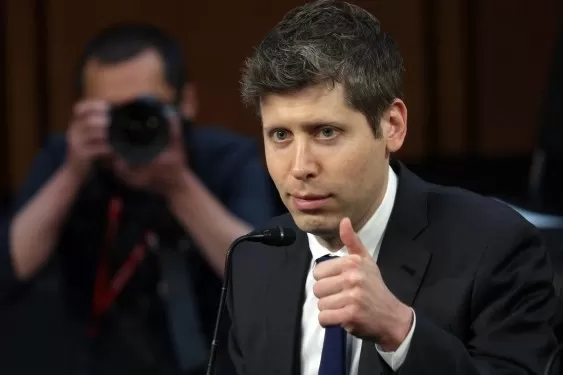
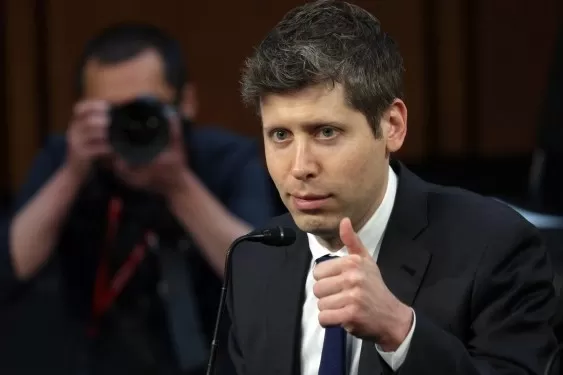
OpenAI CEO Sam Altman told CNBC that the process involved discussions with officials such as Commerce Secretary Howard Lutnick, Treasury Secretary Scott Bessent, and US National Cyber Director Sean Cairncross, but it remains unclear who the experts testing the models were or how they conducted those tests. OpenAI declined to share details about the government’s process with TechCrunch, instead pointing to results from several external evaluations by organizations like UK AISI, SecureBio, and Irregular included in the latest model’s safety card.
Similar to Anthropic’s Fable rollout, OpenAI previewed the model for the government and select users before wider release, but it is unknown who all those users were or how they were selected. In a late June blog post, the company stated, “we don’t believe this kind of government access process should become the long-term default,” adding that it would work with the government to develop a different path forward.
The backdrop to those conversations includes reports that Altman offered up to 5% of OpenAI’s equity for the administration’s so-called “Trump Accounts,” along with OpenAI president Greg Brockman’s role as the largest publicly known donor to Trump’s midterm political operation. It is difficult for outside observers to separate these activities from the government’s apparently lighter-touch approach to regulating Sol.
Amthropic’s Fable, on the other hand, was briefly pulled from wider access when the US government prohibited its use by foreign nationals, partly due to genuine concerns about users jail-breaking the model to access hacking capabilities and partly due to personality clashes between Anthropic and the Trump administration. The threat of an export ban may have also encouraged OpenAI to be more cooperative with the government’s (unknown) requests.
From an industry perspective, a hands-off approach to regulation might seem appealing, but one that relies on personal connections to administration officials creates uncertainty and bad incentives.
Konwinski told TechCrunch that he worries true experts in this technology — “safety researchers, alignment researchers, interpretability researchers, but also data people, and people from all over the stack” — are not playing a sufficient role in the model release process.
Konwinski argues that an “open commons” is the best way to balance safety and innovation. He points to models like the FDA, the NIH, or national labs, which bring together researchers, government officials, and private companies to reach a consensus on safety issues.
Some of this comes down to the incentives of capitalism that have motivated AI researchers for more than a decade, and played out in the courtroom during Elon Musk’s lawsuit challenging OpenAI’s corporate structure. Ball points out that the nature of the AI business requires companies to recoup much of their training costs shortly after their models are released and are further ahead of the competition.
“Even if their intentions are good, there’s very clear legal obligations and fiduciary responsibility that are built right into the operating procedures,” Konwinski points out.
Ball, in his post, argued that the way forward will depend on third-party auditing organizations, licensed by the government, that will evaluate frontier labs’ approach to safety. Konwinski, too, is optimistic about new institutional formats like focused research organizations that could help more disinterested experts from academia and the non-profit world access and evaluate frontier models.
For now, the secrecy surrounding AI development is not going away, but it will also seed political challenges for an industry that Americans increasingly view with skepticism. “There’s not a sense that responsible people are driving forward these changes,” University of Wisconsin-Madison computer science professor Remzi Arpaci-Dusseau said last week at the Open Frontier conference.
At the same event, David Siegel, the computer scientist who founded Two Sigma, one of the most successful quantitative hedge funds, asked attendees to “imagine a situation, which I think would be very bad, [where] a small number of firms control the technology; the government, in their secretive laboratories, is evaluating whether or not the technology is suitable for use; and the general public and scientific community doesn’t really have any access to any of that stuff.”
It seems like we don’t need to imagine it.
Related article
 OpenAI robotics head Caitlin Kalinowski resigns over Pentagon partnership
OpenAI robotics leader Caitlin Kalinowski has stepped down following the company’s controversial partnership with the Department of Defense.“This wasn’t an easy call,” Kalinowski explained in a social media statement. “While AI plays a vital role in
OpenAI Closes Gap With Anthropic Among Business Users, New Data Shows
With OpenAI and Anthropic still distant from their anticipated IPOs and the release of detailed financial reports, we must turn to alternative indicators to gauge their business performance. Ramp, a corporate credit card and expense management platfo
OpenAI launches safer ChatGPT for teens years after they started using it
Following a series of lawsuits regarding the absence of safety protocols in AI chatbots—which contributed to teen suicides and other mental health crises—OpenAI unveiled ChatGPT for Teens on Monday. This new offering incorporates enhanced safety feat
Related Special Topic Recommendations
Text-to-speech
OpenAI robotics head Caitlin Kalinowski resigns over Pentagon partnership
OpenAI robotics leader Caitlin Kalinowski has stepped down following the company’s controversial partnership with the Department of Defense.“This wasn’t an easy call,” Kalinowski explained in a social media statement. “While AI plays a vital role in
OpenAI Closes Gap With Anthropic Among Business Users, New Data Shows
With OpenAI and Anthropic still distant from their anticipated IPOs and the release of detailed financial reports, we must turn to alternative indicators to gauge their business performance. Ramp, a corporate credit card and expense management platfo
OpenAI launches safer ChatGPT for teens years after they started using it
Following a series of lawsuits regarding the absence of safety protocols in AI chatbots—which contributed to teen suicides and other mental health crises—OpenAI unveiled ChatGPT for Teens on Monday. This new offering incorporates enhanced safety feat
Related Special Topic Recommendations
Text-to-speech
 Best AI Text to Speech Tools for Online Courses
2026 Latest Best Top-rated AI Text to Speech Tools for Online Courses are curated by XIX.AI based on rigorous real-world tests and weekly updated rankings. These powerful tools help creators deliver crystal-clear audio content effortlessly, boosting writing efficiency and streamlining course production. Check out the free vs paid comparison to find your perfect fit. Explore now to unlock your AI edge in online education.
 10 tools
 xix.ai
writing
AI Blog Title Tools for Higher Click Through Rates
xix.ai
writing
AI Blog Title Tools for Higher Click Through Rates
2026 Latest Best Top-Rated AI Blog Title Tools for Higher Click Through Rates! XIX.AI has carefully curated a powerful, game-changing collection of top tools that go through rigorous real-world tests. You’ll find a free vs paid comparison, weekly updated rankings, and detailed insights to help you boost your blog’s traffic efficiently. Must-try options are highlighted to help you unlock your AI edge. Explore now!
10 tools
xix.ai
automation
Best AI Task Routing Tools for Support Workflows
2026 Latest Best Top-rated AI Task Routing Tools for Support Workflows! XIX.AI has curated a highly powerful game-changing collection of must-try solutions, all undergoing rigorous real-world tests and updated weekly. These tools streamline workflows, boost productivity, and help teams deliver faster, more efficient support. Explore now to discover your perfect tool and unlock your AI edge!
17 tools
xix.ai
Academic Research
AI Citation and Paper Summary Tools
2026 Latest Best Top-Rated AI Citation and Paper Summary Tools Curated by XIX.AI. Get powerful game-changing solutions for quick content creation, improved writing efficiency, and boosting productivity. We offer a free vs paid comparison along with real-world tests and weekly updated rankings to help you find the must-try tool that fits your needs perfectly. Explore now to Unlock your AI edge.
10 tools
xix.ai
Productivity
Best AI Productivity Tools for Daily Work
2026 Latest Best Top-Rated AI Productivity Tools for Daily Work! XIX.AI has curated a powerful, game-changing selection based on rigorous weekly updated rankings and real-world tests. You’ll find must-try options that boost writing efficiency, streamline content creation, and help you overcome daily work challenges. Get a free vs paid comparison to find the perfect fit for your needs. Explore now to unlock your AI edge!
9 tools
xix.ai
Academic Research
AI Systematic Review Tools for Research Screening
2026 Latest Best Top-Rated AI Systematic Review Tools for Research Screening are here on XIX.AI! This curated collection includes powerful, game-changing solutions that go through rigorous real-world tests to deliver accurate results. We also offer a free vs paid comparison along with weekly updated rankings to help you find the must-try option that boosts your research efficiency significantly. Explore now to unlock your AI edge in academic work!
11 tools
xix.ai

 Comments (0)
0/500
Comments (0)
0/500
OpenAI has launched its latest advanced language model, Sol, making it available to the general public. Sol is widely regarded as matching the capabilities of Anthropic’s Fable, a model so controversial that it briefly triggered White House concerns, leading to a temporary restriction on public access.
How did these models ultimately receive approval for release? The answer remains unclear.
“Frankly, I don’t have visibility into those exact processes, so yes, I don’t feel like I have enough information to say whether they’re adequate or not,” Mina Narayanan, a senior research analyst at Georgetown’s Center for Security and Emerging Technology, told TechCrunch. “Anthropic did say that they were in conversations with the government, and that they developed a classifier to detect jailbreak attempts, and they’ve implemented defensive gap strategies to prevent future jailbreaks, but exactly what that dialog looked like between the government and Anthropic and OpenAI is unclear.”
Dean W. Ball, a former Trump policy advisor now working at OpenAI, noted in his newsletter last month that “nobody knows what the requirements are to get licensed.”
Andy Konwinski, a computer scientist who co-founded Databricks, Perplexity, and the Laude Institute, stated that he has never spoken to anyone who fully understands the process, even among employees at leading AI labs. “It’s existentially a problem,” he tells TechCrunch. “Safety or not, it’s about who has the power to make decisions — who gatekeeps and decides on permissions?”
Eighteen months into the Trump administration, there is still little clarity about how to move forward, despite — or, some critics allege, because — of industry figures shaping policy. Last month, after weeks of internal disputes, an executive order was published outlining a roadmap for evaluating frontier models, but specific details remain unfilled, except for what will not exist. “There will not be an FDA for AI,” Sriram Krishnan, a former Andreessen Horowitz partner who served as a senior advisor for AI in the White House until last month, told the Financial Times.
Notably, there is still no consensus on which types of models require government scrutiny or which agency or agencies should conduct those evaluations. For now, the Department of Commerce’s Center for AI Standards and Innovation appears to be leading the effort, but the executive order directs six cabinet agencies to determine a final process by early August. What has emerged in the meantime is, at best, ad hoc.
OpenAI CEO Sam Altman told CNBC that the process involved discussions with officials such as Commerce Secretary Howard Lutnick, Treasury Secretary Scott Bessent, and US National Cyber Director Sean Cairncross, but it remains unclear who the experts testing the models were or how they conducted those tests. OpenAI declined to share details about the government’s process with TechCrunch, instead pointing to results from several external evaluations by organizations like UK AISI, SecureBio, and Irregular included in the latest model’s safety card.
Similar to Anthropic’s Fable rollout, OpenAI previewed the model for the government and select users before wider release, but it is unknown who all those users were or how they were selected. In a late June blog post, the company stated, “we don’t believe this kind of government access process should become the long-term default,” adding that it would work with the government to develop a different path forward.
The backdrop to those conversations includes reports that Altman offered up to 5% of OpenAI’s equity for the administration’s so-called “Trump Accounts,” along with OpenAI president Greg Brockman’s role as the largest publicly known donor to Trump’s midterm political operation. It is difficult for outside observers to separate these activities from the government’s apparently lighter-touch approach to regulating Sol.
Amthropic’s Fable, on the other hand, was briefly pulled from wider access when the US government prohibited its use by foreign nationals, partly due to genuine concerns about users jail-breaking the model to access hacking capabilities and partly due to personality clashes between Anthropic and the Trump administration. The threat of an export ban may have also encouraged OpenAI to be more cooperative with the government’s (unknown) requests.
From an industry perspective, a hands-off approach to regulation might seem appealing, but one that relies on personal connections to administration officials creates uncertainty and bad incentives.
Konwinski told TechCrunch that he worries true experts in this technology — “safety researchers, alignment researchers, interpretability researchers, but also data people, and people from all over the stack” — are not playing a sufficient role in the model release process.
Konwinski argues that an “open commons” is the best way to balance safety and innovation. He points to models like the FDA, the NIH, or national labs, which bring together researchers, government officials, and private companies to reach a consensus on safety issues.
Some of this comes down to the incentives of capitalism that have motivated AI researchers for more than a decade, and played out in the courtroom during Elon Musk’s lawsuit challenging OpenAI’s corporate structure. Ball points out that the nature of the AI business requires companies to recoup much of their training costs shortly after their models are released and are further ahead of the competition.
“Even if their intentions are good, there’s very clear legal obligations and fiduciary responsibility that are built right into the operating procedures,” Konwinski points out.
Ball, in his post, argued that the way forward will depend on third-party auditing organizations, licensed by the government, that will evaluate frontier labs’ approach to safety. Konwinski, too, is optimistic about new institutional formats like focused research organizations that could help more disinterested experts from academia and the non-profit world access and evaluate frontier models.
For now, the secrecy surrounding AI development is not going away, but it will also seed political challenges for an industry that Americans increasingly view with skepticism. “There’s not a sense that responsible people are driving forward these changes,” University of Wisconsin-Madison computer science professor Remzi Arpaci-Dusseau said last week at the Open Frontier conference.
At the same event, David Siegel, the computer scientist who founded Two Sigma, one of the most successful quantitative hedge funds, asked attendees to “imagine a situation, which I think would be very bad, [where] a small number of firms control the technology; the government, in their secretive laboratories, is evaluating whether or not the technology is suitable for use; and the general public and scientific community doesn’t really have any access to any of that stuff.”
It seems like we don’t need to imagine it.








 OpenAI robotics head Caitlin Kalinowski resigns over Pentagon partnership
OpenAI robotics leader Caitlin Kalinowski has stepped down following the company’s controversial partnership with the Department of Defense.“This wasn’t an easy call,” Kalinowski explained in a social media statement. “While AI plays a vital role in
OpenAI robotics head Caitlin Kalinowski resigns over Pentagon partnership
OpenAI robotics leader Caitlin Kalinowski has stepped down following the company’s controversial partnership with the Department of Defense.“This wasn’t an easy call,” Kalinowski explained in a social media statement. “While AI plays a vital role in
 OpenAI Closes Gap With Anthropic Among Business Users, New Data Shows
With OpenAI and Anthropic still distant from their anticipated IPOs and the release of detailed financial reports, we must turn to alternative indicators to gauge their business performance. Ramp, a corporate credit card and expense management platfo
OpenAI Closes Gap With Anthropic Among Business Users, New Data Shows
With OpenAI and Anthropic still distant from their anticipated IPOs and the release of detailed financial reports, we must turn to alternative indicators to gauge their business performance. Ramp, a corporate credit card and expense management platfo
 OpenAI launches safer ChatGPT for teens years after they started using it
Following a series of lawsuits regarding the absence of safety protocols in AI chatbots—which contributed to teen suicides and other mental health crises—OpenAI unveiled ChatGPT for Teens on Monday. This new offering incorporates enhanced safety feat
OpenAI launches safer ChatGPT for teens years after they started using it
Following a series of lawsuits regarding the absence of safety protocols in AI chatbots—which contributed to teen suicides and other mental health crises—OpenAI unveiled ChatGPT for Teens on Monday. This new offering incorporates enhanced safety feat

2026 Latest Best Top-rated AI Text to Speech Tools for Online Courses are curated by XIX.AI based on rigorous real-world tests and weekly updated rankings. These powerful tools help creators deliver crystal-clear audio content effortlessly, boosting writing efficiency and streamlining course production. Check out the free vs paid comparison to find your perfect fit. Explore now to unlock your AI edge in online education.
10 tools
xix.ai

2026 Latest Best Top-Rated AI Blog Title Tools for Higher Click Through Rates! XIX.AI has carefully curated a powerful, game-changing collection of top tools that go through rigorous real-world tests. You’ll find a free vs paid comparison, weekly updated rankings, and detailed insights to help you boost your blog’s traffic efficiently. Must-try options are highlighted to help you unlock your AI edge. Explore now!
10 tools
xix.ai

2026 Latest Best Top-rated AI Task Routing Tools for Support Workflows! XIX.AI has curated a highly powerful game-changing collection of must-try solutions, all undergoing rigorous real-world tests and updated weekly. These tools streamline workflows, boost productivity, and help teams deliver faster, more efficient support. Explore now to discover your perfect tool and unlock your AI edge!
17 tools
xix.ai
2026 Latest Best Top-Rated AI Citation and Paper Summary Tools Curated by XIX.AI. Get powerful game-changing solutions for quick content creation, improved writing efficiency, and boosting productivity. We offer a free vs paid comparison along with real-world tests and weekly updated rankings to help you find the must-try tool that fits your needs perfectly. Explore now to Unlock your AI edge.
10 tools
xix.ai

2026 Latest Best Top-Rated AI Productivity Tools for Daily Work! XIX.AI has curated a powerful, game-changing selection based on rigorous weekly updated rankings and real-world tests. You’ll find must-try options that boost writing efficiency, streamline content creation, and help you overcome daily work challenges. Get a free vs paid comparison to find the perfect fit for your needs. Explore now to unlock your AI edge!
9 tools
xix.ai

2026 Latest Best Top-Rated AI Systematic Review Tools for Research Screening are here on XIX.AI! This curated collection includes powerful, game-changing solutions that go through rigorous real-world tests to deliver accurate results. We also offer a free vs paid comparison along with weekly updated rankings to help you find the must-try option that boosts your research efficiency significantly. Explore now to unlock your AI edge in academic work!
11 tools
xix.ai












